 Birch Bay
 Siding Replacement in Blaine: Knowing When It's Time
Blaine sits at the water's edge in the far northwest corner of Whatcom County, and that location puts real demands on a home's exterior. Salt-laden air off Semiahmoo Bay and Drayton Harbor, storms that come ashore with enough force to drive rain sideways into wall assemblies, and a moss season that can stretch across most of the year on shaded walls all add up to siding that ages faster here than it would on a house set further inland. Siding replacement is a different job than a repair or a re-side over existing material — it means removing the old cladding down to the sheathing, correcting whatever's underneath, and starting fresh with a system built for this climate. This page is about that specific job: what triggers it, what it should involve, and how we run it for homes in and around Blaine.
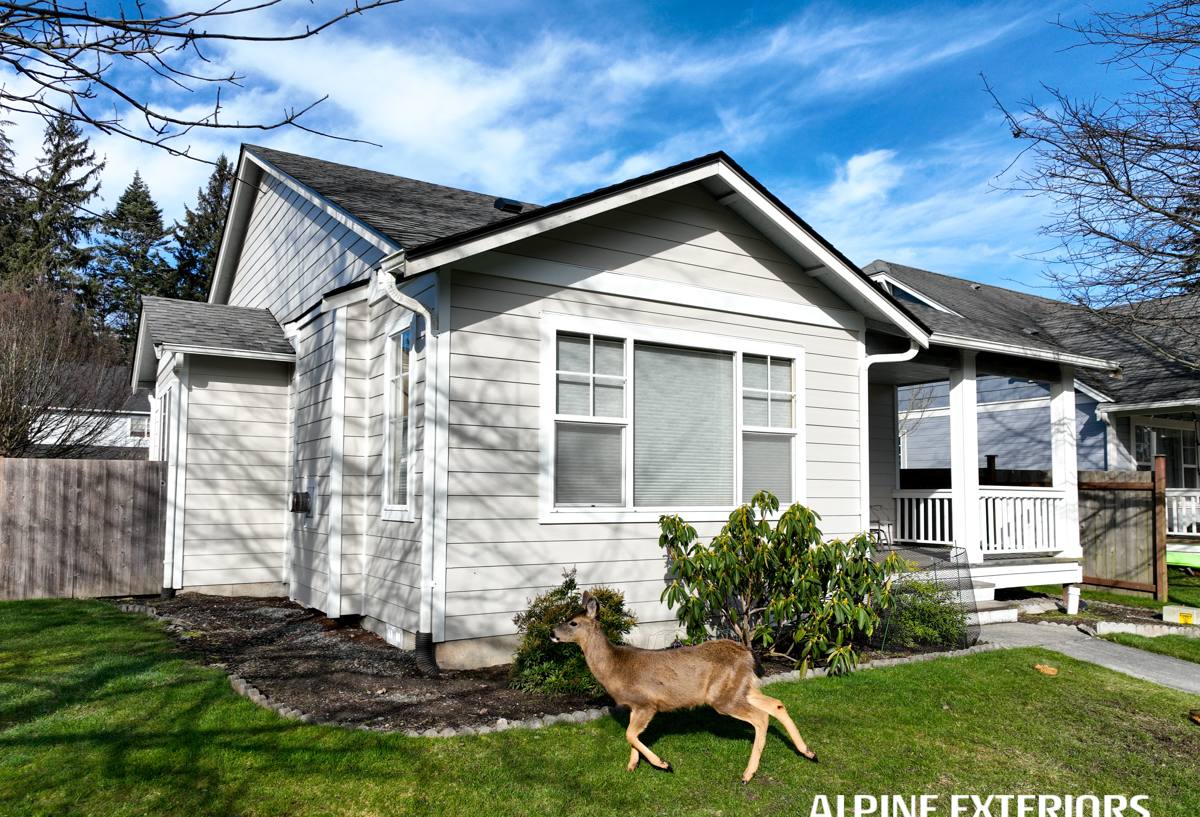
Signs a Blaine Home Needs Full Replacement, Not a Repair
Not every siding problem calls for a full tear-off. But in a coastal town like Blaine, damage tends to be more widespread than it first appears, because moisture that gets behind one section of siding usually isn't staying contained to that one section. A few signs point toward replacement rather than a patch:
- Soft, spongy, or crumbling spots when you press on the siding, especially near the bottom courses or around windows and doors
- Visible warping, cupping, or buckling across multiple sections, not just one board
- Paint or finish that's failing broadly — chalking, peeling, or blistering over large areas rather than one weathered patch
- Water stains, musty odors, or soft drywall on interior walls that back up to exterior siding
- Rot at corners, butt joints, or anywhere trim meets siding
- Visible mold or persistent moss growth on the siding itself, not just the roof
- Siding that's original to a home built more than 20-25 years ago, especially wood-based products that were never rated for this kind of sustained moisture exposure
When damage shows up in more than two or three spots, or when it's tied to a moisture problem in the wall assembly rather than one bad board, patching becomes a short-term fix that hides a bigger issue instead of solving it. That's the point where replacement is the honest recommendation, even if it costs more up front than a repair.
What Blaine's Climate Requires From a Replacement Job
Salt Air and Corrosion
Being this close to the water means Blaine homes take a steadier dose of salt-laden air than towns set further inland in Whatcom County. That salt exposure accelerates corrosion on fasteners, flashing, and any exposed metal trim, and it wears down lower-quality paints and coatings faster than a dry climate would. A replacement job needs to account for that from the first fastener, not just the visible finish.
Driving Rain
Storms coming off the water don't drop rain straight down — wind pushes it sideways into wall assemblies, window flashing, and roof-to-wall transitions. That sideways load is harder on a wall system than the same annual rainfall total would be somewhere calmer, and it's exactly the kind of moisture that finds any gap a rushed installation leaves behind. A correct replacement addresses this with drainage detailing, not just a weather-resistant surface material.
A Long Moss and Mildew Season
Mild temperatures and near-constant moisture add up to a growth season that can run most of the year on north-facing or tree-shaded walls. Any siding material with even slight surface porosity becomes a place for that growth to take hold over time, which is one more reason the material choice matters as much as the installation.
Why We Replace With James Hardie Fiber Cement Only
We install James Hardie fiber cement exclusively on replacement jobs. We won't install LP SmartSide, vinyl siding, Cemplank, Allura, primed spruce, or cedar. That's a professional standard, not a sales pitch, and it comes from what we've seen tearing old siding off houses in exactly this kind of coastal, high-moisture environment.
- Non-combustible core: Fiber cement doesn't feed a fire the way wood-based siding can, which matters for both safety and, in some cases, insurance.
- Factory-applied ColorPlus finish: The color is baked on under controlled factory conditions instead of brushed on in the field, so it resists fading, chalking, and moisture intrusion longer than site-applied paint.
- Climate-engineered HZ product lines: Hardie's HZ5 formulation is built specifically for regions with sustained moisture and freeze-thaw cycling, which describes coastal Whatcom County well.
- Dimensional stability: Fiber cement doesn't swell, cup, or warp the way engineered wood products can after repeated wet-season exposure — a real advantage on a full replacement, where the goal is decades of service, not a few good years.
- Strong transferable warranty: Hardie backs the product with one of the stronger warranty structures in the industry, provided the installation follows their spec.
Each of the products we don't install has a legitimate place in the market and homeowners who are satisfied with them elsewhere. On a full replacement in a town this exposed, though, we've made the call that we'd rather stand fully behind one system than offer a cheaper option that shifts long-term maintenance risk back onto the homeowner.
What a Correct Replacement Job Actually Involves
A siding replacement is really several connected jobs done in sequence, and skipping or rushing any one of them undermines the whole system — even if the new siding looks right the day the crew leaves.
Full Tear-Off, Not a Re-Side
We remove the existing siding down to the sheathing rather than installing over it. That's the only way to actually see what's underneath — rot, old water damage, failed house wrap, or framing issues that a re-side would just seal back up and hide for another decade.
Sheathing and Framing Inspection
Once the old siding is off, we check the sheathing and framing for soft spots, rot, or prior water damage and repair or replace anything compromised before anything new goes back on. Building on top of damaged sheathing is one of the most common ways a new siding job fails early.
Weather-Resistive Barrier and Flashing
New house wrap goes on correctly lapped, shingle-style, so water is directed down and out at every seam. Flashing at windows, doors, and any wall penetration gets installed or replaced so water has a clear path off the wall rather than a chance to pool behind it.
Rain Screen Drainage
In a climate with this much driving rain, a drainage gap behind the siding gives any moisture that does get past the exterior surface a way to drain and evaporate instead of sitting against the wall assembly. This detail matters more in Blaine than it would in a drier, more sheltered part of the county.
Correct Fastening and Joint Treatment
Hardie specifies fastener type, placement, and spacing for a reason, and corrosion-resistant fasteners matter more this close to salt air. Butt joints and trim transitions get sealed properly, since open or poorly finished joints are one of the first places moisture finds its way behind new siding.
How Our Replacement Process Works
- On-site assessment: We walk the exterior with you, identify the extent of the damage, and give you an honest read on whether repair or full replacement is the right call.
- Written estimate: You get a clear scope of work and pricing before anything is scheduled, so there are no surprises once the crew arrives.
- Tear-off and inspection: Old siding comes off, and we document and address anything we find underneath — rot, moisture damage, or framing issues — before moving forward.
- Weather barrier and flashing installation: New house wrap and flashing go in correctly at every seam and penetration.
- Hardie siding installation: Panels, lap siding, or trim go on to manufacturer spec, with attention to fastening, joints, and clearances.
- Final walkthrough: We go over the finished job with you before we consider it done.
Repair Versus Full Replacement
Homeowners often ask which option makes more sense for their situation. The honest answer depends on how widespread the damage is and what's happening behind the siding, not just what it looks like from the curb.
| Factor | Spot Repair | Full Replacement |
|---|---|---|
| Best for | Isolated damage, one or two boards, recent impact damage | Widespread wear, moisture behind the wall, siding older than 20-25 years |
| Moisture behind siding | Doesn't address it if present | Sheathing and house wrap are inspected and corrected |
| Appearance match | Can leave a visible patchwork, especially with weathered finishes | Uniform, consistent finish across the whole home |
| Long-term cost | Lower upfront, but can mean repeat repairs | Higher upfront, resets the clock on the whole exterior |
| Warranty | Limited to the repaired section | Full manufacturer warranty on the new system |
In a lot of cases the deciding factor isn't the siding itself — it's what a contractor finds once a section comes off. If the sheathing behind a "small" repair turns out to be soft or water-damaged, that's usually a sign the same thing is happening elsewhere on the house, even if it hasn't shown up on the surface yet.
What Affects the Cost of a Replacement
| Factor | Why It Matters |
|---|---|
| Square footage and number of stories | More surface area and harder-to-access walls both add labor time |
| Condition of the sheathing underneath | Rot or water damage found during tear-off adds repair work before new siding can go on |
| Trim and detail complexity | Corners, dormers, and accent trim take more time than flat, open wall sections |
| What's being removed | Some older homes have layered siding, or older materials that require careful, deliberate removal |
| Access and site conditions | Waterfront lots, steep grades, or limited access can affect staging and scaffolding needs |
We don't quote a job without walking it first, because two houses with the same square footage can have very different scopes once you account for what's actually happening behind the old siding.
Why a Crew That Already Works Blaine Matters
Siding replacement isn't a generic task that goes the same way everywhere. A crew that regularly works Blaine and the rest of the Whatcom County coastline already knows which details can't be skipped here — the rain screen gap that a drier-climate installer might treat as optional, the fastener spec that matters more this close to salt water, the flashing details that hold up against wind-driven rain instead of just vertical rainfall. That familiarity comes from repetition: seeing what fails on tear-offs in this specific environment and building that knowledge into every job that follows, rather than relearning it house by house.
It also means a shorter feedback loop if something needs attention after the job is done. A local crew is easier to reach, easier to schedule a follow-up visit with, and has a reputation in the area worth protecting — all practical reasons it's worth asking any contractor how much of their work is actually done in your specific area before you hire them.
If your siding is showing signs of age or damage and you're trying to figure out whether a repair or a full replacement makes sense, we're glad to take a look and give you a straight answer. Reach out for a free, no-pressure estimate — we'll walk the exterior with you and lay out exactly what we'd recommend and why.