 Birch Bay
 Siding in Blaine Has to Work Harder Than Siding Inland
Blaine sits right up against the water at the northern edge of Whatcom County, and that location shapes what a home's exterior has to survive. Salt-laden air moves off the bay and settles on everything it touches, including siding. Rain doesn't just fall here — it drives sideways in a stiff onshore wind and finds every gap, seam, and loose joint a lesser installation leaves behind. And because temperatures stay mild and damp for much of the year, moss and algae get a long runway to take hold on north-facing walls and shaded corners. Any siding product installed in Blaine is being tested by all three of these conditions at once, year-round, not occasionally.
That combination is why we treat siding work in this area differently than we would in a drier, inland climate. The material has to resist moisture intrusion, the installation has to be tight enough to keep wind-driven rain out, and the finish has to hold up to salt exposure and organic growth without chalking, peeling, or feeding mold. This page is about what that means specifically for fiber cement siding on a Blaine home, and how we approach the job so it actually holds up.
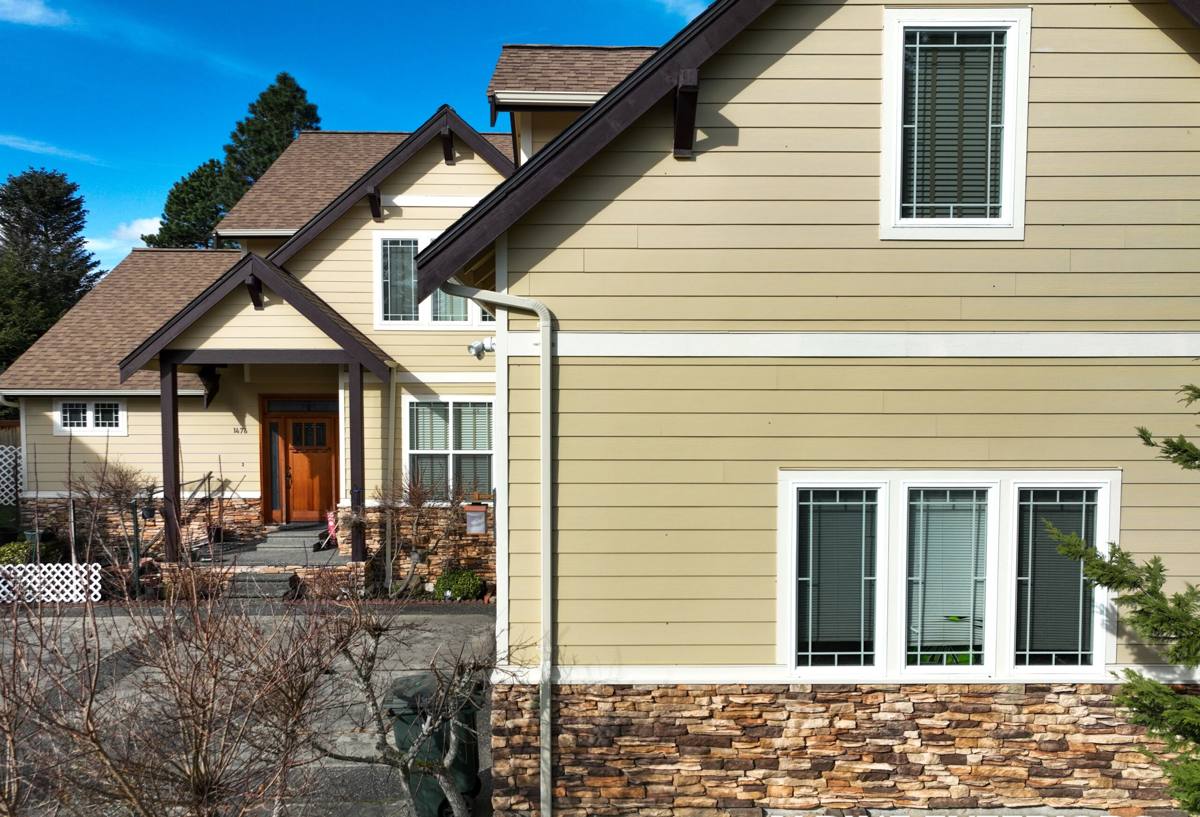
What Salt Air and Constant Moisture Do to the Wrong Siding
Not every siding material is built for a marine climate, and the failures show up in predictable ways. Wood-based products — including engineered wood siding and primed spruce — depend on an intact paint or coating layer to keep moisture out. Once that layer is compromised by a scratch, a poorly sealed cut end, or years of salt-air weathering, water gets into the substrate and the material starts to swell, delaminate, or rot from the inside. Vinyl siding doesn't rot, but it isn't rigid, and constant wind exposure combined with UV and salt can leave it brittle, warped, or rattling loose at the fasteners well before its expected service life is up. Both materials also tend to show moss and algae growth faster than a properly finished fiber cement product, because their surfaces hold moisture longer.
None of this means those products are worthless everywhere — they're simply not what we choose to warranty our work with in a place like Blaine. We install James Hardie fiber cement siding exclusively, and we'll walk through why below.
Where the Damage Shows Up First
- North and west-facing walls with less direct sun exposure to dry them out
- Butt joints and corner trim where caulking has failed or was never done correctly
- Lower courses near grade, where splashback and standing moisture concentrate
- Areas around windows and doors where flashing was skipped or installed backward
Why We Install Only James Hardie Fiber Cement
Fiber cement is a mix of cement, sand, and cellulose fibers, and it doesn't behave like wood or vinyl in wet, salty conditions. It's non-combustible, it doesn't feed mold the way wood-based products can, and it holds its shape in wind and temperature swings instead of warping. We standardized on James Hardie specifically — not fiber cement in general — because of how the product is engineered and finished at the factory, not just how it's marketed.
James Hardie's HZ5 product line is formulated for harsh climate zones, which includes the wind and moisture exposure common along the Whatcom County coastline. The ColorPlus finish is baked on in a controlled factory process rather than field-applied, which gives it more consistent coverage and better resistance to fading and moisture intrusion at the surface than a job-site paint job typically achieves. Hardie also backs its siding with a transferable limited warranty, which matters to homeowners who may sell before the siding's functional life is over.
We don't install LP SmartSide, vinyl, Cemplank, Allura, or unfinished cedar or spruce siding. Some of those are reasonable products in the right application — but for the conditions Blaine homes face, we've made a professional judgment that Hardie's engineered fiber cement, correctly installed, is the better long-term investment for our clients, and it's the only system we'll put our name behind.
What Correct Installation Actually Involves
Fiber cement siding is only as good as the installation underneath it. A quality product installed poorly will still fail in a marine climate, sometimes faster than a cheaper product installed correctly. In Blaine, we pay particular attention to the details that matter most against wind-driven rain and salt exposure.
The Details That Matter Most Here
- Proper weather-resistive barrier and drainage plane behind the siding, with correct lapping so water sheds outward instead of behind the cladding
- Rigid flashing at every window, door, and roofline intersection — not caulk used as a substitute for flashing
- Correct fastener placement and spacing per Hardie's published installation instructions, which affects both wind resistance and warranty validity
- A minimum clearance gap at grade and at roof lines to prevent moisture wicking
- Factory-cut and factory-primed edges used wherever possible, with any field cuts properly sealed
- Correctly caulked and back-primed joints, using sealants rated for the exposure the wall actually gets
Every one of these steps is something a rushed or inexperienced crew can skip without it being obvious for a year or two. In a coastal environment, the consequences of skipping them show up sooner than they would inland — sometimes within a single wet season.
Choosing the Right Hardie Product and Finish for a Blaine Home
James Hardie makes several siding profiles, and the right one depends on the home's style and exposure, not just personal preference. HardiePlank lap siding is the most common choice for traditional home exteriors and comes in several exposure widths and textures, including smooth and cedar-grain finishes. HardieShingle gives a shingle-style look for homes where that's the architectural fit, and HardiePanel works well for board-and-batten or modern vertical designs. For trim, fascia, and soffit work, matching Hardie trim products keeps the whole system consistent in both appearance and moisture performance — mixing in a different trim material creates a weak point where two systems meet.
Color matters more here than it might elsewhere, too. ColorPlus finishes are formulated to resist fading from UV and salt exposure, and darker colors on sun-exposed walls will always show wear differently than lighter colors on shaded, damp walls. We talk through both the architectural fit and the practical side of color choice — including how a given color and texture will actually perform against moss and mildew on the shadier sides of the house — before anything gets ordered.
Our Process, Start to Finish
The process is the same whether the home needs a full re-side or a partial replacement after storm or moisture damage, just with a different scope at the start.
1. Assessment
We inspect the existing siding, sheathing, and any visible water damage, paying close attention to north-facing walls, window and door flashing, and areas near grade — the places that show problems first in this climate.
2. Scope and Product Selection
We walk through Hardie product lines, textures, and colors that fit the home and its exposure, and put together a clear, itemized scope so there are no surprises once work starts.
3. Tear-Off and Substrate Repair
Old siding comes off, and any damaged sheathing or framing found underneath gets repaired before anything new goes on. Installing new siding over compromised substrate just hides a problem instead of fixing it.
4. Weather Barrier and Flashing
A correctly lapped drainage plane and rigid flashing go in at every penetration before a single piece of siding is hung. This step is the one most often shortcut by less careful crews, and it's the one that determines whether the house stays dry.
5. Installation
Siding, trim, and accessories go up to Hardie's published fastening and clearance specifications, keeping the whole system within warranty requirements.
6. Final Walkthrough
We review the finished work with the homeowner, check caulking and joints, and make sure everything meets the standard we'd want on our own home.
Cost Factors for Fiber Cement Siding in Blaine
Every home is different, and we don't quote a job without seeing it, but the factors that move the price are consistent. This table gives an honest sense of what drives cost up or down on a fiber cement project in this area.
| Factor | Why It Affects Cost |
|---|---|
| Extent of substrate repair | Rotted sheathing or framing found during tear-off, common on older homes with wood-based siding, adds material and labor |
| Home size and wall complexity | More corners, dormers, and roof intersections mean more flashing, cutting, and labor time |
| Siding profile and texture | Shingle-style and vertical panel profiles generally run higher than standard lap siding due to installation time |
| Access and exposure | Wind-exposed or multi-story walls near the water can require additional staging and weather protection during install |
| Trim and accessory scope | Full trim, fascia, and soffit replacement in matching Hardie product adds cost but avoids mismatched material weak points |
| Color and finish selection | Custom ColorPlus colors versus standard offerings can affect lead time and material pricing |
Why a Crew That Already Works in Blaine Matters
Coastal siding work isn't the same trade as siding work forty miles inland, even within the same county. A crew that regularly works Blaine and the Birch Bay area already knows how wind-driven rain behaves against these homes, how quickly moss establishes on shaded walls here, and how much clearance and drainage detail actually holds up against sustained salt exposure — not just what a manual says in general terms. That experience shows up in small decisions on site: where extra flashing gets added even though it's not strictly required, which joints get extra attention, and which corners of a home need the most conservative moisture detailing. A crew unfamiliar with this specific coastal exposure is more likely to treat every wall the same way a drier inland job would be treated, and in Blaine that gap shows up as callbacks a few years down the road.
Maintaining Fiber Cement Siding in a Moss-Prone, Salt-Air Climate
Fiber cement is low-maintenance compared to wood or vinyl, but "low-maintenance" doesn't mean "no maintenance," especially here. A little routine attention keeps the siding performing the way it's designed to for decades.
- Rinse siding annually, particularly north-facing and shaded walls, to slow moss and algae buildup before it takes hold
- Inspect caulked joints around windows, doors, and trim every year or two and re-caulk any that have cracked or pulled away
- Trim back vegetation and landscaping that keeps walls shaded and damp longer than necessary
- Check gutters and downspouts before the wet season to keep water from sheeting down siding it wasn't designed to constantly handle
- Watch for any soft spots, staining, or bubbling at the base of walls near grade, which can signal moisture getting behind the cladding
Catching small issues early — a failed caulk joint, a clogged gutter dumping water onto one section of wall — is almost always cheaper and simpler than dealing with what happens if that moisture gets behind the siding and sits there through a wet Whatcom County winter.
Get a Straight Answer for Your Home
If you're weighing siding options for a home in Blaine or elsewhere around Birch Bay, we're happy to take a look and give you a straightforward, no-pressure estimate — including an honest read on what your current siding's condition tells us about what's happening underneath it. Use the form below to get started.