 Birch Bay
 Roofing in Blaine's Marine Climate
Blaine sits close enough to the water that homes here take a different kind of weathering than roofs even a few miles inland. Salt-laden air off the Strait of Georgia and Semiahmoo Bay works on metal fasteners and flashing year-round. Driving rain off Boundary Bay pushes water sideways under wind-driven storms, not just straight down. And the long, damp shoulder seasons that stretch from fall through spring give moss and algae months at a time to gain a foothold on any shingle surface that stays shaded or damp. None of this means an asphalt shingle roof is a bad choice for Blaine — it's still the most practical, cost-effective option for most homes here. It does mean the installation details matter more in Whatcom County than they would in a drier climate, and cutting corners shows up faster.
What "the details matter more" actually means
In a dry climate, a mediocre nailing pattern or a skipped step of ice-and-water barrier might go unnoticed for a decade. In Blaine, marginal work tends to announce itself within a few wet seasons — through granule loss around valleys, soft decking at eaves, or moss creeping up from the north-facing slope. A correctly built roof in this area is built to shed wind-driven rain, resist salt corrosion at every metal point, and dry out fast between storms instead of holding moisture against the shingle mat.
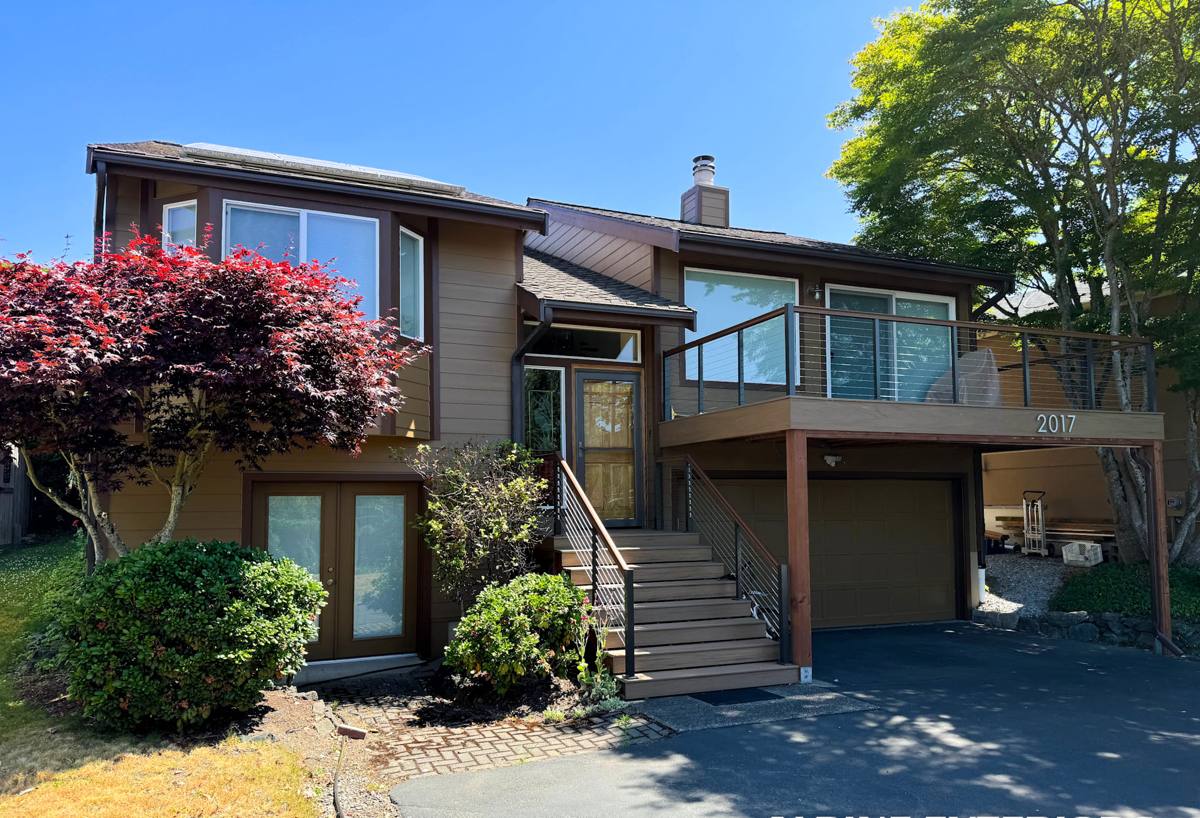
Signs a Blaine Roof Needs Attention
Asphalt shingle roofs don't usually fail all at once — they show warning signs first. Homeowners near Birch Bay and Blaine should watch for these in particular, since the local climate accelerates certain problems over others.
- Moss or dark streaking concentrated on the north or shaded slopes, especially near tree cover
- Granules collecting in gutters or downspouts after normal rain (not just after a storm)
- Curling, cupping, or lifted shingle edges, particularly on slopes that catch the prevailing wind
- Rust staining or soft spots around flashing at chimneys, vents, and skylights
- Daylight or water stains visible in the attic near valleys or the roof-to-wall intersections
- Shingles missing or torn loose after a wind event off the water
- Ceiling stains that appear only during driving, wind-driven rain rather than steady rain
Any one of these on its own might just mean a repair. Several together, or a roof over 15-18 years old, usually mean it's time for a full inspection before a small problem becomes a decking or interior repair.
What a Correct Asphalt Shingle Job Involves
An asphalt shingle roof is a system, not a single product. The shingle itself gets the attention, but in a marine climate like Blaine's, the components underneath and around it do most of the work of keeping a house dry.
Underlayment and water barrier
Synthetic underlayment across the whole deck is the baseline, but the areas most exposed to wind-driven rain — eaves, valleys, and low-slope transitions — need a self-adhered ice-and-water barrier underneath. This isn't an upsell in Blaine's climate; it's the difference between water running off the roof and water finding its way sideways under the shingle mat during a storm blowing in off the bay.
Flashing and fasteners
Salt air corrodes fasteners and flashing faster here than inland, which is why metal choice matters. Flashing and nails should be corrosion-resistant grades suited to coastal exposure, not the cheapest stock option. Every penetration — chimney, plumbing vent, skylight — is a place where a poor flashing detail becomes a leak years before the shingles themselves wear out.
Ventilation
Balanced intake and exhaust ventilation keeps the attic close to outdoor temperature and lets moisture escape instead of condensing under the deck. In a damp climate like Whatcom County's, poor ventilation shows up as premature shingle aging from underneath, plus a higher risk of trapped moisture feeding rot in the decking.
Nailing pattern and wind rating
Shingles are only as wind-resistant as their installation. Correct nail placement (not staples, not overdriven or underdriven nails) and following the manufacturer's pattern is what actually delivers the wind rating printed on the shingle wrapper — it's not automatic just because the product itself carries a high rating.
Our Process for Blaine Roofs
- On-site inspection. We walk the roof and attic, not just look from the ground, to check decking condition, ventilation, flashing points, and moss or moisture patterns specific to the home's orientation.
- Written scope and estimate. You get a clear breakdown of tear-off, decking repair (if needed), underlayment plan, flashing, ventilation, and shingle selection — no vague allowances.
- Tear-off and deck check. Old roofing comes off down to the deck so we can actually inspect it, rather than layering over hidden problems.
- Water barrier and underlayment installation. Ice-and-water barrier at eaves, valleys, and vulnerable transitions, synthetic underlayment across the field.
- Flashing and ventilation work. Corrosion-resistant flashing at every penetration, intake and exhaust ventilation balanced for the attic's actual size.
- Shingle installation. Correct nailing pattern and exposure per manufacturer spec, with extra attention to valleys, hips, and ridge lines.
- Final walkthrough. We review the finished roof and cleanup with you before calling the job done.
Choosing a Shingle for This Climate
Not every asphalt shingle tier is worth the same premium in a coastal climate. The table below is a general guide to how the common tiers hold up under Blaine's conditions — actual performance still depends heavily on correct installation.
| Shingle Tier | Typical Lifespan | How It Handles Blaine's Climate |
|---|---|---|
| 3-tab (economy) | 15-20 years | Lower wind resistance and less algae protection; moss and streaking show sooner on shaded slopes |
| Architectural / laminate | 25-30 years | Heavier mat and better wind rating; most common choice for this area's exposure |
| Algae-resistant (AR) laminate | 25-30 years | Copper or zinc granules slow algae and moss growth — worth the small upcharge given the long damp season here |
| Premium / designer laminate | 30+ years | Best wind and impact ratings; makes sense on homes with more direct wind exposure off the water |
For most Blaine homes, an algae-resistant architectural laminate is the practical middle ground — it costs more upfront than a basic 3-tab but meaningfully slows the moss and streaking that this climate encourages, which saves on cleaning and premature replacement down the road.
Cost Factors on a Blaine Roof
Every roof prices out differently based on size, pitch, and condition, so broad ranges only go so far. That said, these are the factors that move the price up or down on jobs in this area, in roughly the order they matter.
| Factor | Why It Matters Here |
|---|---|
| Roof size and number of stories | More material and more labor time; steeper access adds safety and staging cost |
| Deck condition | Rotten or soft decking found at tear-off requires repair before shingles go on — common on older homes with hidden moisture history |
| Number of valleys, penetrations, and roof planes | Each one needs flashing work; complex rooflines take longer and use more flashing material |
| Shingle tier chosen | Basic 3-tab vs. algae-resistant architectural vs. premium laminate spans a real price range |
| Ventilation upgrades needed | Adding proper intake/exhaust venting where none exists is common on older Whatcom County homes |
| Access and site conditions | Steep pitch, tree cover, or tight lot access affects staging and cleanup time |
Moss and Algae: Ongoing Care
Even a well-installed roof with algae-resistant shingles benefits from basic upkeep in this climate. A few habits go a long way toward getting the full service life out of an asphalt shingle roof near Birch Bay and Blaine:
- Keep overhanging branches trimmed back so shaded slopes get more light and air movement
- Clear gutters and valleys of debris before the fall rains set in
- Have moss physically removed (not just power-washed, which can strip granules) if it establishes on shaded slopes
- Schedule a roof check every couple of years, or after any major windstorm off the water
- Watch attic ventilation for signs of blockage — insulation shifted over vents, pests nesting in intake baffles
Why a Local Crew Matters
Roofing crews that don't regularly work this stretch of Whatcom County tend to treat Blaine like any other job — same underlayment plan, same flashing grade, same shingle tier they'd use inland. A crew that already works this area knows which slopes on a typical Blaine lot take the worst of the wind off the bay, which older homes in the area tend to have inadequate attic ventilation, and where moss problems actually originate rather than just where they show up. That local pattern recognition shows up in fewer callbacks and a roof that's built for the conditions it actually faces, not generic conditions.
If you're seeing early warning signs, planning ahead for an aging roof, or just want an honest opinion on what your Blaine home actually needs, we're glad to take a look. Reach out for a free, no-pressure estimate using the form below.