 Birch Bay
 Blaine's Climate Puts Real Demands on a Siding Job
Blaine sits right on the water at the top of Whatcom County, a few minutes north of Birch Bay, and that location shapes what a siding system has to survive here. Homes close to the shoreline take on salt-laden air that speeds up corrosion of fasteners and trim metal, driving rain off the Strait pushes moisture sideways into wall assemblies during winter storms, and the long gray stretch from fall through spring keeps north-facing and shaded walls damp enough for moss and algae to take hold and stay there for months. None of this is unique to one street or one subdivision in Blaine — it's the baseline condition for any home in this stretch of the county, whether it's an older place near the water or newer construction set back toward the highway.
Siding installation done right in this environment isn't just about picking a material and nailing it up. It's about detailing every seam, transition, and penetration so that the wall assembly behind the siding stays dry even when the siding itself gets soaked repeatedly over a wet Whatcom County winter. Get that wrong and the siding can look fine from the curb for a few years while rot builds behind it unnoticed.
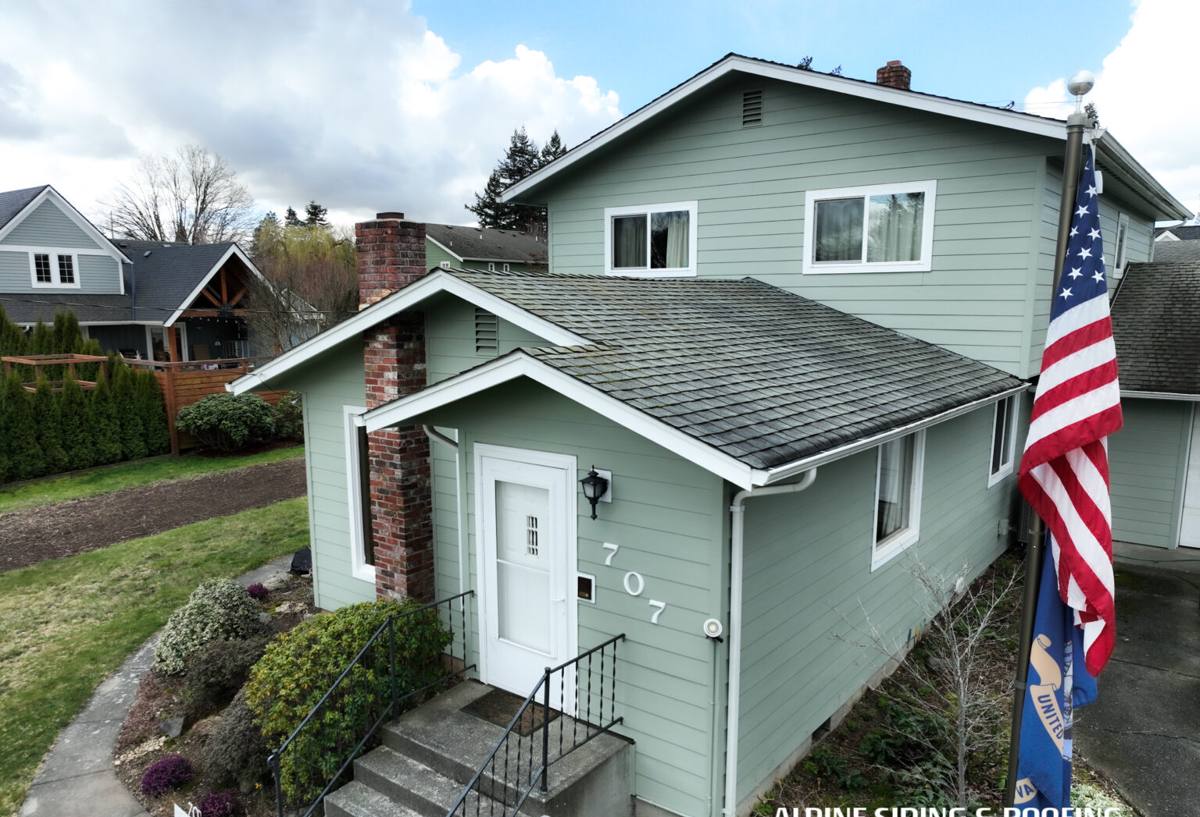
What a Correct Installation Actually Involves
A siding job is a system, not a single product. The visible boards matter, but so does everything behind and around them. On a coastal-influenced job like most of what we see in Blaine, we pay particular attention to:
- A continuous water-resistive barrier (weather-resistant house wrap or building paper) installed shingle-style so water sheds outward, not into the wall
- Properly flashed windows, doors, and any wall penetrations — this is where the majority of siding-related water intrusion actually starts
- Correct fastener type and spacing for the specific siding product, since under- or over-driven fasteners are one of the most common causes of early siding failure
- Rainscreen or drainage gap detailing where conditions call for it, giving incidental moisture a path to drain and dry instead of sitting against the sheathing
- Caulking and sealant only where the manufacturer specifies it — sealing every joint on a lap siding installation traps moisture instead of releasing it
- Proper clearance at grade, decks, and roof-to-wall intersections so splashback and runoff don't sit against the bottom course
Any competent crew can hang siding boards in a straight line. The difference between a job that looks good for two years and one that performs for decades is almost entirely in these details, and they take longer to do correctly than to do quickly.
Moss and Algae: A Whatcom County-Specific Problem
Because Blaine and the rest of Birch Bay's local area go long stretches without direct sun on shaded and north-facing walls, siding here deals with more sustained moisture exposure than siding in drier parts of the state. That means the surface finish matters as much as the substrate. A factory finish engineered to resist mildew and hold up under repeated wet-dry cycling is worth more here than in a dry inland climate, where a lower-grade finish might never get tested the same way.
Why We Only Install James Hardie Fiber Cement
We standardized on James Hardie fiber cement siding for every installation we do, including in Blaine, and we don't install vinyl, LP SmartSide, Cemplank, Allura, primed spruce, or cedar. That's not a marketing position — it's a decision built around what we've seen hold up in this climate over time and what we're willing to warranty our labor against.
Fiber cement is non-combustible, which matters more each year as wildfire smoke and ember exposure become a bigger part of Pacific Northwest summers, even in a coastal county like Whatcom. It doesn't feed on moisture the way wood-based products can, which is a meaningful advantage in a climate that stays wet as much of the year as this one does. And James Hardie's ColorPlus factory-applied finish is baked on under controlled conditions rather than field-applied, which gives it more consistent coverage and better resistance to fading and moisture damage than a coat of paint applied on-site.
James Hardie also builds climate-specific HZ product lines — HZ5 for regions with more freeze-thaw exposure and moisture cycling, which fits Whatcom County's winters better than a generic national product. Paired with a strong transferable warranty, that combination is why we put it on homes instead of the alternatives.
What We Turn Down, and Why
Vinyl siding is inexpensive and low-maintenance, but it can warp or distort under prolonged temperature swings and sun exposure, and it isn't designed to be repainted, which limits a homeowner's options down the road. LP SmartSide and other engineered wood products perform reasonably well when installation and maintenance are followed exactly, but they're more sensitive to moisture intrusion at cut edges and seams than fiber cement, and that sensitivity is a bigger liability in a climate this wet. Primed spruce and cedar are beautiful materials, but they require an ongoing maintenance commitment — refinishing on a real schedule — that most homeowners underestimate until the siding starts showing it. We're not saying any of these products are junk; we're saying that for the way homes get soaked and stay damp in Blaine and the surrounding area, we don't think they're the right long-term bet, and we'd rather install one product well than offer five and hope the homeowner picked the right one.
How Our Process Works on a Blaine Project
1. On-Site Assessment
We walk the home in person — every elevation, not just the side that's visibly failing. In a wet coastal climate, damage on a shaded north wall often lags behind the more obvious south or west wall problems, so we check all four sides, the water-resistive barrier condition where accessible, trim, and any areas where past leaks may have gone unaddressed.
2. Scope and Product Selection
We walk through which James Hardie profile and HZ product line fits the home — lap siding, panel, shingle-style, or a mix — along with ColorPlus color options, and we explain the reasoning rather than just handing over a swatch book.
3. Tear-Off and Sheathing Check
Old siding comes off and we inspect the sheathing underneath before anything new goes up. If there's rot or water damage from a prior installation's flashing mistakes, that gets addressed first — covering it over with new siding just resets the clock on the same problem.
4. Water Management Installed First
House wrap, flashing, and drainage detailing go in before a single piece of visible siding is installed. This is the step that determines whether the job performs in year ten, not just year one.
5. Siding Installation to Manufacturer Spec
Fastener pattern, spacing, and clearances follow James Hardie's published installation instructions, which is also what keeps the manufacturer's product warranty intact.
6. Final Walkthrough
We go over the finished job with the homeowner, point out anything they should keep an eye on, and answer questions about care going forward.
Comparing Siding Approaches for a Blaine Home
| Factor | James Hardie Fiber Cement | Vinyl | Wood / Engineered Wood |
|---|---|---|---|
| Moisture behavior in wet coastal climate | Strong — doesn't absorb or feed on moisture | Doesn't absorb, but seams and gaps can trap it | More sensitive, especially at cut edges |
| Finish durability | Factory-baked ColorPlus finish | Color molded through, but can fade and chalk | Field-applied finish, needs recoating over time |
| Fire resistance | Non-combustible | Can soften or melt under heat | Combustible |
| Maintenance commitment | Periodic cleaning and inspection | Low, but limited repair/repaint options | Regular refinishing on a real schedule |
| Typical lifespan when properly installed | Multiple decades | Multiple decades, but appearance degrades sooner | Shorter without diligent upkeep |
What Drives Cost on a Siding Installation
| Cost Factor | Why It Matters in Blaine |
|---|---|
| Home size and number of stories | More square footage and elevation change means more material and labor time |
| Existing siding removal and disposal | Tear-off of old material adds labor beyond a straightforward install |
| Sheathing repair needs | Coastal moisture exposure sometimes means hidden rot that must be fixed before new siding goes on |
| Trim and detail complexity | Corners, window returns, and roof-to-wall transitions all add flashing and cutting time |
| Product profile and color selection | Different Hardie profiles and ColorPlus colors carry different material costs |
We give exact numbers only after seeing the home in person — anyone quoting a firm price without an on-site look is guessing, and that guess tends to change once the tear-off starts.
Signs a Blaine Home May Need New Siding Soon
- Persistent moss or algae growth that returns within weeks of cleaning, especially on shaded walls
- Soft spots, bubbling, or visible warping anywhere on the siding surface
- Paint or finish that's peeling or chalking heavily rather than just fading evenly
- Gaps opening up at seams, corners, or trim joints
- Rising energy bills that aren't explained by anything else, which can point to a compromised wall assembly
- Visible daylight or drafts at outlets and switches on exterior walls
Any one of these on its own isn't necessarily an emergency, but a combination of two or more is worth having a professional look at before the next wet season.
Why a Crew That Already Works Blaine and Birch Bay Matters
Installing siding correctly in this specific stretch of Whatcom County means understanding how far the salt air reaches inland, which wall orientations hold moisture the longest through a Pacific Northwest winter, and how long the moss season actually runs here compared to a drier part of the state. A crew that works this area regularly isn't guessing at those answers — they've seen the same wall assemblies fail in the same predictable ways and adjusted their detailing accordingly. That local pattern recognition is worth more than a lower bid from a crew that mostly works somewhere drier and treats a Blaine job the same way they'd treat one fifty miles inland.
Ready to Talk About Your Siding
If your Blaine home's siding is showing its age, or you're planning ahead of a remodel, we're happy to take a look and walk you through what we'd recommend and why. Fill out the form below for a free, no-pressure estimate — there's no obligation, just a straight assessment of where things stand.