 Birch Bay
 Metal Roofing Built for Blaine's Waterfront Climate
Blaine sits at the northern edge of Whatcom County, close enough to Semiahmoo Bay and Drayton Harbor that salt-laden air is part of daily life for most homes in the area, not just the ones with a water view. That exposure, paired with storm systems that come ashore off the water with real force, makes it one of the more demanding places in the county to keep a roof performing the way it's supposed to. It's also exactly the kind of climate where metal roofing earns its reputation — when it's installed correctly. When it isn't, the same qualities that make metal roofing attractive can turn into expensive problems within a few years.
This page covers what a correct metal roof install looks like for a home in and around Blaine, the details that matter given the salt air, driving rain, and long moss season this stretch of coastline sees, and how we run the job from the first inspection to final cleanup. We already work Blaine regularly on the siding and exterior side, and that familiarity with how this specific stretch of coastline treats a house carries directly into how we approach a roof here.
Why Metal Roofing Fits Blaine's Conditions
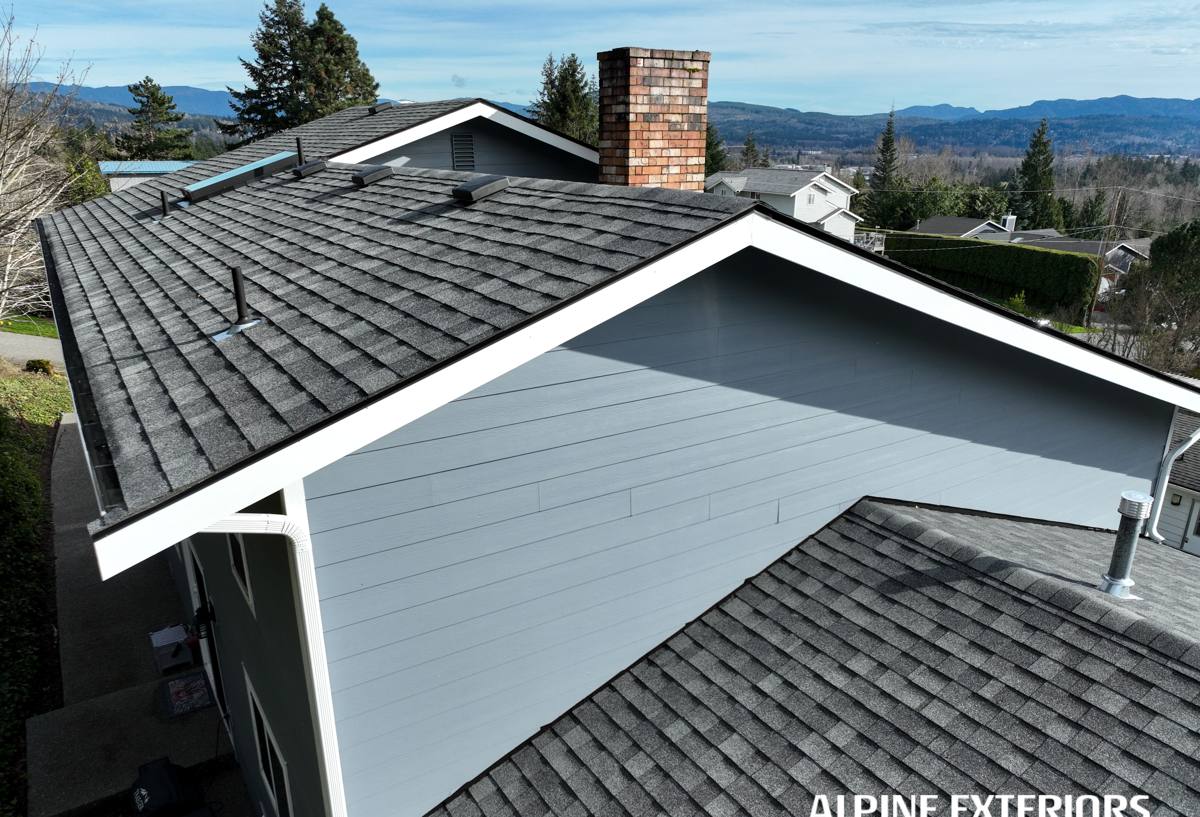
Metal roofing has a real, practical advantage in a climate like Blaine's: a correctly installed standing seam roof has almost no horizontal surface for water, salt spray, or moss to sit and work on. Water sheds fast off a smooth panel, there are no shingle tabs for wind-driven rain to lift or work underneath, and the surface doesn't hold enough moisture for moss to establish the way it does on more porous roofing materials. For homes that catch direct wind and salt off the water, or that sit under tree cover on the shaded side of a lot, that combination of properties solves problems that other roofing materials in this area run into repeatedly.
None of that makes metal roofing foolproof. The panels themselves are only part of the system — the coating, the fastening method, the flashing at every penetration and edge, and the underlayment beneath the panels all have to be right for the roof to actually deliver the 40-plus-year lifespan metal roofing is known for. A metal roof with a weak flashing detail at a chimney or wall transition can leak just as badly as any other roof, and correcting a mistake under standing seam panels later is more involved than lifting and replacing a shingle.
What Blaine's Weather Specifically Demands
- A real coating system, not just painted steel: Salt air breaks down thin or low-grade paint finishes faster than an inland climate would, so the coating on the panel matters as much as the metal underneath it.
- Corrosion-resistant fasteners and flashing: Every exposed fastener and piece of flashing metal is a potential weak point where dissimilar or lower-grade metals corrode faster this close to salt water.
- Wind-rated fastening and seam design: Storms coming off the water push rain sideways and load panels with real wind pressure, so seam type and fastening spacing need to match that exposure, not a generic inland spec.
- Proper underlayment as a backup barrier: Even a well-installed metal roof benefits from a synthetic or self-adhered underlayment underneath, since it's the last line of defense if wind ever drives water past a seam or penetration.
What a Correct Metal Roof Install Involves
A metal roof is a system, not a single product, and each layer of that system is doing a specific job. Skipping or shortcutting any one of them is usually where the failures we get called out to repair start.
Deck Inspection and Prep
Whether it's a tear-off or a re-roof over an existing deck, the decking itself needs to be sound before panels go on. Soft spots, rot, or hidden moisture damage from a prior roof's slow leaks need to be found and repaired first — sealing a damaged deck under new metal panels just hides the problem for a few more years instead of solving it.
Underlayment
A synthetic or self-adhered underlayment goes down across the full deck before panels are installed, giving the roof a secondary water barrier if wind-driven rain ever gets past a seam or fastener. On lower-slope sections, valleys, and around penetrations, a higher-grade ice-and-water membrane adds protection at the spots most likely to see water intrusion.
Panel Type and Fastening Method
Standing seam panels use concealed clips rather than exposed fasteners punched through the panel face, which removes the most common long-term leak point on lower-grade metal roofing. The seams themselves need to be mechanically or hand-crimped to the panel manufacturer's specification, with clip spacing set for the wind exposure of the specific roof, not a one-size-fits-all pattern.
Flashing at Valleys, Walls, and Penetrations
Nearly every metal roof leak we've been called to diagnose traces back to flashing, not the panels themselves. Valleys, chimney and vent penetrations, and the transitions where a roofline meets a wall all need flashing that's custom-formed to fit and properly integrated with both the panel seams and the underlayment beneath them, not caulked into place as an afterthought.
Coating and Finish
The paint or coating system on a metal panel is what actually stands up to years of salt air and UV exposure. A quality PVDF (Kynar-type) finish resists chalking, fading, and salt-driven corrosion far longer than a basic polyester coating, which matters more here than it would on a roof set further inland.
Comparing Metal Roofing Options for a Blaine Home
| Panel Type | Fastening | Fit for Blaine Conditions |
|---|---|---|
| Standing seam | Concealed clips, no exposed fasteners | Best fit for direct wind and salt exposure; the most leak-resistant option over time |
| Exposed-fastener panel | Fasteners punched through panel face | Lower upfront cost, but fastener gaskets degrade faster in salt air and need periodic inspection |
| Stone-coated steel | Interlocking panels resembling shingle or tile profiles | Good wind and impact resistance; worth considering where a shingle-style look is preferred |
For most homes in Blaine, standing seam is the practical choice given the direct wind and salt exposure this area sees. Exposed-fastener panels can still make sense on secondary structures like detached garages or shops where upfront cost matters more and the roof is easier to inspect and maintain over time.
Cost Factors Worth Understanding
Metal roofing bids can vary widely between contractors for the same roof, and the gap is almost always real differences in scope rather than one bid simply being padded. Knowing what drives the cost makes it much easier to compare estimates that look nothing alike on paper.
| Factor | What It Affects |
|---|---|
| Panel profile and gauge | Wind resistance, denting resistance, and expected lifespan of the roof |
| Coating grade (PVDF vs. polyester) | How well the finish resists fading, chalking, and salt-driven corrosion over time |
| Fastening method | Long-term leak risk and how much maintenance the roof needs going forward |
| Underlayment grade | Backup protection if water ever gets past a seam or penetration |
| Flashing scope | How thoroughly valleys, walls, and penetrations are addressed |
| Roof complexity and access | Labor time, staging, and the amount of custom flashing work required |
A written estimate that itemizes these components separately tells you far more than a single lump-sum number. It's worth asking any contractor to walk through exactly what panel profile, gauge, and coating are included before comparing two prices side by side.
How Our Process Works
A metal roof is a long-term investment on your home, and we run the process so you know what's happening and why at every stage, not just at the beginning and the end.
- In-person inspection: We walk the roof and attic ourselves rather than estimating from a photo, and check the deck, existing flashing, and ventilation as part of that visit.
- Written estimate: You get an itemized bid covering panel type, gauge, coating, underlayment, flashing scope, and cleanup, so you know exactly what's included.
- Scheduling around weather: We build reasonable flexibility into the timeline, since wet-season delays are a normal part of working on this stretch of coastline, not an excuse we reach for after the fact.
- Tear-off and deck repair: Old roofing comes off completely where needed, and any deck damage we find gets repaired before panels go on.
- Underlayment, flashing, and panel installation: Each layer goes down to manufacturer specification, with extra time spent on custom flashing at valleys, penetrations, and wall transitions.
- Final walkthrough and cleanup: We review the finished roof with you in person and do a full site sweep before we call the job done.
Why Hiring a Crew That Already Works Blaine Matters
A crew that's already spent time on roofs in and around Blaine has seen firsthand how salt air works on unprotected fasteners and lower-grade coatings, how wind-driven rain off the water finds its way through a poorly detailed flashing job, and which roof orientations hold moss longest through the county's wet stretches. That's practical knowledge earned from working this exact coastline, and it shows up in small decisions throughout a job that a crew unfamiliar with Blaine's specific exposure might not think to make.
It also matters once the job is finished. A workmanship warranty is only as good as the company standing behind it years down the road, and a contractor with an established, ongoing presence in this part of Whatcom County is one you can actually reach if a question comes up later, not a name that worked the area for one job and moved on.
A Practical Checklist Before You Choose a Metal Roofing Contractor
- Do they specify panel profile, gauge, and coating type in writing, not just "metal roof"?
- Is the fastening method (concealed clip vs. exposed fastener) clearly stated in the bid?
- Is flashing work at valleys, walls, and penetrations explicitly written into the estimate?
- Do they carry current WA contractor licensing, liability insurance, and workers' compensation?
- Can they point to recent, real metal roofing work in or near Blaine?
- Does the bid separate the manufacturer's material warranty from the contractor's own workmanship warranty?
Signs a Blaine Roof May Be Ready for Metal
Homeowners usually start looking at metal roofing after dealing with the same problems repeatedly on a shingle or shake roof, rather than as a first choice out of the gate. A few signs point specifically toward metal being worth a serious look.
- Repeated moss buildup or dark streaking on shaded roof planes despite regular cleaning
- A shingle or shake roof that's needed more than one repair for the same recurring leak
- A home with direct, unobstructed wind exposure off the water where wind-driven rain is a recurring concern
- An interest in a roof that's meant to outlast one or two shingle replacement cycles rather than needing to be redone again in 20-25 years
None of this means metal roofing is the right call for every home in Blaine — a well-built shingle or shake roof still performs fine on plenty of properties here. It's worth an honest conversation about your specific roof, its exposure, and what you're trying to solve before deciding either way.
If you'd like an honest, no-pressure look at your Blaine roof and a written estimate you can compare against anything else you've received, we're glad to come take a look. Use the form below to request a free estimate.