 Birch Bay
 Windows in Sandy Point Face a Different Set of Problems
Sandy Point sits close enough to the water that its homes take a steady diet of salt-laden air, wind-driven rain, and long stretches of damp, low-light weather. That combination is harder on windows than most homeowners realize. It's not one dramatic storm that causes trouble — it's the slow, cumulative effect of salt settling into hardware and finishes, moisture working into small gaps year after year, and moss and algae holding dampness against trim and sills long after the rain stops. A window that would last three decades a few miles inland can show serious wear in half that time here if it wasn't built or installed with this exposure in mind.
We work on homes throughout Birch Bay and the Sandy Point area regularly, so we're not guessing at what holds up. We've seen which frame materials handle salt exposure gracefully, which hardware corrodes early, and which installation shortcuts turn into leaks a few winters later. Custom windows done right in this neighborhood account for all of that from the start — not as an upgrade, but as the baseline.
What "Custom" Actually Means Here
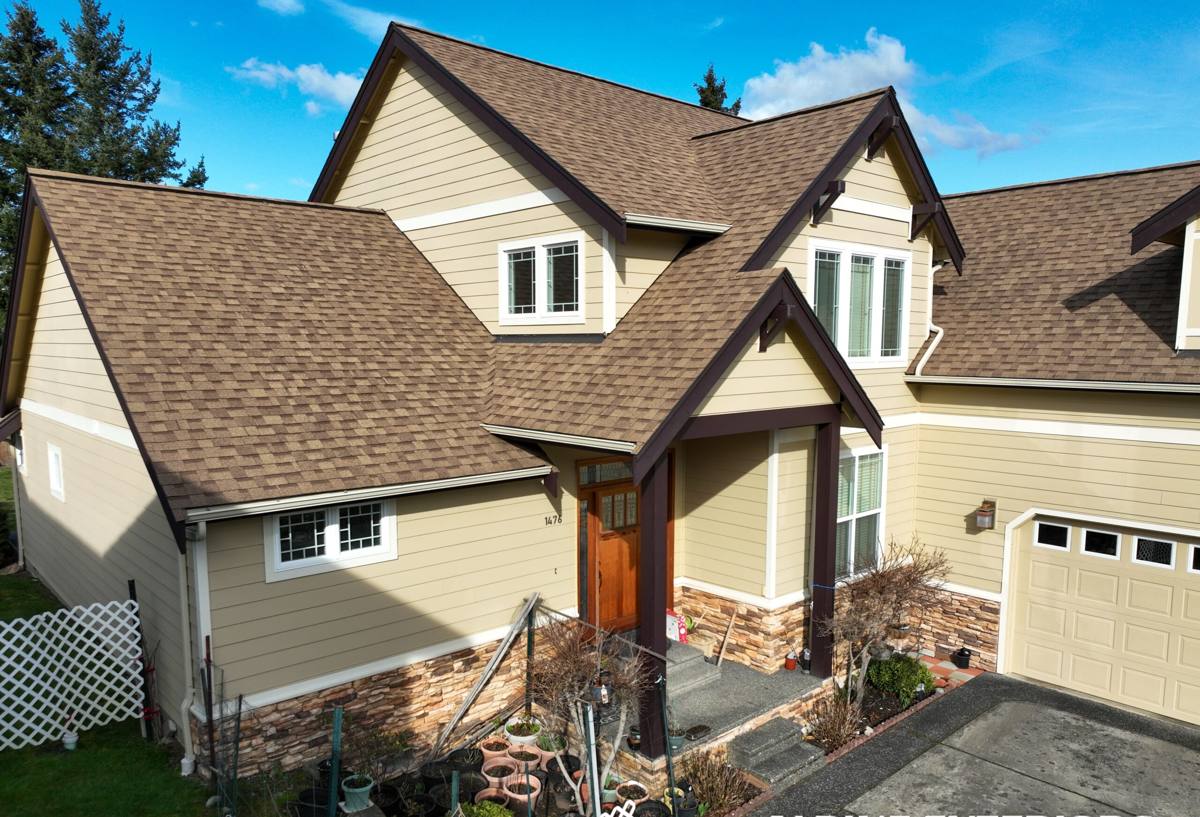
Custom windows aren't just about non-standard shapes or oversized openings, though Sandy Point has plenty of both — homes built to take advantage of water views often have larger picture windows, unusual widths, or openings that don't match anything on a standard size chart. Custom, in the way we use it, means the window is specified and built to fit your actual opening, your home's exposure, and how you use that room, rather than picking the closest stock size and making it work.
That matters more here than in a lot of places, because an ill-fitting window in a salt-air, high-rain environment doesn't just look wrong — it's a maintenance and moisture problem waiting to happen. Gaps that would be a minor draft inland become an entry point for wind-driven rain here.
Common reasons homeowners in this area go custom
- Replacing older wood or aluminum windows that were never a great match for salt exposure
- Enlarging or reshaping an opening to bring in more natural light during Whatcom County's darker months
- Matching window style and trim across additions or mismatched past renovations
- Upgrading glass performance for wind and driving rain without changing the home's exterior look
- Replacing frames that are corroding, rotting, or fogging between panes
Materials: What Holds Up Near the Water
Frame material is the single biggest factor in how a window performs in a salt-air environment over time. There's no perfect material for every budget and every home, so we walk through real trade-offs rather than pushing one option.
| Frame Material | How It Handles This Climate | Trade-Offs |
|---|---|---|
| Fiberglass | Very stable in temperature swings and salt exposure; doesn't corrode or rot | Higher upfront cost than vinyl |
| Vinyl (quality-grade) | Good moisture resistance, no corrosion; performs well when installed correctly | Lower-end vinyl can warp or discolor faster under constant damp/UV cycling |
| Aluminum | Strong and slim sightlines, but conducts cold and is more prone to corrosion near salt air unless properly coated | Higher condensation risk without thermal breaks; hardware needs corrosion-resistant coating |
| Wood | Classic look, good insulator | Needs consistent upkeep here — moisture and moss exposure shorten the maintenance window considerably |
| Wood-clad | Interior wood warmth with an exterior shell that resists moisture | Cladding seams need careful installation to stay sealed long-term |
Our default recommendation for most Sandy Point homes is fiberglass or a quality vinyl, both with corrosion-resistant hardware. We're not against wood or aluminum — we just make sure you know the maintenance commitment before it goes on your house.
Hardware and Finish Details That Matter More Here
Salt air is hardest on the small parts: hinges, cranks, locks, and screws. Standard hardware can start showing surface corrosion within a couple of seasons this close to the water. We spec corrosion-resistant hardware finishes and stainless or coated fasteners as standard practice on this coastline, not as an upsell.
Glass and Weatherproofing for Wind-Driven Rain
Wind-driven rain doesn't just fall on a window — it gets pushed sideways and upward into any gap that will take it. That's the failure mode we design against most carefully in this area.
What a correct install includes
- Proper flashing integration with the existing wall assembly, not just caulk over the gap
- Sill pans or sloped sills that direct any intruding moisture back out, not into the wall cavity
- Continuous, compatible sealant at all frame-to-wall joints — mismatched sealants fail faster together than either would alone
- Insulated, low-conductivity spacer systems in the glass unit to reduce condensation on cold, damp mornings
- Correct shimming and squaring so the sash seals evenly under wind pressure, not just at rest
Double- or triple-pane glass with a good low-E coating and quality spacer system is standard for this area — it manages both the heat loss on cold, damp days and interior condensation, which is a common complaint in homes with older single-pane or poorly sealed units near the water.
Moss, Algae, and the Long Wet Season
Whatcom County's wet season runs long, and Sandy Point's shaded, moisture-holding conditions give moss and algae plenty of time to take hold on sills, trim, and anywhere water sits instead of draining. This isn't just cosmetic. Moss and algae growth holds moisture against wood trim and caulked joints, which accelerates rot and breaks down sealants faster than dry-climate wear ever would.
When we install custom windows here, we pay close attention to drainage paths and trim details that shed water rather than trap it — sloped sills, drip caps above the frame, and trim materials that don't give moss anything to grip. Good design choices at install time cut down on the cleaning and re-caulking you'd otherwise be doing every year or two.
Our Process for Sandy Point Jobs
- On-site assessment — we measure openings, check current framing and sheathing condition for hidden moisture damage, and talk through what's not working with your current windows.
- Product selection — we walk through frame material, glass package, and hardware options with the trade-offs specific to this location, not a generic sales sheet.
- Custom fabrication — windows are built to your exact opening dimensions and style requirements.
- Removal and prep — old units come out carefully, and we inspect the opening for rot, corrosion, or prior water intrusion before anything new goes in. Problems get fixed before the new window does, not covered up.
- Installation — proper flashing, sill pans, shimming, and sealant application, done to hold up against wind-driven rain, not just pass a quick visual check.
- Final check — operation, seal, and finish are all verified before we consider the job done.
Why Local Experience Matters for This Kind of Work
A crew that mostly works inland, drier neighborhoods can install a window that looks fine and still underperforms here within a few years — not because the workmanship was careless, but because the details that matter in a salt-air, high-rain environment are different from the details that matter elsewhere. Flashing sequencing, sealant selection, hardware finish, and drainage design all need to account for this specific exposure.
Working regularly in Birch Bay and Sandy Point means we're not learning these lessons on your house. We already know which materials and details hold up against this stretch of Whatcom County weather, and which ones create callbacks a couple of winters down the road.
What to Check Before You Hire Anyone for Window Work Here
- Do they ask about drainage and flashing details, or just quote a window brand and move on?
- Do they recommend corrosion-resistant hardware without you having to ask?
- Can they explain why they're recommending a specific frame material for your home's exposure?
- Do they check the condition of the existing opening before installing, not just after?
- Are they familiar with other homes in the immediate area, or is this their first job near the water?
Cost Factors Worth Understanding Upfront
Custom window pricing in this area depends on a handful of factors more than any single "average price" can capture:
| Factor | Why It Moves the Price |
|---|---|
| Frame material | Fiberglass and wood-clad typically cost more upfront than standard vinyl, but often cost less over time near salt air |
| Opening condition | Rot or corrosion discovered during removal adds repair work before the new window can go in |
| Size and shape | Oversized or non-standard openings require full custom fabrication rather than near-stock sizing |
| Glass package | Upgraded low-E coatings and multi-pane units cost more but reduce condensation and heat loss |
| Number of openings | Whole-home replacements typically bring a better per-window cost than one-off jobs |
We'd rather walk your home and give you real numbers than throw out a broad range that doesn't mean much until we've seen your openings.
Get a Straight Answer for Your Home
If you're dealing with drafty, foggy, or corroding windows in Sandy Point, or planning a custom opening as part of a larger project, we're happy to come take a look. No pressure, no hard sell — just an honest read on what your home actually needs and what it would take to fix it right. Fill out the form below and we'll set up a free estimate.