 Birch Bay
 Windows Built for Sandy Point's Coastline, Not a Catalog Photo
Sandy Point sits close enough to the water that its homes take a different kind of weathering than houses even a few miles inland. Salt-laden air moves in off the bay, wind-driven rain comes in sideways more often than straight down, and the long gray stretch of fall through spring keeps everything damp long enough for moss and mildew to get a foothold. Windows here don't fail because they're old — they fail because they were never really matched to this environment in the first place. A window that performs fine in a dry inland climate can develop condensation, seal failure, and frame rot years ahead of schedule once it's facing salt spray and sustained coastal moisture.
When we talk about "energy-efficient windows" for a Sandy Point home, we're not just talking about a U-factor on a sticker. We're talking about a window and installation system that keeps water out, keeps heat in, and keeps standing up to salt air without the frame, seal, or flashing giving out early. That's a different design problem than efficiency alone, and it's worth understanding before you buy.
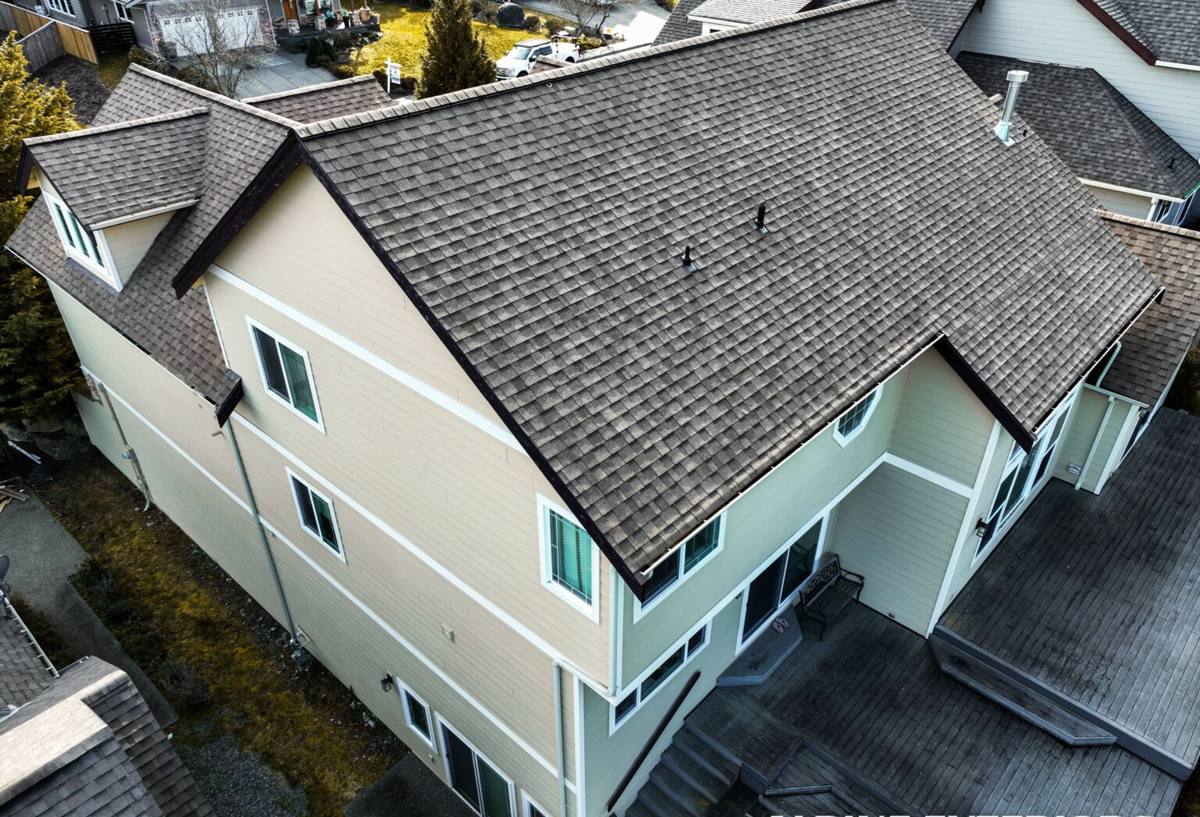
What This Climate Actually Does to a Window
Salt Air
Airborne salt is corrosive to certain metal components — hardware, some aluminum cladding, and lower-grade fasteners in particular. Over years, this can lead to pitting, stiff or failing locks, and premature finish breakdown on materials that aren't rated for coastal exposure.
Driving Rain
Wind-driven rain doesn't just fall on a window, it gets pushed against it and can find its way in through gaps that would never leak in calmer weather. This puts the burden on flashing, sealant, and the water management details around the rough opening — not just the window unit itself.
Moss and Sustained Moisture
Whatcom County's long wet season keeps wood trim, sills, and casing damp for extended stretches. That moisture, combined with shade and the organic debris that collects in gutters and sills, is exactly what moss and mildew need to establish. Once moss gets into a joint or a sill seam, it holds moisture against the wood and accelerates rot from the inside out.
Signs Your Current Windows Are Already Costing You
- Condensation or fogging between the panes (a sign the seal has failed)
- Drafts you can feel near the frame on a windy day
- Visible moss or dark staining building up on the sill or lower casing
- Difficulty opening, closing, or locking the window
- Soft or discolored wood trim around the window opening
- A noticeable jump in heating costs during the wet months
- Paint or finish that's peeling or bubbling near the frame
Any one of these is worth a look. A couple of them together usually means the window and its surrounding seal are no longer doing their job, and the longer that goes unaddressed, the more likely the damage spreads into the surrounding wall framing.
What a Correct Installation Actually Involves
The window itself matters, but in this climate, the installation is at least as important as the product. A high-end window installed poorly will leak and underperform. A mid-range window installed correctly will often outlast it. Here's what we consider non-negotiable for a Sandy Point install:
- Proper flashing sequence — flashing tape and building paper layered so water is always directed outward and down, never trapped behind the window
- Sill pan protection — a sloped, sealed sill pan under the window so any water that does get past the frame drains out instead of pooling
- Correct sealant, not just caulk — the right sealant for coastal exposure, applied at the joints that actually need it rather than a bead around the whole perimeter as a catch-all
- Insulated shimming and low-expansion foam around the frame so there are no gaps for air or moisture to move through, without over-foaming and bowing the frame
- Corrosion-resistant fasteners and hardware rated for coastal or marine-grade exposure
- Interior and exterior trim sealed and finished so moisture can't wick into the wood from either side
Skip any one of these and the window's energy performance rating becomes mostly theoretical — the numbers on the label assume a correct installation, not an approximate one.
Frame and Glass Options: What Actually Makes Sense Here
| Option | How It Handles This Climate | Trade-Offs to Know |
|---|---|---|
| Vinyl | Good moisture and salt resistance, low maintenance, solid efficiency for the cost | Can look less premium; darker colors absorb more heat and expand/contract more |
| Fiberglass | Excellent dimensional stability and weather resistance, holds paint well | Higher upfront cost than vinyl |
| Wood-clad | Warm interior look, good performance when properly maintained | Exterior cladding and joints need regular inspection in a wet, salty climate — moisture that gets behind the cladding is harder to catch early |
| Aluminum | Strong and slim sightlines | Conducts heat and cold readily and is more vulnerable to salt corrosion unless properly coated — we're selective about where we recommend it here |
For most Sandy Point homes, vinyl or fiberglass frames with dual- or triple-pane, low-E glass and argon fill hit the right balance of efficiency, moisture resistance, and long-term maintenance. Wood-clad windows can still be the right call for homeowners who want that look and are willing to keep up with inspection and upkeep — it's a legitimate choice, just one that asks more of the owner over time.
Glass Package Basics Worth Knowing
- Low-E coating reflects heat back where you want it — in during winter, out during summer — without noticeably changing how much light comes through
- Argon or krypton gas fill between panes slows heat transfer versus plain air
- Warm-edge spacers reduce the cold spot right at the edge of the glass, which is also where condensation tends to start
- U-factor and SHGC ratings on the label tell you how well the window resists heat loss and how much solar heat it lets in — both matter for a marine climate with mild summers and damp, chilly winters
Our Process for a Sandy Point Window Job
- On-site assessment — we look at each opening individually, not just the house as a whole. Sun exposure, wind exposure, and existing moisture damage can vary window to window on the same house.
- Honest scope and options — we'll tell you plainly if a window is a straightforward swap or if there's rot or damage behind it that needs to be addressed first. We'd rather flag it now than have it show up as a surprise mid-project.
- Accurate measurement and ordering — correct sizing avoids gaps that become long-term problems.
- Install day — proper flashing, sill pans, sealing, insulation, and hardware as described above, on every opening, not just the visible ones.
- Final check and cleanup — operation, seal, and finish checked on every window before we consider the job done.
Why It Matters That We Already Work in This Area
A crew that mostly works drier, more sheltered neighborhoods can do a technically fine window install and still get it wrong for Sandy Point, because the details that matter here — flashing sequence for driving rain, hardware that resists salt corrosion, sill drainage for sustained moisture — aren't the first things they reach for. Working this stretch of the Birch Bay coastline regularly means we're not guessing at what the weather does to a window over a five- or ten-year stretch; we've seen it, and we build the install around it from the start.
Keeping New Windows Performing Long-Term
- Rinse salt residue off frames and glass periodically, especially after storms
- Keep sills and tracks clear of debris where moss and mildew can start
- Check exterior caulking and sealant once a year for cracking or gaps
- Make sure gutters and downspouts near window openings are clear and directing water away from the wall
- Operate locks and hardware occasionally through the year so they don't seize up
None of this is heavy maintenance, but skipping it in a climate like Whatcom County's is how a good window installation turns into an early repair job.
Getting Started
If your Sandy Point home has windows that are drafty, fogged, showing moss or rot around the frame, or just not keeping up with the weather anymore, we're happy to take a look. We'll give you a straight assessment of what's going on and a free, no-pressure estimate for what it would take to fix it right — no obligation either way. The form below is the easiest way to get that started.