 Birch Bay
 Sandy Point's Roofs Work Harder Than Most
Sandy Point sits close enough to the water that its homes take a different kind of weathering than houses a few miles inland. The salt air off the bay settles on every exposed surface, wind-driven rain finds its way under anything that isn't properly lapped and fastened, and the long, wet Whatcom County winters give moss months at a time to get established on shaded and north-facing roof planes. A roof here isn't just shedding water — it's fighting corrosion, wind uplift, and organic growth at the same time, year after year.
That combination is exactly why so many homeowners in this stretch of coastline look at metal roofing instead of another asphalt shingle job. Done right, it's one of the few roofing systems that holds up to all three problems at once. Done wrong — with the wrong coating, the wrong fasteners, or sloppy flashing — it can fail faster and uglier than the shingle roof it replaced.
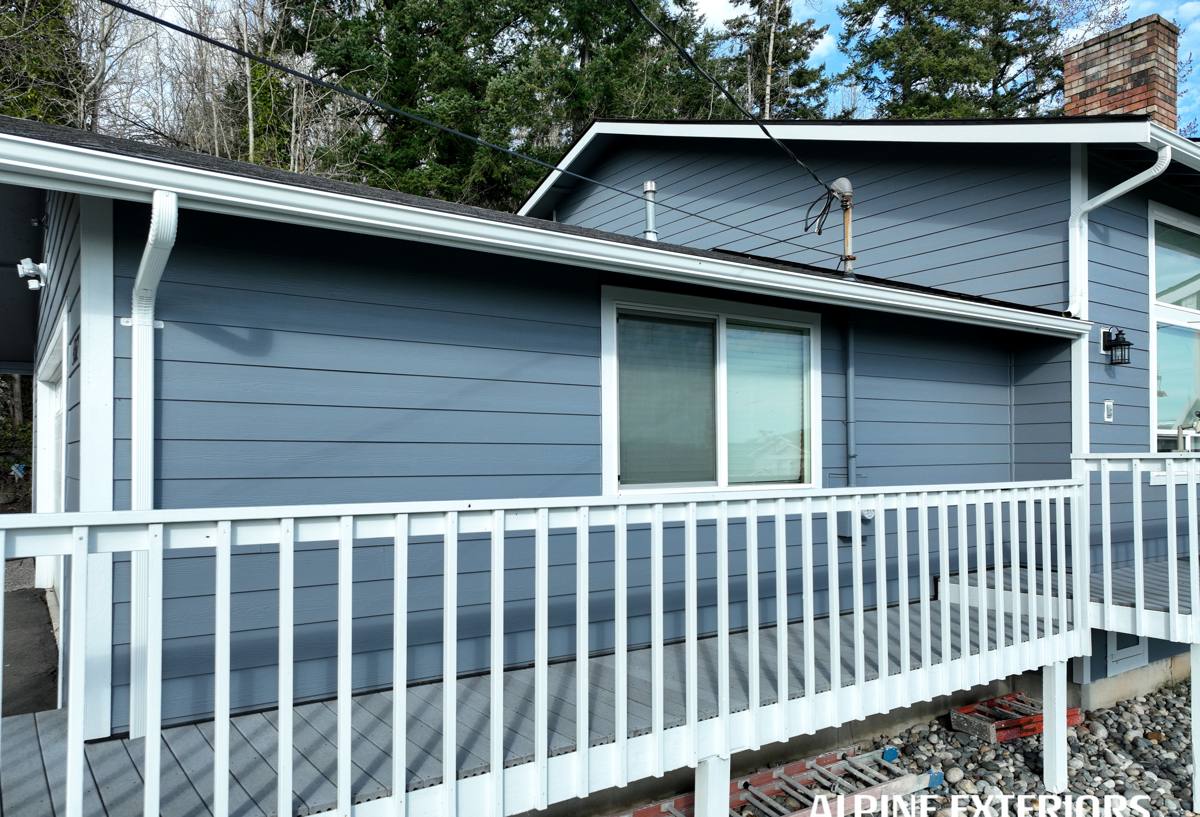
Why Metal Makes Sense on This Part of the Coast
Metal roofing's advantages line up almost point-for-point with what Sandy Point's climate demands:
- Moss resistance: Metal doesn't give moss and lichen the rough, organic surface they need to take hold the way shingle granules do, so north-facing slopes and shaded valleys stay cleaner longer.
- Rain-shedding performance: Standing seam and properly lapped panel systems move driving rain off the roof fast, which matters when storms off the water push water sideways instead of straight down.
- Wind performance: A correctly fastened metal roof handles gusty coastal wind loads better than most shingle products, and it doesn't lose granules or tabs the way shingles do over time.
- Longevity, if specified correctly: A quality metal roof can outlast two or three shingle roofs — but only if the material and coating were chosen for a salt-air environment in the first place.
That last point is where a lot of metal roofs in coastal Whatcom County go wrong, and it's worth its own section.
Salt Air Changes What "Good Materials" Means
Not all metal roofing is built for a marine environment, even though most of it is marketed as low-maintenance. Airborne salt accelerates corrosion at cut edges, fastener heads, and any spot where a protective coating gets scratched during installation or later maintenance. A metal roof that would perform fine twenty miles inland can start showing rust streaks and fastener corrosion within a few years this close to the water if it isn't specified and installed with that in mind.
What we look at before recommending a system for a Sandy Point home:
| Factor | Why It Matters Here |
|---|---|
| Base metal & coating | Coastal exposure calls for coatings and finishes rated for marine/salt-air environments, not the standard-grade product used further inland. |
| Cut-edge treatment | Every field cut exposes bare metal; those edges need to be treated or positioned so they aren't sitting exposed to salt spray and standing moisture. |
| Fastener material | Mismatched or bargain-grade fasteners corrode first and telegraph rust streaks down the panel — a common early failure point on coastal roofs. |
| Panel/seam style | Standing seam sheds water and handles wind uplift better than exposed-fastener panels, which matters more on homes with direct water exposure. |
| Underlayment | A high-quality synthetic or self-adhered underlayment at eaves, valleys, and penetrations backs up the metal if wind-driven rain ever gets past a seam. |
None of this is upselling — it's the difference between a metal roof that looks the same in fifteen years and one that needs panel replacement in five.
Standing Seam vs. Exposed-Fastener: Which Fits Your Home
We get asked about this often enough that it's worth explaining plainly. Standing seam panels interlock with concealed fasteners, which means no exposed screw heads for salt air to attack and a cleaner path for water to run off. Exposed-fastener panels cost less up front but rely on gasketed screws that compress over time and need periodic checking — a real maintenance item on a home that's catching salt spray and driving rain regularly.
For a primary roof on a home directly exposed to weather off the water, we generally steer people toward standing seam. For secondary structures — a detached garage, a shop, a covered patio roof — exposed-fastener panels can be a reasonable, lower-cost option if the homeowner understands the trade-off and is willing to keep an eye on fastener condition.
Moss, Valleys, and Where Water Actually Collects
Metal sheds moss better than shingles, but it isn't moss-proof, and it isn't drainage-proof either. The spots that cause problems on metal roofs in this area are predictable:
Shaded and North-Facing Slopes
Even on metal, debris and organic buildup can accumulate in low spots or where tree cover keeps a section of roof damp longer than the rest. It's slower than on shingles, but it still happens if debris isn't cleared.
Valleys and Transitions
Valleys concentrate water flow, and on a roof getting hit with sideways rain, that's where flashing detail quality shows up first. Undersized or poorly lapped valley flashing is one of the more common causes of leaks we find on metal roofs that were installed by crews without much coastal experience.
Gutters and Downspouts
A metal roof that sheds water efficiently just moves the moss and debris problem downstream — literally. Gutters clogged with needles and moss debris back water up under the drip edge, which can undermine even a well-installed roof over time.
Our Installation Process for Sandy Point Homes
Inspection and Assessment
We start by looking at the existing roof deck, ventilation, and any signs of past moisture intrusion — not just the surface. Salt-air corrosion and moss-related moisture damage often show up in the decking before they show up as a visible leak.
Deck Prep
Any soft, rotted, or moisture-compromised decking gets identified and addressed before a single panel goes down. Installing a metal roof over a compromised deck just hides the problem.
Underlayment and Flashing
This is where most of the long-term protection actually comes from. We pay particular attention to eaves, valleys, and every penetration — pipe boots, chimneys, skylights — since these are the points most likely to leak under driving rain if they're rushed.
Panel Installation
Panels are installed with fasteners and spacing matched to the manufacturer's coastal wind-load specifications, not a generic inland install pattern. Cut edges are treated or positioned to minimize salt exposure.
Trim, Cleanup, and Final Check
Ridge caps, edge trim, and any transitions are finished, the site is cleaned of metal shavings and fasteners (which can rust and stain a new roof if left behind), and we walk the completed roof before calling the job done.
Keeping a Metal Roof Sound in a Salt-Air Climate
A correctly installed metal roof needs far less attention than a shingle roof, but "far less" isn't "none." A short annual routine goes a long way here:
- Clear needles, leaves, and moss debris out of valleys and off any low-slope sections before wet season sets in
- Keep gutters and downspouts flowing freely so water isn't backing up under the drip edge
- Do a visual check of fastener heads and panel seams, especially on exposed-fastener systems, looking for early rust or lifted gaskets
- Watch for rust streaking below any cut edges or fastener rows — an early sign a coating has been compromised
- Trim back tree limbs that keep sections of the roof shaded and damp longer than the rest
None of this requires a specialist visit every year — most of it is a homeowner walking the yard with binoculars or a quick trip up a ladder. But catching a lifted fastener or a clogged valley early is the difference between routine upkeep and a repair bill.
Why It Matters That We Already Work This Area
A lot of roofing problems in Sandy Point don't come from bad materials — they come from installers applying a standard inland install to a home that needed coastal-specific detailing. Fastener choice, cut-edge treatment, flashing overlap, and underlayment coverage all need to be dialed in for salt air and driving rain, and that's knowledge you build by working this specific stretch of Whatcom County coastline repeatedly, not by reading a spec sheet once.
We also know the practical side: what access looks like on Sandy Point's narrower lots and private roads, how weather windows off the bay affect scheduling a tear-off, and what Whatcom County permitting for a reroof actually requires. That local familiarity shows up in fewer surprises during the job and a roof that's detailed correctly the first time.
Get a Straight Answer on Your Roof
If you're weighing metal roofing for a Sandy Point home — whether you're replacing an aging shingle roof or comparing metal against another reroof option — we're happy to take a look and give you an honest read on condition, options, and what a correct install would actually involve for your home. Use the form below to request a free, no-pressure estimate.