 Birch Bay
 Why Sandy Point Roofs Take More Punishment
Sandy Point sits close to the water, which means the homes there catch weather that inland Whatcom County neighborhoods simply don't deal with. Salt-laden air moves in off the water and settles on every exposed surface of a roof — nail heads, flashing, vent stacks, gutter hardware — and over years that steady exposure corrodes metal faster than it would a few miles inland. Add wind that has nothing to slow it down before it hits the roofline, and you get wind-driven rain that doesn't just fall straight down, it gets pushed sideways and upward under shingle edges and around flashing that wasn't detailed for that kind of pressure.
Then there's the wet season itself. Whatcom County gets a long stretch of damp, low-sun months from fall through spring, and roof planes that don't get much direct sunlight — north-facing slopes, areas shaded by trees or a neighboring roofline — stay damp long enough for moss to take hold. Moss isn't just a cosmetic problem. It holds moisture directly against the shingle surface, works its way under tabs and edges, and over time it lifts material that was never designed to stay wet that long.
None of this means a Sandy Point roof needs anything exotic. It means the details — fastener choice, underlayment, ventilation, flashing work — have to be done correctly for a coastal, moss-prone climate, not just done to a generic minimum.
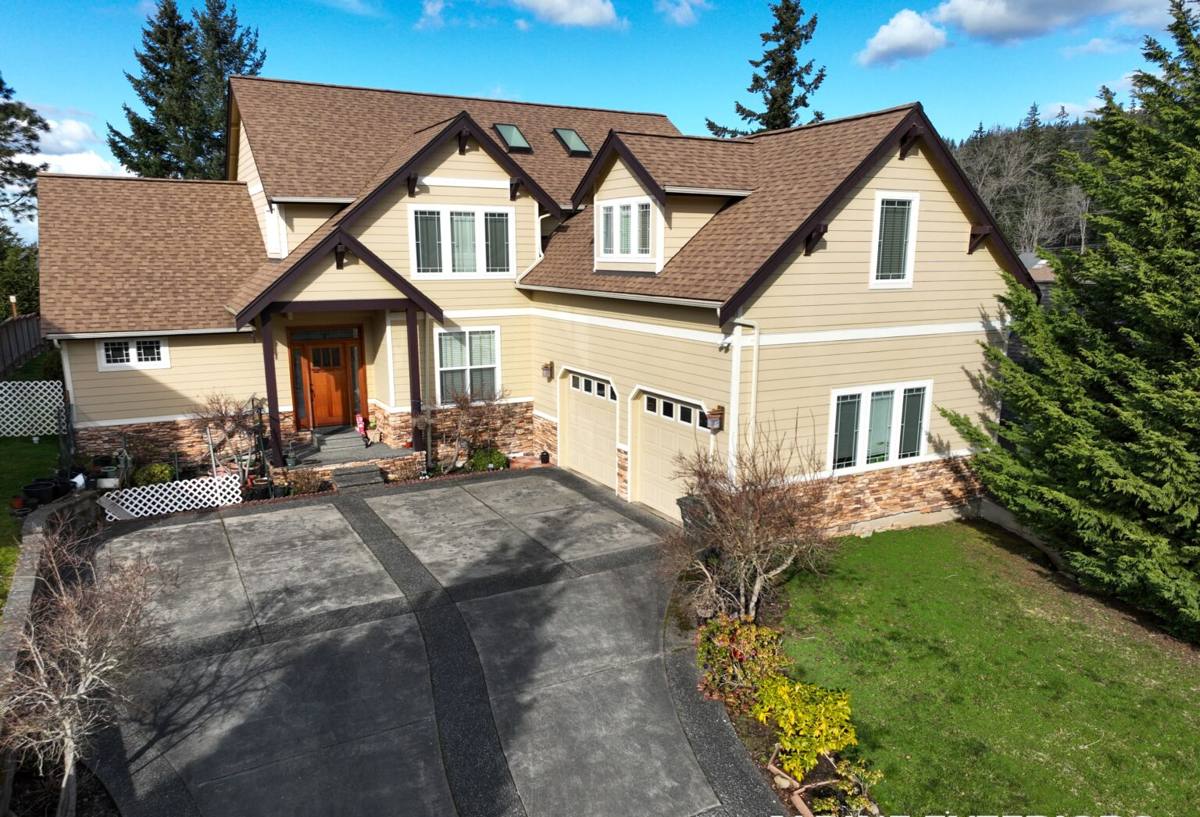
Signs a Roof Needs Replacing, Not Just Patching
A lot of roofs get patched two or three times before anyone calls in a full replacement, and sometimes that's the right call. Other times it's just delaying a bigger, more expensive repair. Here's what tells us a roof has moved past the patching stage:
- Granule loss heavy enough that you can see bare asphalt in spots, especially on south- and west-facing slopes that take the most sun and weather
- Shingles that are curling, cupping, or have started to crack along the tab edges
- Moss mats that come back within a season or two of being scraped off — a sign the roof surface underneath is staying wet longer than it should
- Soft or spongy spots when walked on, which usually means the decking underneath has taken on moisture
- Daylight visible through the roof deck from inside the attic
- Repeated leaks around the same chimney, skylight, or vent flashing even after being sealed
- Ceiling stains that show up specifically after windstorms, not just heavy rain — that pattern points to wind-driven water getting past flashing or shingle laps rather than a simple standing-water leak
- A roof that's at or past the expected service life for its material, especially if it was never upgraded with algae-resistant shingles or proper ventilation
If you're only seeing one or two of these, a repair may still make sense. If several show up together, that's usually the roof telling you it's done.
What a Correct Replacement Involves in This Climate
Tear-Off and Deck Inspection
We remove the old roofing down to the deck rather than layering over it. That's the only way to actually see what's happening underneath — soft or delaminated plywood, rusted fasteners, or moisture staining that tells us where water has been getting in. Any damaged decking gets replaced before anything new goes down, because new shingles over a compromised deck just fail again faster.
Underlayment and Water Barrier
This is one of the most important upgrades for a property like Sandy Point's. A synthetic underlayment with strong wind and water resistance, combined with self-adhering ice-and-water membrane at eaves, valleys, and around every penetration, gives the roof a real second line of defense when wind pushes rain sideways or up under the shingle edge. On a standard inland roof this matters; on an exposed waterfront roof it's not optional.
Ventilation
Balanced intake and exhaust ventilation keeps the attic temperature closer to outdoor temperature, which reduces condensation on the underside of the deck and helps roof surfaces dry out faster after rain — a direct factor in how much moss takes hold over time.
Flashing and Fasteners
Every place the roof plane is interrupted — chimneys, skylights, vent pipes, wall-to-roof transitions — gets new flashing, not old flashing reused under new shingles. For fasteners and exposed metal components, we favor corrosion-resistant hardware given the salt air, rather than standard-grade material that's fine inland but wears faster this close to the water.
Choosing a Roofing Material for Salt Air and Moss
There's no single "best" material for every home — it depends on the roof's exposure, the home's style, and the budget. Here's how the common options actually perform in a Birch Bay / Sandy Point setting:
| Material | Moss Resistance | Wind-Driven Rain Performance | Salt-Air Durability | Typical Lifespan |
|---|---|---|---|---|
| Architectural asphalt shingle (algae-resistant) | Good, with periodic cleaning on shaded slopes | Good when installed with proper underlayment and sealed laps | Good — fiberglass mat and mineral surface hold up well | 25-30 years |
| Standard 3-tab asphalt shingle | Fair — more prone to moss retention than architectural profiles | Fair — lower wind rating than architectural shingles | Fair | 15-20 years |
| Standing seam metal | Very good — smooth surface sheds moisture, little for moss to grip | Excellent — few seams, strong wind ratings | Good with a proper coastal-grade finish and stainless or coated fasteners | 40-50+ years |
| Synthetic/composite shingle | Good, varies by product line | Good | Good | 30-50 years depending on product |
For homes with heavily shaded roof planes or a history of chronic moss, we usually steer the conversation toward architectural shingles with algae-resistant granules or metal roofing, since both handle sustained moisture better than a basic 3-tab product. Whatever the choice, the decision should come down to how that roof plane actually gets weather and sun exposure, not just what looks good in a brochure.
Ventilation and Moss: Prevention, Not Just Removal
Scraping moss off a roof buys time, but it doesn't fix why it's growing there in the first place. Moss needs sustained moisture and shade to establish, and a roof that dries out slowly after every rain — because of poor attic ventilation, dense tree cover, or a low-slope shaded plane — will keep growing it back no matter how often it's cleaned.
A correct replacement addresses this at the source: balanced ventilation to keep the deck and shingle undersides drier, algae-resistant shingle granules where relevant, and, where it's practical, trimming back overhanging branches that keep a section of roof in permanent shade. None of that eliminates moss risk entirely in a climate this wet, but it changes how fast it comes back and how much maintenance the roof needs going forward.
Our Roof Replacement Process
- Inspection and estimate — we walk the roof, check the attic from inside, and look at flashing, ventilation, and deck condition before quoting anything
- Material selection — we go over the trade-offs above so you're choosing based on how that roof performs here, not just price
- Scheduling around weather — tear-off exposes the deck, so we plan around the forecast rather than rushing into an open roof during a rain system
- Property protection — landscaping, siding, and driveways get covered or protected before tear-off starts
- Tear-off and deck inspection — old roofing comes off, decking gets checked and repaired as needed
- Underlayment and water barrier installation — synthetic underlayment plus ice-and-water membrane at vulnerable points
- New roofing installation — installed to manufacturer spec, with attention to nailing pattern and exposure for wind performance
- Flashing, vents, and ventilation details — new flashing throughout, ventilation checked and corrected if it's undersized
- Cleanup — full site cleanup including a magnetic sweep for stray nails
- Final walkthrough — we go over the finished roof with you before considering the job done
Why Local Experience in Birch Bay and Sandy Point Matters
A crew that only occasionally works this stretch of Whatcom County treats every roof the same. A crew that works Birch Bay and Sandy Point regularly knows which slopes take the worst of the wind off the water, where salt exposure tends to eat through cheap fasteners first, and which roof planes in this area chronically hold moss because of shade and orientation. That knowledge shapes real decisions — where to add extra water barrier, what fastener grade to use, how to detail flashing around a chimney that's catching wind from an unusual angle.
There's a practical side too. Many lots along the water have tighter driveways and limited staging space compared to inland properties, so getting dumpsters, material delivery, and equipment positioned without damaging landscaping takes some planning. A crew that's done it before on similar lots isn't figuring that out for the first time on your job.
What Affects the Cost of a Roof Replacement Here
Every roof is different, so we don't quote sight unseen, but these are the main factors that move the price up or down:
| Cost Factor | Why It Matters |
|---|---|
| Roof size and pitch | More square footage and steeper pitches mean more material and more labor time |
| Number of existing layers | Removing multiple layers of old roofing takes longer than a single tear-off |
| Decking condition | Rotted or soft plywood found during tear-off has to be replaced before installation continues |
| Material choice | Standard architectural shingle, premium shingle, and metal roofing carry different material and labor costs |
| Access and staging | Tight driveways, limited yard space, or difficult roof access can add time |
| Penetrations | Chimneys, skylights, and multiple vent stacks each need individual flashing work |
| Ventilation upgrades | Adding or correcting intake/exhaust venting is worth doing during a replacement rather than after |
We'd rather walk your roof and give you real numbers than throw out a broad range that doesn't mean much once we're actually up there.
If your Sandy Point or Birch Bay roof is showing its age, we're happy to take a look and give you a straightforward, no-pressure estimate — just fill out the form below and we'll get in touch.