 Birch Bay
 Sandy Point Decks Work Harder Than Most
Sandy Point sits right up against the water, and that changes what a deck has to survive. Homes here get a steady dose of salt-laden air, wind off the Strait, and driving rain that comes in sideways more often than straight down. Add in the long stretch of gray, wet months that Whatcom County sees every year, and you've got a moss season that can run from fall clear through spring. A deck built to a generic spec sheet will show its age here faster than the same deck would ten miles inland.
That doesn't mean building here is impossible or unusually expensive — it means the details matter more. Fastener choice, framing ventilation, footing depth, and decking material all need to be picked with this specific exposure in mind, not just whatever's cheapest at the yard that week.
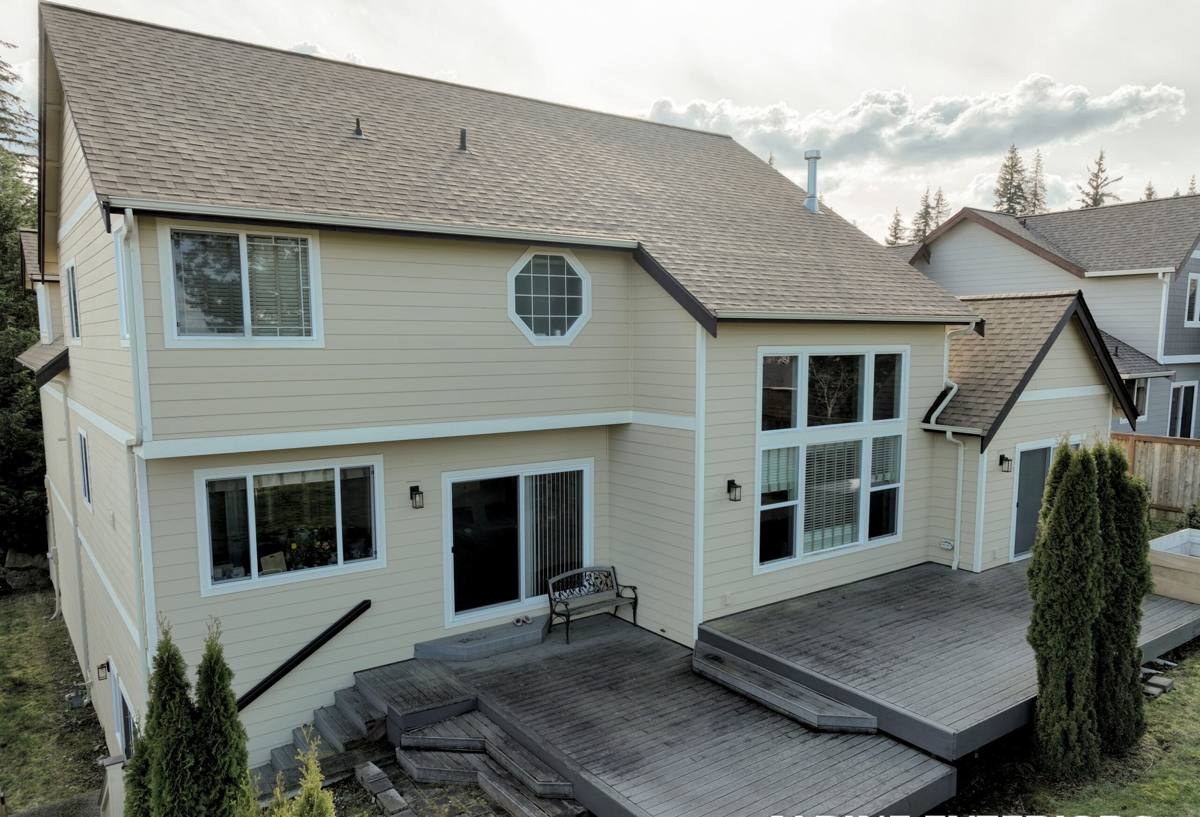
What Salt Air and Wind Actually Do to a Deck
Corrosion, Faster Than You'd Expect
Salt air accelerates corrosion on anything metal — fasteners, joist hangers, railing hardware, even the heads of screws that look fine from a distance. On a standard build, that shows up as rust streaks, weakened connections, and hardware that fails years before the wood or decking around it does. It's one of the most common problems we find when we're called out to look at an older Sandy Point deck.
Wind Load on an Open Waterfront Lot
Waterfront and near-waterfront lots tend to be more exposed than a lot tucked into trees. That means higher wind loads on railings, on any roof or pergola structure over the deck, and on the connection between the deck and the house. Framing that would be perfectly adequate in a sheltered yard can be undersized here.
Moisture That Doesn't Dry Out
Driving rain gets pushed into places a vertical rain would never reach — under railings, behind ledger boards, into end grain on stair stringers. Combined with our long moss season, any spot that stays damp for weeks at a time becomes a place where rot and moss growth start quietly, often out of sight underneath the deck.
Building It Right the First Time
Fasteners and Hardware
For anything within reach of salt air, we use stainless steel or heavy hot-dip galvanized fasteners and coated structural hardware rated for coastal or ACQ-treated lumber contact — not the standard-grade hardware that's fine for an inland build. It costs a bit more up front and it's the single biggest factor in whether a deck's structure is still tight in fifteen years.
Footings for Sandy, Low-Lying Ground
Soil near the water is often sandier and holds water differently than soil further inland. Footings need to be sized and set to the frost depth and bearing conditions that actually exist on the lot, not assumed from a standard plan. We check this on-site rather than guessing from a typical Whatcom County soil profile.
Airflow Underneath
A deck that can't breathe underneath is a deck that stays damp. We build in enough clearance and, where the site allows it, venting or gapping that lets air move under the structure so it can actually dry out between storms instead of holding moisture through the whole wet season.
Ledger Attachment and Flashing
Where the deck meets the house is the most common failure point on any deck, and it's worse in a wind-driven-rain climate. Proper flashing, correct fastener spacing, and a ledger board that's sealed against the sheathing — not just bolted to it — keeps water out of the house framing, not just off the deck surface.
Choosing a Decking Material for This Exposure
There's no single "best" decking material — there's the right trade-off for your budget, your maintenance appetite, and how close you are to the water. Here's how the common options actually hold up under salt air and heavy moss pressure:
| Material | Salt Air / Moisture Behavior | Moss Season Maintenance | Typical Lifespan |
|---|---|---|---|
| Pressure-treated wood | Handles moisture well when sealed regularly; fasteners are the weak point | Needs annual cleaning and periodic sealing to resist moss and graying | 10–15 years with upkeep |
| Cedar | Naturally rot-resistant but still needs sealing near salt spray | Prone to moss and mildew without regular cleaning; softer surface | 15–20 years with upkeep |
| Composite decking | Doesn't absorb moisture like wood; won't rot | Can still grow surface moss/mildew in shaded, damp spots — needs occasional washing | 25–30 years |
| PVC / cellular decking | Fully moisture-proof, best option directly exposed to salt spray | Lowest moss retention; easiest to keep clean | 25–30+ years |
We're honest with clients about this: composite and PVC cost more up front but save real time and money on maintenance for a deck that's this exposed. Wood is a legitimate choice too, especially on a budget, but it only performs well if someone's actually willing to clean and reseal it on schedule. We'll walk through the real trade-offs for your specific spot rather than pushing whatever's easiest for us to install.
Our Process for a Sandy Point Deck Build
- Site walk and exposure assessment — we look at how much direct wind and salt spray the deck location actually gets, plus drainage and soil conditions.
- Design and material selection — sized for wind and snow load per code, with decking and hardware matched to the exposure level we found.
- Permitting — we handle the permit application with Whatcom County or the applicable jurisdiction, including any setback review for waterfront or near-waterfront parcels.
- Footings and framing — footings set to verified depth and bearing conditions; framing built with corrosion-resistant fasteners and hardware throughout.
- Ledger and flashing — proper flashing and sealed attachment where the deck meets the house, the point most likely to fail if rushed.
- Decking, railing, and finish work — installed per manufacturer spec (critical for composite and PVC warranty coverage) with attention to gapping and airflow.
- Final walkthrough — we go over basic maintenance for the specific material you chose, so you know what upkeep actually looks like here.
What We Commonly Find on Older Sandy Point Decks
- Standard-grade fasteners rusted through or badly corroded well before the decking itself has failed
- Ledger boards with little or no flashing, leading to hidden rot in the house rim joist
- Footings too shallow or undersized for the actual soil conditions on the lot
- No airflow underneath, leaving the framing damp for most of the wet season
- Moss buildup on wood decking that was never sealed or cleaned on a regular schedule
- Railings and posts undersized for the wind exposure of an open waterfront lot
None of these are unusual mistakes — they're what happens when a deck is built to a generic inland spec instead of the conditions actually present at the site.
Maintenance Checklist for a Coastal Deck
Whatever material you choose, a few habits go a long way toward getting the lifespan you're expecting out of it:
- Rinse off salt spray and debris a few times a year, especially after storms
- Clean moss and algae off the surface and railings before it gets a foothold, particularly in shaded areas
- Check hardware and fasteners annually for early rust or corrosion, especially near the ledger and stairs
- Reseal or refinish wood decking on the schedule the product actually calls for, not "whenever it looks bad"
- Keep the underside of the deck clear of debris that traps moisture against the framing
- Watch for soft spots near the ledger board — that's usually the first place trouble shows up
Permitting and Local Considerations
Deck construction near the water in Whatcom County typically involves standard building permitting, and depending on the exact location and setback situation, may involve additional review. We handle that process as part of the job so you're not left tracking down requirements on your own. If your lot has any shoreline or setback questions, we'll flag that early in the design phase rather than after materials are ordered.
Why Local Experience in Sandy Point Actually Matters
A deck built by a crew that hasn't worked this stretch of coastline before is a guess dressed up as a plan. We've built and repaired decks in Birch Bay and the surrounding waterfront neighborhoods long enough to know which hardware actually holds up to this air, which decking products handle a real moss season without babying, and where the wind on an open lot tends to load a structure the hardest. That's not something you get from a spec sheet — it's something you get from having done the work here before, seen what failed, and adjusted.
If you're planning a new deck or need an honest look at one that's showing its age, we'd be glad to walk the site with you. Reach out for a free, no-pressure estimate using the form below.