 Birch Bay
 Sandy Point's Siding Problem Isn't Like Most of Whatcom County
Sandy Point sits right on the water, which means every exterior surface on these homes deals with a combination most inland Whatcom County houses never see: salt-laden air moving off the Strait, wind-driven rain that hits siding at an angle instead of falling straight down, and a wet season that stretches long enough for moss and algae to get comfortable on anything that stays damp. Siding here isn't just a weather barrier — it's fighting a slow chemical and biological process every day of the year.
That combination is why we treat Sandy Point differently from a standard Birch Bay estimate. The product, the flashing details, and the fastening approach all need to account for a shoreline microclimate, not just "Pacific Northwest rain" in general.
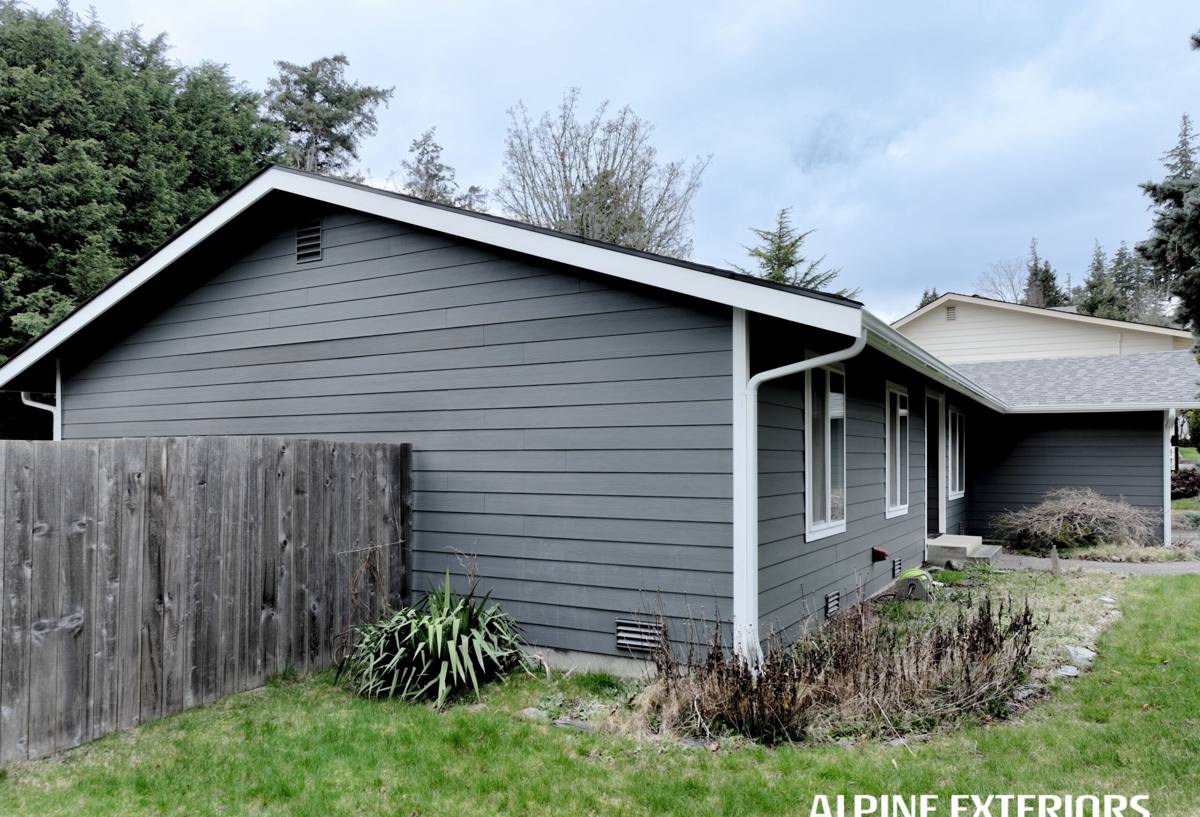
What Salt Air, Driving Rain, and Moss Season Actually Do to Siding
Salt Air
Airborne salt is corrosive to exposed metal fasteners, trim edges, and any coating that isn't formulated to resist it. Over years, salt exposure accelerates fastener corrosion and can cause premature fading or chalking on lower-grade paint finishes. It doesn't just affect houses at the waterline — prevailing winds carry salt spray well inland from Sandy Point's shoreline.
Driving Rain
Wind-driven rain doesn't behave like a garden hose aimed at a wall — it gets pushed sideways and upward under laps, around trim, and into any gap that a calmer climate could get away with ignoring. This is why lap spacing, caulking choices, and flashing at windows and penetrations matter more here than in a sheltered inland yard.
Moss and Algae Season
Whatcom County's wet months run long, and north- and west-facing walls that stay shaded and damp are exactly where moss and algae take hold first. On a low-quality or poorly finished siding surface, that growth doesn't just look bad — it holds moisture against the wall longer, which compounds the problem.
Why We Install Only James Hardie in Sandy Point
We don't install vinyl, LP SmartSide, Cemplank, Allura, or bare wood siding — anywhere, but especially not on a shoreline lot like Sandy Point. Vinyl can warp and become brittle with sustained UV and salt exposure and offers little defense against wind-driven moisture at its overlapping joints. Engineered wood products rely on a wood-strand core and a factory coating that has to stay intact to keep moisture out; any breach in that coating on a salt-air, high-moisture site is a bigger risk than it would be inland. Bare or primed wood siding needs a maintenance schedule — recoating, caulking, spot repairs — that most homeowners don't want to keep up with even in a mild climate, let alone this one.
James Hardie fiber cement is cement, sand, and cellulose fiber — it doesn't rot, it isn't a food source for moss or algae the way wood-based products can be, and it holds up to direct salt spray and driving rain far better than vinyl or engineered wood over the long haul. It's also non-combustible, which matters given how many Whatcom County properties border trees and brush. That's the whole reason we standardized on one product line instead of offering the full menu — we'd rather install fewer products correctly than a lot of products we don't fully stand behind.
The Hardie Product Lines That Make Sense on a Shoreline Lot
James Hardie builds different siding formulations (called HZ5 and HZ10 zones) engineered for different climate exposures, and Whatcom County's coastal edge — including Sandy Point — falls into the more demanding moisture and freeze-cycle category. We spec the product line to match that, not the cheapest option in the catalog.
- HardiePlank lap siding — the most common choice for Sandy Point homes; available in smooth or cedar-textured finishes, installed with the lap spacing and fastener pattern the coastal exposure calls for.
- HardiePanel vertical siding — often used as an accent or on gable ends, useful for breaking up large wall planes on waterfront-style homes.
- HardieTrim — fiber cement trim boards around windows, corners, and fascia, so the whole envelope is one consistent, non-combustible material instead of mixing in wood trim that will fail faster than the field siding around it.
- ColorPlus factory finish — a baked-on finish applied under controlled conditions, which holds color and resists fading and chalking far better than field-applied paint, especially under UV and salt exposure.
Color choice matters here too. Darker colors on west- and south-facing walls take more direct sun and heat cycling; lighter, ColorPlus-finished tones tend to show wear more slowly on the sides of a house that get the harshest combination of sun and salt spray.
What a Correct Installation Involves on a Coastal Lot
Fiber cement siding is only as good as the installation behind it. On a site like Sandy Point, a few details separate a job that lasts decades from one that fails early:
Flashing and Water Management
Proper head flashing above windows and doors, correctly lapped weather-resistant barrier behind the siding, and a drainage plane that lets any moisture that does get behind the cladding find its way back out — this is non-negotiable on a driving-rain site.
Fastener Selection
Corrosion-resistant fasteners, installed per Hardie's specification for the exposure zone, matter more here than almost anywhere else in the county. The wrong fastener on a salt-air house is a slow-motion failure you won't see until the streaking and staining show up years later.
Clearances and Caulking
Correct ground clearance, gaps at inside and outside corners, and the right sealant at joints keep wind-driven rain from finding a path behind the siding. Hardie's own installation guidelines are specific about this, and skipping them is one of the most common causes of early callbacks on fiber cement jobs generally.
Our Process, Start to Finish
- On-site walkthrough — we look at your home's specific exposure: which walls face the water and prevailing wind, where moss is already established, and where old flashing or trim needs attention before new siding goes up.
- Product and color plan — we recommend the Hardie line, texture, and ColorPlus finish that fits both the exposure and the look you want, and give you a written estimate.
- Prep and removal — old siding comes off, sheathing gets inspected for hidden moisture damage (common on older waterfront homes), and any repairs happen before new material goes up.
- Weather barrier and flashing — this is the step that determines whether the siding lasts 10 years or 40; we don't rush it.
- Installation — siding, trim, and accessories installed to Hardie's fastening and clearance specs for your exposure zone.
- Final walkthrough — we go over the finished job with you before calling it done.
Cost Factors for a Sandy Point Hardie Project
Every home is different, but these are the variables that typically move the price on a shoreline siding job:
| Factor | Why It Matters Here |
|---|---|
| Home size and wall complexity | More corners, dormers, and trim detail means more labor and cut waste |
| Existing siding removal and sheathing condition | Waterfront homes sometimes have hidden moisture damage under old siding that needs repair first |
| Product line and texture | HZ5-rated HardiePlank vs. panel accents vs. added trim work all price differently |
| ColorPlus color selection | Standard vs. premium color options can affect material cost |
| Access and site conditions | Waterfront lots can have tighter access, slopes, or landscaping that affects staging and labor time |
We give a firm written estimate after the on-site walkthrough — not a phone-quote guess — because these variables genuinely change the number.
Maintenance Checklist for Salt-Air, Moss-Prone Homes
James Hardie siding is low-maintenance, not zero-maintenance. On a Sandy Point property, a little seasonal attention goes a long way:
- Rinse salt residue off siding a few times a year, especially on walls facing the water
- Keep gutters clear so overflow doesn't run down the wall and feed moss growth
- Trim back vegetation and tree cover on shaded, north-facing walls where moss establishes first
- Inspect caulking at trim joints and window edges annually; recaulk if it's cracked or pulling away
- Watch for any staining near fasteners, which can signal a corrosion issue worth addressing early
Why Hiring a Crew That Already Works Sandy Point Matters
A contractor who mostly works inland jobs can install Hardie siding correctly by the book and still miss the details that matter specifically on a shoreline lot — the flashing sequence around a walkout that faces prevailing wind, the fastener spec that respects a higher-corrosion exposure, the color choice that will actually hold up on a west-facing wall that gets full sun and salt spray. Working Birch Bay and Sandy Point regularly means we've already seen how these homes age and what actually fails first, so we build the job around that instead of a generic spec sheet.
If you're planning a siding replacement or a new build in Sandy Point, we're happy to walk the property, talk through what your home's specific exposure calls for, and give you a straightforward, no-pressure estimate using the form below.