 Birch Bay
 Sandy Point Sits Closer to the Water Than Most of Birch Bay
Sandy Point is one of the more exposed pockets of the Birch Bay area — narrow lots, short setbacks from the water, and a lot of siding that takes wind-driven spray straight off the bay with almost nothing to break it up. That's a different exposure profile than a home set back in the trees a half-mile inland, and it changes what "good siding" actually needs to do. A product that performs fine on a sheltered lot in Custer or Blaine can struggle on a Sandy Point elevation that faces open water. We've worked enough of these lots to know the difference matters, and it's the reason we don't treat every Whatcom County siding job the same way.
This page is specifically about fiber cement siding for Sandy Point homes — what the local exposure demands, what a correctly installed job actually involves, and why we only install James Hardie products rather than the wider range of siding materials on the market.
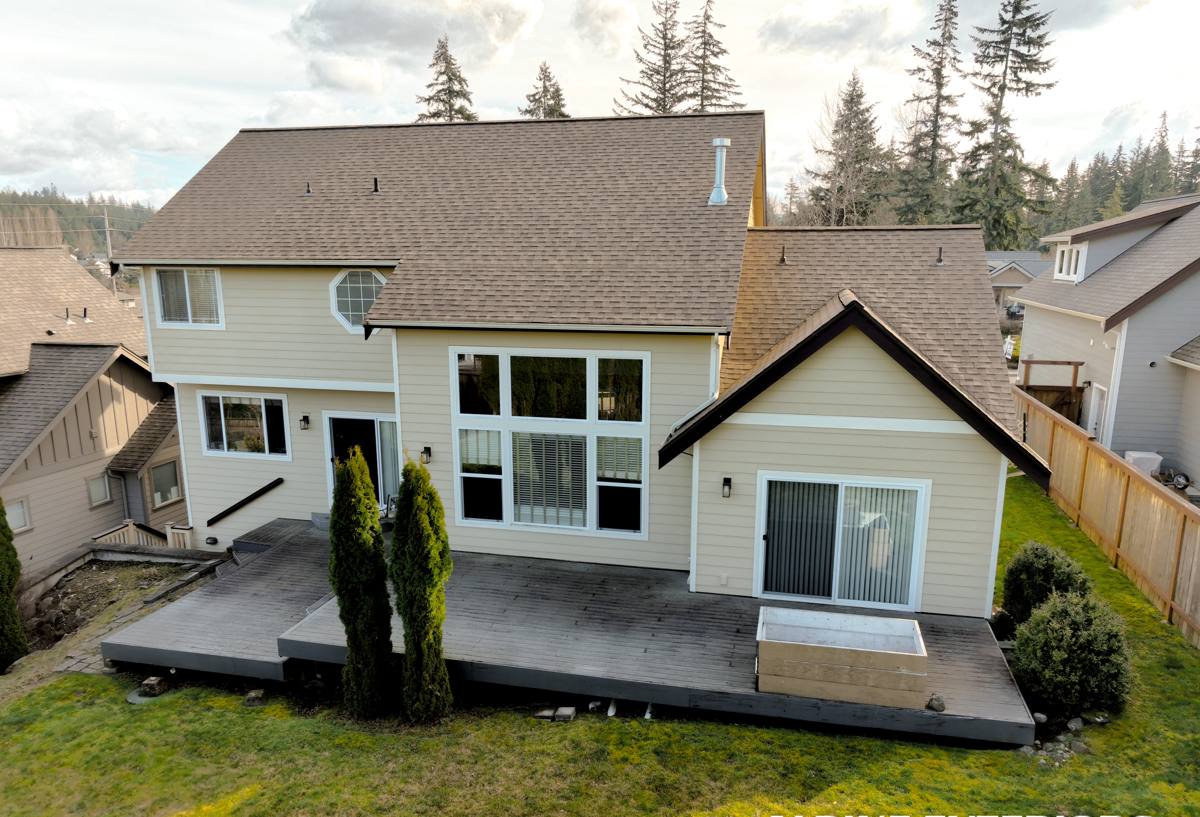
What Salt Air, Driving Rain, and Moss Season Actually Do to Siding
Three things wear down exterior cladding in Sandy Point faster than almost anywhere else in Whatcom County:
- Salt air — airborne salt from Birch Bay settles on every exterior surface, accelerates corrosion of exposed metal fasteners and trim, and can leave a fine residue that holds moisture against the siding face.
- Driving rain — wind off the water pushes rain sideways instead of letting it fall straight down, which forces water into seams, laps, and fastener penetrations that a calmer site would never test.
- A long moss and algae season — the Pacific Northwest's wet, mild winters and shaded, damp shoulder seasons give moss and algae months of opportunity to establish on siding that stays damp, especially on north-facing walls and areas with poor airflow.
None of these are exotic problems — every siding material on the market claims to handle them. The difference shows up over years, not in the first season, in how the material and the fasteners actually age under sustained exposure.
Why This Is Harder on Wood-Based and Vinyl Products
Untreated or primed wood siding relies on paint film to keep water out. Once driving rain finds a hairline crack or a nail head starts to telegraph through the paint, water gets behind the material and the clock starts on rot — and that clock runs faster in a marine exposure than an inland one. Vinyl siding doesn't rot, but it moves more with temperature swings, and at the coast, wind loading on exposed elevations puts extra stress on the panels and their fastening. Engineered wood products carry their own moisture-management requirements that are unforgiving if installation details are skipped. None of that is a reason to think less of those products in general — it's a reason to be honest about what a Sandy Point exposure asks of whatever goes on the wall.
Why We Only Install James Hardie in Sandy Point
We standardized on James Hardie fiber cement siding company-wide, and a waterfront-adjacent site like Sandy Point is exactly where that decision pays off. Hardie's fiber cement is non-combustible, doesn't rot, and doesn't feed moss or algae the way organic materials can. The ColorPlus factory finish is baked on under controlled conditions rather than field-applied, which means the color layer is more consistent and more resistant to the kind of UV and salt exposure that fades and chalks field-painted finishes over time. We don't install LP SmartSide, vinyl, Cemplank, Allura, primed spruce, or cedar — not because those products have no place in the industry, but because we've made James Hardie our standard and we'd rather be excellent at installing one system correctly than average at installing several.
That said, fiber cement siding is only as good as the installation underneath it. A Hardie product installed with the wrong fasteners, wrong clearances, or skipped flashing details will fail in a marine exposure faster than a lesser product installed correctly. The material matters, but the crew matters just as much.
Which Hardie System Fits a Sandy Point Home
James Hardie engineers its siding lines to different climate zones, and coastal Washington falls into the HZ5 zone — Hardie's most moisture- and freeze-aware category. For Sandy Point specifically, we typically look at:
HardiePlank Lap Siding
The most common choice for waterfront and near-waterfront homes in this area — a traditional lap profile with the durability to handle the exposure and a range of ColorPlus finishes that hold up to salt and sun without repainting on the same schedule as field-finished materials.
HardiePanel Vertical Siding
Often used as an accent or on gable ends and porch elements where a vertical line suits the architecture; same climate-engineered substrate underneath.
HardieTrim
Fiber cement trim at corners, window and door casings, and fascia — this matters more on an exposed site than people expect, because trim boards take direct rain impact and are a common failure point when a cheaper trim material is paired with good siding.
What Correct Installation Actually Involves
Fiber cement siding is a system, not just a board on a wall. On a Sandy Point job, the details below are where we spend extra attention because of the exposure:
| Detail | Why It Matters Here |
|---|---|
| Fastener material and placement | Corrosion-resistant fasteners, driven flush (not overdriven), keep salt air from working a rust point into the panel over time. |
| Weather-resistive barrier and flashing | Driving rain tests every seam; proper house wrap, window/door flashing, and kick-out flashing at roof-wall intersections keep wind-driven water from getting behind the cladding. |
| Clearances above grade, decks, and roofing | Hardie specifies minimum clearances to reduce splash-back and standing moisture — skipping these is one of the most common installation errors we see on older homes. |
| Joint and butt seam treatment | Properly sealed or shiplapped joints keep wind-driven rain from being forced sideways into the seam. |
| Painting and caulking at cut edges | Field-cut edges need to be sealed per Hardie spec — an exposed raw edge in a salt-air environment weathers faster than a factory edge. |
These aren't exotic requirements — they're in Hardie's published installation instructions. The difference between a job that looks fine at handoff and one that still looks fine in year twelve is almost entirely whether a crew follows them on every single board, not just the visible ones.
Our Process, Start to Finish
- Site walk and exposure assessment — we look at which elevations face the water directly, existing moisture damage, current trim and flashing condition, and any moss or algae staining that points to trapped moisture.
- Written estimate — product line, color, trim details, and a clear scope so there's no ambiguity about what's included.
- Prep and tear-off — removal of existing siding, inspection of sheathing for hidden rot (common on older waterfront homes), and repair before anything new goes up.
- Weather barrier and flashing installation — the unglamorous part that determines whether the finished siding actually keeps water out.
- Hardie installation to spec — correct fastening, clearances, and joint treatment as described above.
- Final walk-through — we go over the finished work with you before calling the job done.
Moss, Algae, and Salt Staining: Realistic Maintenance Expectations
Fiber cement doesn't feed moss and algae the way wood-based products can, but nothing that sits outside in Whatcom County's wet season stays perfectly clean forever. On Sandy Point homes, north-facing walls, areas under tree cover, and low-airflow corners are the spots most likely to develop surface moss or algae growth over a long, damp winter. This is a surface-level maintenance issue, not a structural one, on properly installed Hardie siding — a periodic gentle wash keeps it looking right. Salt residue is similar: it's a cosmetic buildup that rinses off, not something that compromises the material the way it can compromise unprotected metal or paint film on other products.
What Fiber Cement Siding Typically Costs to Install in Sandy Point
Pricing depends on home size, existing siding condition, trim complexity, and how much sheathing repair is needed once old siding comes off — we don't quote a number without seeing the house. In general terms, the factors that move the price most are:
| Factor | Effect on Cost |
|---|---|
| Hidden sheathing or rot repair | Increases cost; more common on older waterfront homes with a history of moisture intrusion |
| Trim complexity (corners, window casings, gables) | More linear feet of HardieTrim adds labor and material |
| Siding profile (lap vs. panel vs. mixed) | Mixed profiles and accent details add install time |
| Number of stories and access | Multi-story or tight-lot access increases labor time and equipment needs |
| Tear-off vs. install over existing | Full tear-off (our standard recommendation for water-damaged siding) costs more but starts clean |
Why Hiring a Crew That Already Works Sandy Point Matters
A crew that hasn't worked this specific stretch of coastline doesn't always anticipate how much wind-driven rain a west-facing wall here actually takes, or how quickly a skipped flashing detail shows up as a stain two winters later. We've done enough jobs in and around Birch Bay and Sandy Point to know which elevations need extra attention, which older homes are more likely to have hidden sheathing damage, and how the moss and algae pattern typically shows up on this kind of lot. That local pattern recognition is part of what you're hiring, not just the ability to nail up boards.
Questions Worth Asking Any Siding Contractor Before You Hire
- Are you a certified James Hardie installer, and can you explain the HZ5 climate-zone requirements for this area?
- What fastener type and flashing details do you use on wind-exposed, waterfront-adjacent walls?
- How do you handle sheathing repair if you find hidden rot once old siding comes off?
- What does your written estimate include — trim, flashing, disposal — and what's billed as an extra?
- Can you walk me through your process from tear-off to final walk-through?
If you're planning a siding replacement on Sandy Point or elsewhere in the Birch Bay area, we're glad to come take a look and put together a straightforward, no-pressure estimate. Use the form below to get started.