 Birch Bay
 Deck Repair Built for Sandy Point's Waterfront Conditions
Sandy Point sits close enough to the water that every deck in the neighborhood is doing double duty: holding up your family's cookouts and fighting off salt-laden air, wind-driven rain, and a moss season that can stretch from October well into spring. Decks here don't fail the way they do inland. The damage patterns are specific to this stretch of Whatcom County, and repairing them right means understanding those patterns, not just patching whatever looks bad on the surface.
This page covers what we see on Sandy Point decks, what a proper repair actually involves, and how our process works from first look to final walkthrough.
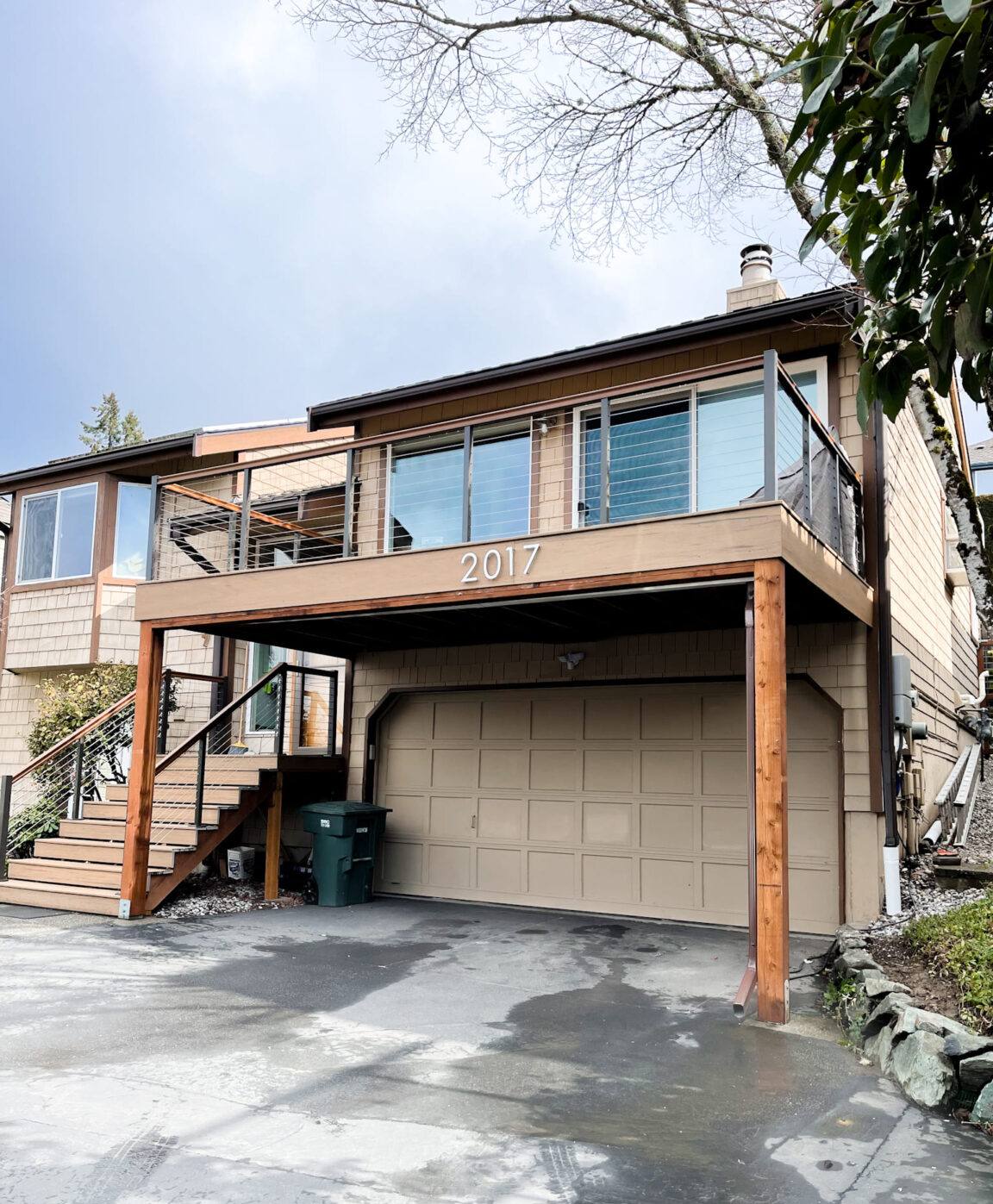
Why Sandy Point Decks Wear Differently
Three things work together against a deck out here, and it's worth understanding each one before you decide how to fix a problem.
Salt Air
Airborne salt from the nearby water settles on every exposed surface, including metal fasteners, flashing, and railing hardware. Salt accelerates corrosion in anything that isn't rated for coastal exposure, and once a nail or screw starts rusting, it swells slightly and weakens its grip on the wood around it. This is usually the real reason a board that looks fine still feels loose underfoot.
Driving Rain
Storms coming off the water rarely fall straight down — wind pushes rain sideways into ledger boards, under railing caps, and into any gap where flashing has failed. Water that gets behind a board or into a joint doesn't dry out the way it would on an open, sun-exposed surface. That trapped moisture is where rot actually starts, often invisible from above for a season or two before it shows.
A Long Moss Season
Whatcom County's damp, mild winters give moss and algae months to establish themselves on any deck surface that doesn't get direct sun or good airflow. Beyond looking bad, moss holds moisture against the wood surface continuously, and it makes boards genuinely slick and dangerous underfoot — a real fall hazard on stairs and near entry points.
Signs Your Sandy Point Deck Needs Repair
Most deck problems out here start small and stay hidden until they're not. Walk your deck and check for these before booking anyone:
- Boards that flex, bounce, or feel spongy when you step on them
- Rust streaks running down from screw or nail heads
- Railing posts that wiggle when pushed sideways
- Green or black staining that comes back within weeks of cleaning
- Gaps or separation where the deck meets the house (the ledger board)
- Cupped boards — edges higher than the center, or vice versa
- Soft spots you can press a screwdriver into with light pressure
- Stair stringers or joists visibly sagging when viewed from below
Any one of these is worth a look. Several at once usually means the underlying framing has been absorbing moisture for a while.
The Repairs We Handle Most Often in Sandy Point
Fastener and Hardware Replacement
Standard zinc-coated fasteners hold up fine in a lot of the country and fail early here. When we open up a Sandy Point deck, corroded nails and screws are one of the most common findings — even on decks that are otherwise structurally sound. Swapping to stainless steel or hot-dip galvanized, coastal-rated hardware is often the single most effective repair for extending a deck's life in this location.
Ledger Board and Rim Joist Rot
The ledger board — where the deck attaches to the house — takes the brunt of wind-driven rain because it sits in a joint that's hard to flash perfectly. When flashing has failed or was never installed correctly, water works its way behind the board and rots it from the inside out. This is a structural connection, not a cosmetic one, so we treat any softness here as a priority repair.
Decking Board Replacement
Individual boards that have cupped, split, or gone soft can usually be replaced without touching the rest of the deck, as long as the framing underneath is sound. We match the replacement approach to what's already there rather than pushing a full resurface when it isn't needed.
Moss and Algae Remediation
Cleaning moss off is only half the job — if the underlying cause (poor drainage, lack of sun, boards laid too tight) isn't addressed, it comes right back. Where it makes sense, we adjust board spacing, clear drainage paths, or recommend surface treatments that actually slow regrowth instead of just resetting the clock.
Railing and Stair Repair
Loose railing posts and worn stair treads are a safety issue first and a cosmetic one second. We check post attachment down to the framing, not just the visible connection, since a railing that looks solid can still be anchored into compromised wood.
Repair or Replace? How We Decide
Not every damaged deck needs a full rebuild, and not every deck should be patched. The framing is what really determines the answer — decking boards and railings are relatively easy to swap out, but a deck built on failing joists or posts isn't worth repairing piecemeal.
| Component | Usually Repairable | Usually Needs Replacement |
|---|---|---|
| Decking boards | Isolated cupping, splitting, or surface wear on a few boards | Widespread soft spots or rot across most of the surface |
| Ledger board | Minor gap or flashing failure caught early, wood still firm | Soft or crumbling wood where the deck meets the house |
| Joists and beams | Localized surface rot with sound core wood | Sagging, spongy, or visibly compromised framing members |
| Fasteners and hardware | Corroded but structure otherwise sound | Rarely requires full replacement on its own |
| Railings and posts | Loose connections with solid post material | Rotted post bases or cracked structural members |
| Footings and posts | Minor settling with no active movement | Heaving, shifting, or undersized footings for the deck's use |
When we come out, we're checking both what's visible and what's underneath — because on a Sandy Point deck, the surface almost never tells the whole story.
Our Deck Repair Process
- Full inspection — we check decking, framing, ledger attachment, footings, and hardware, including areas that require getting underneath the deck.
- Honest scope and estimate — you get a clear breakdown of what's failing, what's still sound, and what it will cost to fix — not a blanket recommendation to rebuild.
- Repair the source, not just the symptom — if the root cause is a flashing gap or drainage issue, we address that alongside the visible damage so the same repair isn't needed again in two years.
- Coastal-appropriate materials — corrosion-resistant fasteners and hardware suited to salt air exposure, matched decking material, and flashing detailed to shed wind-driven rain.
- Final walkthrough — we check the repair together and point out what to watch for going forward.
Materials That Actually Hold Up Here
Material choice matters more in Sandy Point than it does a few miles inland, mainly because of the fastener and moisture exposure. For structural repairs, we use stainless steel or coastal-rated galvanized fasteners rather than standard exterior-grade hardware — the price difference is small relative to labor, and it's the difference between a repair that lasts and one that starts corroding again in a few winters.
For decking material itself, both quality wood and composite boards have a place, and the right call depends on the deck's exposure and your maintenance preferences.
- Wood decking costs less upfront and can be spot-repaired board by board, but needs regular sealing and cleaning to resist moss and moisture in this climate.
- Composite decking resists moss growth and moisture absorption better with less upkeep, but costs more initially and requires the full board be replaced rather than sanded or patched if it's damaged.
We'll walk through the tradeoffs for your specific deck rather than pushing one option — the right material depends on how much sun the deck gets, how it's used, and your budget for ongoing maintenance.
Maintenance That Extends a Repair's Life
A well-done repair can be undone quickly if the same conditions that caused the original damage aren't managed afterward. A few habits make a real difference on a Sandy Point deck:
- Clear leaves and debris from between boards before fall rains set in, so water and moss don't get a foothold
- Rinse salt residue off railings and hardware periodically, especially after storms
- Check ledger board and railing connections once a year for early signs of movement
- Reseal or refinish wood decking on the manufacturer's recommended schedule, not just when it looks worn
- Keep gutters and downspouts near the deck clear so runoff isn't draining directly onto it
Why Local Experience Matters for This Repair
A deck repair crew that hasn't worked this stretch of Whatcom County will often treat a Sandy Point deck like any other — replace the obviously bad boards, swap in whatever fasteners are on the truck, and call it done. That approach tends to miss the corrosion hiding in hardware that still looks intact, or the flashing detail that's letting rain into the ledger board a little at a time.
Working in Sandy Point regularly means we know where water actually gets in on decks facing this exposure, which fastener grades hold up and which don't, and how aggressively moss establishes itself here compared to more sheltered yards. That's the difference between a repair that solves the problem and one that just delays it.
If your deck is showing any of the signs above, we're glad to take a look and give you a straightforward, no-pressure estimate — just use the form below to get started.