 Birch Bay
 Why Sandy Point Roofs Wear Differently Than Roofs Inland
Sandy Point sits right up against the water, and that location shapes everything about how a roof ages there. Salt-laden air moves off Birch Bay and settles on shingles, flashing, and fasteners day after day, accelerating corrosion on anything metal that isn't rated for a marine-adjacent environment. Add in driving rain that comes in sideways during winter storms, and you've got wind-driven moisture finding its way into laps, seams, and nail penetrations that would stay dry on a roof a few miles inland.
Then there's moss. Whatcom County's long, wet, shaded stretch of the year gives moss and algae months to take hold, and Sandy Point's tree cover and marine humidity make it worse than in more open, sun-exposed parts of Birch Bay. Moss isn't just cosmetic — it holds moisture against the roof surface, lifts shingle edges as it grows, and works its roots into granule layers, all of which shortens the life of an otherwise sound roof.
A roof repair done for a Sandy Point home has to account for all three of these factors at once: corrosion resistance, wind-driven water intrusion, and moss management. A patch job that ignores any one of them tends to fail again within a season or two.
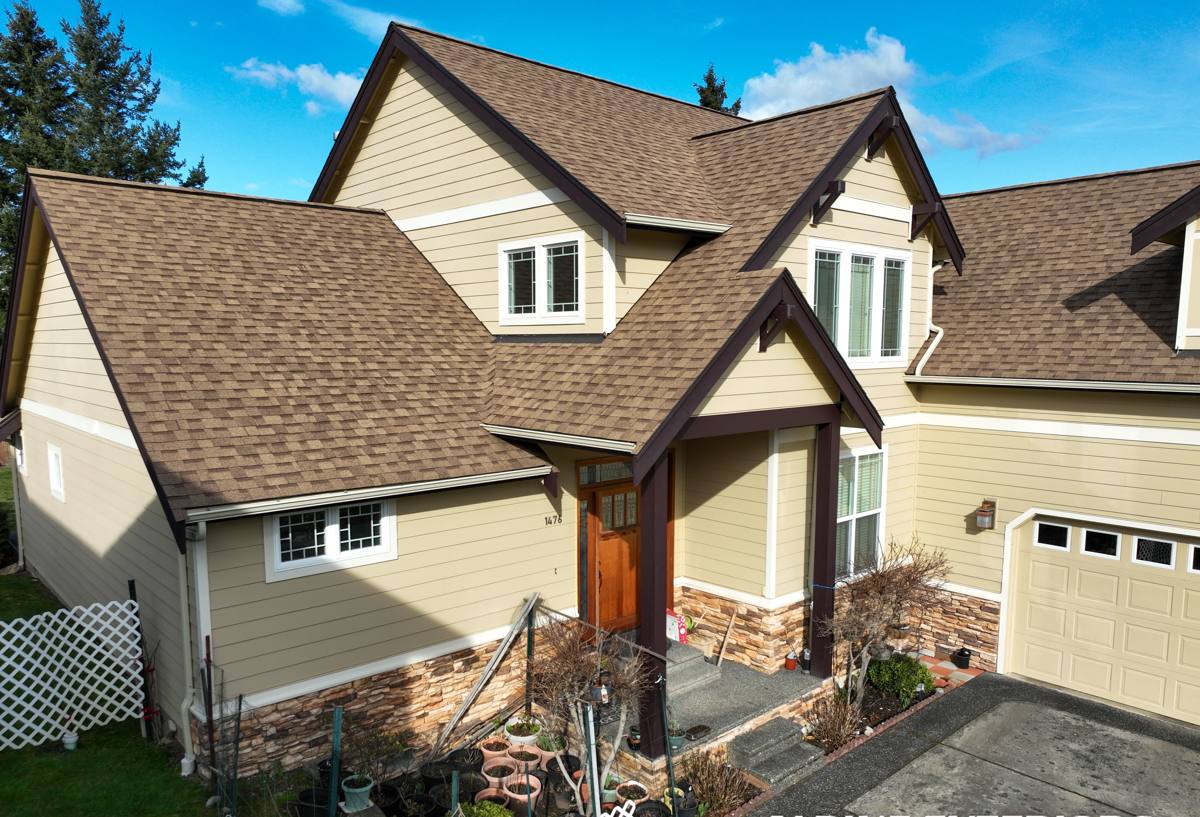
Signs Your Sandy Point Roof Needs Repair, Not Replacement
Most roofs don't need a full tear-off — they need the right repair, done correctly, before a small problem becomes a big one. Here's what we typically look for during an inspection:
- Granule loss concentrated around valleys, eaves, or wherever moss has been sitting the longest
- Rust streaking or pitting on flashing around chimneys, plumbing vents, or skylights
- Shingles that are lifted, cracked, or missing after a windstorm off the bay
- Soft or discolored ceiling spots inside the home, which usually point to a slow leak rather than a sudden one
- Moss buildup thick enough that you can see it holding water after a dry spell
- Gutter overflow or staining below the roofline, often a sign of clogged or undersized drainage
If a roof is still structurally sound and the damage is limited to specific areas — a flashing detail, a section of wind-lifted shingles, a valley that's collecting debris — repair is almost always the more sensible, cost-effective move. Replacement makes sense when the underlying decking has been compromised, when multiple layers of past repairs have failed, or when the roof is old enough that patching one area just means the next area fails soon after.
What a Correct Repair Actually Involves
It starts with finding the real source, not just the visible symptom
Water travels. A stain on a bedroom ceiling doesn't necessarily mean the leak is directly above it — it can trace back several feet along rafters or sheathing before showing itself. A repair that only addresses the spot where water appeared, without tracing it back to where it's actually entering, is a repair that comes back.
It matches materials and fastening to the exposure
On a property exposed to salt air, we don't use standard-grade fasteners or flashing in areas that take direct salt spray or persistent moisture. Galvanized materials corrode faster near open water than most people expect, so we favor corrosion-resistant options in the areas that need it — without over-specifying (and over-pricing) sections of the roof that aren't as exposed.
It addresses moss at the root, not just the surface
Scraping moss off without treating the roof and correcting the conditions that let it grow back — poor airflow, overhanging branches, debris buildup in valleys — is a short-term fix. A proper repair removes moss safely (without damaging granules in the process), treats the surface, and flags any contributing conditions the homeowner can address, like trimming back branches that shade a section of roof year-round.
Common Repairs We See on Sandy Point Homes
Flashing failures at chimneys, vents, and wall intersections
Flashing is where the vast majority of roof leaks originate, and it's also the first thing salt air and repeated wetting/drying cycles will degrade. Re-sealing without addressing corroded or poorly lapped flashing underneath is a temporary fix at best.
Wind-lifted or missing shingles
Storms coming off the bay put real uplift pressure on shingle edges, especially at ridges, rakes, and any section without adequate wind-rated sealing. Once a shingle lifts or goes missing, the exposed underlayment and fasteners are next in line for water damage.
Valley and eave deterioration
Valleys concentrate water flow and collect debris; eaves are where ice and heavy rain runoff pool longest. Both are common failure points, and both need materials and detailing suited to standing water exposure, not just standard field shingle.
Gutter and drainage-related roof edge damage
When gutters clog with moss, needles, or leaf debris, water backs up under the roof edge instead of draining away. We often find that what looks like a roofing problem is actually a drainage problem that's been damaging the roof edge for months.
Our Repair Process
- Inspection and diagnosis — We get on the roof (weather permitting) and trace visible damage back to its actual source, checking flashing, fasteners, underlayment condition, and moss/algae presence throughout, not just at the reported problem area.
- Honest scope and estimate — We explain what we found, what needs repair now, what's worth monitoring, and what a fair price range looks like — in plain language, no upsell pressure.
- Repair work — We remove and replace damaged materials, correct flashing details, treat and clear moss, and reseal with materials suited to Sandy Point's salt-air and rain exposure.
- Walkthrough and documentation — Before we leave, we walk you through what was done and note anything worth keeping an eye on going forward.
Repair vs. Replacement: Weighing the Factors
| Factor | Favors Repair | Favors Replacement |
|---|---|---|
| Roof age | Under 15-20 years, or recently replaced in sections | Nearing or past the material's expected lifespan |
| Extent of damage | Isolated to one or two areas (flashing, a valley, storm damage) | Widespread granule loss, multiple failed repair points |
| Decking condition | Solid, no rot or soft spots found during inspection | Soft, delaminating, or water-damaged sheathing underneath |
| Repair history | First or second repair in this area | Same area has been patched multiple times already |
| Budget timing | Want to extend the roof's life a few more years | Planning ahead for a full replacement anyway |
Cost for a repair depends heavily on scope — a single flashing correction is a very different job from re-decking a storm-damaged section. We'll always give you a real number after we've actually inspected the roof, not a phone estimate.
Materials Suited to Sandy Point's Exposure
We don't push premium materials on every section of every roof — that's not honest pricing. But in the areas that take the brunt of salt air and driving rain (typically the windward-facing slopes and anything near open water views), we lean toward corrosion-resistant flashing and fasteners, and sealants rated for repeated wet-dry cycling rather than general-purpose products. The tradeoff is a modestly higher material cost in those specific areas in exchange for a repair that actually holds up to the environment it's in, instead of needing to be redone in a year or two.
Why It Matters to Hire a Crew That Already Works This Neighborhood
Sandy Point isn't a typical suburban roofing job. Access can be tighter, tree cover affects how and where moss builds up, and the wind and rain exposure varies noticeably depending on which direction a given roof slope faces relative to the bay. A crew that's already worked roofs in this specific area recognizes these patterns quickly, instead of treating every job like a blank slate.
There's also a practical side: knowing Whatcom County's permitting expectations and typical weather windows means fewer surprises and less time waiting around for the right conditions to do the work correctly. Roof repair isn't something that should be rushed between rain systems — doing it right sometimes means timing the job around a dry stretch, and local experience helps predict those windows better than guesswork.
Maintenance Checklist Between Repairs
A good repair buys you years, but a few habits stretch that further:
- Clear gutters and downspouts at least twice a year, more often if you're under trees
- Trim back branches that keep sections of the roof shaded and damp
- Have moss treated before it thickens, not after it's visibly matted
- Check attic ventilation — poor airflow speeds up moisture damage from the inside out
- Walk the exterior after major windstorms and note anything that looks lifted or missing
- Get a roof looked at professionally every couple of years, even with no obvious problems
Let's Take a Look
If you're seeing signs of trouble on a Sandy Point roof — or just want an honest read on where things stand — we're happy to come take a look. The estimate is free, there's no pressure, and you'll get a straight answer about what actually needs doing. Fill out the form below to get started.