 Birch Bay
 Why Sandy Point Roofs Wear Differently
Sandy Point sits right on the water in Birch Bay, and that location shapes everything about how a roof ages here. Homes close to the shoreline take on salt-laden air almost year-round, which is harder on exposed metal — fasteners, flashing, vent caps — than it is a few miles inland. Add Whatcom County's wind-driven winter rain coming off the Strait, and you've got a roof that has to shed water sideways, not just downhill, at every valley, eave, and wall transition.
Then there's shade and moisture. A lot of Sandy Point lots have mature conifers and sit low relative to the water, which means roofs stay damp longer after a storm and get less direct sun to dry out. That combination is exactly what moss needs to take hold, and once moss establishes itself on a roof surface, it holds moisture against the shingles or panels for months at a time instead of letting them dry between rains. Over a full roof lifecycle, that's a meaningfully different wear pattern than a dry, sun-exposed roof a few towns inland — and it's why we treat a Sandy Point installation differently from a standard job.
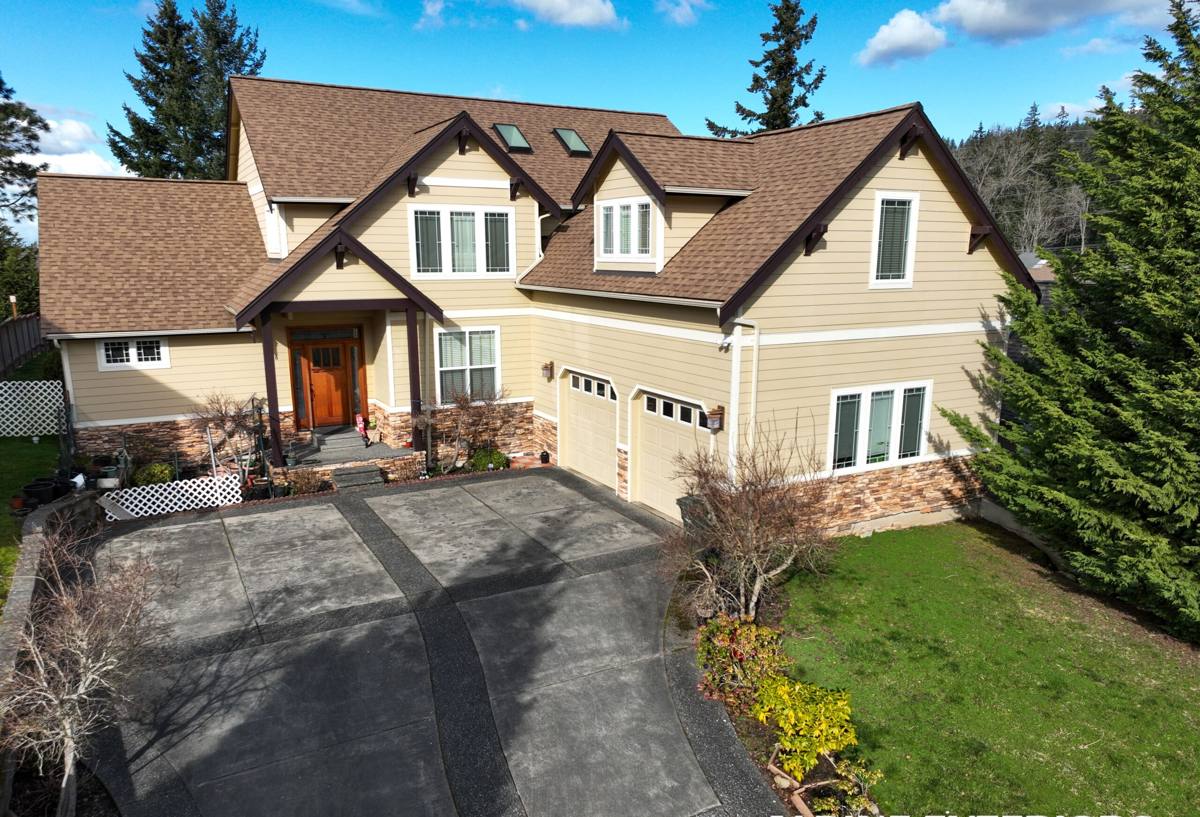
Signs Your Roof Is Due for Replacement
Most homeowners don't wake up one day and decide they need a new roof — it's usually a slow accumulation of small signs that finally add up. In a marine, moss-prone area like Sandy Point, the signs to watch for include:
- Granule loss showing up in gutters or at downspout outlets, especially after wind or heavy rain
- Moss or dark algae streaking on north-facing or shaded slopes that keeps coming back after cleaning
- Shingle edges curling or lifting, particularly on slopes that catch the wind off the water
- Soft or spongy spots when walking the roof, which usually means the decking underneath has absorbed moisture
- Daylight visible through the roof deck from inside the attic, or damp insulation near the eaves
- A noticeable jump in heating costs, which can point to failing ventilation or insulation tied to roof condition
- Leaks that only show up during wind-driven storms, not steady rain — a sign water is being pushed sideways under flashing or shingle laps
- A roof at or past 20–25 years old for standard asphalt composition shingles, which is a realistic ceiling in this climate rather than the optimistic numbers on a shingle wrapper
Any one of these on its own might just need a repair. Several at once, or a roof already past the two-decade mark, usually means it's more cost-effective to replace than to keep patching.
What Goes Into a Correct Installation Here
Tear-Off and Deck Inspection
We don't install a new roof over an old one, and we don't recommend it — layering shingles traps moisture, hides deck damage, and voids most manufacturer warranties. A full tear-off lets us actually see the decking. In a damp, shaded environment like Sandy Point, it's common to find sections of plywood or sheathing that have softened from long-term moisture exposure, particularly near valleys, chimneys, and eaves where water lingers longest. Any compromised decking gets replaced before anything new goes down — installing new roofing over soft decking just guarantees an early failure.
Underlayment for Wind-Driven Rain
Standard felt underlayment is fine in a lot of the country. On a shoreline property that regularly takes wind-driven rain off the water, we use synthetic or self-adhered underlayment in the areas most exposed to that kind of weather — especially at eaves, valleys, and low-slope sections. The goal is a secondary water barrier that still does its job even if wind pushes rain up under the shingle laps, which is a real scenario here in winter storms, not a hypothetical.
Flashing at Valleys, Chimneys, and Wall Transitions
Flashing is where most roof leaks actually start, not in the open field of shingles. Near the water, we pay particular attention to metal selection and detailing at every penetration and transition — chimneys, skylights, sidewall intersections, and valleys — because salt air accelerates corrosion on lower-grade or improperly sealed metal faster than it would inland. Properly lapped, sealed, and fastened flashing is one of the least visible parts of a roof job and one of the most important.
Ventilation for a Humid Marine Climate
A roof that can't breathe traps moisture in the attic, which shortens the life of the decking and the shingles from underneath — often before the outside weather has done any visible damage. We size and balance intake and exhaust ventilation to the specific structure, not a one-size-fits-all vent count, because in a humid coastal climate under-ventilation shows up as premature deck rot and ice-adjacent moisture problems well before the shingles themselves wear out.
Choosing Roofing Materials for a Salt-Air Environment
There's no single "best" roofing material for every Sandy Point home — it depends on budget, roof pitch, and how much long-term maintenance you want to take on. Here's how the common options actually compare in this specific environment:
| Material | Typical Lifespan Here | How It Handles Salt Air, Rain & Moss | Relative Cost |
|---|---|---|---|
| Asphalt composition shingle (standard) | 18–25 years | Reliable and budget-friendly; benefits from algae-resistant granules given local moss pressure | Lowest upfront cost |
| Asphalt composition shingle (algae-resistant, heavier weight) | 25–30 years | Copper- or zinc-infused granules resist algae and moss growth better on shaded slopes | Moderate |
| Standing seam metal | 40–50+ years | Sheds moss and water very well due to smooth surface and slope; requires marine-grade fasteners and coatings near the shoreline | Highest upfront cost |
| Architectural/dimensional shingle | 25–30 years | Better wind resistance than standard 3-tab, holds up well to driving rain when properly nailed | Moderate to higher |
For most Sandy Point homes, an algae-resistant architectural shingle offers the best balance of upfront cost and resistance to the moss and streaking problems the climate causes. Metal is a strong long-term option, especially on lower-slope sections that shed water and moss well, but it's a bigger investment and needs to be detailed correctly at fasteners and edges to actually deliver its long lifespan near salt air.
Moss & Algae: Designing the Roof to Resist Them
Moss isn't just a cosmetic issue — left alone, it lifts shingle edges, holds water against the roof surface, and works its way under laps over time. Rather than treating moss as something to deal with after the fact, we build resistance into the installation itself: algae-resistant shingle products where budget allows, zinc or copper strips at the ridge on moss-prone slopes, and attention to tree cover and shading during the estimate so we can flag which slopes will need the most resistance built in. None of this makes moss impossible on a shaded, damp Sandy Point roof, but it meaningfully slows how fast it comes back and how much damage it does before you notice it.
Our Installation Process, Step by Step
- On-site assessment — we walk the roof, check the attic, and evaluate exposure to wind, shade, and standing water specific to your property
- Written estimate — material options, scope, and pricing laid out clearly, with no pressure to decide on the spot
- Scheduling around weather — we plan around Whatcom County's wetter months where possible, since a roof needs a reasonably dry window to tear off and dry-in properly
- Tear-off and deck inspection — old roofing removed, decking checked and repaired as needed
- Underlayment, flashing, and ventilation installed — the parts of the job that determine whether the roof actually performs in this climate, not just how it looks
- Final roofing material installed — shingles or metal installed to manufacturer specification, including proper nailing patterns for wind resistance
- Cleanup and final walkthrough — site cleared of debris and nails, roof reviewed with you before we consider the job done
Why Hire a Crew That Already Works Sandy Point
A roofing crew that mostly works inland jobs isn't necessarily doing anything wrong — but they may not think about wind-driven rain at valleys, salt exposure on fasteners, or moss pressure on shaded slopes as first-order concerns, because those aren't daily issues where they usually work. A crew that regularly works Birch Bay and Sandy Point specifically has already seen which details fail first in this environment and builds around them from the start, instead of learning it from a callback. That's not a marketing point — it's the difference between a roof that just meets code and one that's actually suited to where it sits.
Protecting Your New Roof After Installation
A correct installation gets you most of the way to a long-lasting roof, but a little upkeep goes a long way in this climate. Keep gutters clear so water isn't backing up under the eaves during winter storms. Have overhanging branches trimmed back where practical to cut down on shade and debris that feed moss growth. A light annual visual check — from the ground or by a professional — can catch a lifted shingle or a failing sealant joint long before it becomes a leak. None of this replaces periodic professional inspection, but it meaningfully extends the life of the work.
If your roof is showing its age, or you just want an honest read on how much life is left in it, we're glad to take a look. The estimate is free, there's no pressure attached to it, and you'll get a straight answer about what your Sandy Point home actually needs — use the form below to get started.