 Birch Bay
 Siding Built for Sandy Point's Waterfront Exposure
Sandy Point sits right up against the water on Birch Bay's shoreline, and that location shapes everything about how siding performs here. Homes in this community take a steady diet of salt-laden air, wind-driven rain coming straight off the water, and a moss season that, in this corner of Whatcom County, can run nine or ten months out of the year. Siding that would hold up fine a few miles inland can fail early here — not because it's bad material, but because it was never engineered for this specific combination of stressors.
Salt air is corrosive to exposed metal fasteners and trim, and it accelerates the breakdown of anything with a painted or coated surface that isn't formulated to resist it. Driving rain doesn't just wet the surface of a wall — on an exposed waterfront lot, wind pushes moisture sideways and upward, finding every seam, lap, and penetration that isn't detailed correctly. And constant dampness plus mild temperatures is exactly the recipe moss and algae need to take hold on siding, trim, and roofing. Put those three together year-round and you have a climate that punishes shortcuts in both material choice and installation.
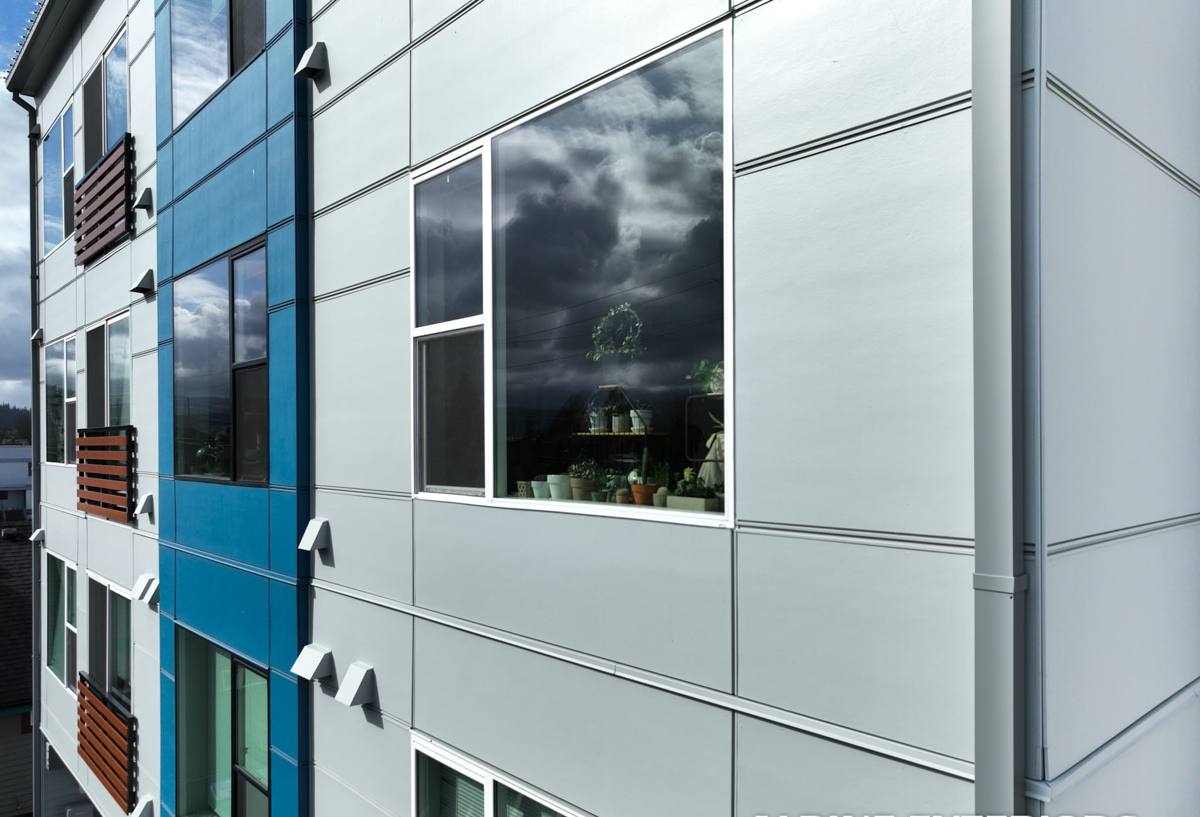
What Correct Siding Installation Actually Involves
Siding installation isn't just fastening panels to a wall — it's building a water management system, and the panels are only the visible layer of it. On a Sandy Point home, we pay particular attention to the parts that don't show once the job is done, because those are the parts that determine whether the siding lasts 10 years or 40.
The Weather-Resistive Barrier
Behind every piece of siding we install is a properly lapped weather-resistive barrier (housewrap or building paper) that sheds water downward and outward, away from the wall sheathing. On a home this exposed to wind-driven rain, laps have to be installed shingle-style — upper courses over lower ones — with no reverse laps that can catch water and drive it inward.
Flashing at Every Penetration
Windows, doors, hose bibs, vents, light fixtures — every penetration through the siding is a place water wants to get in. Correct flashing detail at each one, tied into the weather-resistive barrier, is what actually keeps a wall dry. This is one of the most common places we find shortcuts on older installs when we're re-siding a home.
Fastener Choice and Placement
In a salt-air environment, fastener corrosion resistance matters more than it does inland. We use fasteners rated for the exposure and follow manufacturer nailing patterns exactly — fastener placement affects both water resistance and how well the siding holds up to wind uplift, which matters on an open waterfront lot.
Rainscreen Gap and Drainage
A small drainage gap between the siding and the weather-resistive barrier lets any moisture that does get past the outer layer drain and dry out instead of sitting against the wall. This detail is especially valuable in a climate where the siding rarely gets a long stretch of dry weather to fully dry between rain events.
Why We Only Install James Hardie Fiber Cement
We made a deliberate decision as a company to install James Hardie fiber cement siding exclusively — not vinyl, not LP SmartSide, not Cemplank, Allura, or primed wood products. That decision matters even more on a lot like Sandy Point's than it does elsewhere in Whatcom County.
Fiber cement is non-combustible and dimensionally stable, meaning it doesn't expand and contract with moisture and temperature swings the way wood-based products can — a real advantage in a climate that stays damp for most of the year. James Hardie's ColorPlus factory finish is baked on and warranted against fading and peeling, which matters when salt air and UV exposure are actively working against painted surfaces. And Hardie's HZ5 product line is engineered specifically for cold, wet, freeze-prone coastal climates like this one — it's not a generic product retrofitted for the Pacific Northwest, it's built for it.
We've seen what happens to wood-based and lower-grade composite sidings on exposed waterfront homes in this area: moisture wicking at cut edges, swelling, and paint failure well before a homeowner expects to be dealing with it. That's the maintenance burden we're not willing to install on a customer's home, which is why Hardie is the only product we put up.
Our Installation Process
Every Sandy Point project follows the same sequence, regardless of the home's size or siding style:
- On-site assessment — we look at the existing siding and sheathing condition, wind exposure of the specific lot, and any problem areas around windows, doors, and roof-to-wall transitions.
- Tear-off and sheathing inspection — old siding comes off and we check the sheathing underneath for rot or moisture damage before anything new goes up. This step catches problems that aren't visible from outside.
- Weather-resistive barrier installation — installed and lapped correctly, with all seams and penetrations properly integrated.
- Flashing at windows, doors, and penetrations — done before siding installation begins, not patched in afterward.
- James Hardie panel or lap siding installation — installed to manufacturer specification, including fastener type, spacing, and clearances from grade, decks, and roof lines.
- Trim, caulking, and final detail work — the finish details that determine both appearance and long-term water resistance.
- Walkthrough — we go over the finished work with the homeowner before calling the job done.
Signs a Sandy Point Home Needs New Siding
Because of the exposure here, siding problems tend to show up earlier and more visibly than they would on a more sheltered inland home. Watch for:
- Persistent moss or algae growth that comes back quickly after cleaning
- Soft spots, bubbling, or visible swelling in siding panels or trim
- Paint that's peeling, chalking, or failing faster than a typical repaint cycle
- Cracked or separated caulk joints around windows, doors, and trim
- Visible gaps, warping, or panels that have pulled away from the wall
- Rust streaking from fasteners or trim hardware
- Rot or discoloration at the bottom edges of siding near grade or decks
- Rising energy bills that suggest the wall assembly is no longer performing as insulation and a moisture barrier
Cost Factors for Siding Installation
Every home and lot is different, but these are the main factors that drive the scope and cost of a siding installation project on the Birch Bay waterfront:
| Factor | Why It Matters |
|---|---|
| Home size and wall complexity | More square footage, corners, and roof lines mean more material and labor |
| Sheathing condition | Rot or moisture damage found during tear-off adds repair work before new siding can go up |
| Siding profile and color | Lap width, panel style, and ColorPlus color selection affect material cost |
| Trim and detail work | Corner boards, window trim, and fascia detailing add labor time |
| Wind exposure of the lot | Higher-exposure waterfront sites may call for additional fastening or flashing detail |
| Access and site conditions | Tight lots, slopes, or limited staging area can affect labor time |
We give every homeowner a clear, written estimate before work starts — no vague ranges, no surprise add-ons once the job is underway.
Why Hire a Crew That Already Works Sandy Point
Siding work on an exposed waterfront lot is different from siding work three miles inland, and a crew that already works this specific stretch of coastline knows that going in. We understand how far wind-driven rain can push moisture up a wall, which details matter most in a salt-air environment, and how much of a head start moss gets on a shaded, damp lot like the ones common around Birch Bay.
We're also familiar with Whatcom County permitting requirements and typical construction patterns in this area, which keeps projects moving without avoidable delays. A crew that hasn't worked waterfront homes before can still do competent siding work — but they're learning the site-specific lessons on your home instead of bringing them with them.
Maintenance After Installation
One advantage of James Hardie fiber cement in a climate like this: it doesn't demand much upkeep to keep performing. It won't rot, and it isn't a food source for the moss and algae that thrive in Sandy Point's damp, shaded conditions the way wood-based siding can be. Homeowners still benefit from an occasional gentle rinse to keep moss and grime from building up on the surface, and periodic visual checks of caulking around windows and trim, but this is maintenance in the truest sense — not repair work to head off failure.
If you're planning a siding project in Sandy Point, we're happy to take a look at your home and walk you through what it actually needs. Reach out using the form below for a free, no-pressure estimate.