 Birch Bay
 Roofing in California Creek: A Different Set of Rules
California Creek sits close enough to Birch Bay's shoreline that homes here deal with a roofing environment most inland Whatcom County contractors don't think about every day. Salt-laden air moves in off the bay, wind-driven rain comes at roofs sideways instead of straight down, and the tree cover and damp, shaded pockets around the creek corridor keep moss and algae growing for most of the year. None of that is dramatic on its own. But stacked together, year after year, it's exactly the combination that wears out a roof faster than the manufacturer's warranty paperwork suggests it should.
A roof replacement done right in this neighborhood isn't just "put new shingles on." It's a set of decisions about materials, ventilation, and underlayment that account for the specific way California Creek weather attacks a roof system. That's the lens we bring to every estimate here.
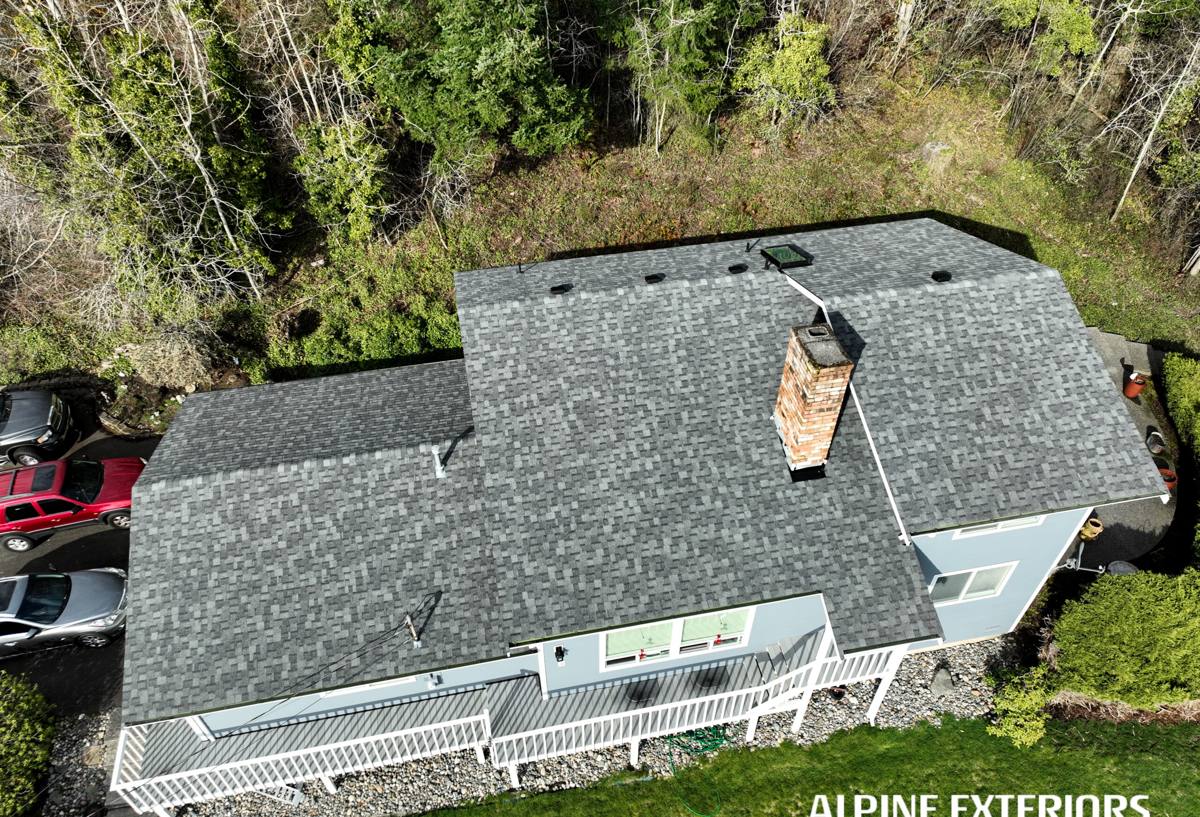
What Salt Air, Rain, and Moss Actually Do to a Roof
Salt Air
Airborne salt doesn't just sit on the surface — it works into fasteners, flashing seams, and any exposed metal. Over time it accelerates corrosion on nails, drip edge, and vent flashing faster than the same materials would wear a few miles inland. Roofs closer to the water need corrosion-resistant fasteners and flashing metals from day one, not as an upgrade.
Driving Rain
When rain comes in at an angle instead of falling straight, it tests every lap, seam, and penetration on a roof — not just the open field of shingles. Wind-driven rain can push water backward under shingle tabs and around chimneys, skylights, and vent stacks that would stay dry in a calmer climate. This is why underlayment choice and flashing detail work matter more here than shingle brand.
Moss and Algae
Shaded, damp areas near the creek and under tree canopy hold moisture on the roof surface long after the rain stops. Moss doesn't just look bad — its root structure lifts shingle edges, holds standing moisture against the roof deck, and shortens the life of the material underneath it. A roof with poor airflow or heavy shade cover will grow moss again within a couple of seasons no matter how thoroughly it's cleaned, unless the replacement addresses ventilation and, where practical, exposure.
Signs a California Creek Roof Is Due for Replacement
- Granules collecting in gutters or at downspout outlets — a sign the shingle surface is wearing thin
- Moss or dark algae streaking that comes back within months of cleaning
- Curling, cupping, or cracked shingles, especially on the north or shaded side of the roof
- Soft or spongy spots when walked on, which can indicate deck moisture damage
- Rusting or corroded flashing around chimneys, vents, or skylights
- Daylight visible through the attic roof deck, or damp insulation near the roofline
- A roof over 20-25 years old that hasn't had a full tear-off, regardless of appearance
Any one of these on its own might mean a repair is enough. Several at once, or a roof already past its expected service life, usually means repair costs start competing with replacement costs — and replacement is the better long-term move.
What a Correct Roof Replacement Includes Here
A roof replacement built for this stretch of Whatcom County coastline isn't just a materials swap. The details below are where a roof either holds up through its full expected life near the bay, or starts showing problems again in five to seven years.
Full Tear-Off, Not an Overlay
We remove the old roofing down to the deck. This lets us actually inspect the sheathing for moisture damage or rot — something you can't see or fix with a second layer installed over the first. In a damp, shaded area like California Creek, hidden deck moisture is common enough that skipping this step is a real risk.
Deck Repair Where Needed
Any soft, delaminated, or rotted sheathing gets replaced before new roofing goes down. Roofing over a compromised deck voids most manufacturer warranties and guarantees a shorter roof life no matter how good the shingles are.
Ice-and-Water Shield and Quality Underlayment
Given the wind-driven rain this area sees, we pay close attention to underlayment coverage at eaves, valleys, and around every penetration — the places driving rain is most likely to find a way in. This is a place we don't cut corners to save a few dollars, because it's the layer that protects the deck if wind ever pushes water past the shingles themselves.
Corrosion-Resistant Flashing and Fasteners
Given the proximity to salt air, we use flashing and fastener materials chosen for corrosion resistance, not just cost. Cheaper galvanized components can start rusting within a few years this close to the water; the incremental cost of better materials is small compared to a flashing failure and the water damage that follows.
Balanced Attic Ventilation
Proper intake and exhaust ventilation keeps the underside of the roof deck dry and reduces the damp, stagnant conditions moss and algae need to establish. This is one of the most overlooked parts of a roof replacement, and one of the most effective moss-prevention measures available — more effective long-term than any chemical treatment.
Algae-Resistant Shingle Options
Many manufacturers offer shingles with algae-resistant granules built in. In a shaded, moisture-prone area like this, that's a reasonable upgrade to discuss — it won't eliminate moss on its own, but it slows algae staining and buys time between cleanings.
Material Options and How They Hold Up Locally
| Material | How It Handles Salt Air & Rain | Moss/Algae Behavior | Typical Lifespan Here |
|---|---|---|---|
| Architectural asphalt shingle | Good with corrosion-resistant flashing and proper underlayment | Benefits from algae-resistant granule options; needs periodic cleaning in shaded areas | 20-30 years with correct install |
| Standing seam metal | Excellent, if coated/fastener system is coastal-rated | Sheds moss more easily due to smooth, steep surface | 40-50+ years |
| Wood shake | Higher maintenance in damp, salt-air conditions | More prone to moss retention; needs regular upkeep | Shorter effective life without diligent maintenance |
| Composite/synthetic shingle | Good corrosion and moisture resistance | Similar to architectural asphalt with algae-resistant coatings | 30-50 years depending on product |
There's no single "correct" material for every California Creek home — roof pitch, shade exposure, budget, and the look you want all factor in. What matters more than the brand name is whether the installation accounts for this specific microclimate, which is where a lot of otherwise fine roofing systems fall short.
Cost Factors for This Neighborhood
We won't quote a number without seeing the roof, but a few things consistently move the price up or down for homes in and around California Creek specifically:
- Deck condition — hidden rot from long-term moss cover or past leaks adds repair cost that only shows up once tear-off begins
- Roof pitch and access — steeper roofs and limited driveway/staging access near the creek can affect labor time
- Number of penetrations — chimneys, skylights, and multiple vent stacks each need careful flashing work, which adds time given the driving-rain exposure here
- Material choice — asphalt, metal, and composite options carry different upfront costs and different long-term maintenance needs
- Ventilation upgrades — adding proper intake/exhaust venting if the current attic is under-ventilated
- Moss and debris removal — heavier moss buildup on an older roof means more cleanup during tear-off
Our Process for California Creek Roof Replacements
- On-site inspection — we walk the roof, check the attic for ventilation and moisture signs, and look at flashing, valleys, and penetrations up close
- Written estimate — a clear scope of work and pricing, including material options suited to this location's exposure
- Scheduling around weather — we plan tear-off and dry-in around Whatcom County's rain patterns so the deck isn't left exposed longer than necessary
- Tear-off and deck inspection — old roofing removed, deck checked and repaired as needed
- Underlayment, flashing, and shingle installation — installed with the corrosion resistance and rain protection this area calls for
- Ventilation check — confirming intake and exhaust airflow is balanced before we close out the job
- Final walkthrough — reviewing the completed roof and cleanup with you before we consider the job done
Why a Crew That Knows This Area Matters
Roofing crews that mostly work drier, inland parts of Whatcom County can still put on a technically fine roof — but they don't always default to the corrosion-resistant fasteners, the extra attention at flashing laps, or the ventilation planning that a shaded, salt-exposed, high-rainfall spot like California Creek benefits from. Those aren't exotic upgrades; they're just decisions that matter more here than they do ten miles inland, and a crew that regularly works Birch Bay properties makes them by default rather than as an afterthought.
We're not going to tell you a roof here needs to be dramatically different from a roof anywhere else in the county. It's the same trade, the same core materials. What changes is which details get extra attention — and that comes from having done this work, on this kind of terrain, against this kind of weather, more than once.
Ready to Talk About Your Roof?
If you're seeing granule loss, moss that keeps coming back, or a roof that's simply getting up there in age, it's worth having someone take a look before small problems turn into deck damage. We offer free, no-pressure estimates for California Creek homeowners — just fill out the form below and we'll get a look at your roof and give you a straight answer on what it needs.