 Birch Bay
 Siding Built for the California Creek Microclimate
California Creek sits in that stretch of Whatcom County where Puget Sound weather and the low-lying, wooded terrain around Birch Bay combine into a genuinely tough environment for exterior building materials. Homes here deal with salt-laden air drifting off Birch Bay and the Strait of Georgia, long stretches of driving rain off the water, and a moss and mildew season that can run most of the year in shaded, tree-covered lots. Siding that isn't engineered for this combination doesn't just look tired faster — it fails faster, in ways that are expensive to catch early and worse to ignore.
We install James Hardie fiber cement siding exclusively, and we work this area regularly. This page is about what that actually means for a California Creek home: what the climate demands, what a correct installation looks like, and why the details matter more here than they would somewhere drier and further from salt water.
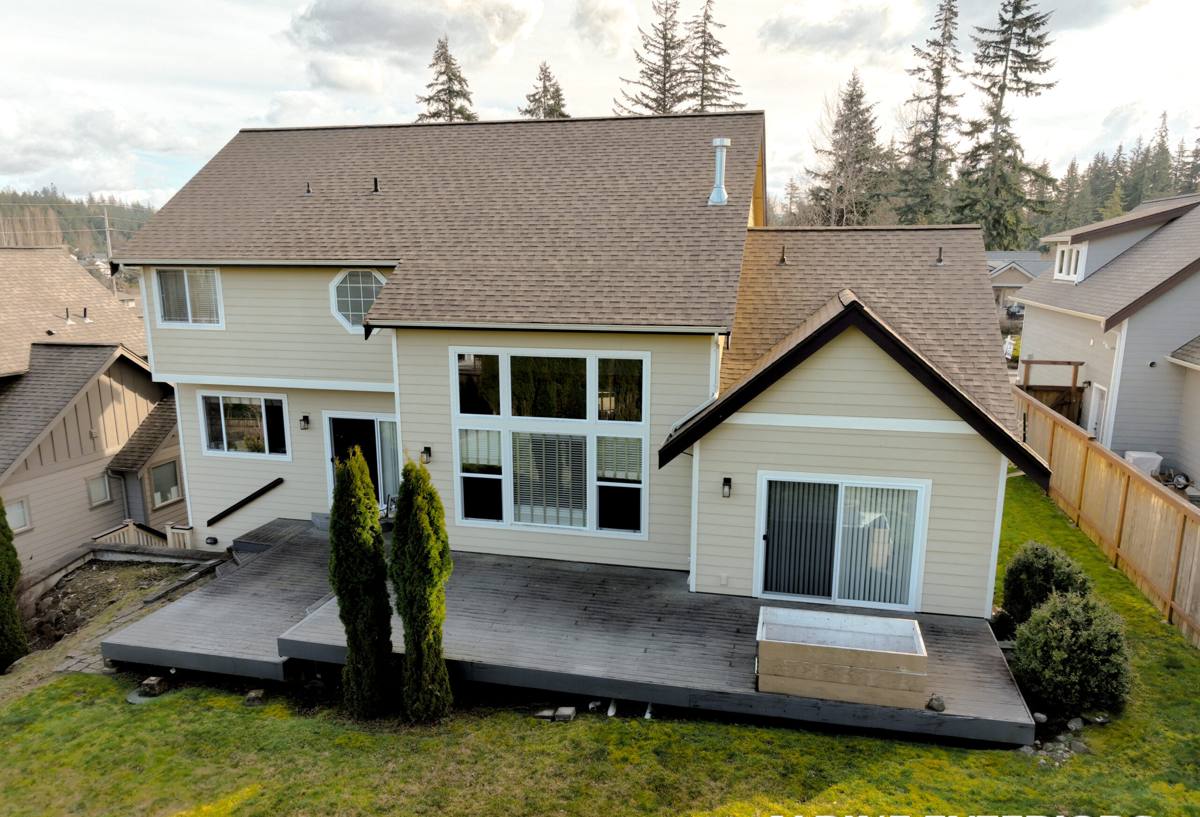
What Salt Air, Rain, and Moss Actually Do to Siding
Salt Air
Airborne salt from Birch Bay doesn't just affect homes right on the water. It travels with prevailing wind and settles on siding, trim, and fasteners across the surrounding area, including inland pockets like California Creek. Salt is hygroscopic — it pulls moisture out of the air and holds it against a surface. On products that aren't built to resist that, the result is accelerated finish breakdown, corrosion at fastener points, and a surface that stays damp longer than it should between rain events.
Driving Rain
Storms coming off the Strait don't fall straight down here — wind-driven rain hits siding at an angle, working into laps, joints, and any gap around windows, doors, and trim. A siding system is only as good as its ability to shed that water without letting it track behind the cladding. Over time, wind-driven rain finds every shortcut in a mediocre install, whether that's from face-nailing where the manufacturer specifies blind-nailing, insufficient overlap, or missing flashing details.
Moss and Sustained Moisture
California Creek's tree cover and proximity to water mean many lots stay shaded and damp well after a storm passes. That's ideal for moss, algae, and mildew growth on any surface that holds moisture at its surface. Some siding materials are essentially organic — wood fiber, cellulose, or wood substrates — which gives moss something to root into and gives moisture somewhere to be absorbed rather than shed. Once that cycle starts, it's a maintenance treadmill: wash, treat, repaint, repeat, with the underlying material slowly degrading the whole time.
Why James Hardie Fits This Climate
James Hardie fiber cement is manufactured from cement, sand, and cellulose fibers, engineered specifically to resist moisture absorption, freeze-thaw cycling, and coastal exposure. A few things matter specifically for a property like yours in California Creek:
- Non-combustible core — fiber cement doesn't burn, rot, or feed insects, removing an entire category of failure that wood-based and wood-substrate products carry.
- HZ5 / HZ10 engineered product lines — Hardie makes climate-specific formulations for higher-moisture, coastal, and freeze-prone regions, rather than a single one-size-fits-all board.
- ColorPlus factory finish — a baked-on, multi-coat finish applied under controlled conditions, which holds color and resists fading and moisture intrusion better than field-applied paint on job-primed products.
- Dimensional stability — fiber cement expands and contracts far less than wood-based sidings across wet and dry cycles, which means fewer stressed joints, less caulk failure, and fewer hairline gaps for water to exploit.
None of that means Hardie siding is maintenance-free. It means the material itself isn't the weak point — the installation is where correctness or shortcuts show up over the following years, which is why we treat installation detail as seriously as the product choice.
What a Correct Installation Looks Like Here
A James Hardie installation done to manufacturer specification isn't materially different in California Creek than anywhere else in the region — but the margin for error is smaller, because the climate will find and exploit any shortcut faster. The details that matter most on a coastal-influenced, high-moisture property:
Water Management Behind the Siding
Correct installation starts with a drainage plane and weather-resistant barrier behind the siding, not just the siding itself. Hardie boards are a cladding layer, not a standalone waterproofing system — proper house wrap, flashing at every penetration (windows, doors, hose bibs, vents), and correct kick-out flashing at roof-wall intersections are what actually keep bulk water out of the wall assembly.
Fastening and Clearances
James Hardie specifies fastener type, spacing, and placement precisely, and those specs change slightly by product line and exposure category. Getting this wrong — using the wrong fastener, face-nailing where blind-nailing is called for, or nailing too close to board edges — creates entry points for moisture and stress cracking that shows up as callback issues years later, well after a rushed crew has moved on.
Clearance and Ground Contact
Hardie requires minimum clearance from grade, roof lines, decks, and patios. On tree-shaded, damp lots like much of California Creek, skipping this clearance is one of the most common causes of moisture wicking into the bottom courses of siding, regardless of how good the product is.
Caulking and Joint Treatment
Butt joints, trim transitions, and penetrations need the correct sealant, correctly applied — not as a cosmetic finishing step but as part of the water management system. Over-reliance on caulk to compensate for poor flashing is a shortcut that fails within a few wet seasons.
Comparing Approaches: What Determines Long-Term Performance
| Factor | Why It Matters in California Creek |
|---|---|
| Product resistance to moisture absorption | Determines whether siding holds dampness through the region's long wet, shaded stretches or sheds it |
| Factory-applied vs. field-applied finish | Factory finish resists salt-air and moisture-driven fading and peeling far longer than site-applied paint |
| Correct flashing and drainage plane | Prevents wind-driven rain from tracking behind the cladding regardless of siding material |
| Fastener spec compliance | Wrong fasteners or placement create long-term entry points for moisture and cause stress cracking |
| Clearance from grade and grade-adjacent moisture | Shaded, damp lots accelerate wicking and moss growth at the base of a wall if clearance is skipped |
Our Process for California Creek Projects
We approach every California Creek home the same disciplined way:
- On-site assessment — we walk the property, note sun and shade exposure, tree cover, drainage patterns, and existing moisture or moss issues before recommending anything.
- Product line selection — we specify the correct James Hardie product and profile for the home's exposure, not a default catalog choice.
- Water management first — house wrap, flashing, and drainage details are installed and inspected before a single board goes up.
- Manufacturer-spec installation — fastening, clearances, and joint treatment follow James Hardie's published installation guidelines, not shortcuts.
- Final walkthrough — we review the completed job with you, including care and maintenance expectations specific to your lot's sun and moisture exposure.
Why the Installing Crew Matters as Much as the Product
The single biggest variable in how long siding performs isn't the brand — it's whether it was installed correctly for the site conditions it actually faces. A crew unfamiliar with coastal Whatcom County work may not think twice about clearance from grade on a shaded lot, or may use standard fastening details that would be fine in a drier inland climate but leave a California Creek home more exposed than it should be. A crew that works this area regularly builds in those margins automatically, because they've seen what happens when they're skipped.
We also only install one product system, which means we're not making a per-job decision between materials based on margin or availability. Every crew member installing your siding is trained on the same manufacturer specifications, applied consistently, project after project.
What to Expect for Maintenance
Even correctly installed James Hardie siding benefits from basic upkeep, especially on shaded, moisture-prone lots:
- Periodic gentle rinsing to keep salt residue, pollen, and organic debris from building up on the surface
- Visual checks after major storms for damaged trim, loose fasteners, or caulk separation at joints and penetrations
- Keeping vegetation and mulch beds trimmed back from direct contact with siding to preserve airflow and clearance
- Repainting is not required on schedule the way it is with field-painted materials — ColorPlus finish is designed to hold color for years without a repaint cycle
This is a fraction of the upkeep that wood-based or job-primed siding demands in this climate, but it isn't zero — no exterior cladding is.
Get a Straight Answer for Your Property
Every lot in California Creek sits a little differently — some more exposed to wind off the bay, some more shaded and moss-prone under tree cover. The right approach depends on your specific site, not a generic recommendation. If you'd like a straightforward, no-pressure look at what your home's siding needs and an honest estimate for a James Hardie installation done to spec, use the form below to request a free estimate.