 Birch Bay
 Energy-Efficient Windows in California Creek
California Creek sits in the low-lying, marine-influenced corner of Whatcom County near Birch Bay, and that setting puts real pressure on a home's windows — not just on how well they keep water out, but on how well they keep conditioned air in. Salt-laden air off the water, long stretches of driving rain, and a moss season that can run most of the year on shaded walls and trim all work against a window's seals, frames, and glazing over time. When those components degrade, the first thing homeowners usually notice isn't a leak — it's a draftier house and a heating bill that keeps climbing.
This page focuses specifically on energy-efficient windows for California Creek properties: what actually makes a window efficient in this exposure, what a correct installation looks like, and how we approach the repair-versus-replace decision when the real question is energy performance rather than just appearance or age.
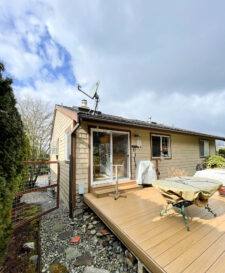
How This Climate Works Against Window Efficiency
Salt Air and Seal Breakdown
Marine air carries salt that accelerates corrosion in window hardware and can break down lower-grade seals and gaskets faster than a drier inland climate would. Once a seal starts to fail, insulated glass units lose their gas fill and their ability to resist heat transfer, and weatherstripping around the sash stops doing its job — both of which show up directly as higher energy loss, not just fogging or drafts.
Wind-Driven Rain and Air Infiltration
Open, low-lying terrain near the water means storms push rain sideways into wall assemblies and window openings rather than straight down. The same gaps that let wind-driven rain in also let conditioned air out and cold, damp air in. A window that's technically rated for good energy performance on paper won't deliver it if the installation leaves those infiltration paths open around the frame.
A Long Moss and Shade Season
Mild, wet conditions across this part of Whatcom County keep shaded elevations damp for much of the year, and window sills, trim, and the wood framing around older units are common places moss and mildew take hold. Beyond the cosmetic issue, sustained moisture against a frame or sill can compromise the seal and insulation around the opening, which is another quiet path for energy loss.
What "Energy-Efficient" Actually Means in a Window
Homeowners hear "energy-efficient" used loosely, but a few specific ratings actually determine how a window performs. Understanding them helps separate a real upgrade from a marketing label.
U-Factor
U-factor measures how well a window resists heat transfer — lower is better. In a climate like this one, where the bigger concern is heat escaping during long damp, cool stretches rather than keeping heat out, U-factor is usually the number that matters most when comparing window options.
Low-E Coatings and Gas Fills
Low-E coatings are a microscopically thin layer applied to the glass that reduces heat transfer without cutting down on visible light. Combined with an inert gas fill — typically argon — between panes, they meaningfully lower a window's U-factor. The specific coating and fill can vary by manufacturer, which is worth asking about directly rather than assuming all double-pane windows perform the same.
Air Infiltration Ratings
Air infiltration ratings measure how much air leaks through the window assembly itself under test conditions. It's a useful number, but it only reflects the window unit — it says nothing about how well that window will be sealed into the surrounding wall once it's actually installed, which is where a lot of real-world performance is won or lost.
| Rating | What It Measures | Why It Matters Here |
|---|---|---|
| U-Factor | Heat transfer through the whole window unit | Primary driver of heating loss in a cool, damp climate |
| Solar Heat Gain Coefficient | How much solar heat passes through the glass | Secondary priority here compared to hotter, sunnier climates |
| Air Infiltration | Air leakage through the window unit itself | Only half the story — installation seals the rest |
| Condensation Resistance | How well the window resists interior condensation | Directly tied to comfort and moisture problems in wet winters |
Signs a California Creek Home Is Losing Energy Through Its Windows
- Rooms near windows feel noticeably colder or draftier than the rest of the house
- Heating costs have climbed without a clear reason like rate increases
- Fogging or visible moisture trapped between panes of a double-pane window
- Condensation forming on interior glass or sills during cold, damp stretches
- Visible daylight or a gap where the frame meets the siding or trim
- Curtains or blinds noticeably moving on days with no windows open
Frame Material and Long-Term Energy Performance
The frame plays a bigger role in long-term energy performance than most homeowners expect, because a frame that warps, swells, or lets hardware go stiff over time will stop sealing tightly against the sash regardless of how good the glazing package is.
| Frame Material | Moisture Behavior | Long-Term Seal Performance |
|---|---|---|
| Vinyl | Resists rot; can flex slightly with heat | Generally reliable and lower cost |
| Fiberglass | Very dimensionally stable across temperature swings | Holds tight seals well over many years |
| Wood without cladding | Absorbs moisture readily in this climate | Seal and finish need regular upkeep to stay tight |
We install vinyl and fiberglass window systems for this reason — both resist the rot and swelling that wood-frame windows without cladding are prone to in a wet, marine-influenced climate, and both hold their seals better over time than a frame material that's absorbing and releasing moisture with the seasons.
Installation: Where Energy Efficiency Is Actually Won or Lost
A high-performance window with a low U-factor and a good gas fill still won't deliver that performance if it's installed loosely. Proper insulation around the rough opening, correctly lapped flashing tied into the surrounding wall, and weatherstripping and sealant rated for sustained moisture exposure all matter as much as the window's factory rating. We treat this as standard installation practice, not an optional upgrade, because in this exposure a poorly sealed opening undoes a meaningful share of whatever efficiency gain the new window was supposed to deliver.
A Common Gap We See on Older Retrofits
On repair and replacement calls in this area, one of the most common findings isn't a failed window unit — it's gaps around the rough opening that were never properly insulated or air-sealed during a past installation. Caulk alone, without proper flashing and insulation behind it, tends to crack and open back up over a few wet seasons, and a homeowner is left wondering why a "new" window still feels drafty.
Repair, Reglaze, or Full Replacement — The Energy Question
Not every underperforming window needs full replacement. If the frame is sound and hardware still functions, a failed seal can often be addressed with a reglaze or insulated glass unit replacement, which restores most of the lost efficiency at a fraction of full replacement cost. If the frame itself is warped, rotted, or the hardware has been failing for years, patching the glass won't fix the air leaks happening around it — at that point full replacement is usually the more honest recommendation, both for comfort and for long-term cost.
A Simple Checklist Before Hiring for Energy-Efficient Window Work in California Creek
- Ask for the specific U-factor and air infiltration ratings of any window being proposed, not just an "energy-efficient" label
- Confirm how they insulate and air-seal the rough opening, not just how they set the window unit
- Confirm current Washington contractor licensing and active liability insurance
- Get a written scope that separates the manufacturer's product warranty from the contractor's installation warranty
- Ask whether reglazing or a full replacement makes more sense for each affected window, and why
Our Process
We start with an on-site look at the windows in question — checking frame condition, seal integrity, hardware function, and how the existing opening was insulated and flashed. From there we give a straightforward read on whether repair, reglazing, or replacement is the more sensible path for actual energy performance, along with the specific ratings we'd recommend for the exposure your home sees. Flashing, insulation, and air-sealing at the opening are handled as standard practice on every job, not offered as an add-on.
If your California Creek home has drafty rooms, rising heating costs, or windows that just don't feel like they're doing their job anymore, we're happy to take a look and give an honest read on what's actually going on. Reach out below for a free, no-pressure estimate.