 Birch Bay
 Why California Creek Roofs Take a Beating
California Creek sits close enough to the water that every roof in the area lives with the same combination of stressors: salt-laden air moving in off Birch Bay, wind-driven rain that comes in sideways during winter storms, and a moss season that stretches from fall through spring. None of these things alone would wreck a roof quickly. Together, over years, they wear down flashing, loosen shingles, and open small gaps that let water in long before a homeowner notices a leak inside.
Whatcom County storms rarely bring the dramatic hail or tornado damage you'd see elsewhere. What they bring instead is repeated, grinding exposure — gusts strong enough to lift shingle edges, rain heavy enough to find every weak seam, and damp conditions that never really let a roof dry out and reset. That's a different kind of damage pattern than a single big storm event, and it calls for a repair approach that accounts for it.
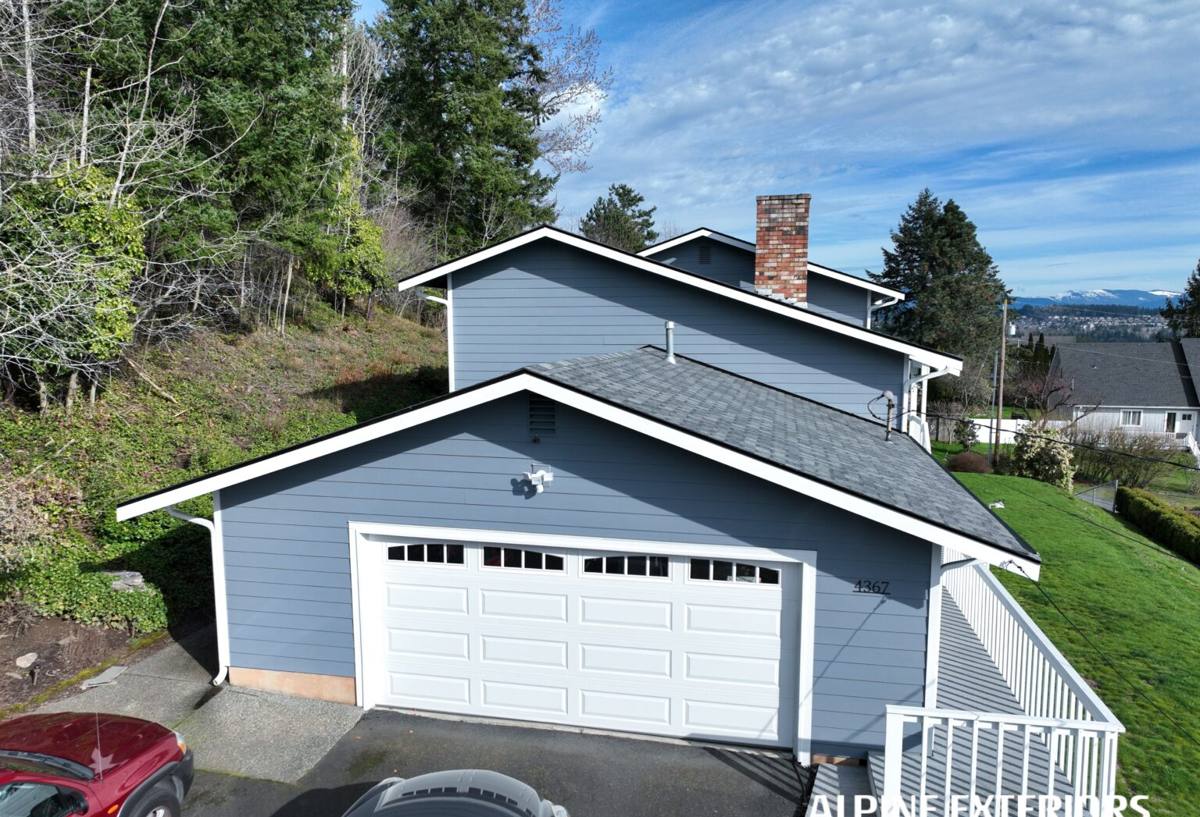
What Storm Damage Actually Looks Like Here
Homeowners often picture storm damage as a hole punched through the roof. In California Creek, it's usually quieter than that. The damage we're called out for most often falls into a few categories:
- Wind-lifted or creased shingles along ridgelines and roof edges, where uplift pressure is highest
- Flashing pulled loose or bent around chimneys, skylights, and roof-to-wall transitions
- Granule loss from shingles battered repeatedly by driving rain, which shortens their remaining service life
- Debris strikes from branches or limbs knocked loose during high-wind events
- Gutter and downspout damage that redirects water onto fascia and siding instead of away from the house
- Moss and organic growth working into lifted shingle tabs, holding moisture against the roof deck
The last one surprises people. Moss isn't cosmetic in this climate — it's a moisture trap. Once it establishes itself under a lifted or damaged shingle edge, it keeps that spot wet well after the rest of the roof has dried, which accelerates rot in the decking underneath.
Damage That's Easy to Miss From the Ground
A lot of storm damage in this area simply isn't visible from a ladder-free walk around the house. Lifted tabs on the back slope, cracked pipe boot seals, or flashing that's shifted a quarter inch at a valley won't show up until water starts staining a ceiling — and by then it's usually been leaking for a while. This is the main reason we recommend a roof-level inspection after any notable storm, not just a driveway assessment.
What a Correct Storm Repair Involves
A proper storm damage repair isn't just swapping out a few obviously broken shingles. It starts with figuring out how far the damage actually extends, because wind and water don't stop at the visible edge of a problem.
Inspection First
We check the full roof surface, not just the area the homeowner points to. That means the ridge, all valleys, every penetration (vents, skylights, chimneys), the flashing at roof-to-wall intersections, and the gutter line. We're looking for both the obvious damage and the secondary signs — soft spots underfoot, lifted tabs nearby, staining on the underside of the decking if it's accessible from the attic.
Matching the Repair to the Damage
Once we know the scope, the repair itself typically involves some combination of:
- Removing and replacing damaged shingles with matching material, tied properly into the surrounding courses
- Re-securing or replacing bent, corroded, or loosened flashing at vulnerable transition points
- Resealing pipe boots and vent flashing, which are common failure points in wind-driven rain
- Replacing sections of decking if moisture has caused rot or delamination underneath the damaged area
- Clearing moss and treating the affected area before closing the repair back up, so trapped moisture isn't sealed in
The goal on every repair is to restore the roof's ability to shed water the way it was designed to, not just to patch the spot that's visibly broken. A repair that looks fine but doesn't address the flashing or decking underneath it tends to fail again within a season or two, especially in a climate that gives a roof so little downtime between rain events.
Repair or Replace — How We Make That Call
Not every storm-damaged roof needs a full replacement, and not every roof that looks rough from the ground is actually a repair candidate. The decision comes down to how much of the roof is affected, how old the existing roofing is, and whether the decking underneath is still sound.
| Factor | Favors Repair | Favors Replacement |
|---|---|---|
| Extent of damage | Isolated to one slope or section | Spread across multiple slopes or the whole roof |
| Roof age | Under roughly 12-15 years, materials still sound elsewhere | Nearing or past expected service life |
| Decking condition | Solid, no rot found on inspection | Soft spots or rot found in multiple areas |
| Prior repair history | First significant repair needed | Repeated patch repairs in the same areas |
| Moss and moisture pattern | Surface growth, no deck saturation | Long-term moss cover with underlying moisture damage |
We'll always tell you honestly which side of that line your roof falls on, including when a repair is genuinely the right call and a full replacement would be spending more than necessary. We only recommend replacement when the inspection actually supports it.
Our Process, Start to Finish
- Contact and scheduling — you describe what you're seeing (a leak, missing shingles, storm event) and we schedule an inspection.
- Roof-level inspection — we get on the roof, not just look from the ground, and document the actual condition and cause.
- Written assessment — you get a clear explanation of what's damaged, what caused it, and what repair is actually needed.
- Repair work — matched materials, proper flashing technique, and decking replacement where required.
- Final check — we confirm the repair area sheds water correctly and there's no remaining vulnerable spot nearby.
We don't upsell repairs into replacements to pad a job, and we don't do a surface-level patch that leaves the underlying cause untouched. Both approaches cost homeowners more in the long run, either in wasted money or in a repeat call a year later.
Working With Insurance Claims
Many storm damage repairs in this area are at least partially covered by homeowners insurance, particularly when the damage is tied to a specific wind or storm event. If you're planning to file a claim, timing and documentation matter. We can provide a written inspection report describing the damage and its likely cause, which is typically what an adjuster wants to see alongside their own inspection. We're not a public adjuster and won't promise a claim outcome, but we'll give you an honest, accurate description of the roof's condition to support your claim.
Why a Crew That Knows California Creek Matters
A roofer who works all over Washington sees this coastal wind-and-moisture pattern occasionally. A crew that works Birch Bay and California Creek regularly sees it constantly, and that changes how we approach a repair. We know which flashing details tend to fail first in salt air, how far moss usually creeps in a single wet season here, and which roof orientations catch the worst of the driving rain off the bay. That local pattern recognition means fewer surprises during the repair and a better read on whether a roof needs a targeted fix or a closer look at its overall condition.
It also means we're not far away if a repair needs a follow-up check after the next storm rolls through, which happens more than a few times a year in this part of Whatcom County.
After a Storm: A Quick Homeowner Checklist
- Check gutters and the ground around the house for shingle granules or shingle pieces
- Look for water stains or new spots on interior ceilings, especially near chimneys or skylights
- Note any branches or debris that fell on or near the roof during the storm
- Check the attic (if accessible) for daylight, damp insulation, or staining on the decking
- Avoid climbing onto the roof yourself after a storm — wet, mossy surfaces are genuinely dangerous
- Call for an inspection sooner rather than later; small leaks get more expensive the longer they run
Don't Wait Out the Damage
Because so much of this region's roof damage builds quietly — a lifted tab here, a bit of moss there, flashing that's shifted just slightly — the worst outcomes usually come from delay, not from the storm itself. A roof that gets checked and repaired promptly after a wind event almost always costs less to fix than one where the same small problem was left to work its way into the decking over another wet season.
If your California Creek home has been through a recent storm, or if you're just not sure whether last winter left any damage behind, we're happy to take a look. Fill out the form below for a free, no-pressure estimate — we'll tell you plainly what we find, whether that's a small repair or nothing to worry about at all.