 Birch Bay
 Roof Repair Built for California Creek's Weather
California Creek sits close enough to Birch Bay and the Strait of Georgia that homes here take on a specific mix of punishment: salt-laden air moving in off the water, wind-driven rain that gets pushed sideways under loose flashing, and a moss season that runs longer than most homeowners expect in Whatcom County. A roof repair here isn't just patching a leak — it's addressing why that leak started in the first place, and that "why" is almost always tied to one of those three factors.
We repair roofs in this neighborhood regularly, which means we already know which slopes hold moisture longest, which valley details tend to fail first on older homes in the area, and what a proper fix looks like versus a temporary cover-up. This page walks through what we look for, how we approach a repair, and what to expect if you call us.
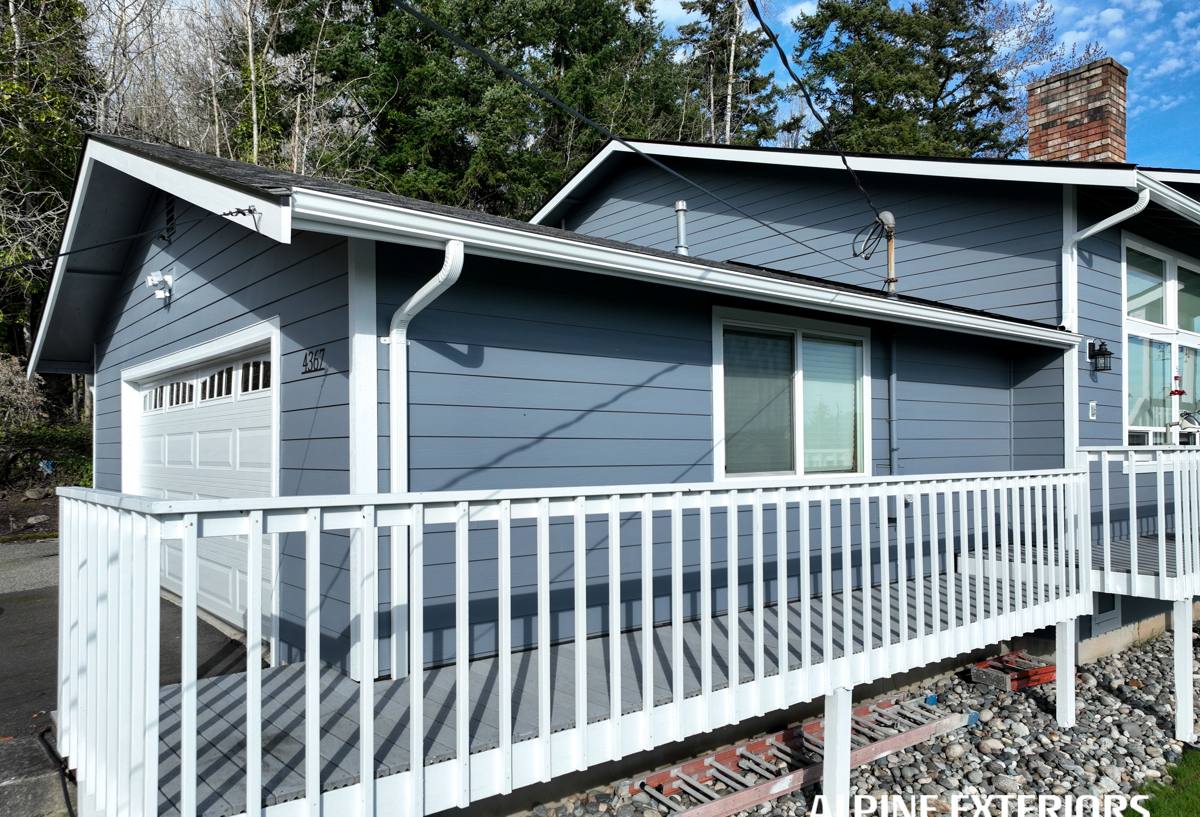
Why Roofs Fail Differently Near the Water
Salt Air and Metal Fatigue
Salt air accelerates corrosion on exposed metal — flashing, fasteners, valley metal, and pipe boots with metal collars. A nail or flashing seam that would last decades a few miles inland can start rusting and lifting years earlier this close to the coast. Once flashing corrodes, it stops shedding water cleanly, and that's where slow, hard-to-spot leaks begin.
Driving Rain and Wind Direction
Birch Bay's storms often come with sustained wind that drives rain sideways rather than straight down. That matters because a lot of standard roofing details are built to handle vertical rain, not horizontal. Rain pushed uphill under a shingle tab, into an under-sealed ridge cap, or past a poorly lapped valley will find a gap that would never leak in calmer weather.
Moss and Trapped Moisture
The long wet season in this part of Whatcom County gives moss plenty of time to establish on north-facing slopes and shaded areas under tree cover. Moss doesn't just look bad — it holds moisture against the roofing material, lifts shingle edges as it grows, and keeps the deck underneath damp longer than it should ever stay. That sustained dampness is what leads to soft decking and premature granule loss.
What a Correct Roof Repair Actually Involves
A lot of "roof repairs" are really just caulk over a symptom. We start every job the same way: find the actual entry point, not just the stain on the ceiling below it. Water travels — a leak showing up in a bedroom can easily originate several feet away at a valley, a chimney flashing, or a vent boot.
- Locate the true source of the leak, tracing water path along the deck if needed, not just patching where the stain appears
- Inspect surrounding shingles, flashing, and fasteners for related wear — a leak rarely happens in isolation
- Check the roof deck itself for soft spots or rot once the covering is pulled back
- Replace failed flashing and boots with corrosion-appropriate materials, not just re-sealing old metal
- Clear moss and organic debris from the repair area and surrounding slopes before closing it back up
- Match shingles or roofing material as closely as possible so the repair doesn't stand out or create a new weak seam
- Re-check the repair area during the next significant rain when possible, or advise the homeowner on what to watch
Common Repair Points We See in This Area
| Roof Area | Typical Issue | Why It Happens Here |
|---|---|---|
| Valleys | Water backing up under metal or shingle laps | Driving rain overwhelms standard lap coverage |
| Pipe and vent boots | Cracked rubber collars, rusted metal bases | UV exposure plus salt-air corrosion shortens lifespan |
| Chimney and wall flashing | Lifted or corroded step flashing | Coastal air speeds up metal fatigue at seams |
| North-facing slopes | Moss growth lifting shingle edges | Shade and prolonged moisture in the wet season |
| Ridge caps | Wind-lifted or under-sealed caps | Sustained coastal wind works fasteners loose over time |
Repair vs. Replacement: How We Decide
Not every leak means a new roof, and we won't tell you it does. The honest question is whether the damage is contained to a specific detail — a boot, a flashing run, a section of valley — or whether it points to broader wear across the whole roofing system.
Signs a Repair Is the Right Call
- The issue is localized to one flashing detail, valley, or penetration
- The shingles elsewhere still have good granule coverage and flexibility
- The roof deck underneath is sound once we check it
- The roof is roughly mid-life, not already near the end of its expected service
Signs It's Time to Talk Replacement Instead
- Multiple unrelated leak points across different slopes
- Widespread granule loss, curling, or brittle shingles
- Soft or spongy decking found in more than one area
- The roof is already near or past its expected lifespan for the material
We'll tell you plainly which category your roof falls into. If a repair will genuinely hold, that's what we recommend — a roof replacement isn't a small expense, and we'd rather earn that job later with an honest repair now than oversell one today.
Materials and Fasteners We Use for Coastal Conditions
Given how much salt air factors into repair failures near Birch Bay, we're deliberate about what goes back on the roof. Standard fasteners and flashing that work fine inland can corrode faster out here, so where it matters — flashing, exposed fasteners, boot collars — we favor materials with better corrosion resistance for the environment rather than defaulting to whatever's cheapest. It's a small cost difference upfront that avoids calling us back out for the same corrosion issue in a few years.
We match shingle type, color, and weight to your existing roof as closely as the manufacturer's current lineup allows. On older roofs where an exact match isn't available, we'll walk you through the closest realistic option and set expectations before starting, rather than surprising you with a patch that stands out.
Our Process, Start to Finish
- Inspection and diagnosis — We get on the roof (weather permitting) or use a close visual and interior inspection to trace the actual leak path, not just the visible symptom.
- Straight explanation — We tell you what we found, what caused it, and whether it's a repair or something bigger, in plain terms with a written scope.
- The repair itself — Flashing, boots, shingles, or deck sections are addressed as needed, with moss and debris cleared from the work area.
- Cleanup — Old materials and debris are removed from the property; we don't leave nails or scraps in the yard.
- Follow-up — If you notice anything after the next hard rain, we want to know. A repair should hold through the weather it was built for.
Preventing the Next Leak Between Now and Then
A repair solves today's problem. A little seasonal attention keeps the next one from starting. In this part of Whatcom County, that mostly comes down to moss control and keeping water moving off the roof instead of sitting on it.
- Have moss treated or removed before it spreads across a full slope, especially on shaded, north-facing sections
- Keep gutters clear so water isn't backing up under the eave edge during heavy rain
- Trim back overhanging branches that keep roof sections shaded and damp longer than they need to be
- Have flashing and boots checked every couple of years, since corrosion here tends to be gradual and easy to miss until it fails
- Address small leaks early — a contained flashing issue is a much smaller job than the soft decking it causes if ignored for a season or two
Why a Crew That Already Works California Creek Matters
Roofing companies that mainly work farther inland don't always account for how much faster coastal conditions age a roof. We're out in Birch Bay and the surrounding area regularly, so we're not guessing at what the salt air, wind direction, and moss pattern do to roofs here — we're seeing it repair after repair. That matters for diagnosis speed, for material choices, and for knowing which details on a given roof age are most likely the actual culprit before we ever climb up.
If you've got a leak, a soft spot, or just want a straight opinion on whether your roof needs a repair or something more, we're happy to take a look. Reach out for a free, no-pressure estimate using the form below — we'll give you an honest read on what's going on and what it'll take to fix it right.