 Birch Bay
 Roofing in California Creek: A Different Set of Problems Than Inland Whatcom County
California Creek sits close enough to the water that homes here deal with a combination of stresses most inland Whatcom County roofs never see. Salt-laden air off the Strait of Georgia works its way into fasteners, flashing, and vent hardware. Driving rain, pushed sideways by wind off the water, tests every lap and seal in a roof system rather than just the field of the shingles. And the long, wet Pacific Northwest fall-through-spring stretch gives moss and moisture months to find any weak point in a roof's design. A roof installed the same way it would be in a drier inland climate often shows problems within a few years out here — not because the materials failed, but because the install didn't account for the environment it was going into.
When we install a new roof in California Creek, we're not just putting shingles on a house. We're building a system meant to shed wind-driven rain, resist salt corrosion at every metal component, and stay clean enough that moss doesn't get the foothold it's looking for.
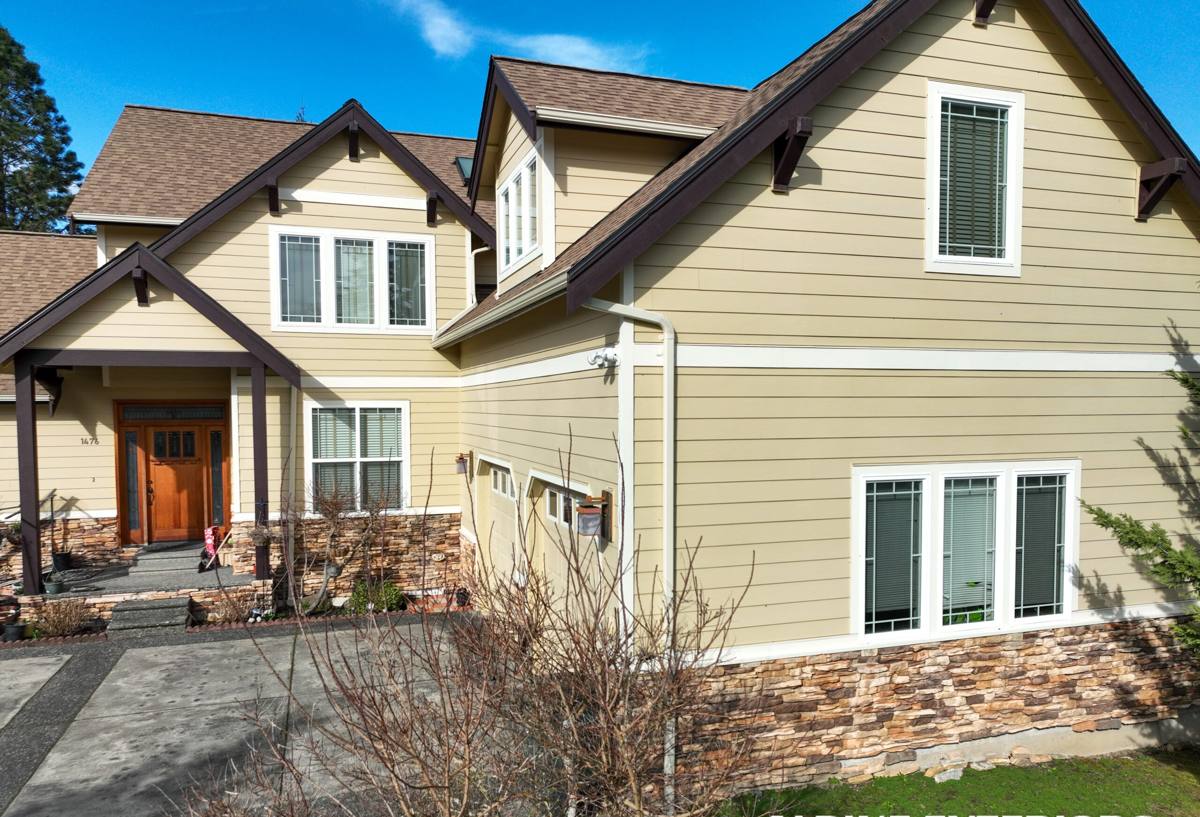
What Salt Air Actually Does to a Roof
Salt air is corrosive to exposed metal, and a roof has more metal in it than most homeowners realize: nails, flashing, drip edge, vent stacks, ridge caps, and any exposed fastener heads. Standard electro-galvanized nails and low-grade flashing can start showing rust streaks and pinholes well before a shingle roof reaches the end of its rated life when it's installed close to the water.
Where We Upgrade Materials for Proximity to Water
- Stainless steel or hot-dip galvanized fasteners in place of standard electro-galvanized nails
- Heavier-gauge flashing at valleys, chimneys, and wall intersections
- Corrosion-resistant vent stack flashing rather than painted steel
- Sealants rated for UV and salt exposure, not general-purpose caulk
None of these upgrades are dramatic or expensive relative to the total cost of a roof, but skipping them is exactly how a roof that should last 25-30 years starts leaking at fasteners and flashing points in 8-10.
Driving Rain and Wind: Why Lap and Seal Details Matter More Here
Homes closer to the water take rain from more directions and at higher wind speeds than the same storm produces a few miles inland. That changes how a roof needs to be detailed, not just what it's covered with.
The Details That Do the Real Work
Underlayment coverage, starter strip placement, valley construction, and the number of nails per shingle all matter more in a wind-driven rain environment than they do in a calm one. A roof that would perform fine with minimum-code underlayment and standard nailing patterns inland can still leak in California Creek if those same minimums are used here.
- Full synthetic underlayment coverage, not spot coverage at eaves and valleys only
- Ice-and-water shield style membrane at eaves, valleys, and roof-to-wall transitions, regardless of season
- Six-nail pattern on shingles rather than the four-nail minimum, for better wind resistance
- Closed or woven valleys detailed to shed water fast, not just funnel it
These aren't upgrades in the sense of "nicer" — they're the difference between a roof that's rated for the wind exposure of this location and one that technically meets code but wasn't built with this specific site in mind.
Moss: The Slow Problem That Becomes an Expensive One
Whatcom County's wet season runs long, and California Creek's tree cover and humidity give moss plenty of time to establish itself on north-facing slopes and shaded valleys. Moss isn't just cosmetic. As it grows, it lifts shingle tabs, holds moisture against the roof deck, and works its way under the shingle layer over several seasons. A roof that looks fine from the ground can have moss-related moisture damage underneath by the time it's visible.
Building Moss Resistance Into a New Roof
The right time to address moss is during installation, not after it's already established. We install roofs in this area with moss-resistant shingles where the roof design and budget allow, and we make sure roof design details — ventilation, slope transitions, and overhangs — don't create the shaded, damp pockets moss prefers. Zinc or copper strips at the ridge are a proven, low-maintenance way to reduce moss growth over time without chemical treatments, and we'll walk through whether they make sense for a given roof's exposure and tree cover.
What a Correct New Roof Installation Includes
A new roof is more than the shingle brand. Every layer underneath it does a specific job, and skipping or shortcutting any one of them is where most roof failures actually start.
| Layer / Step | What It Does | Why It Matters in California Creek |
|---|---|---|
| Tear-off and deck inspection | Removes old roofing, exposes the deck for damage | Salt air and past moisture can hide rot under old shingles that a re-roof-over-existing job would trap |
| Deck repair/replacement | Replaces any soft, delaminated, or water-damaged sheathing | A new roof over a bad deck fails regardless of shingle quality |
| Underlayment | Secondary water barrier under the shingles | Backstops the system during wind-driven rain that gets past the shingle layer |
| Flashing (valleys, walls, chimneys, vents) | Seals transitions and penetrations | Most roof leaks start at flashing, not in the open field of shingles |
| Ventilation (ridge/soffit) | Moves moist attic air out | Poor ventilation traps humidity, accelerating deck rot and moss growth from underneath |
| Shingle installation | The visible, weather-facing layer | Correct nailing pattern and exposure matter more under wind load |
| Cleanup and final inspection | Confirms details are sealed, debris cleared | Catches gaps before they become the first leak |
Our Process for a California Creek Roof Replacement
1. On-Site Assessment
We look at the existing roof's current condition, the deck underneath where accessible, ventilation setup, tree cover, and slope exposure. This tells us where moss and moisture have already caused problems and where the new roof needs extra attention.
2. Written Estimate and Material Selection
You get a clear, itemized estimate that separates tear-off, deck repair contingencies, underlayment, flashing, and shingle costs — no vague lump-sum numbers. We'll walk through shingle options, moss-resistant products, and metal upgrades so you understand what you're paying for and why.
3. Tear-Off and Deck Repair
Full removal of old roofing, inspection of the deck, and repair of any damaged sheathing before anything new goes down.
4. Underlayment, Flashing, and Ventilation
This is where a roof's real weather resistance is built, and it's the stage where corners get cut on lower-quality installs. We don't skip it.
5. Shingle Installation
Installed to manufacturer specification and adjusted for this site's wind and rain exposure.
6. Final Walkthrough
We go over the finished roof with you, confirm ventilation and flashing details, and answer any questions about maintenance going forward.
What to Ask Before Hiring Anyone for a Coastal Roof
- Do they upgrade fasteners and flashing for salt air exposure, or use the same materials regardless of proximity to water?
- What's their underlayment coverage — full deck or minimum code?
- What nailing pattern do they use, and will they put it in writing?
- Do they address moss risk in the design (zinc strips, ventilation, shingle choice) or only after it's already grown in?
- Can they show you how they've handled valleys, chimney flashing, and roof-to-wall transitions on other jobs in the area?
- Is the warranty from the manufacturer, the installer, or both, and what does it actually cover?
Why Local Experience in This Specific Area Matters
A roofing crew that mostly works drier, inland jobs will build a technically code-compliant roof — and it may still underperform here. Working regularly in Birch Bay and the surrounding Whatcom County coastline means we already know which slopes on which house orientations collect moss first, which flashing details fail under wind-driven rain, and which fastener grades hold up against salt air over the long run instead of just at installation. That's not something you can fully substitute with a generic install checklist; it comes from seeing how roofs in this exact environment actually age.
Roof Lifespan Expectations for This Area
Asphalt shingle roofs are typically rated for 25-30 years by manufacturers, but that rating assumes average conditions. In a salt air, high-wind, high-moss environment, a poorly detailed roof can start needing repairs at 10-15 years, while a properly detailed and upgraded roof can reasonably approach or meet its rated lifespan. The difference isn't the shingle bag — it's everything described above happening correctly, once, at installation.
If you're planning a roof replacement in California Creek or elsewhere in Birch Bay, we're glad to come take a look and give you a straightforward, no-pressure estimate — what your current roof's condition actually is, what a correctly detailed install would involve, and what it would cost. Use the form below to get started.