 Birch Bay
 Building a Deck for California Creek's Setting
California Creek sits within the greater Birch Bay area of Whatcom County, and homes here tend to share a particular mix of conditions: mature tree cover along the creek corridor, lots that vary from open and sunny to heavily shaded, and the same marine-influenced air that reaches inland from the bay even on properties that aren't right on the water. That combination changes what a deck actually needs to hold up long-term compared to a deck built in a more open, exposed location or one set well back from any water or tree cover at all.
A deck is an unprotected structure — no roofline or wall assembly shielding it from the weather — and in a setting like California Creek, that means dealing with salt-laden air, wind-driven rain, and a moss and mildew season that runs long under shaded canopy, sometimes all in the same yard. This page covers what a California Creek deck actually needs, what a correctly built one involves, and how we approach a deck project in this specific part of the Birch Bay area.
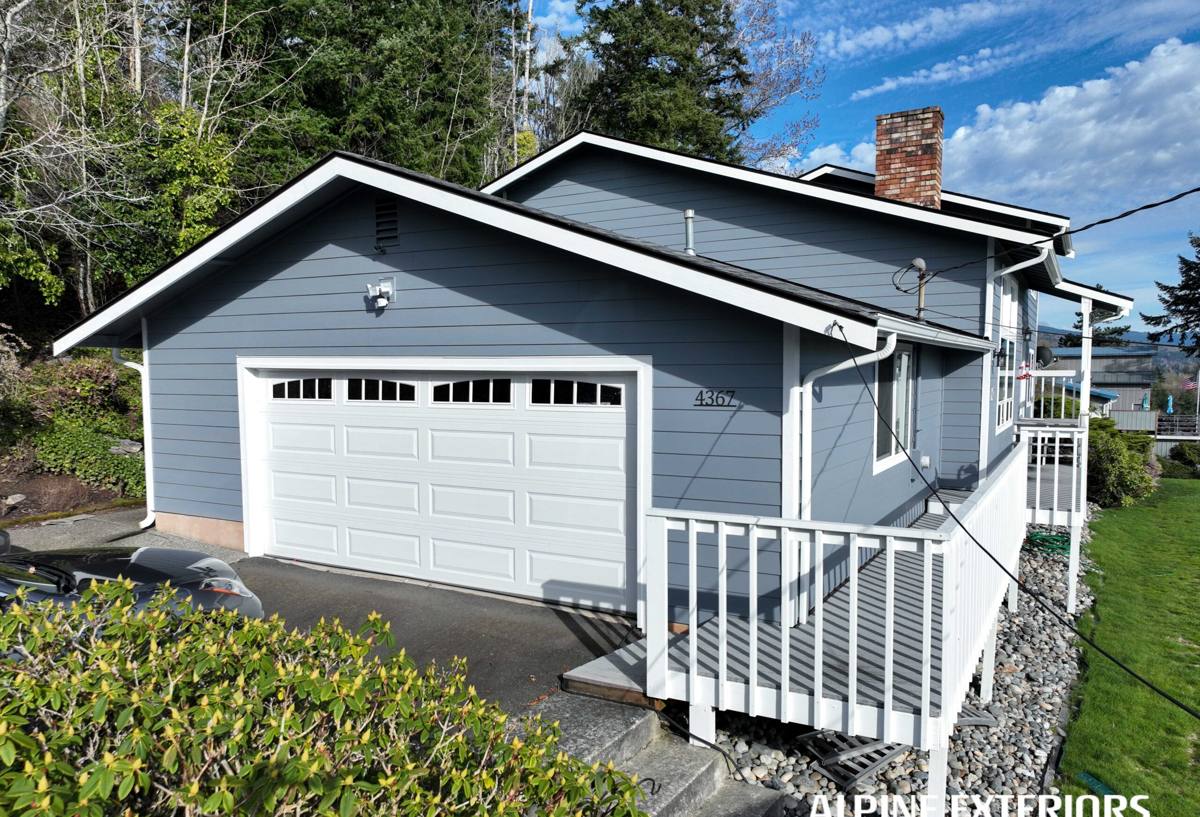
What This Setting Does to a Deck
Marine Air Doesn't Stop at the Shoreline
Homeowners a short distance from the water sometimes assume salt exposure is only a waterfront problem. It isn't. Salt-laden air off the bay travels inland on wind, and California Creek properties still see it, just at a somewhat lower intensity than lots directly on the shoreline. That air still accelerates corrosion in exposed fasteners, brackets, and railing hardware over time, which matters just as much on a structure people stand and walk on as it does on siding or roofing.
Tree Cover and a Long Moss Season
The tree canopy along the creek corridor is a defining feature of a lot of California Creek properties, and it cuts both ways for a deck. Shade reduces UV-driven fading and helps decking colors hold longer, but it also keeps surfaces damp longer after every rain, which is exactly what moss and mildew need to establish. Combined with Whatcom County's mild, wet stretch of fall through spring, a shaded deck here can stay damp for days at a time rather than drying out between storms. Sun-exposed decks on more open lots in the same neighborhood deal with a different balance — less moss pressure, more UV fade — which is one reason a deck built for this area needs to be assessed lot by lot rather than treated as one standard build.
Driving Rain and Wind
Storms coming through this part of the county still bring wind-driven rain that doesn't fall straight down. It pushes sideways into railings, up under ledger connections, and between deck boards that aren't gapped correctly for drainage. Wooded lots can get some wind-break benefit from surrounding trees, but that same tree cover also means more falling debris — needles, leaves, seed pods — that collects in board gaps and railing joints if a deck isn't detailed to shed it.
Low-Lying Ground and Drainage
Properties near a creek corridor often have lower-lying or slightly wetter ground than lots set further away, and that affects how a deck's substructure needs to be graded and drained. Standing water or persistently damp soil under a deck accelerates decay in untreated framing and gives moss another foothold from underneath, not just on the surface.
Choosing Decking Material for a Shaded, Moist Lot
Material choice matters more on a California Creek lot with heavy shade than it does on an open, sun-exposed site, because the gap in performance between a well-suited product and a poorly-suited one shows up faster where surfaces stay damp longer.
Wood
Pressure-treated lumber and cedar remain popular for their look and lower upfront cost, but both need regular sealing or staining to perform well, and both are more susceptible to moss and mildew taking hold on shaded surfaces that don't get much drying time between rain events. On a heavily wooded lot, wood decking is usually the material that shows moss and graying soonest without consistent upkeep.
Capped Composite
Capped composite boards have a plastic shell wrapped around a wood-fiber composite core, which resists moisture absorption and staining far better than uncapped composite or wood. That resistance matters directly on a shaded California Creek lot, where the board surface may stay damp for extended stretches through the wet season.
Cellular PVC
PVC decking has no wood fiber at all, so there's nothing for moisture to work into even at cut edges or fastener holes. It costs more than composite and can flex more under concentrated point loads, but on a heavily shaded, consistently damp lot, some homeowners find the added moisture resistance worth it, particularly for decks that rarely see direct sun.
| Material | Performance in Heavy Shade | Moss Resistance | Upkeep |
|---|---|---|---|
| Cellular PVC | Excellent — no wood fiber to hold moisture | Strong, smooth non-porous surface | Occasional washing |
| Capped composite | Strong — cap layer resists moisture uptake | Good on most product lines | Occasional washing |
| Uncapped composite | Moderate — exposed fiber can absorb some moisture | Fair; more buildup over time in shade | Periodic cleaning |
| Cedar | Fair — needs sealing to resist prolonged dampness | Fair when sealed and maintained | Regular oiling or sealing |
| Pressure-treated wood | Weak without diligent maintenance in shade | Poor without regular treatment | Regular sealing or staining |
What a Correctly Built Deck Involves Here
The decking surface gets most of the homeowner's attention, but on a California Creek lot, the framing, drainage, and hardware underneath are what actually determine whether the deck lasts one decade or several. A build done right for this area includes:
- Framing material rated for sustained moisture exposure, sized correctly for the span and load rather than a generic layout
- Stainless steel or coastal-grade corrosion-resistant fasteners throughout, since marine air still reaches inland properties even off the immediate shoreline
- Correct board gapping for drainage, so wind-driven rain and shaded moisture can actually clear instead of sitting on the surface
- Proper ledger board flashing where the deck ties into the house, one of the most common points water gets into a poorly built deck
- Grading and, where needed, additional drainage detailing underneath the deck so low-lying or creek-adjacent soil doesn't stay saturated against the framing
- Footings set to the correct depth and bearing for the site's actual soil conditions, which can vary meaningfully across a wooded, creek-corridor lot
- Joist spacing matched to the specific decking product's span rating
- Railing design that allows some airflow across the deck surface, which helps shaded areas dry out faster between storms
Skip any of those and the deck usually still looks fine the first season. The problems that show up later — a soft joist, a loosening post, moss working into a board's surface — trace back almost every time to one of these details being shortcut at the start.
Design Considerations for a California Creek Lot
Beyond material and structure, a few site-specific questions are worth working through before a design is finalized. How much of the lot sits under tree canopy versus open sky affects both the moss-resistance priority for the decking material and how much seasonal debris cleanup the design should plan for. Grading and slope near the creek corridor affect where footings land and how stormwater sheds away from the house and deck substructure. And because setback and critical-area rules can apply to properties near a stream corridor in Whatcom County, it's worth confirming early in design — not after a permit application — whether the deck's footprint and any grading work fall inside a regulated buffer.
| Factor | Why It Affects the Build |
|---|---|
| Shade vs. sun exposure on the lot | Drives decking material choice and expected moss/mildew maintenance |
| Distance from the creek corridor | May trigger Whatcom County critical-area or setback review before permitting |
| Soil moisture and grading | Affects footing depth, drainage detailing, and framing material |
| Elevation change across the lot | Affects stair placement, substructure height, and railing requirements |
| Proximity to mature trees | Affects root protection during footing work and ongoing debris cleanup |
How Our Process Works
We start with a site visit to look at the specifics of the lot — how much shade the deck area gets through the day, existing drainage and grade, distance from the creek corridor, and the condition of anything being replaced. That assessment shapes the material conversation more than a standard product recommendation would, since a heavily shaded, creek-adjacent lot and an open, sun-exposed lot two streets over can call for genuinely different choices.
Where a property sits close enough to the creek corridor that Whatcom County critical-area or setback rules may apply, we confirm that before finalizing design, not after submitting for permit. Once permitting is handled, the build follows the sequence above: substructure and footings sized for the site's actual soil and drainage conditions, correctly fastened framing, then the decking surface, railing, and any stairs. We finish with a walkthrough of what the specific material you chose needs going forward — for most modern decking that's not much, but it isn't nothing, especially on a shaded lot.
What Your Deck Still Needs From You
Even a well-built deck in the right material needs some routine attention in this setting to reach its full lifespan. A short list worth keeping in mind:
- Sweep leaves, needles, and seed debris out of board gaps and railing joints regularly, especially on lots under heavy tree cover
- Rinse the deck surface periodically to clear pollen, salt residue, and organic buildup before it works into the surface or cap layer
- Check ledger board flashing and fastener heads once a year for early signs of lifting, staining, or corrosion
- Confirm grading and drainage under and around the deck are still shedding water away from the framing, particularly after a wet winter
- Address any moss on the surface promptly with an appropriate cleaner rather than letting it establish and spread
Why Hiring a Crew That Already Works This Area Matters
A contractor who's built decks around California Creek and the wider Birch Bay area already knows that this isn't a one-size-fits-all setting — that a wooded, creek-adjacent lot needs different material and drainage priorities than an open lot with more direct sun, and that marine air still matters here even without a waterfront view. That familiarity shows up in decisions homeowners might not think to ask about on their own: which fastener grade to specify, how much board gapping a shaded deck actually needs, or whether a given footprint is going to run into a setback question. Those are exactly the details that separate a deck that performs well for decades from one that develops problems within a few wet seasons.
A Simple Checklist Before Hiring for a Deck Build Here
- Ask what decking materials they recommend for your specific lot's sun and shade exposure, and why
- Confirm they carry current Washington contractor licensing and insurance
- Ask how they handle drainage and grading for a lower-lying or creek-adjacent site
- Ask about fastener and hardware corrosion resistance for a marine-air setting
- Get a written scope of work, including whether they're confirming setback or critical-area requirements before the permit stage
If you're planning a new deck or replacing an aging one on a California Creek property, we're glad to walk the site with you and give an honest read on what your specific lot needs. Reach out below for a free, no-pressure estimate.