 Birch Bay
 Metal Roofing Built for the California Creek Climate
Homes in the California Creek area near Birch Bay sit in one of the tougher spots in Whatcom County for a roof to survive long-term. You've got salt-laden air rolling in off the water, long stretches of driving rain that comes in sideways as much as it comes down, and a moss season that can run from fall through spring. Asphalt shingles take a beating in these conditions. A properly installed metal roof handles all three far better — but only if it's specified and installed correctly for this specific climate, not just installed the same way a crew would install it fifty miles inland.
This page covers what a metal roof actually needs to hold up in California Creek, what a correct installation looks like, and how we approach the job when we're called out to a home in this area.
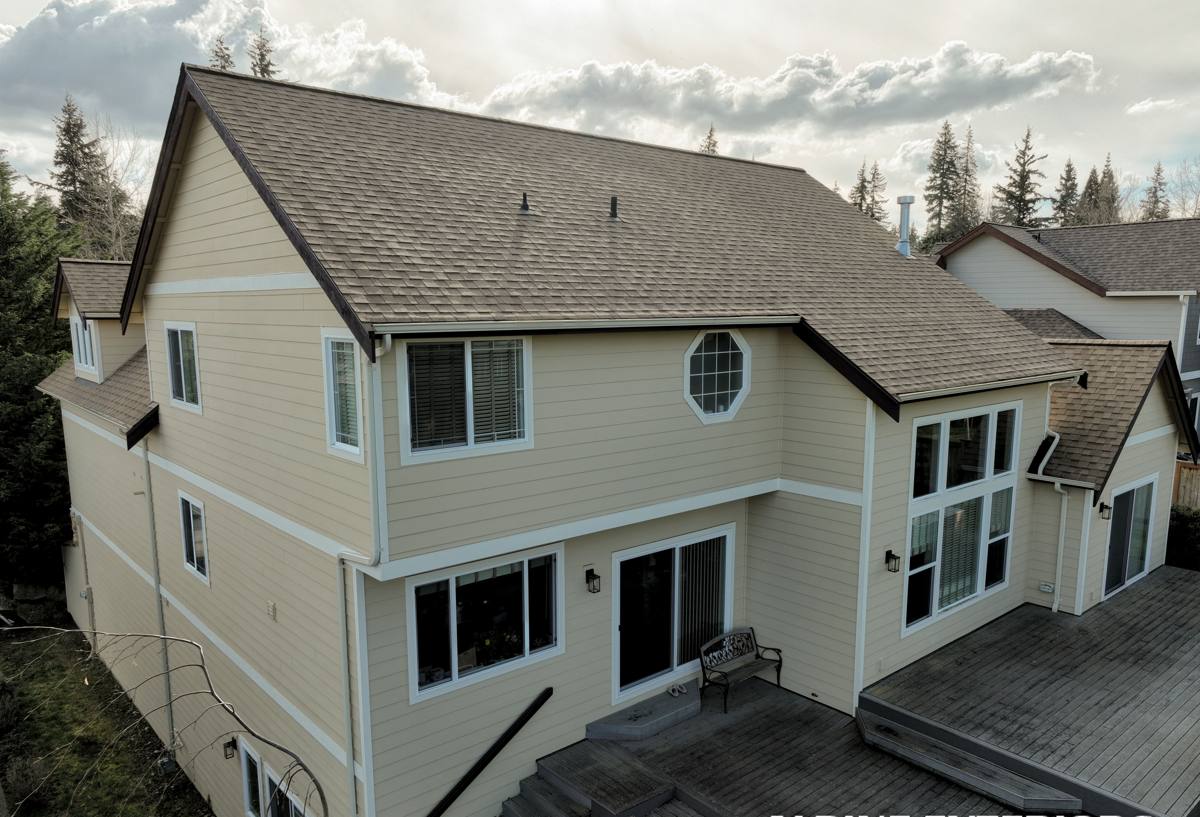
What the Local Climate Does to a Roof Over Time
Salt Air and Corrosion
Proximity to the water means airborne salt is a constant, low-level presence on every exterior surface, including the roof. Salt accelerates corrosion on fasteners, flashing, and any exposed metal edge that isn't rated for a marine or near-marine environment. Over years, this shows up as rust streaking, pitted fastener heads, and premature failure at panel seams and flashing joints — long before the field of the roof itself would otherwise need replacing.
Moss and Trapped Moisture
Whatcom County's damp, mild winters are ideal moss-growing conditions, and moss doesn't just sit on a roof looking green — it holds moisture against the roofing material, works its way under shingle tabs and lap joints, and keeps the surface wet far longer than open air and sun would allow. On asphalt shingles this speeds up granule loss and rot in the decking underneath. On a well-installed metal roof, moss has almost nothing to grip and drains off far more readily, but poor detailing (valleys, low-slope transitions, debris-catching trim) can still give it a foothold.
Wind-Driven Rain
Storms coming off the water don't just drop rain straight down — they push it sideways and upward under laps, at ridge caps, and around any penetration (vents, chimneys, skylights). This is the single biggest factor separating a metal roof that performs for decades from one that leaks within a few years: the quality of the underlayment, flashing, and fastening details matters more here than in a calmer inland climate.
Why Metal Roofing Makes Sense for This Area
Metal roofing isn't automatically the right answer for every home, but for California Creek's climate profile it addresses the three problems above directly:
- Steep, smooth panel profiles shed water and moss spores faster than a textured shingle surface
- Properly coated steel and aluminum resist salt-driven corrosion far longer than untreated fasteners or bare galvanized trim
- Continuous panel runs with correctly lapped seams give wind-driven rain fewer entry points than a shingle field with thousands of individual tabs and cut lines
- A correctly installed metal roof typically outlasts two or more asphalt roof cycles, which matters when re-roofing means working around salt exposure and access limitations near the water
That said, metal roofing is unforgiving of shortcuts. A rushed or under-detailed metal roof will fail faster and more visibly than a rushed shingle roof, because there's no forgiving second layer of granules and felt to hide behind. This is why the installation details below matter as much as the material choice itself.
What a Correct Installation Involves
Panel System and Fastening
Standing seam systems (concealed fasteners, raised interlocking seams) generally outperform exposed-fastener panel systems in this climate because there are no exposed screw heads for salt air to attack over time. Exposed-fastener panels cost less up front and are a reasonable option on secondary structures like sheds or garages, but on a primary home roof this close to the water, the long-term maintenance burden of re-torquing or replacing corroding fasteners is worth weighing seriously before choosing that route.
Underlayment
A synthetic, high-temperature underlayment — not old-style felt — should go down under any metal roof in this climate, with self-adhered ice-and-water membrane at eaves, valleys, and around every penetration. This is the backup layer that protects the deck if wind-driven rain ever gets past the panel laps, and it's not optional for a roof exposed to this much weather.
Flashing and Penetrations
Every valley, sidewall, chimney, and vent pipe is a place water can find its way in if the flashing isn't formed, lapped, and sealed correctly for the specific panel profile being used. Off-the-shelf flashing that isn't matched to the panel system is one of the most common causes of the leaks we get called out to repair on other contractors' metal roof jobs.
Ventilation
A metal roof over a poorly ventilated attic can trap moisture inside the roof assembly rather than outside it, which defeats a lot of the moisture benefit metal is supposed to provide. Ridge and soffit ventilation sized correctly for the roof and attic volume should be part of any metal re-roof scope, not an afterthought.
Panel System Comparison
| System | Fastener Exposure | Typical Lifespan (this climate) | Best Use |
|---|---|---|---|
| Standing seam (concealed fastener) | None visible | 40–60+ years with proper install | Primary home roofs, coastal exposure |
| Exposed-fastener panel | Screw heads exposed to weather | 25–40 years, fastener maintenance needed | Outbuildings, budget-driven projects |
| Metal shingle/shake panels | Concealed on most systems | 35–50 years | Homes wanting a traditional look with metal performance |
Our Process for California Creek Roofs
We approach every metal roofing project in this area the same structured way:
- On-site inspection — we look at the existing roof, decking condition, ventilation, and any moss or moisture damage before quoting anything, since salt-air homes often have hidden corrosion at flashing and fasteners that isn't visible from the ground
- System recommendation — based on the roof's slope, exposure to prevailing wind and rain direction, and your budget, we recommend a panel system and finish rather than defaulting to one product for every job
- Tear-off or overlay assessment — most homes in this area need a full tear-off to inspect and repair the deck underneath, since installing new metal over compromised or moss-damaged decking just hides a problem rather than fixing it
- Installation — underlayment, ice-and-water membrane at vulnerable points, panels, and flashing installed to the manufacturer's specification for the panel system chosen
- Final walkthrough — we go over the finished roof with you, including what to expect in terms of appearance changes (like slight sound differences in heavy rain) and any maintenance recommendations specific to your property
Maintenance in a Moss-Prone, Salty Climate
Metal roofing needs far less maintenance than asphalt shingles, but "far less" isn't "none," especially this close to the water. A short annual routine keeps a metal roof performing for its full lifespan:
- Clear debris (needles, leaves, branches) from valleys and low-slope areas where moss spores and organic matter tend to collect
- Check gutters and downspouts are flowing freely — a clogged gutter backs water up under the roof edge
- Look at exposed fasteners (if you have an exposed-fastener system) for early rust staining and have them addressed before they loosen
- Rinse visible salt film off the roof surface periodically if the home is in a particularly exposed spot near the water
- Have flashing around chimneys, vents, and skylights checked every few years, since these are the points most likely to develop a slow leak first
Cost Factors to Understand Before You Budget
Metal roofing costs more up front than asphalt shingles, but the comparison isn't apples to apples once you factor in lifespan and this area's climate demands. Rough cost drivers on a California Creek project typically include:
| Factor | Why It Affects Cost |
|---|---|
| Panel system chosen | Standing seam runs higher than exposed-fastener panel, reflecting the labor and material difference |
| Roof complexity | Valleys, dormers, and multiple roof planes increase flashing work and labor time |
| Deck condition | Moss and moisture damage found during tear-off may require deck repair before panels go on |
| Ventilation upgrades | Adding or correcting ridge/soffit ventilation adds labor but protects the whole assembly |
| Access and site conditions | Steep pitches or limited equipment access near the water can affect labor time |
We give firm, itemized quotes after the on-site inspection rather than ballparking over the phone, because deck condition and roof complexity vary enough from home to home in this area that a phone estimate isn't a reliable number either of us can plan around.
Why Hiring a Crew That Already Works This Area Matters
A metal roof installed by a crew unfamiliar with coastal Whatcom County conditions can look identical to a correctly installed one for the first year or two — the difference shows up later, in fastener corrosion, flashing failures at valleys, and moss finding a foothold where detailing was cut short. Working regularly in and around Birch Bay and California Creek means we're already accounting for salt exposure, wind-driven rain direction, and moss pressure in the materials and details we choose, not treating it as a special case after the fact. We also carry the local knowledge of what permitting and inspection expects in Whatcom County, so there are no surprises partway through the job.
Get a Straightforward, No-Pressure Estimate
If your roof is showing moss buildup, corrosion at the flashing, or you're simply planning ahead for a re-roof, we're happy to take a look and walk you through honest options for your home — no pressure, no upsell. Use the form below to request a free estimate for your California Creek property.