 Birch Bay
 Siding Repair in California Creek: A Different Kind of Wear
California Creek sits just inland of Birch Bay, in a low-lying, creek-fed corner of Whatcom County where tree cover, drainage patterns, and proximity to the water all shape how a house ages. Homes here don't get quite the same direct waterfront blast that a bay-front property takes, but they deal with their own version of the same problem: persistent dampness. Shaded lots along the creek corridor hold moisture longer after a storm, salt-tinged air still drifts in off Birch Bay and the Strait of Georgia, and the region's long, gray stretch of fall and winter rain gives siding very little chance to fully dry out between wet spells. That combination is exactly what produces the slow, quiet kind of siding damage that homeowners often don't notice until it's further along than it looks.
This page is specifically about siding repair for California Creek homes — not full replacement, and not siding in general. Repair work is its own discipline: it requires correctly diagnosing what's actually wrong, matching or properly transitioning materials, and fixing the underlying moisture path rather than just patching what's visible. Get any of that wrong and a repair becomes a callback within a year or two. We install and repair James Hardie fiber cement exclusively, and a large part of what makes a repair last out here is understanding how this specific climate interacts with whatever siding is already on the house.
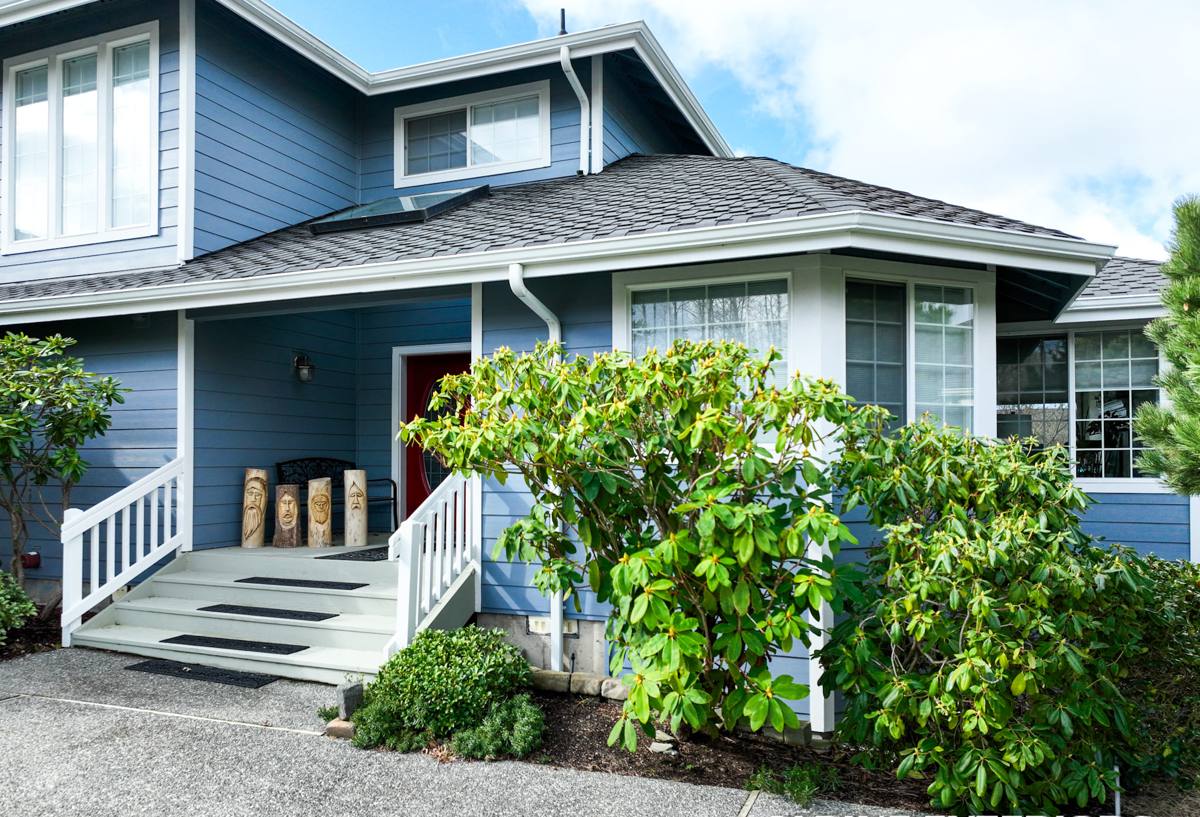
What Actually Causes Siding Damage in California Creek
Shade and Creek-Corridor Dampness
Many lots near California Creek carry more tree cover and shading than an open, exposed Birch Bay waterfront property. That's pleasant for the house in summer, but it means north- and creek-facing walls can stay damp for days after a storm passes, since sun and wind don't reach them the way they reach an open elevation. Siding on those shaded walls is doing double duty — resisting the moisture itself and resisting the organic growth that moisture invites — and it's usually the first place repair issues show up.
Salt Air Moving Inland
Birch Bay's salt-laden marine air doesn't stop at the waterline. It moves inland on prevailing winds and settles across the surrounding area, including California Creek, in smaller but still meaningful concentrations. Over years, that salt exposure accelerates corrosion in exposed fasteners and works on lower-quality finishes faster than a dry inland climate would. It's a slower process than what a bay-front home experiences, but it's a real factor in why siding repairs out here need corrosion-resistant fasteners and hardware, not whatever's cheapest.
Driving Rain and Wind-Driven Moisture
Whatcom County storms regularly push rain sideways, not just straight down, and a creek-adjacent lot with open sightlines toward the water can still take a meaningful amount of wind-driven rain even without direct waterfront exposure. That matters for repair work specifically, because wind-driven moisture finds its way into gaps, loose laps, and failed caulk joints that ordinary rainfall would never reach. A repair that only addresses the visible crack or gap, without accounting for how water actually moves across that wall in a storm, tends to fail again at the same spot.
A Long Moss and Mildew Season
Between the shade, the creek's ambient humidity, and the region's extended wet season, surfaces around California Creek rarely get a long uninterrupted dry stretch for much of the year. Moss and mildew take hold fastest where siding stays damp at the surface instead of shedding water, and once established, they hold additional moisture against the material — which is part of why organic growth is so often connected to the underlying repair issue, not just a cosmetic nuisance on its own.
Signs Your Siding Needs Repair, Not Just Cleaning
A lot of what homeowners notice on aging siding looks similar at a glance but means very different things underneath. Telling the two apart correctly is the actual job of a proper repair estimate.
| What You See | Often Just Cosmetic | Usually Needs Repair |
|---|---|---|
| Surface staining or light moss film | Yes — cleanable, especially on well-drained walls | Only if it keeps returning fast in the same spot |
| Hairline cracking at a board edge | Sometimes, if shallow and isolated | Often — moisture can be entering behind it |
| Soft, spongy, or crumbling siding | No | Yes — indicates moisture damage underneath |
| Gaps opening at seams or corners | Rarely | Usually — failed caulk or shifted panels |
| Bubbling or peeling near the base of a wall | No | Yes — often a drainage or grade clearance issue |
| Rust streaking around fasteners | Cosmetic if isolated and shallow | Can mean fastener failure underneath |
The most important distinction is whether the damage is limited to the surface or has already reached the substrate and wall assembly behind it. Surface issues are usually a straightforward repair. Anything soft, crumbling, or associated with a persistent gap almost always means water has already gotten past the siding, and the repair needs to address that entry point, not just the panel.
Common Signs Worth a Repair Call
- Soft or spongy spots when you press on the siding, especially near the base of walls or below windows
- Cracking, splitting, or visible gaps at board joints and corners
- Moss or mildew that returns quickly after cleaning, particularly on shaded or creek-facing walls
- Peeling, bubbling, or discoloration near trim, window flashing, or roof-to-wall transitions
- Warping, buckling, or panels that no longer sit flat against the wall
- Visible rust streaking or corrosion around fasteners and trim
- Interior signs — a damp smell, staining, or soft drywall on an exterior-facing wall
What a Correct Repair Job Actually Involves
A repair that holds up in this climate starts with figuring out why the damage happened, not just fixing what's visible. On a shaded, creek-adjacent property that usually means checking a few things most surface-level patch jobs skip entirely.
Diagnosing the Moisture Path
Before any siding comes off, we look at how water is actually reaching the damaged area — whether it's coming from a failed seal, poor flashing at a window or roofline, grade or landscaping pushed too close to the wall, or a drainage gap behind the siding that's not doing its job. Repairing the panel without correcting that path just resets the clock on the same failure.
Matching or Properly Transitioning Material
On a James Hardie repair, matching factory ColorPlus finish and profile matters for both appearance and performance — mismatched material can create a visible seam or, worse, a point where water behaves differently than the surrounding wall expects. On older homes with non-Hardie siding already installed, we're honest about what a patch repair can realistically achieve versus what genuinely needs a broader section replaced.
Fasteners and Hardware Built for This Climate
Given the salt content in the air moving inland from Birch Bay, repairs here use corrosion-resistant fasteners rated for coastal and marine-influenced conditions, not standard hardware that will start showing rust streaks within a few seasons.
Sealing and Drainage Details
Caulk and sealant only work as long as they're intact, and in a climate this wet, joints and transitions need to be resealed correctly rather than smeared over. Where a wall lacks proper drainage behind the siding, a repair is also the right time to correct that, since it's far cheaper to address during a repair than to discover it during a later, larger failure.
Repairing James Hardie vs. Other Siding Materials
What a repair actually requires depends heavily on what's already on the wall. This is a general comparison of how common siding materials behave when they need repair work in a damp, shaded, moisture-heavy setting like California Creek.
| Material | Repairability | Moisture Risk If Left Unrepaired |
|---|---|---|
| James Hardie fiber cement | Individual boards can be cut in and replaced; factory finish is durable and color-matchable | Low — dimensionally stable, doesn't swell or absorb water the way wood-based products do |
| Vinyl siding | Panels can crack in cold weather and are prone to warping; exact profile matches get harder to find over time | Moderate — moisture can travel behind panels and go unnoticed longer |
| LP SmartSide / engineered wood | Repairable, but cut edges and joints need careful resealing or moisture re-enters quickly | Higher — wood-based core is sensitive to sustained dampness |
| Cedar / primed wood siding | Repairable but labor-intensive; often needs refinishing to blend with weathered original boards | Highest — absorbs and releases moisture readily without disciplined maintenance |
We install and repair James Hardie exclusively going forward, but we still evaluate and repair whatever siding a California Creek home already has. On homes with other materials, part of an honest estimate is telling you plainly when a patch repair is realistic and when the damaged section has reached the point where replacement with fiber cement is the more sound long-term move.
Our Repair Process
We start with an on-site inspection, not a guess from the driveway. That means getting close to the damaged area, pressing on suspect spots to check for softness, and tracing visible symptoms back to their actual moisture source rather than treating them in isolation. From there, we put together a clear, written scope — what's being repaired, what materials are involved, and what it costs — before any work begins.
The repair itself typically involves removing the affected siding section, addressing whatever underlying issue caused the damage (flashing, sealant, drainage, or grade), and installing matched replacement material with fasteners and sealing appropriate to this climate. We test the surrounding area as we go, since damage that looks contained to one board sometimes extends further once the siding is opened up.
What We Check Before Closing Out a Repair
- The original moisture source has been identified and corrected, not just the visible symptom
- Replacement material is properly matched or transitioned so it performs consistently with the surrounding wall
- Fasteners and hardware are rated for coastal, moisture-heavy conditions
- Flashing, caulk, and drainage details are sealed correctly at every disturbed joint
- The repaired area is inspected once more after the first significant rain when practical
When Repair Isn't the Right Call
Repair makes sense when damage is isolated, the underlying wall assembly is sound, and the surrounding siding still has useful life left in it. It stops making sense when damage is widespread across multiple walls, when the same failure keeps recurring in different spots, or when opening up one section reveals that moisture has already spread well beyond it. In those cases, we'll say so directly rather than stacking patch repairs on a wall that's telling you it needs a broader fix. Part of an honest repair estimate is knowing — and telling you — where that line is.
Why a Local Crew Matters in California Creek
California Creek is a small enough area that its exposure profile doesn't always match the general Birch Bay description — some lots sit more open toward the water, others are tucked back under tree cover along the creek with very different drying conditions. A crew that already works this specific pocket of Whatcom County recognizes that variation on sight, instead of applying a generic coastal repair spec to every wall. That local familiarity is what keeps a repair estimate accurate and keeps the actual fix focused on the real cause of the damage rather than just the part you can see from the yard.
Before You Hire Someone for Siding Repair Here
- Ask them to explain what caused the damage, not just what they plan to replace
- Confirm current Washington contractor licensing and active liability insurance
- Ask specifically how they'll address drainage or flashing issues behind the damaged siding, not just the surface
- Get a written scope of work and cost before anything is removed from the wall
- Ask whether they've worked on creek-adjacent or shaded lots in this area before, not just open waterfront properties
If you're seeing cracking, soft spots, recurring moss, or gaps in your siding anywhere around California Creek, we're happy to take a close look and give you an honest read on what it actually needs — a straightforward repair, or something more. Reach out below for a free, no-pressure estimate.