 Birch Bay
 Deck Repair Built for Sumas Conditions
A deck in Sumas doesn't fail the same way a deck in a dry climate does. Out here in Whatcom County, the damage is slow and cumulative: months of driving rain, a moss season that can stretch from fall through spring, and marine-influenced air that keeps wood, fasteners, and framing damp long after a storm has passed. None of that shows up overnight. It shows up as a soft board three years later, a wobbly rail post, or a dark stain spreading across the decking where water has been sitting instead of draining.
We repair decks in Sumas as part of our regular service area, not as an occasional job we drive out for. That matters because deck problems here tend to follow patterns tied to the local climate, and knowing those patterns ahead of time is what separates a repair that lasts from one that reopens in eighteen months.
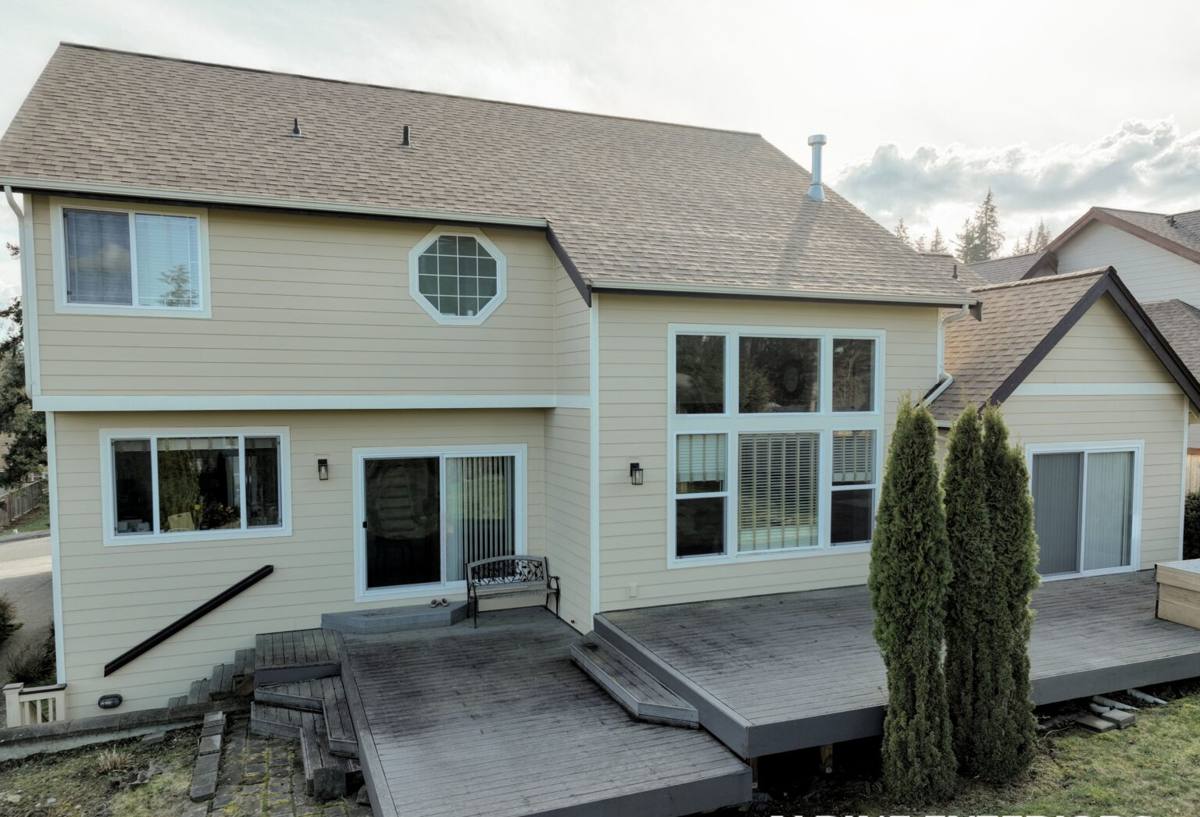
What Whatcom County Weather Does to a Deck Over Time
Moisture That Doesn't Fully Dry Out
Between rain events, Whatcom County doesn't always give lumber enough dry, sunny stretches to fully release moisture. Decking boards, joists, and especially the ledger board where the deck attaches to the house can stay damp at the core even when the surface looks fine. That trapped moisture is what drives rot, not a single hard rain.
Moss and Organic Buildup
A long moss season means organic growth gets a real foothold on horizontal surfaces, in the gaps between deck boards, and on north-facing areas that don't get much direct sun. Moss holds water against the wood and accelerates decay well beyond what plain rain exposure would cause on its own.
Marine Air and Fastener Corrosion
Even away from the immediate shoreline, the salt-tinged marine air that moves through this region carries enough moisture and mineral content to speed up corrosion on lower-grade screws, nails, and metal connectors. Corroded fasteners are one of the most common hidden failure points we find in older Sumas decks — the wood around them looks okay, but the connection itself has weakened.
Signs a Sumas Deck Needs Repair — Not Full Replacement
Most decks we look at don't need to be torn out and rebuilt. They need targeted repair to the specific areas that took the damage. Here's what we check for before recommending anything:
- Soft, spongy, or discolored decking boards, especially near board edges or fastener holes
- Gaps or separation where the ledger board meets the house — a common water entry point
- Rust streaks or visibly corroded screws, nails, or joist hangers
- Wobble or give in railings and posts when pushed firmly by hand
- Moss or algae growth that returns quickly after cleaning
- Stair stringers that feel spongy or show cracking at the notches
- Standing water or slow drainage after rain instead of water shedding off the surface
If the framing underneath — the joists, beams, and posts — is structurally sound, repair is almost always the right call. Replacement becomes necessary when rot has reached the structural members themselves, not just the surface decking.
What a Correct Deck Repair Actually Involves
Starting Below the Surface
A repair that only replaces visibly damaged boards without checking what's underneath is a repair that misses the point. We pull decking in the affected area and inspect the joists, ledger board attachment, and any flashing before deciding what actually needs to be replaced versus what can stay.
The Ledger Board Connection
This is where the deck bolts to the house, and it's the single most important structural connection on the entire deck. If flashing is missing, damaged, or was never properly installed, water has likely been getting behind it for years. We address this as part of any repair where the ledger is accessible, since it's the failure point most likely to cause a real safety issue if ignored.
Fasteners and Hardware
We replace corroded fasteners and connectors with corrosion-resistant hardware rated for exterior and treated-lumber use. Mixing old, corroding fasteners with new lumber is a shortcut that shows up as rust stains and loosening within a couple of seasons.
Matching Materials Correctly
New boards need to match the structural rating and moisture behavior of what's staying in place. Sistering a joist, replacing a section of decking, or rebuilding a stair stringer all require using lumber that's rated for the load and exposure it will see — not just whatever matches visually.
Repair vs. Replacement: What Actually Drives the Decision
| Factor | Leans Toward Repair | Leans Toward Replacement |
|---|---|---|
| Framing condition | Joists and beams are solid | Rot has reached structural members |
| Extent of damage | Isolated boards, posts, or stair sections | Damage spread across most of the deck |
| Age of the deck | Under 15-20 years, built to a reasonable standard | Original construction is outdated or undersized |
| Ledger connection | Sound once flashing is corrected | Chronic water intrusion has damaged the rim joist |
| Budget goals | Extend usable life at lower cost | Ready to reconfigure size, layout, or material |
Cost for repair work varies a lot depending on how much of the deck is affected and what's found once we open things up — a single board and post repair is a modest job, while a ledger and framing repair with new decking over a larger area costs more. We give a firm, itemized quote after inspection rather than a guess over the phone, because guessing on deck work almost always undersells or oversells the real scope.
Our Deck Repair Process in Sumas
1. On-Site Inspection
We walk the full deck, check for soft spots by hand and with a probe, inspect the ledger and visible framing, and test railings and stairs for movement. This is what the free estimate covers.
2. Written Scope and Estimate
You get a clear description of what needs repair, what materials we'll use, and a firm price before any work starts. No open-ended time-and-materials guessing.
3. Repair and Rebuild of Affected Areas
We remove and replace only what's compromised, correct any flashing or drainage issues we find at the ledger, and upgrade fasteners in the repaired sections to corrosion-resistant hardware.
4. Cleanup and Finish
Site is cleaned of debris and old material, and if the repair includes new decking, we'll talk through sealing or staining options so the new sections weather in evenly with the rest of the deck.
Materials: Honest Trade-Offs for This Climate
Pressure-Treated Lumber
Still the standard for framing and a common choice for decking repairs because it's affordable and widely available in the exact dimensions needed to match existing structure. It needs periodic sealing or staining to perform well long-term in a wet climate — skip that maintenance and it will gray, check, and take on moisture faster than it should.
Composite and Capped-Composite Decking
A reasonable option when we're replacing a larger section of decking surface, since it resists moss growth and moisture absorption better than untreated wood. It costs more up front, and we're upfront that mismatched board profiles between old and new sections can be a visual trade-off worth discussing before committing.
Why We're Careful About What We Recommend
We don't push a single "best" material on every job. The right call depends on how much of the deck is being repaired, whether it needs to visually match existing decking, and your own tolerance for maintenance versus upfront cost. We'll walk through the trade-offs honestly rather than upselling.
Keeping a Repaired Deck in Good Shape
A properly repaired deck still needs some seasonal attention in this climate. A short annual routine goes a long way:
- Clear leaves and debris from between boards before fall rains set in
- Treat visible moss growth early, before it spreads across the surface
- Check railings and stair posts for movement once a year
- Reseal or restain wood decking on the manufacturer's recommended schedule, not just when it looks faded
- Confirm gutters and downspouts near the deck aren't dumping extra water onto it
- Look at the ledger board area yearly for any sign of new gaps or staining
Why Hire a Crew That Already Works in Sumas
Deck repair done by someone unfamiliar with this climate tends to treat every repair the same way it would be treated in a drier region — replace the obvious board, skip the flashing check, use whatever fasteners are on the truck. That approach leaves the exact conditions that caused the original damage in place to do it again.
We work in Sumas and the surrounding Whatcom County area regularly, so we're not guessing at how moisture, moss, and marine air behave on a deck here — we see the same failure patterns repeat across similar homes and know where to look first. That translates into faster, more accurate inspections and repairs that address the actual cause, not just the visible symptom.
Get a Free, No-Pressure Estimate
If you've noticed a soft board, a wobbly rail, or moss that keeps coming back no matter how often you clean it, it's worth having someone take a real look before it turns into a bigger repair. Use the form below to request a free estimate — we'll inspect the deck, tell you honestly what it needs, and give you a firm price with no obligation.