 Birch Bay
 Roof Replacement in Sumas: Built for a Border-Valley Climate
Sumas sits at the far edge of Whatcom County, tucked into the flat, low-lying farmland of the Sumas Prairie right against the Canadian border, with Sumas Mountain rising just to the south. It's a different setting than the coastal towns closer to Bellingham Bay, but the roof over a Sumas home still has to survive the same demanding Pacific Northwest weather pattern, with a few local twists added on top. Rain here rarely falls straight down — storms moving through the valley push it in sideways, testing flashing and underlayment in ways a calmer climate never would. Fog and humidity settle into the low valley floor and linger longer than they would on higher ground, keeping roof surfaces damp well after a storm has passed. And a moss season that runs most of the year, combined with cold outflow wind that funnels down from the Fraser Valley in British Columbia during winter, adds up to a specific combination of stresses that a roof replacement needs to be built around from the start, not patched around later.
A roof replacement is a bigger decision than a repair, and it's worth getting right the first time. This page covers what that actually looks like for a Sumas home: the signs that tell you it's time, what a correct tear-off-to-shingle replacement involves, the material and cost factors specific to this area, and how our process works from first inspection to final walkthrough.
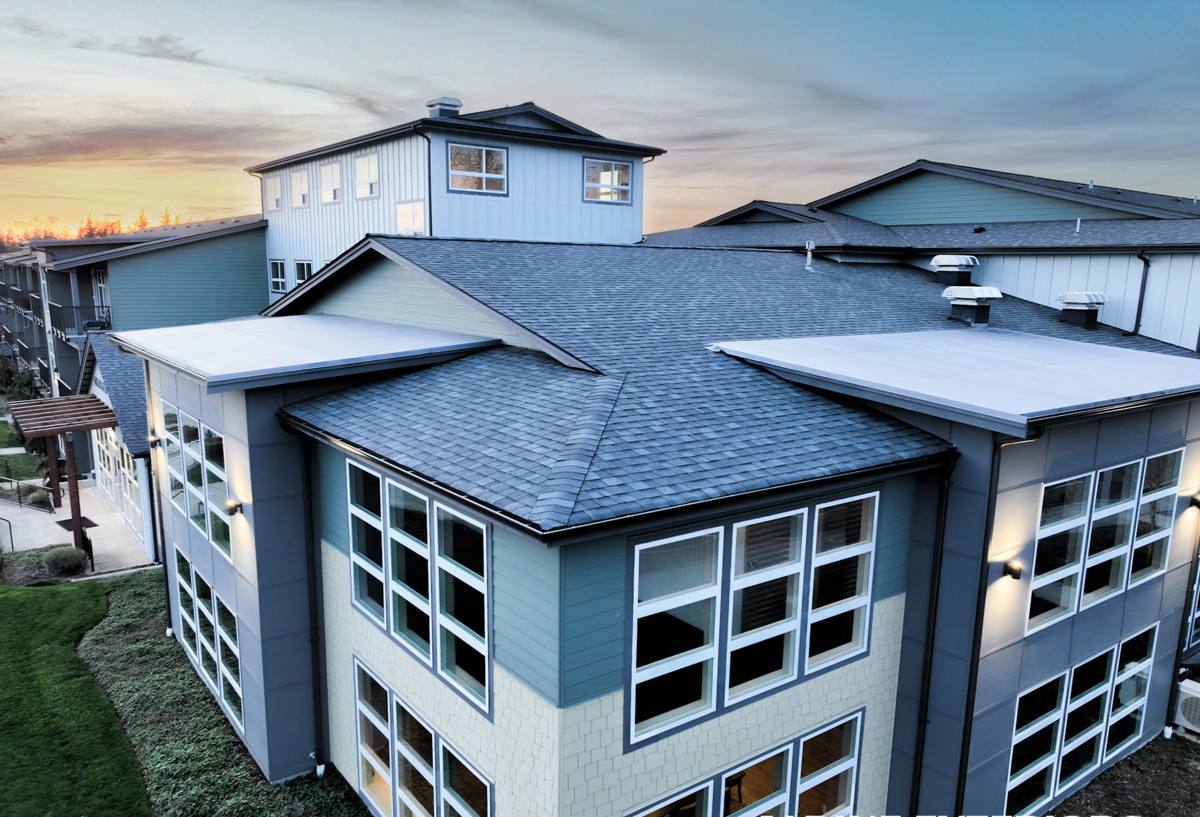
Signs a Sumas Roof Has Reached the End of Its Life
Roofs rarely fail all at once. They give warning signs, and in a wet valley climate like Sumas those signs tend to show up a little earlier and a little more aggressively than they would on a drier, more sheltered roof.
- Moss or dark algae streaking that keeps returning within months of a cleaning, especially on north-facing or shaded slopes
- Granules collecting in gutters and at the base of downspouts, a sign the shingle surface is wearing thin
- Curling, cracking, or lifted shingle edges, particularly after a windy outflow event
- Soft, spongy decking or visible sagging along the roofline rather than a straight, even plane
- Water staining on interior ceilings or attic framing, especially near valleys or roof-to-wall transitions
- A roof that's already had two or more leak repairs in the same general area
Any single item on that list might point to a targeted repair. Several together, especially on a roof that's already past its expected lifespan, usually mean the roof is telling you it's done. That's especially true in Sumas, where lingering valley humidity gives moisture more time to work into a deck that's already compromised — a small problem here doesn't stay small as long as it might in a drier climate.
What a Correct Roof Replacement Involves
A roof replacement is more than stripping off old shingles and nailing down new ones. In a climate with this much sustained moisture and periodic hard wind, the layers underneath the shingles matter as much as the shingles themselves.
Tear-Off and Deck Inspection
A full tear-off down to the decking is the only reliable way to find rot, soft spots, or hidden moisture damage that's been developing under the old roof, often well before it shows up as an interior leak. Layover installs skip this step and simply bury whatever problems already exist under a new layer of shingles — a shortcut that catches up with a homeowner eventually, usually at the worst possible time.
Underlayment
Synthetic or self-adhered underlayment gives a roof a real second line of defense against wind-driven rain that gets pushed sideways and up under shingle tabs, which happens more often in Sumas than in a calmer, more sheltered location. Ice-and-water shield at eaves and valleys adds extra protection exactly where water is most likely to back up during a heavy rain event.
Flashing at Valleys, Chimneys, and Wall Transitions
Most roof leaks in this region start at flashing, not out in the open field of the roof. Valleys, chimney and vent penetrations, and roof-to-wall intersections all need new flashing that's properly lapped and integrated with the underlayment, not old flashing with a bead of caulk smeared over it.
Ventilation
Balanced intake and exhaust ventilation keeps the underside of the roof deck dry, which matters more in a valley setting where fog and humidity keep the air damp longer after a storm passes. A roof deck that stays damp because of poor attic airflow will grow moss and encourage rot from underneath, regardless of how good the shingles on top look.
Fastening for Wind Exposure
Correct nail placement and count, to manufacturer specification rather than a shortcut pattern, is what keeps shingles from lifting when a cold outflow wind event rolls down the valley in winter. This matters more for exposed or elevated Sumas properties than it does for a sheltered, tree-lined lot.
Choosing a Roofing Material for a Sumas Home
| Roofing Material | Typical Lifespan | Fit for Sumas Conditions |
|---|---|---|
| 3-tab asphalt shingles | 15-20 years | Lower upfront cost, but a thinner profile and lower wind rating are a tougher match for outflow-wind-exposed lots |
| Architectural (laminate) shingles | 25-30 years | Heavier and better wind resistance; the most common practical choice in this climate |
| Algae-resistant / premium shingles | 30+ years | Worth considering on shaded, north-facing slopes where moss and algae take hold fastest |
| Standing seam metal | 40-60 years | Strong wind and moss performance if flashing and fastener detailing are done correctly |
For most homes in Sumas, architectural shingles with algae-resistant granules strike a reasonable balance between upfront cost and the long-term maintenance this climate asks for. Whether metal or a premium shingle tier makes more sense depends on the roof's pitch, orientation, and how long you plan to stay in the home — that's a conversation worth having in person rather than deciding from a table.
What Drives the Cost of a Roof Replacement
| Factor | Why It Matters Here |
|---|---|
| Roof size and pitch | More square footage and steeper pitches mean more material, labor, and staging time |
| Tear-off vs. layover | A full tear-off costs more upfront but is the only way to catch deck damage before it's covered up |
| Underlayment grade | Synthetic and self-adhered options resist wind-driven rain better than standard felt |
| Number of valleys, penetrations, and wall transitions | Each one adds flashing labor, and flashing is where most Sumas-area leaks actually start |
| Deck repair | Rot found during tear-off, more likely after prolonged valley humidity, needs to be replaced before new roofing goes on |
| Shingle grade and wind rating | Higher wind ratings matter more on lots exposed to winter outflow wind events |
Exact numbers depend on the specific roof, which is why we walk the property in person and give a detailed, itemized estimate rather than a one-line price pulled from a general calculator.
Our Roof Replacement Process
- In-person inspection: We get on the roof and into the attic ourselves, and document the actual condition of the shingles, decking, flashing, and ventilation.
- Written estimate: You receive a clear, itemized bid covering tear-off, underlayment, flashing, ventilation, material selection, and cleanup.
- Scheduling around valley weather: We build reasonable flexibility into the timeline, since wet stretches and the occasional winter outflow wind event are a normal part of working in this area.
- Tear-off and deck repair: Old roofing comes off completely, and any rotted or soft decking found underneath is replaced before anything new goes down.
- Underlayment, flashing, and shingle installation: Each layer goes on to manufacturer specification, with extra attention at valleys, penetrations, and wall transitions.
- Final walkthrough and cleanup: We review the completed roof with you and do a full site and magnetic nail sweep before calling the job finished.
Why Hiring a Crew That Already Works in Sumas Matters
Sumas isn't identical to the coastal towns closer to Bellingham Bay, and a crew that only works that stretch of the county doesn't automatically know how a valley roof behaves differently. A crew that's actually done roofs in and around Sumas has already seen how lingering fog keeps a deck damp longer after a storm, how cold outflow wind out of the Fraser Valley tests fastening patterns that would hold fine elsewhere, and which roof orientations hold moss longest through a long wet season. That kind of local pattern recognition shows up in small decisions on install day — where to add extra flashing attention, which slopes need algae-resistant granules, how much ventilation a particular attic actually needs — decisions a crew unfamiliar with this specific valley climate might not think to make.
It also matters after the job is done. A workmanship warranty only means something if the company behind it is still around and reachable a few years later, which is worth confirming before signing anything.
A Practical Checklist Before You Choose a Roofer in Sumas
- Do they perform a full tear-off with deck inspection, or just a layover over the old roof?
- Does the estimate name the underlayment type and shingle product specifically, not just "new shingles"?
- Is flashing work at valleys, chimneys, and walls explicitly included in the written bid?
- Do they carry current Washington contractor licensing, liability insurance, and workers' compensation?
- Can they point to actual recent work in or near Sumas, not just a service-area list on a website?
- Does the bid separate the manufacturer's material warranty from their own workmanship warranty?
If your Sumas home is showing signs it might need a new roof, or you just want an honest second opinion before committing to anything, we're happy to walk the roof with you and give you a straightforward read — no pressure, no upsell script. Use the form below to request a free estimate.