 Birch Bay
 Board and batten siding has become one of the most requested looks for homes in and around Sumas — the vertical lines read as clean, modern farmhouse, or classic Pacific Northwest depending on the trim and color choices around it. But in Whatcom County, how that siding is built matters more than how it looks on day one. Vertical siding creates more seams, more transitions, and more places for water to find its way in than a standard horizontal lap job. Done right, board and batten is one of the most durable, good-looking exteriors you can put on a home here. Done wrong, it's a magnet for the exact problems this region is known for: driving rain, long damp stretches, and moss that never really goes dormant.
Why Board and Batten Fits Sumas Homes
Board and batten works well on a wide range of home styles common in this part of Whatcom County — from newer farmhouse-style builds to older homes getting a full exterior refresh. The vertical battens draw the eye up, which reads well on single-story ranches and taller two-story homes alike, and it pairs cleanly with stone or masonry accents, dark trim, and covered porches that are already common features on homes in this area. It's also a practical choice for gable ends, dormers, and accent walls where a change in texture and direction helps break up a large flat elevation.
The style choice is only half the equation, though. The other half is whether the assembly underneath is built to handle the weather this region actually gets — and that's where a lot of board and batten installs, done by crews unfamiliar with local conditions, start to fail early.
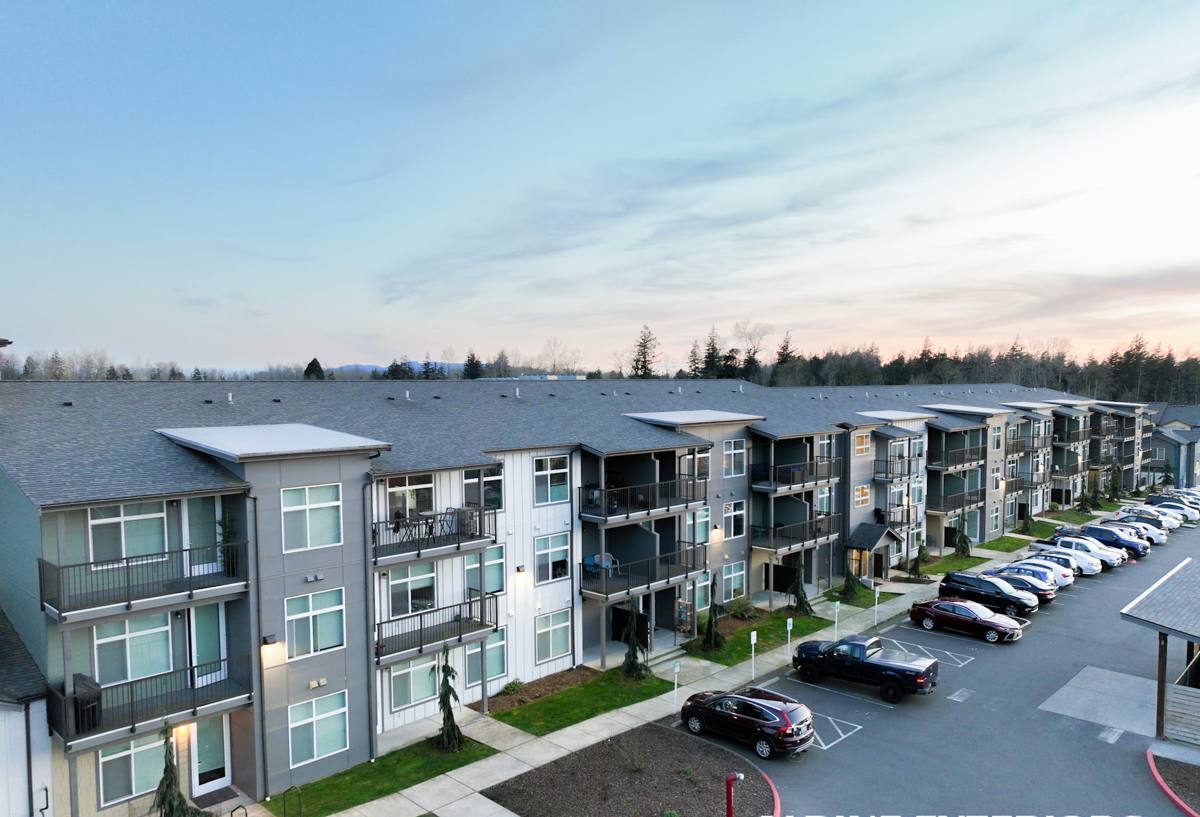
What Whatcom County's Climate Does to Vertical Siding
Driving Rain and Wind-Driven Moisture
Homes across the Birch Bay and Sumas area deal with the same marine-influenced weather pattern that defines this whole stretch of the Salish Sea lowlands: long wet seasons, sustained drizzle, and periodic wind-driven rain events that push water sideways into vertical seams rather than letting it simply run down and off. Board and batten has more vertical joints per square foot than lap siding, and every one of those joints is a potential entry point if it isn't flashed and fastened correctly.
Moss, Mildew, and the Shade Factor
Whatcom County's moss season is long — mature trees, cloud cover, and consistent moisture keep north-facing and shaded walls damp for weeks at a stretch. Any siding material that absorbs water or lacks a factory-cured finish gives moss and mildew something to grow into, not just onto. Over time that turns into soft spots, staining, and paint failure, especially at the base of battens and behind trim where airflow is limited.
Freeze-Thaw and the Off-Season
Winters here aren't brutal, but they're not nothing either. Repeated freeze-thaw cycles on siding that's already holding moisture accelerate cracking, swelling, and fastener failure. A batten that's absorbed water all fall and then freezes in January is under real stress — and that stress shows up as gaps, warping, or popped fasteners by spring.
What a Correct Board and Batten Installation Involves
Substrate and Water-Resistive Barrier
Everything starts underneath the siding. A correctly built wall has a continuous water-resistive barrier, properly lapped and taped seams, and flashing integrated at every window, door, and penetration before the first board goes up. Skipping or rushing this step is invisible on installation day and expensive to discover later.
Batten Spacing and Fastening
Batten spacing needs to be consistent and engineered for the panel material underneath — not just eyeballed for symmetry. Fasteners need to land in solid framing or proper blocking, at the spacing and edge distance the manufacturer specifies, so the assembly can handle wind load and thermal movement without working loose over time.
Corners, Trim, and Flashing Details
Outside corners, window and door trim, and the transition at the foundation line are where most vertical siding failures actually start. Each of these needs its own flashing detail and a gap for drainage — caulk alone is not a substitute for proper flashing, no matter how neat it looks on install day.
James Hardie Board and Batten: The System We Install
We install James Hardie fiber cement exclusively, and board and batten is one of the styles where that decision matters most. James Hardie's vertical siding panels and battens are engineered specifically for climates like ours through the HZ5 product line, which is formulated for the Pacific Northwest's moisture and temperature patterns rather than a generic national spec. The material is non-combustible, doesn't swell or rot the way wood-based products can, and comes with a factory-applied ColorPlus finish that's baked on and warranted against fading and cracking — which matters on a wall that's going to sit damp and shaded for months at a time.
We don't install vinyl board and batten, primed spruce, cedar, LP SmartSide, or other fiber cement brands like Allura or Cemplank. That's a standard, not a knock on every homeowner who has one of those products — cedar has real appeal, vinyl is inexpensive, and engineered wood has its place. But we've made a professional judgment that in this climate, with the moisture exposure Sumas homes see, fiber cement built to Hardie's spec is the material that holds up with the least long-term maintenance burden, and it's the only thing we're willing to put our labor and warranty behind.
Board and Batten vs. Other Vertical Siding Options
| Material | Moisture Behavior | Maintenance | Fire Rating | Typical Warranty |
|---|---|---|---|---|
| James Hardie Fiber Cement | Engineered for wet climates, doesn't rot or swell | Low — factory finish, occasional wash | Non-combustible | Long transferable product + finish warranty |
| Cedar | Absorbs moisture, needs consistent sealing | High — refinish every few years | Combustible | Varies by installer, no factory finish warranty |
| Vinyl | Doesn't rot but can warp, trap moisture behind it | Low, but limited repair options | Combustible, can deform in heat | Prorated, often not transferable |
| LP SmartSide (engineered wood) | Treated but still wood-based; edge exposure is a risk point | Moderate — paint and caulk maintenance | Combustible | Manufacturer warranty, installation-sensitive |
Our Process for Sumas Projects
Every board and batten job starts with an honest look at what's actually there — not just a quote based on square footage.
- On-site assessment: We check the existing wall assembly, sheathing condition, and moisture history before recommending anything.
- Scope and product plan: We spec panel and batten sizing, trim details, and flashing plan for your home's exposure — south and west walls need different attention than sheltered north walls.
- Tear-off and prep: Old siding comes off, sheathing is inspected and repaired as needed, and the water-resistive barrier goes on correctly before anything else happens.
- Installation: Panels, battens, and trim go up to Hardie's fastening and clearance specs, with flashing integrated at every penetration.
- Final walkthrough: We go over the finished work with you before we consider the job done.
Cost Factors for Board and Batten Siding
Every home is different, but a few factors consistently drive cost on board and batten projects:
| Factor | Why It Matters |
|---|---|
| Tear-off vs. new construction | Removing and disposing of old siding adds labor beyond the new install |
| Sheathing repair | Water damage found during tear-off has to be fixed before new siding goes on |
| Wall height and access | Two-story walls, steep gables, and limited access increase labor time |
| Trim and corner complexity | More windows, doors, and architectural detail mean more precision work |
| Full exterior vs. accent use | Board and batten as a full exterior costs more than using it as an accent over lap siding |
We're glad to walk through where your project falls on these factors during a free estimate — no pressure, no inflated numbers to negotiate down from.
Signs Your Current Siding Needs Attention
If you're weighing a full re-side versus a repair, a few warning signs are worth taking seriously before another wet season passes:
- Soft or spongy spots when you press on siding, especially near the bottom of walls
- Persistent moss or dark staining that comes back soon after cleaning
- Visible gaps, warping, or bowing in boards or battens
- Paint that's peeling, bubbling, or chalking heavily on one side of the house
- Rising utility bills or drafts that suggest the wall assembly behind the siding has failed
Why Hire a Crew That Already Works in Sumas
Board and batten is unforgiving of shortcuts, and a crew that doesn't regularly work in this part of Whatcom County can miss the details that matter here — the right barrier and flashing approach for a climate with a long wet season, batten spacing that accounts for real thermal movement rather than a generic spec sheet, and trim details built for wind-driven rain rather than fair-weather installation. We work this area regularly, we install one product system so there's no guesswork in how it's supposed to go together, and we stand behind the installation because we control every part of it.
If you're considering board and batten siding for a home in Sumas, we'd be glad to take a look and give you a straightforward, no-pressure estimate — use the form below to get started.