 Birch Bay
 Asphalt Shingle Roofing Built for Sumas's Climate
A roof in Sumas takes on more than it looks like from the driveway. Salt-laden air moving in off the water works on exposed fasteners and flashing metal for years before anyone notices anything wrong from the ground. Rain in this part of Whatcom County doesn't always fall straight down — a lot of it comes in sideways during the wetter months and gets forced up under shingle tabs instead of running off the way it's supposed to. And on roof planes that stay shaded through the winter, moss and algae settle in early and hang around well into spring. None of that makes asphalt shingle roofing a poor fit for a Sumas home. It just means the roof has to be installed by someone who accounts for those specific conditions instead of treating every job the same regardless of where the house sits.
This page covers what a correct asphalt shingle installation or replacement actually looks like for a home in Sumas — the material choices that hold up, the installation details that keep water out, and how we run the job from the first walk-through through final cleanup.
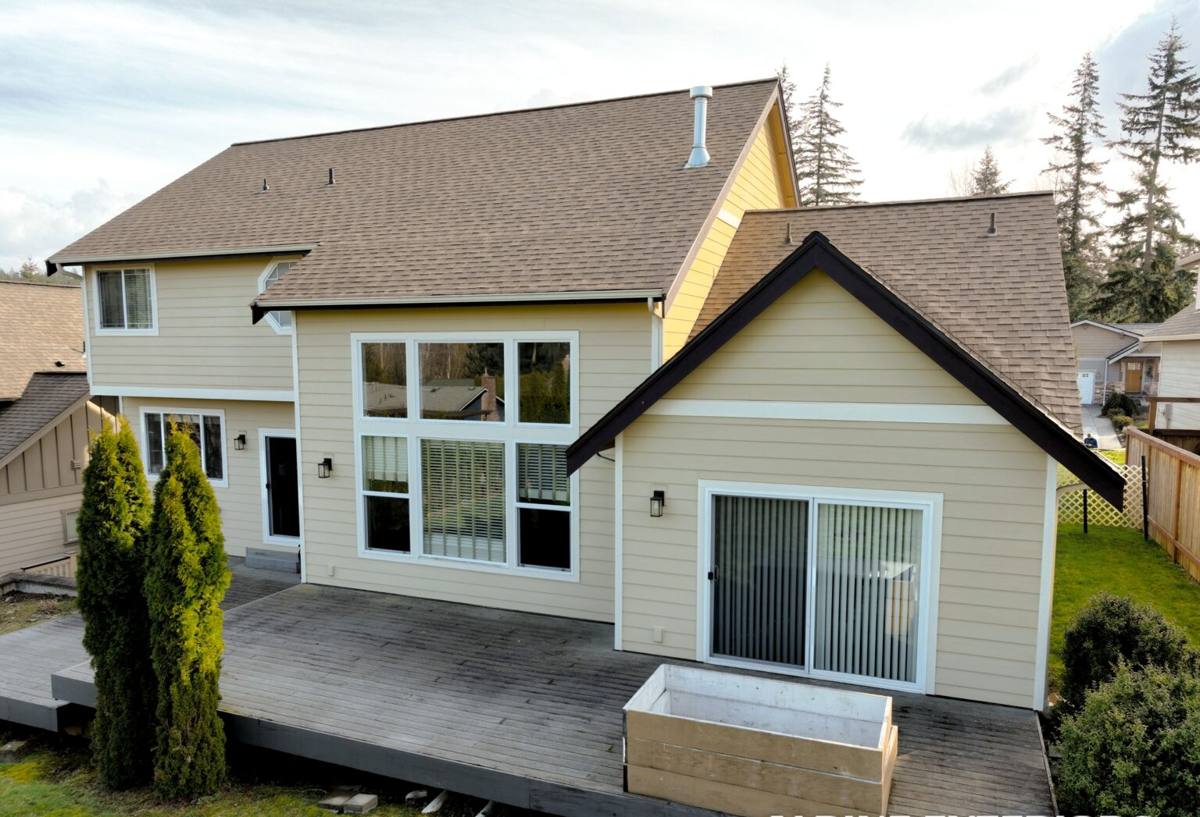
Why Asphalt Shingles Still Make Sense for Sumas Homes
Asphalt shingles remain the right call for most homes in this area, and the reasons are practical ones. They're a well-proven product in Pacific Northwest weather, priced well against metal or tile, available in enough colors and profiles to fit almost any house style, and if a section gets damaged later it can usually be repaired without redoing the whole roof. What the phrase "asphalt shingles" doesn't tell you is how well the roof was actually put on, and that's exactly where Sumas weather finds its way in.
In our experience, the shingle material itself is rarely the first thing to fail. Problems start at the details underneath and around it — the underlayment behind the shingles, how each course is fastened and lapped, and how flashing is built at valleys, chimneys, and wherever the roof meets a wall. A mid-grade shingle roof put on correctly will outlast a premium shingle roof that was rushed.
What Local Weather Actually Demands
- Corrosion-resistant fasteners and flashing: Salt-tinged air speeds up corrosion on undersized or lower-grade metal, and rusted-through flashing is one of the most common sources of leaks that don't show up for years.
- Underlayment rated for wind-driven rain: Basic felt is a weaker line of defense than synthetic or self-adhered underlayment when rain is being pushed sideways and up under the shingle tabs rather than simply falling and draining off.
- Algae-resistant granules: Shaded roof planes that stay damp through the winter hold enough moisture for moss and algae staining to take hold within just a few years on untreated shingles.
- Balanced attic and roof deck ventilation: Moisture trapped under the deck accelerates wood rot and moss growth from underneath at the same time weather is working against the roof from above.
What a Correct Installation Actually Involves
Sumas homeowners often ask what actually separates a roof that lasts twenty-plus years from one that starts leaking after five. It comes down to a handful of details that aren't visible once the job is finished, which is exactly why it matters who's doing the work.
Underlayment That Matches the Exposure
We use synthetic or self-adhered underlayment rated for wind-driven rain rather than defaulting to basic felt. On a roof exposed to sideways rain off the water, that underlayment is doing real work as the second line of defense any time water gets past the shingles themselves — which happens more often than most homeowners assume, even on a well-built roof.
Flashing at Valleys, Chimneys, and Walls
Valleys, chimneys, skylights, and anywhere a roof plane meets a wall are where the large majority of roof leaks actually start — not out in the open field of shingles. We build flashing at these transitions with metal sized and lapped correctly for this climate, not caulk standing in for a flashing detail that was skipped.
Fastening and Nailing Pattern
Shingle manufacturers specify a nailing pattern and fastener count for a reason, and cutting corners here is one of the most common ways a roof fails early in a windy coastal area. We follow manufacturer nailing specs and adjust fastener placement for wind exposure rather than using the minimum count to save time.
Ventilation Above and Below the Deck
A roof that can't breathe traps heat and moisture against the underside of the deck, which shortens shingle life from below at the same time weather is wearing it down from above. We check intake and exhaust ventilation as part of every roofing job, not as an afterthought once the shingles are already on.
Choosing the Right Shingle for a Sumas Roof
| Shingle Type | Typical Lifespan | Best Fit |
|---|---|---|
| 3-tab asphalt | 15-20 years | Budget-conscious re-roofs where basic protection is the priority |
| Architectural / laminate | 25-30 years | Most Sumas homes — better wind resistance and a dimensional look at a reasonable price |
| Premium / designer laminate | 30+ years | Homes where appearance and maximum durability matter more than upfront cost |
For most homes in this area, we recommend architectural shingles. They carry a stronger wind rating than 3-tab shingles, which matters on a property exposed to driving rain and gusty weather off the water, and the added upfront cost is modest compared to the extra years of service life.
Repair, Partial Replacement, or Full Tear-Off?
Not every roofing problem in Sumas calls for a full replacement. A section of wind-lifted shingles, an isolated leak at one flashing detail, or storm damage limited to one roof plane can often be repaired without touching the rest of the roof. But if the underlayment has been compromised over a wide area, or the shingles are past their expected service life and starting to fail broadly rather than in one spot, patching it usually just delays a larger job while moisture keeps working on the deck underneath. We'll walk the roof and tell you honestly which situation you're actually dealing with, rather than suggesting a full tear-off when a repair would do the job.
How Our Process Works
- Walk-through and inspection: We get on the roof, not just in the yard looking up, and check shingles, flashing, ventilation, and the deck itself for soft spots or hidden damage.
- Honest assessment: We tell you plainly whether you're looking at a repair, a partial replacement, or a full tear-off, and why.
- Written estimate: A clear, itemized estimate with no pressure to sign before you've had time to think it over.
- Material and color selection: We help you pick a shingle line and color that fits the house and the budget, and explain the real tradeoffs between options.
- Tear-off and deck inspection: Old roofing comes off down to the deck, which gets inspected and repaired as needed before anything new goes on.
- Installation: Underlayment, flashing, and shingles go on following manufacturer spec and the fastening pattern this climate calls for.
- Final walk-through and cleanup: We walk the finished roof with you, answer questions, and make sure the property is left clean, including a magnetic sweep for stray nails.
Cost Factors for Asphalt Shingle Roofing in Sumas
| Factor | What It Affects | Why It Matters Here |
|---|---|---|
| Tear-off vs. overlay | Labor scope and deck access | Tear-off reveals hidden moisture and rot damage that's common under older roofing in this climate |
| Roof pitch and complexity | Labor time and material waste | Steeper roofs and multiple valleys take longer to flash correctly and add to labor cost |
| Deck condition | Repair costs before new roofing goes on | Trapped moisture from a failing roof can rot plywood or plank decking that needs replacing first |
| Shingle grade | Material cost and expected lifespan | Architectural shingles cost more upfront but hold up better to wind-driven rain than 3-tab |
| Ventilation upgrades | Added material and labor | Homes with inadequate intake or exhaust ventilation often need vents added during the reroof |
Exact pricing depends on the specific roof and its condition, which is why we walk the property in person and give a real number instead of quoting off a generic price sheet over the phone.
Roof Readiness Checklist
- Shingles checked for curling, cracking, or missing granules
- Flashing at valleys, chimneys, and skylights inspected for rust or separation
- North-facing and shaded roof planes checked for moss or algae staining
- Attic checked for daylight, water stains, or signs of poor ventilation
- Gutters and downspouts checked for granule buildup, a sign of accelerating shingle wear
- Interior ceilings checked for staining that could indicate a slow, existing leak
Why a Local Crew Matters in Sumas
A crew that works in and around Sumas regularly gets a feel for how salt air, driving rain, and a long moss season behave on real roofs here over a full year, not just how a shingle performs on a spec sheet. That experience shapes decisions on install day: which roof planes hold moss longest and need extra granule protection, where flashing deserves extra attention, and which fastening details are worth the additional time so a homeowner isn't dealing with a callback after the next big storm off the water. We're based nearby in Birch Bay and treat Sumas as one of the communities we know firsthand, not a market we drive into once and never see again.
If your Sumas home needs a new roof, a repair, or just an honest opinion on what shape your current shingles are actually in, we're glad to take a look. Reach out using the form below to schedule a free, no-pressure estimate.