 Birch Bay
 Roofing in Sumas: What Whatcom County Weather Actually Demands
A roof in Sumas doesn't fail the way a roof fails in a dry climate. It doesn't usually blow off in one dramatic storm or crack apart from heat. It fails slowly, from the inside out, because moisture finds a way in and never fully dries. Whatcom County gets long stretches of steady, driving rain, damp air that lingers for days at a time, and enough shade and humidity in the wrong spots to grow moss on almost any roof surface that isn't actively shedding water and getting sun. Add in the salt-tinged air that moves through this part of the county and settles on metal fasteners, flashing, and vents, and you've got a set of conditions that will find every shortcut in a roofing job within a few years, not a few decades.
None of that means roofing in Sumas is harder than roofing anywhere else. It means the details that don't matter much in a dry climate matter a lot here — underlayment selection, ventilation, flashing at every penetration, and how a roof is detailed at valleys and edges where water concentrates. A new roof installation done right for this area is built assuming it will be wet, shaded, and windblown for a good chunk of the year, not assuming ideal conditions most of the time.
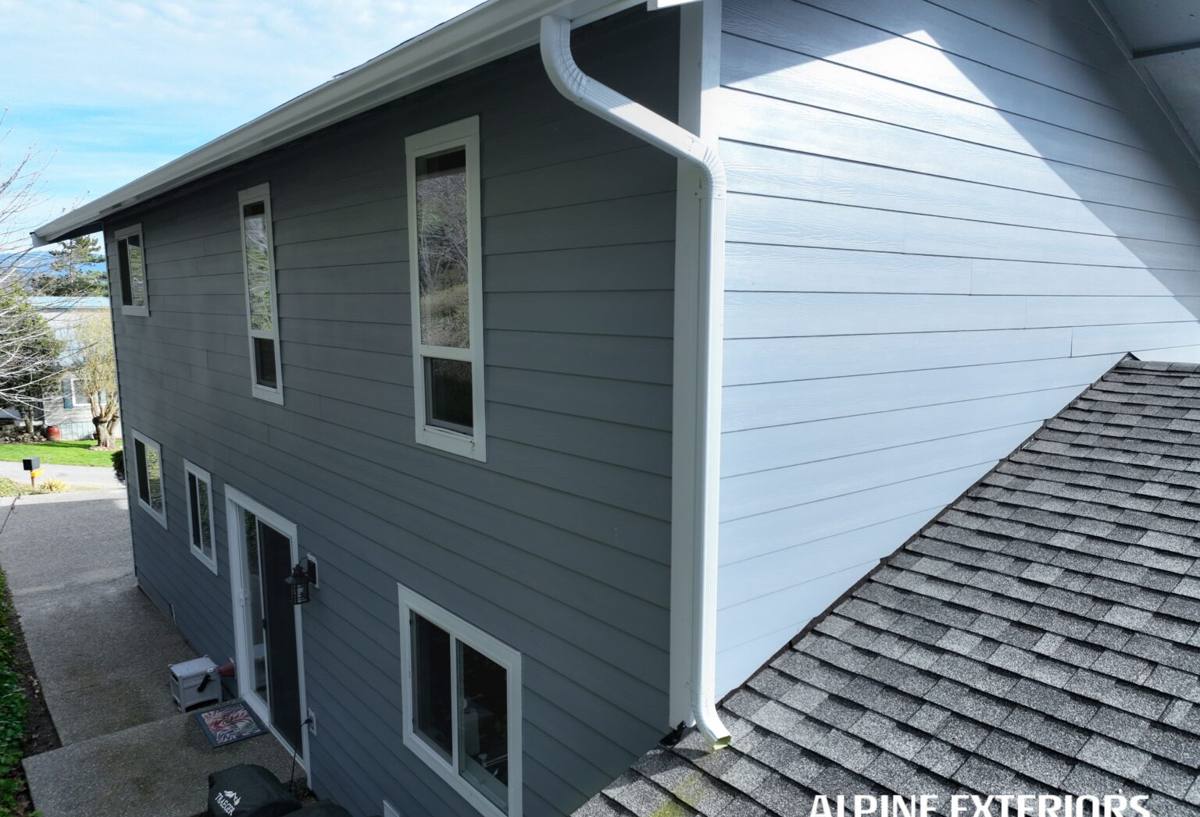
Warning Signs a Sumas Roof Is Ready for Replacement
Homeowners often ask for a repair when what they actually need is a replacement, or they wait past the point where repair still makes sense. A few signs point clearly toward a full new roof rather than another patch:
- Granule loss heavy enough that gutters are collecting sandy grit after every rain
- Shingles that are cupping, curling at the edges, or cracking when you look closely from the ground
- Moss or dark algae streaking that comes back within a season of being cleaned
- Soft spots in the decking you can feel when walking the roof, or sagging visible from the street
- Daylight or water stains in the attic, especially near valleys, chimneys, or vent pipes
- A roof that's taken more than two or three repair calls in the last few years for different leaks
Any one of these on its own might still be a repair. Two or three together, especially on a roof already past 20 years old, usually means the underlying materials are worn out everywhere, not just at the spot that's currently leaking.
What a Correct New Roof Installation Actually Involves
A new roof isn't just new shingles laid over what's there. Done properly, it's a full system, and skipping any layer of that system is where most premature failures come from.
Tear-Off and Deck Inspection
Old roofing comes off completely so the decking underneath can actually be inspected, not guessed at. Soft, delaminated, or water-stained plywood gets replaced before anything new goes down. Roofing over a compromised deck is one of the most common corner-cutting moves in the trade, and it's invisible until the roof fails again a few years later.
Underlayment and Moisture Protection
In a climate like this one, underlayment isn't a formality — it's the roof's real waterproofing layer, since it's what stands between the house and any water that gets past the shingles during wind-driven rain. Ice-and-water shield along eaves, valleys, and penetrations adds another layer of protection exactly where water tends to pool or back up.
Flashing at Every Penetration
Chimneys, skylights, vent pipes, and wall intersections are where the overwhelming majority of roof leaks actually start — not in the open field of shingles. New, properly lapped flashing at every one of these points matters more to long-term performance than the shingle brand on the box.
Ventilation Built In, Not Bolted On
A roof that can't breathe traps moisture in the attic, which shortens the life of the decking and the shingles from underneath. Intake at the eaves and exhaust at the ridge, sized correctly for the attic space, is part of a correct installation, not an upgrade.
Roofing Material Options for Sumas Homes
Most homes in this area land on one of a few practical options. Each has real trade-offs worth understanding before you decide.
| Material | Typical Lifespan | How It Handles Local Conditions |
|---|---|---|
| Architectural asphalt shingles | 25–30 years | Good moss and wind resistance when installed with proper ventilation; most cost-effective option |
| Standard 3-tab shingles | 15–20 years | Lower upfront cost but thinner profile wears faster under sustained rain and moss exposure |
| Standing seam metal | 40–50+ years | Sheds water and moss growth exceptionally well; higher upfront cost, fewer seams for water to find |
| Metal shingle panels | 40–50 years | Metal durability with a more traditional shingle look; installation quality matters a lot for fastener sealing |
We don't push one material on every home. A roof with heavy tree cover and shade all day benefits more from metal's moss resistance than a wide-open, sunny roof plane where a well-ventilated architectural shingle will perform just as well for a fraction of the cost.
Cost Factors in a New Roof Installation
Every roof is priced differently, but the same handful of factors move the number up or down on almost every job:
| Factor | Effect on Cost |
|---|---|
| Roof size and number of stories | More square footage and steeper access both add labor and material |
| Roof pitch and complexity (valleys, dormers) | More cuts, more flashing, more labor time per square |
| Extent of decking replacement needed | Rotten or soft plywood adds material and labor beyond the base estimate |
| Material choice | Asphalt shingles are the most affordable; metal costs more upfront but less over its life |
| Ventilation and flashing upgrades | Correcting inadequate ventilation adds cost but prevents early failure |
We give a written estimate that breaks these out so you can see what you're actually paying for, rather than one flat number with no explanation behind it.
Our Installation Process, Start to Finish
- On-site inspection — we walk the roof and attic, not just look from the driveway, and check decking condition, ventilation, and flashing points
- Written estimate — a clear breakdown of material, labor, and any decking replacement, with material options explained honestly
- Scheduling around weather — we plan tear-off in windows that keep your home protected from open-sky exposure as much as possible
- Tear-off and deck repair — old materials removed, decking inspected and replaced where needed
- Underlayment, flashing, and ventilation installation — the layers that determine how the roof performs in ten years, not just how it looks this year
- Final roofing material installation — installed to manufacturer specification so warranty coverage stays intact
- Site cleanup and walkthrough — debris and nail sweep, followed by a walkthrough so you know exactly what was done
Questions to Ask Before You Hire a Roofing Contractor in Sumas
The roofing trade has its share of storm-chasers and door-knockers who aren't around when a warranty claim comes up. Before signing anything, it's worth asking:
- Are you licensed and insured in Washington State, and can you provide proof?
- Will decking replacement, if needed, be itemized separately or is it a vague allowance?
- What underlayment and ventilation approach are you using, and why?
- Is the warranty backed by the manufacturer, the installer, or both — and what voids it?
- Do you have a permanent local address and phone number, not just a job-site cell number?
- Can you give references from roofs you've installed in this same area?
A contractor who answers these plainly, without dodging, is usually the one worth hiring.
Why Hire a Crew That Already Works in Sumas
Roofing crews that mostly work in drier climates or unfamiliar regions tend to build to a generic spec — whatever gets a roof watertight on a normal day. A crew that works Whatcom County regularly builds to the conditions that actually show up here: sustained rain events, shaded roof planes that stay damp for days, and moss pressure that never really goes away. That shows up in small decisions — where extra ice-and-water shield goes, how much ventilation an attic actually needs, which flashing details hold up over years of driving rain — that aren't obvious unless you've seen what fails on roofs in this specific area.
It also means we're still local when a warranty question comes up five or ten years down the road, not a name from a flyer that's long gone.
If your roof is showing its age or you're just trying to understand your options before you need to decide, we're glad to come take a look. The estimate is free, there's no pressure attached to it, and you'll get straight answers about what your roof actually needs — just fill out the form below to get started.