 Birch Bay
 Windows Built for the Nooksack Area's Weather, Not Just the Opening
"Custom" gets used loosely in the window business. For us, working in and around Nooksack and the wider Birch Bay service area, it means two things at once: the window is sized and built to fit your actual opening — not a stock size with shims and foam hiding the gap — and it's specified to hold up to what Whatcom County weather actually does to a house over a few decades. Those are two different problems, and a lot of installs only solve the first one.
Homes in this part of the county see a mix of conditions depending on how close they sit to the water. Closer to Birch Bay itself, salt-laden air speeds up corrosion on hardware and finishes. Further inland around Nooksack, that salt exposure drops off, but you still get the same driving, sideways rain off the Strait and Georgia Strait weather systems, the same long gray stretch from fall through spring where moss and algae never really dry out, and the same freeze-thaw cycles that work on any gap in a seal. Any window we spec for this area has to handle wind-driven water first — that's the constant across the whole service territory, coastal or not.
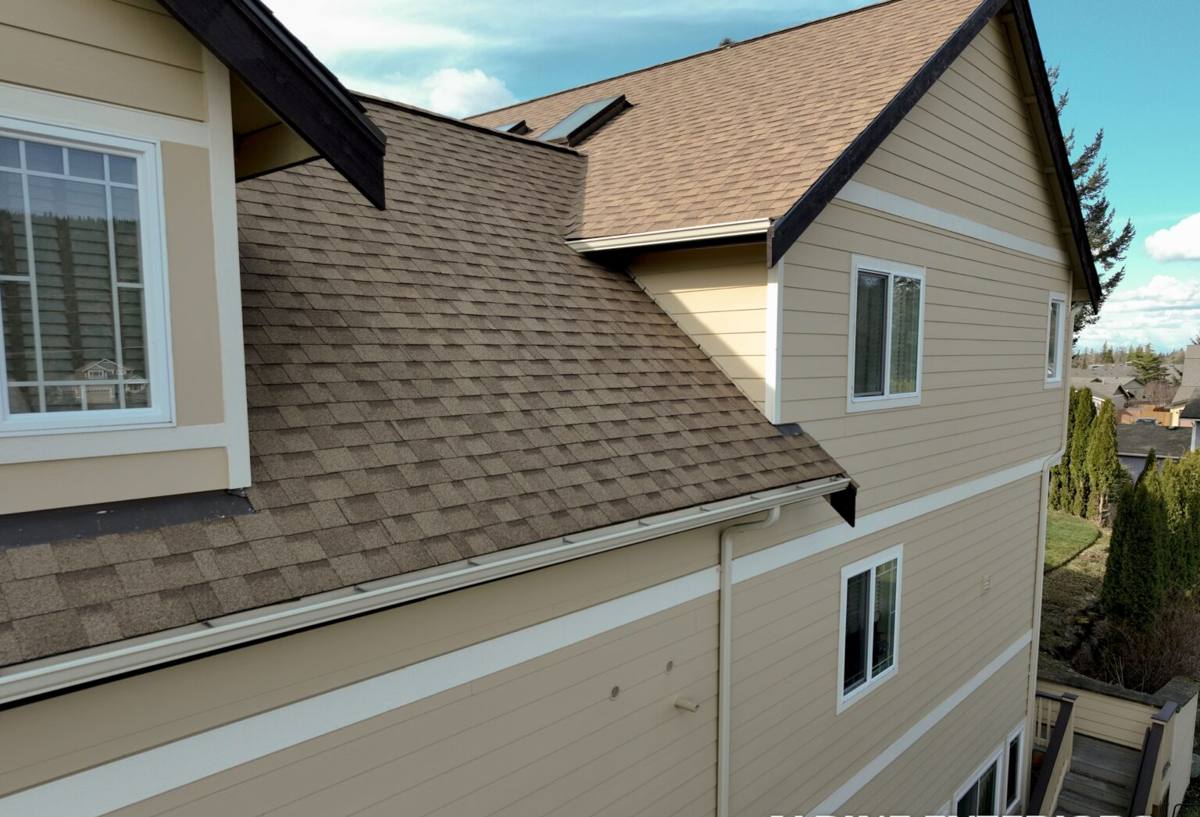
What "Custom" Actually Solves For Local Homes
Nooksack-area housing stock spans a wide range — older farmhouses and ranch-style homes built decades before today's energy codes, newer construction, and everything renovated or added onto in between. That mix means a lot of window openings are not standard sizes anymore, whether by original design or by settling, past remodels, or old-fashioned custom carpentry. A true custom window install accounts for:
- Openings that are out of square from age or settling — common in older regional framing
- Non-standard sizes from additions, converted porches, or hand-built openings
- Matching sightlines and grille patterns across a home that's been added onto over the years
- Wall assemblies that were never built with a modern weather-resistive barrier in mind
- Rough openings with hidden rot or moisture damage that only shows up once the old window is out
None of that is exotic — it's just what you run into when a house has been standing through Whatcom County winters for 30, 50, or more years. A correct custom install plans for it instead of getting surprised by it mid-job.
Signs Your Current Windows Are Losing the Fight
Window failure in this climate is usually slow and easy to miss until it isn't. A few things worth checking before you decide whether you need repair, replacement, or nothing at all:
- Visible condensation or fogging between the panes of a double-pane window — the seal has failed and the gas fill is gone
- Soft or discolored trim and sill wood on the interior, especially at the bottom corners
- A draft you can feel with your hand near the frame on a windy day, even with the window latched
- Paint or finish that's bubbling or peeling on the exterior casing
- Green or black growth building up in the corners of the frame or on the sill faster than the rest of the siding
- Windows that are difficult to open, close, or lock — often a sign the frame has shifted or swollen
- Noticeably higher heating bills without another clear cause
Any one of these on its own isn't necessarily an emergency. Several together, especially on the weather-facing side of the house, usually means the window and its flashing are past the point where caulk and weatherstripping fix the real problem.
What a Correct Installation Actually Involves
Removal and Opening Inspection
We don't quote a job blind and we don't assume the opening behind an old window is sound. Once the old unit is out, we check the sill, jambs, and header for rot or soft wood before anything new goes in. This is the point where hidden moisture damage from years of a marginal seal usually shows up — and it's far cheaper to deal with here than to bury it under a new window and find it in five years.
Flashing and Weatherproofing
This is the step that actually determines whether a window survives driving rain, and it's the step that gets rushed most often on lower-end installs. Correct flashing means a sill pan to direct any water that gets past the window back outside the wall, properly lapped house wrap or weather barrier at the head and jambs, and flashing tape sequenced so water always sheds downward and outward — never trapped behind the window where it can rot framing from the inside where you can't see it.
Setting and Sealing the Window
The window gets shimmed level, plumb, and square — not just tight to the opening — then fastened per the manufacturer's schedule so the frame won't rack or bow under wind load. Insulation goes in the gap around the frame, not spray foam pressure-packed to the point it bows the jambs inward. Exterior sealant goes on last, over the flashing, not as a substitute for it.
Interior and Exterior Finish
Trim, casing, and any siding disturbed during the swap get restored to match, and the whole unit gets a final operation check — opening, closing, locking — before we call it done.
Choosing Materials and Glass for This Climate
There's no single "best" window material — there's a right trade-off for your home, your budget, and how exposed the house is to weather. Here's how the common options generally compare for a Whatcom County setting:
| Frame Material | Moisture & Salt Resistance | Maintenance | Typical Trade-off |
|---|---|---|---|
| Vinyl | Good — won't rot or corrode | Low | Budget-friendly; limited color/finish options long-term |
| Fiberglass | Very good — dimensionally stable in temperature swings | Low | Higher upfront cost than vinyl; excellent longevity |
| Wood (unclad) | Requires diligent upkeep near moisture and salt air | High | Best classic look; needs regular refinishing in this climate |
| Wood-clad (exterior aluminum/vinyl clad) | Good — clad exterior shields the wood | Moderate | Wood warmth inside, protected exterior; higher cost |
| Aluminum | Prone to condensation and corrosion near salt air unless thermally broken | Moderate | Generally not our first recommendation this close to the water |
Glass matters as much as the frame. Double-pane, low-E glass is the standard baseline for this region and performs well. Triple-pane adds another layer of insulation and sound dampening — worth considering on a north- or west-facing wall that takes the brunt of winter storms, less critical on a sheltered side of the house. We'll walk through what actually makes sense for each elevation of your home rather than defaulting to the most expensive option across the board.
Our Process, Start to Finish
1. On-Site Assessment
We look at the actual openings, the current windows' condition, and the exposure of each wall before recommending anything. No sight-unseen quotes.
2. Straightforward Estimate
You get a clear breakdown of materials, scope, and price — including what we found during the assessment that might affect the job, like suspected rot or an out-of-square opening.
3. Scheduling Around the Weather
We plan install windows with an eye on the forecast. Openings get sealed and protected the same day they're opened — we don't leave a house exposed to wind-driven rain overnight.
4. Installation
Removal, inspection, flashing, setting, sealing, and finish work as outlined above, done in sequence, not shortcuts.
5. Final Walkthrough
We check operation on every window with you before we consider the job finished, and clean up the site so you're not left with old units and packaging.
Why a Crew That Already Works This Area Matters
Window installation isn't just a product spec — it's a judgment call about how a specific wall, in a specific spot, handles water. A crew that's worked windows across Nooksack and the greater Birch Bay area has already seen how older local framing behaves once it's opened up, which wall orientations catch the worst of the wind-driven rain, and where moss and algae tend to build up fastest on trim and sills. That's the kind of knowledge that shows up as fewer surprises mid-job and a flashing detail that's actually right for your house instead of a generic install by the book.
It also matters for permitting and code — replacement and new-construction window work can trigger different requirements depending on scope, and a local crew knows what Whatcom County actually asks for versus what's optional.
Living With New Windows in a Wet, Mossy Climate
Even a correctly installed window benefits from basic upkeep in this region:
- Rinse sills and tracks periodically to keep organic debris and moss spores from taking hold
- Check exterior caulk lines once a year, especially after a hard winter, and touch up any cracking
- Keep gutters and downspouts clear — overflow near a window is one of the most common causes of premature seal failure
- Operate locks and hardware a few times through the year so they don't seize up over a wet winter
None of this is heavy maintenance — it's the kind of five-minute check that catches a small problem before it becomes a rot repair.
Get a Straight Answer on Your Windows
If you're not sure whether your windows need full replacement, a repair, or nothing at all yet, we're glad to take a look and tell you honestly which it is. Use the form below to request a free, no-pressure estimate for your Nooksack-area home.