 Birch Bay
 Metal Roofing for Nooksack Homes
Nooksack sits inland from Birch Bay but shares the same weather pattern that shapes every roofing decision in this part of Whatcom County: long wet winters, moisture that lingers in shaded valleys and under tree cover, and a moss season that can run most of the year if a roof isn't set up to shed water and dry out quickly. Add the salt-tinged air that reaches inland from Bellingham Bay and the Strait of Georgia on a west wind, and you have a climate that is genuinely hard on roofing materials — not in a dramatic way, but through slow, steady wear that shows up as premature granule loss, moss colonies, and rust at fasteners and flashings.
Metal roofing, installed correctly, handles this combination better than most alternatives. It sheds water fast, doesn't hold moisture the way organic shingle surfaces can, and resists moss growth far longer. But "metal roofing" covers a wide range of products and installation quality, and a roof that's wrong for this climate — or installed without the right attention to fastening, flashing, and ventilation — can fail in ways that are expensive to fix. This page covers what actually matters for a metal roof on a Nooksack-area home.
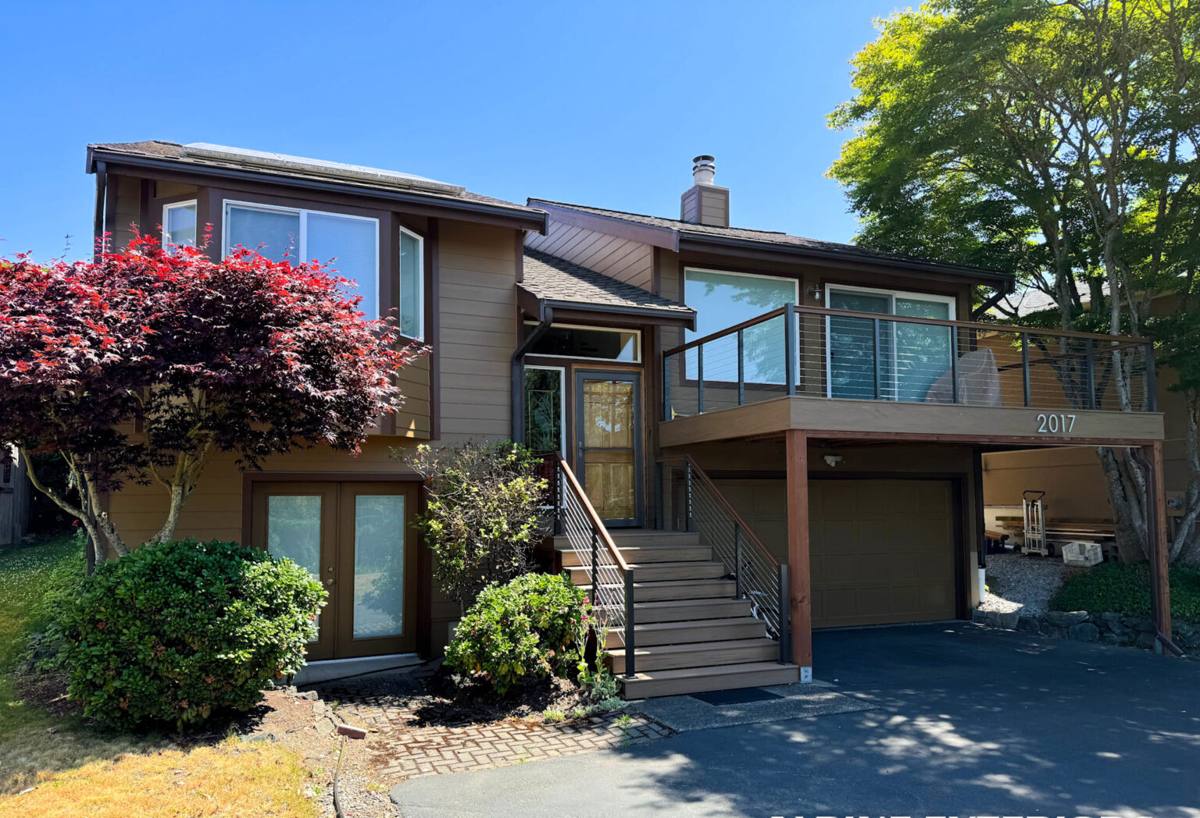
What This Climate Does to a Roof
Driving rain and wind-driven moisture
Storms coming off the Strait of Georgia and through the Fraser Valley corridor don't just drop rain straight down — wind pushes it sideways, under laps and around penetrations that would stay dry in a calmer climate. Any roofing system here needs laps, seams, and flashing details sized for that reality, not just for standard vertical rainfall.
Salt air and corrosion
Homes closer to Birch Bay and the water get the most direct exposure, but salt-laden air travels well inland on prevailing winds, and Nooksack properties aren't immune to it. Salt accelerates corrosion at cut edges, fasteners, and any spot where a protective coating has been scratched or is thinner than it should be. This is the single biggest reason material choice and finish quality matter more here than in a dry inland climate.
Moss and organic growth
Shaded lots, tree cover, and near-constant winter dampness make Whatcom County prime territory for moss. Moss holds moisture against a roof surface, works into seams, and — on shingle roofs — physically lifts material over time. Metal sheds moss far more effectively because it offers no organic surface for spores to root into and dries fast between rain events, but a poorly ventilated or badly detailed metal roof can still trap moisture underneath and grow moss-friendly conditions in the wrong places.
Metal Roofing Options: What Fits This Area
Not every metal roofing product performs the same way in a wet, salt-influenced climate. The table below compares the options we most often discuss with Nooksack-area homeowners.
| Type | Best For | Climate Notes |
|---|---|---|
| Standing seam (steel or aluminum) | Most homes; long-term performance priority | Concealed fasteners mean fewer penetration points for water and salt to attack; excellent water-shedding on low-slope sections |
| Exposed-fastener metal panel | Budget-conscious projects, outbuildings, shops | Lower upfront cost, but fastener gaskets wear over time and need inspection — more maintenance-sensitive near salt air |
| Aluminum panel systems | Properties closer to the bay, high salt exposure | Naturally corrosion-resistant since it doesn't rust like steel; often the better long-term choice the closer you are to open water |
| Steel with premium coatings (PVDF/Kynar-type finishes) | Standard steel panels where a strong coating is specified | Coating quality determines how well the panel resists salt and UV over decades — this is where cutting corners shows up early |
For most Nooksack homes, we lean toward standing seam in steel or aluminum, with the choice between the two often coming down to how much direct salt exposure the specific site gets and the homeowner's budget. Exposed-fastener panels have their place, particularly on secondary structures, but we're upfront that they carry more long-term maintenance in this climate.
What a Correct Installation Actually Involves
The panel itself is only part of the system. A metal roof's performance in this climate depends just as much on what's underneath and around it.
Underlayment
We use synthetic, high-temp underlayment rated for metal roofing, with self-adhered membrane at eaves, valleys, and any low-slope transitions — the spots where wind-driven rain is most likely to work its way past the panel seams.
Fastening and clips
Standing seam systems use concealed clips rather than through-panel screws wherever possible, which removes the most common point of long-term leak and corrosion. Where exposed fasteners are used, we specify stainless or coated fasteners matched to the panel material — mixing incompatible metals accelerates corrosion through galvanic reaction, which is a real problem near salt air.
Flashing and penetrations
Chimneys, vent stacks, skylights, and wall-to-roof transitions are where most roof failures start, regardless of roofing material. Metal roofing requires custom-bent flashing that matches the panel profile — off-the-shelf flashing that doesn't integrate cleanly with the seams is a common source of callbacks on jobs done by crews unfamiliar with metal systems.
Ventilation
Proper ridge and soffit ventilation keeps moisture from condensing on the underside of the panels, which matters in a climate where indoor-outdoor temperature and humidity differences are common through fall and winter. Skipping this step is one of the more common corner-cuts we see, and it's not visible until moisture problems show up in the attic.
Our Process for Nooksack Projects
- On-site assessment — we look at slope, existing roof condition, ventilation, tree cover, and proximity-driven salt exposure before recommending a system.
- Material and profile selection — matched to the home's exposure, budget, and the roof's specific vulnerable points (valleys, low-slope sections, dormers).
- Tear-off and deck inspection — we check the roof deck for rot or soft spots before anything new goes down; moss and moisture damage from the old roof often shows up here.
- Underlayment and flashing installation — the part of the job that determines whether the roof performs in a driving rainstorm, done before a single panel goes up.
- Panel installation — fastened and seamed to spec, with attention to expansion allowances so panels aren't stressed as temperatures shift seasonally.
- Final walkthrough — we review the completed roof with the homeowner and cover basic maintenance expectations.
What Drives the Cost
Metal roofing costs more upfront than asphalt shingles, and the range on any given project depends on several factors that matter more in this climate than in a milder one.
| Factor | Why It Matters Here |
|---|---|
| Panel material (steel vs. aluminum) | Aluminum costs more but resists salt-air corrosion without relying entirely on coating integrity |
| Roof complexity (valleys, dormers, penetrations) | More custom flashing needed to handle wind-driven rain at every transition |
| Coating/finish quality | Better coatings resist salt and UV degradation longer, reducing repaint or recoat needs |
| Existing deck condition | Moss and moisture damage from a prior roof can mean deck repair before installation |
| Ventilation upgrades | Adding or correcting ridge/soffit venting adds cost but prevents condensation issues specific to our humidity |
We give straightforward, itemized estimates so homeowners can see exactly where the cost is going rather than a single lump number.
Maintenance: What Actually Keeps a Metal Roof Performing
Metal roofing is lower-maintenance than shingles, not maintenance-free. In this climate, a short annual checklist goes a long way:
- Clear debris and needles from valleys and gutters before fall rains set in — trapped organic material holds moisture against the panel
- Check for early moss or algae staining, particularly on shaded slopes, and address it before it spreads
- Look at exposed fasteners (if present) for signs of gasket wear or rust streaking
- Inspect flashing around chimneys, vents, and skylights after major windstorms
- Confirm gutters and downspouts are directing water away from the foundation, not just off the roof edge
Why Local Experience Matters for This Job
Metal roofing rewards correct detailing and punishes shortcuts, and both show up over years, not days. A crew that regularly works Nooksack and the broader Birch Bay area already knows which roof lines catch the worst of the driving rain, which lots hold moisture longest under tree cover, and how much salt exposure to plan for at a given elevation and distance from the water. That local knowledge shapes real decisions — material choice, flashing details, ventilation — rather than applying a generic spec that might be right for a drier region but leaves gaps here.
If you're weighing a metal roof for a Nooksack-area home, we're happy to walk the roof, talk through what your specific site needs, and put together a clear, no-pressure estimate using the form below.