 Birch Bay
 Why Nooksack-Area Roofs Take a Different Kind of Beating
Roofs in this part of Whatcom County don't fail the same way roofs do in drier climates. It's rarely one dramatic storm that does the damage — it's the combination of salt-laden air moving in off the water, long stretches of wind-driven rain, and a moss season that can run eight months or more out of the year. Each of those wears on a roof differently, and a repair that doesn't account for all three tends to fail again within a season or two.
Salt Air and Metal Fasteners
Salt in the air accelerates corrosion on exposed nail heads, flashing, and any galvanized hardware that isn't fully coated or protected. On an older roof, you'll often see rust streaking below fastener lines or flashing seams before you see an actual leak. That corrosion is usually the first crack in the system, even if it's not what a homeowner notices first.
Wind-Driven Rain and Roof-to-Wall Intersections
Straight-down rain is easy on a roof. Wind-driven rain is not — it gets pushed sideways and upward under shingle edges, around chimneys, at dormers, and anywhere a roof plane meets a wall or vent. Most of the "mystery leaks" we get called out for aren't from a hole in the field of the roof at all; they're from wind-driven water finding a gap in flashing or underlayment that a calm-weather inspection would never reveal.
Moss Season and Shingle Life
Moss doesn't just look bad — it holds moisture against the roof surface, lifts shingle edges as it grows, and works its way under laps over time. In a climate where moss can establish itself for most of the year, an untreated roof ages faster than the manufacturer's warranty numbers assume. This is one of the biggest differences between roofing here and roofing in a drier part of the state.
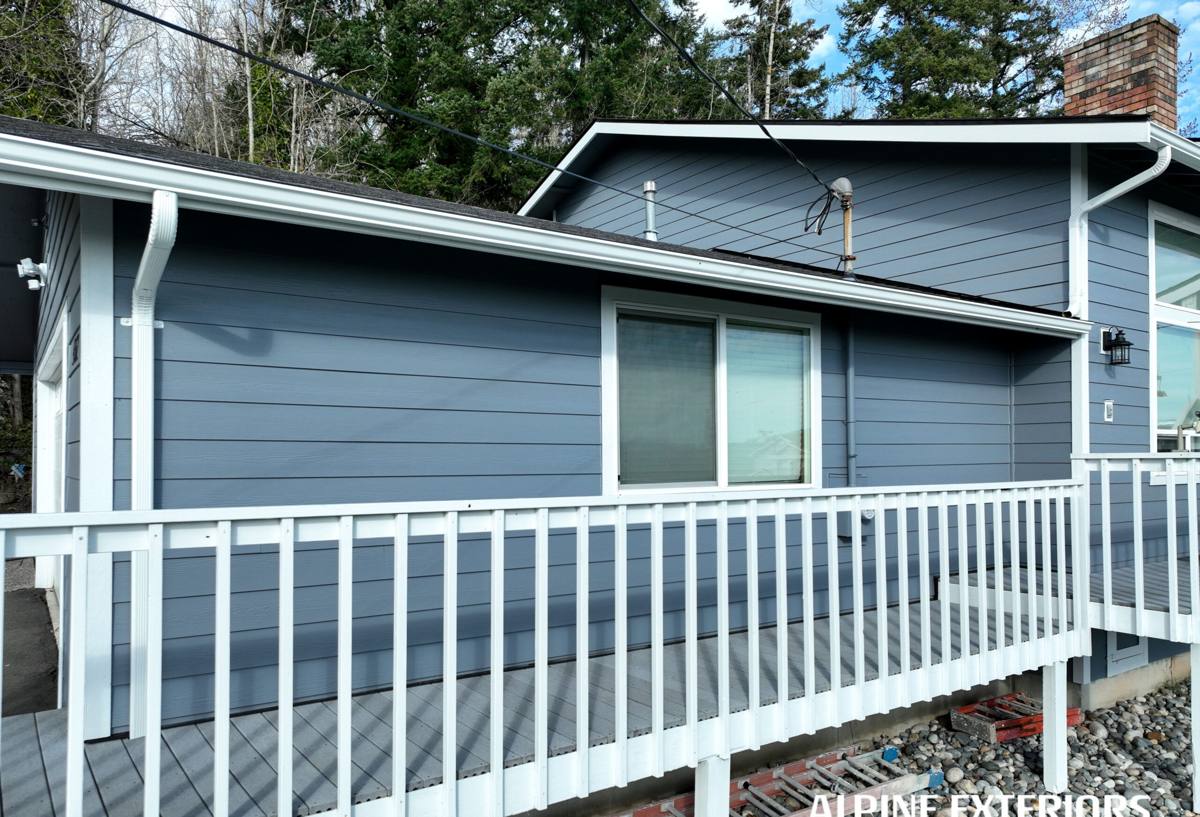
What Counts as Storm Damage (and What Doesn't)
Homeowners often assume "storm damage" means something dramatic and obvious. In practice, most storm damage we find is subtle enough that it's easy to miss until it turns into an interior leak. Damage worth having inspected includes:
- Shingles that are lifted, curled, or missing at ridge lines and edges after high wind
- Granule loss visible in gutters or downspouts after a heavy rain event
- Flashing that's bent, separated, or pulled away from a chimney, skylight, or wall
- Branch or debris impact marks, even without a visible puncture
- Soft spots or discoloration on interior ceilings that showed up after a storm
- Gutter or fascia damage that's letting water track back up under the roof edge
What doesn't automatically count as storm damage is general wear — a 20-year-old roof with worn granules and some moss growth is aging, not storm-damaged, even if a recent storm is what prompted the homeowner to call. We'll tell you honestly which one you're looking at.
The Anatomy of a Correct Storm Repair
A storm repair that's done right is not the same as a patch job. Patching covers the visible symptom; a correct repair traces the water back to its actual entry point and rebuilds that section so it performs like the rest of the roof.
Diagnosing the Real Entry Point
Water doesn't always leak in where it shows up inside the house — it can travel along rafters or sheathing before dripping somewhere else entirely. A proper inspection works from both the roof surface and, when needed, the attic side, tracing staining and moisture patterns back to the actual failure point instead of guessing from the ceiling stain alone.
Matching Materials and Fastening Pattern
Repairs should use materials that match the existing roof's type, weight, and exposure rating, fastened the way the original roof was engineered to be fastened. A mismatched shingle or an under-nailed patch might look fine for a season, but it becomes the next weak point the first time wind gets under it.
Flashing and Underlayment — the Parts You Don't See
Most storm repairs that fail again do so because someone re-covered a shingle without addressing the flashing or underlayment underneath it. In a climate with this much wind-driven rain, flashing details at valleys, chimneys, and wall intersections matter more than the shingles themselves. We replace and re-seal these layers as part of the repair, not just the visible top layer.
Our Process for Nooksack Storm Repairs
- Inspection. We walk the roof and, where relevant, the attic to identify every point of damage — not just the one that prompted the call.
- Documentation. We photograph and describe the damage clearly enough to support an insurance claim if you're filing one.
- Temporary protection. If there's active exposure, we get the area weather-tight the same visit so the damage doesn't spread while a full repair is scheduled.
- Repair plan and honest scope. We tell you plainly whether you're looking at a targeted repair or whether the damage points to a bigger issue worth addressing now.
- The repair itself. Matched materials, correct fastening, and flashing/underlayment work done to hold up under the next storm, not just this one.
- Cleanup and follow-up. Debris removed, gutters checked, and a straightforward explanation of what we did and why.
Repair vs. Replacement: How We Help You Decide
Not every storm-damaged roof needs full replacement, and not every roof that "just needs a patch" should get one. The honest answer usually comes down to a handful of factors:
| Factor | Leans toward repair | Leans toward replacement |
|---|---|---|
| Roof age | Under roughly 12-15 years | Nearing or past manufacturer's expected service life |
| Extent of damage | Isolated to one section or slope | Spread across multiple areas or repeat leak history |
| Moss/algae condition | Light coverage, shingles still intact underneath | Heavy moss with shingle granule loss or lifting |
| Underlying decking | Sound, no soft spots found | Soft, delaminated, or water-stained sheathing |
| Insurance involvement | Damage clearly tied to one storm event | Adjuster or contractor identifies broader wear |
We'll walk you through where your roof falls on this table honestly — including telling you when a repair is genuinely the right call, not just the cheaper one to sell.
Moss, Algae, and Long-Term Roof Health
Because moss season runs long here, moss control has to be treated as part of storm resilience, not a separate cosmetic issue. A roof carrying heavy moss going into a wind event is more likely to lose shingles, because moss growth breaks the seal between shingle layers and gives wind a place to catch. Part of any real storm repair in this area includes clearing moss from the repaired section and, where it makes sense, discussing longer-term moss management so the same section doesn't fail again next season. We won't oversell a full moss-treatment program if what you actually need is a clean, well-sealed repair — but we'll flag it honestly if moss is a real contributor to the damage.
Insurance and Storm Claims — What Homeowners Should Know
We're not insurance adjusters and won't pretend to be, but we can tell you what tends to help a claim move smoothly: clear photo documentation, a written description of the damage and its likely cause, and a repair estimate that separates storm-caused damage from any pre-existing wear. We provide all of that as a standard part of our inspection, whether or not you end up filing a claim. What we won't do is inflate a scope of work to match a policy — our documentation reflects what we actually found on your roof.
Why a Crew That Already Works Nooksack Matters
A roofing crew that's already familiar with Whatcom County conditions isn't guessing at what your roof is up against — they've seen the same salt-air corrosion pattern, the same wind-driven leak points, and the same moss buildup on other roofs nearby. That familiarity shows up in faster, more accurate diagnosis and in materials and methods chosen for this climate specifically, not a generic repair pulled from a different region's playbook. It also means realistic response times after a storm, when a lot of local roofs need attention at once and a crew with local roots is easier to reach and easier to hold accountable.
Signs It's Time to Call for an Inspection
- You noticed missing or lifted shingles after a recent windstorm
- There's a new water stain on a ceiling or in the attic
- Gutters are collecting more granules than usual
- Moss has visibly thickened on north-facing or shaded slopes
- Flashing around a chimney, skylight, or vent looks bent or separated
- It's been several years since the roof was last inspected
If you're in Nooksack or anywhere else in Whatcom County and you're seeing any of the signs above, it's worth having a straightforward inspection before a small issue turns into an interior repair. We're happy to come take a look, tell you plainly what we find, and put together a free, no-pressure estimate for whatever the roof actually needs — no obligation, no pressure to sign anything on the spot.