 Birch Bay
 Building a Deck That Holds Up in Nooksack's Salt Air and Rain
Nooksack sits close enough to Birch Bay and the Strait of Georgia that the same weather patterns hit every outdoor structure in the area: salt-laden air blowing in off the water, long stretches of driving rain through fall and winter, and a moss season that can run half the year in shaded yards. A custom deck built here isn't just a weekend carpentry project — it's an outdoor structure that has to survive conditions that would chew through a deck built to a generic, inland spec. We've built and repaired decks throughout the Birch Bay area, including the Nooksack community, and the patterns of what fails and what holds up are consistent enough that we plan for them before the first post hole is dug.
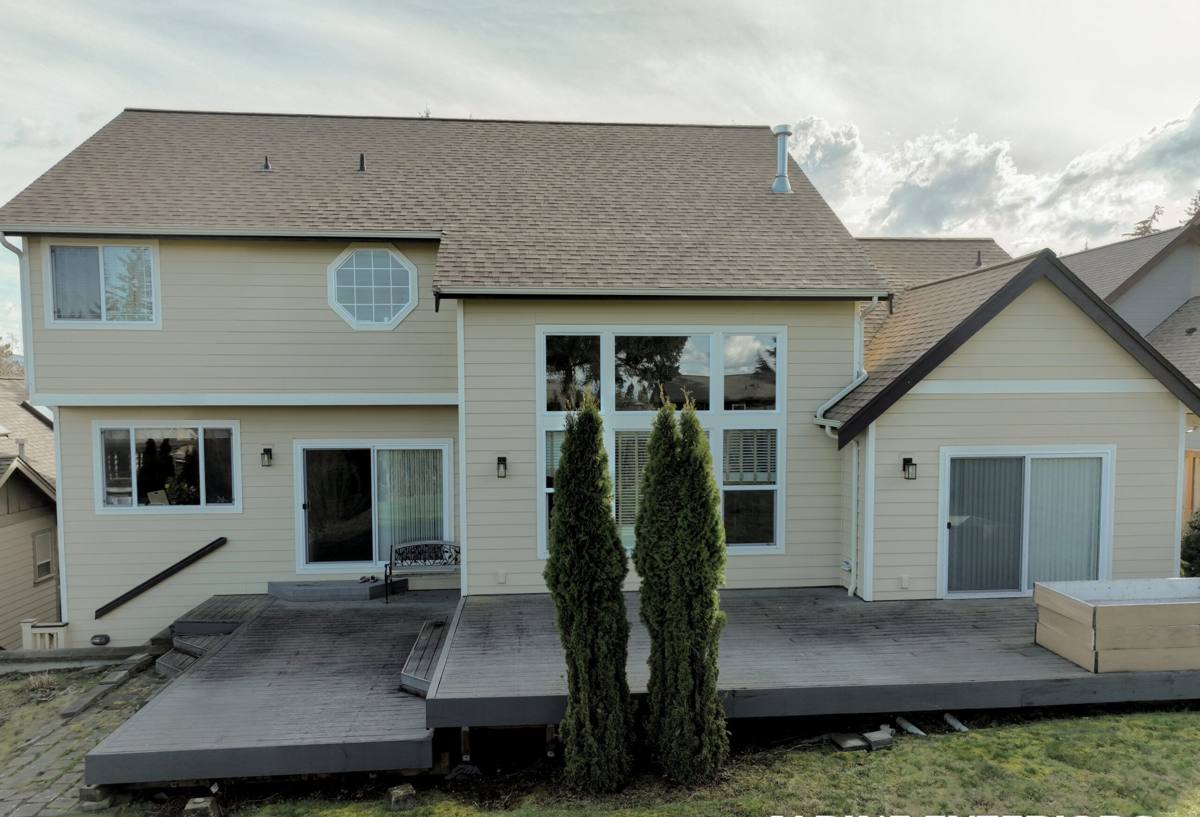
What This Climate Actually Does to a Deck
Salt Air and Corrosion
Homes near the water deal with airborne salt even when they're not directly on the beach. Salt accelerates corrosion on anything metal — fasteners, joist hangers, railing hardware, and structural screws. A deck built with standard hardware can show rust streaks and weakened connections years before an identical deck built inland would. This is the single biggest difference between building a deck in Nooksack and building one somewhere with a dry, inland climate, and it's the first thing we account for in material selection.
Driving Rain and Standing Water
Whatcom County's rain doesn't just fall straight down — wind-driven rain gets pushed sideways into ledger boards, under railings, and into any gap that wasn't sealed correctly. Over a wet season, water that isn't shed properly finds its way into end grain, fastener holes, and the point where the deck attaches to the house. That's where rot starts, and it's almost always hidden until the damage is advanced.
The Long Moss Season
Shaded, damp decking grows moss for much of the year in this area, especially on the north or tree-covered side of a lot. Moss holds moisture against the decking surface, stains it, and turns the surface slick and dangerous underfoot. Decking material, board spacing, and surface texture all affect how much of a problem this becomes and how much maintenance it demands.
What a Correctly Built Deck Involves
Substructure and Framing
The framing is the part of a deck nobody sees once it's finished, and it's also the part that determines whether the deck is still solid in fifteen years. Correct footing depth, proper joist spacing for the decking material chosen, and flashing at every point where wood meets wood or wood meets the house are non-negotiable in this climate. Cutting corners here doesn't show up as a problem for a year or two — it shows up as soft spots, sagging, or a structural failure down the line.
Decking Material Choices
There's no single "right" decking material for every homeowner — it comes down to budget, maintenance tolerance, and how much sun or shade the deck gets. Here's an honest comparison of what we typically install or discuss with Nooksack-area homeowners:
| Material | Upfront Cost | Maintenance | How It Handles This Climate |
|---|---|---|---|
| Pressure-treated lumber | Lowest | Annual cleaning, periodic sealing | Affordable and strong, but needs consistent upkeep to resist moss and moisture; end grain is the weak point |
| Cedar | Mid-range | Regular sealing or staining | Naturally rot-resistant and handles moisture well, but salt air and UV exposure will gray and dry it out without upkeep |
| Composite decking | Higher | Occasional washing, no sealing | Resists rot and doesn't need staining, but surface texture and drainage still matter for moss and algae growth |
| PVC decking | Highest | Minimal — mostly washing | Fully resists moisture damage and rot; best option where salt exposure and low-maintenance are top priorities |
We'll walk through this trade-off honestly during an estimate. A composite or PVC deck costs more up front, but for a homeowner who doesn't want to re-seal a deck every year or two in a climate like this, it often pencils out over time. Wood costs less initially but only performs well with consistent maintenance.
Fasteners and Hardware
Given the salt air issue, we specify corrosion-resistant fasteners and structural hardware as standard practice near Birch Bay and Nooksack — stainless steel or heavy hot-dip galvanized, not the coated deck screws that are fine in a dry inland climate but start showing rust within a few seasons here. Hidden fastener systems also reduce the number of exposed screw heads where water and salt can concentrate.
Drainage, Airflow, and Ledger Attachment
Proper board spacing lets water drain through instead of pooling on the surface, which cuts down on both rot risk and moss growth. Ledger board attachment — where the deck connects to the house — gets flashed and sealed correctly so wind-driven rain can't work its way behind the board and into the house framing. Adequate airflow underneath the deck keeps the substructure drying out between rain events instead of staying damp for weeks at a time.
Design Considerations for Nooksack Properties
Lots in and around Nooksack vary from open, wind-exposed sites to shaded, tree-covered yards, and the right deck design responds to that. A deck on an exposed site benefits from wind-conscious railing design and hardware that won't loosen under repeated gusts. A shaded lot needs decking and board spacing chosen specifically to fight moss rather than a material that looks good on a sunny showroom sample but struggles in low light and constant dampness. Railing height and guard spacing also need to meet current Washington building code, which we account for in every design regardless of the site.
Our Process From First Call to Finished Deck
- On-site consultation. We walk the property, look at sun/shade exposure, drainage, and how the deck will be used, and talk through material options and budget honestly.
- Design and materials plan. We put together a design with the framing spec and decking material selected for the site's specific exposure — not a one-size-fits-all package.
- Permitting. Most custom decks in Whatcom County require a building permit depending on size and height; we handle that process so it's not on you to figure out.
- Construction. Footings, framing, flashing, decking, and railing are installed in sequence, with each stage checked before the next begins.
- Final walkthrough. We go over the finished deck together, including what maintenance it will need and on what schedule.
Cost Factors for a Custom Deck
Every deck is priced based on size, material, height off the ground, and site complexity, so we won't quote a number without seeing the property. In general terms, these are the factors that move the price:
| Factor | Why It Matters |
|---|---|
| Decking material | Pressure-treated, cedar, composite, and PVC all carry different material costs and labor requirements |
| Deck height and footings | A deck built well above grade needs deeper footings, additional framing, and often stairs and taller railing |
| Site access | Sloped, tree-covered, or hard-to-access lots take longer to build on and affect labor time |
| Railing and hardware | Corrosion-resistant hardware and custom railing designs cost more than standard options but last longer near the water |
| Permitting requirements | Size, height, and attachment to the home determine what permitting and inspection steps apply |
Keeping a Nooksack Deck in Good Shape Year-Round
A well-built deck still needs some seasonal attention in this climate. This is the basic upkeep routine we recommend to homeowners in the area, regardless of which contractor built it:
- Sweep off leaves and debris regularly, especially in fall — trapped organic material holds moisture against the decking
- Wash the surface at least once or twice a year to remove moss, algae, and salt residue before it builds up
- Check railing hardware annually for rust or loosening, especially on decks with more direct wind or salt exposure
- Reseal or re-stain wood decking on the schedule appropriate to the product — don't wait until it's visibly gray and dry
- Keep gutters and downspouts near the deck clear so runoff isn't dumping extra water onto or under the structure
- Check underneath the deck once a year for standing water, soft framing, or gaps in flashing at the ledger board
Why It Matters to Hire a Crew That Already Works This Area
A contractor who mostly works inland, drier climates will often default to standard fasteners, standard sealing schedules, and standard framing details — because that's what works where they usually build. Those same defaults fall short near Birch Bay and Nooksack, where salt air, driving rain, and moss are constant rather than occasional. Working regularly in this specific area means we've seen which details actually hold up here and which ones fail early, and we build to that standard as a matter of course, not as an upsell.
Get a Free, No-Pressure Estimate
If you're planning a new deck or replacing one that's showing its age, we're happy to come take a look and talk through honest options for your property. Use the form below to request a free estimate — no pressure, no obligation.