 Birch Bay
 Roof Repair in Nooksack Starts With Understanding the Weather
Homes in and around Nooksack sit inside a specific weather pattern that's tougher on roofing than most of the country ever deals with. You've got salt-laden air moving in off the water, long stretches of driving rain that don't just fall straight down but get pushed sideways into every seam and lap, and a moss season that can run the better part of the year in Whatcom County's damp, mild climate. A roof here doesn't fail because it was installed badly ten years ago and finally gave out. It fails because it's been absorbing moisture, salt, and organic growth every single season, and small problems that would sit dormant in a drier climate compound fast when they don't get a break.
That's the lens we use for every roof repair call in this area. We're not just patching a leak — we're figuring out why the roof let water in during this specific climate, and making sure the fix holds up against the same conditions next winter and the winter after that.
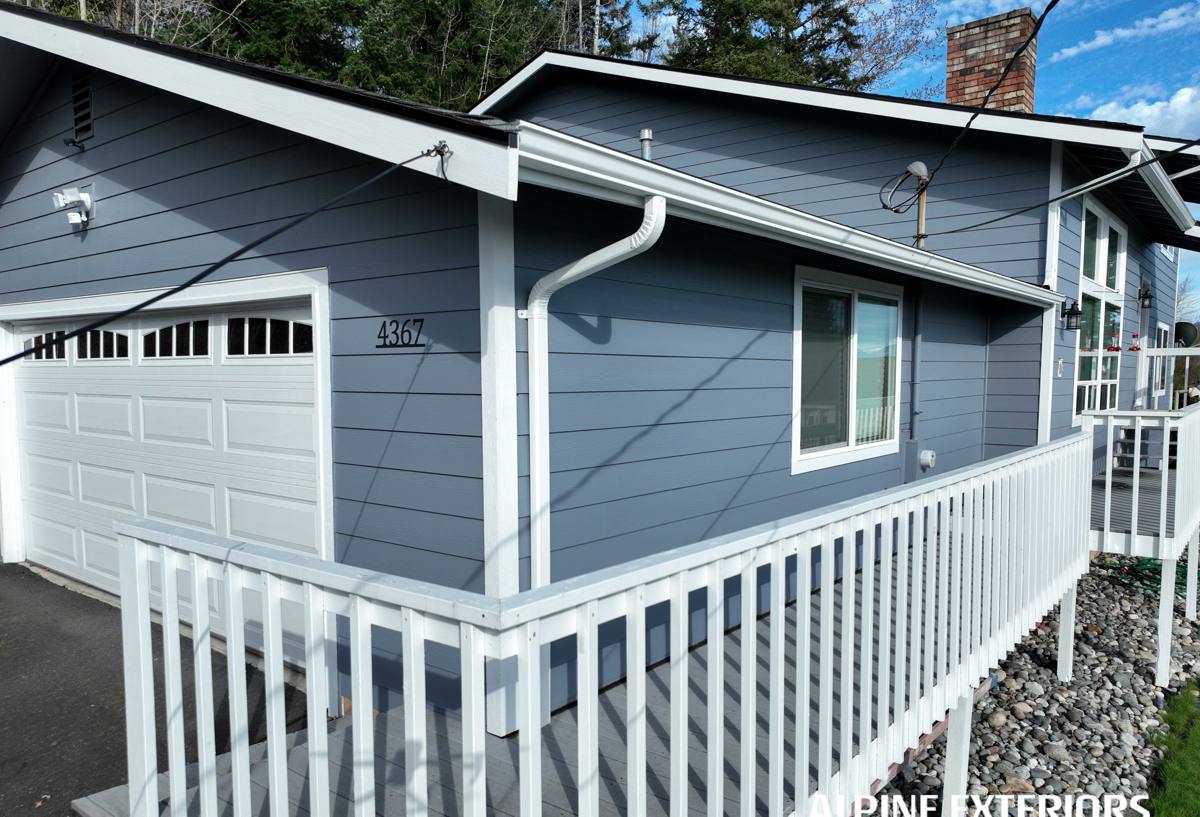
Signs a Nooksack Roof Needs Repair, Not Just a Look
Most roof damage in this area doesn't announce itself with a dramatic leak on day one. It shows up as small, easy-to-ignore signs first. If you're seeing any of the following, it's worth having someone look before the next heavy rain event turns it into an interior problem.
- Granules collecting in gutters or at the base of downspouts
- Moss or dark streaking on north-facing or shaded slopes
- Shingles that are curling, cupping, or lifting at the edges
- Ceiling stains, especially ones that appear or darken after wind-driven rain
- Daylight visible through the roof deck from inside the attic
- Soft or spongy spots when walking the roof surface
- Rust, gaps, or lifted edges around flashing at chimneys, vents, or wall intersections
- Debris buildup in valleys where water and moss both tend to collect
Any one of these on its own might not mean much. Two or three together, especially if the roof hasn't been looked at in a few years, usually means water has already found a way past the surface layer.
What's Actually Damaging Roofs in This Climate
Salt Air and Corrosion
Proximity to salt water accelerates corrosion on anything metal — nails, flashing, vent boots with metal collars, gutter hangers. Once corrosion starts, it doesn't stay isolated. A rusted-through nail head or a flashing seam that's corroded open becomes the entry point for water, even if the shingles or panels around it look fine.
Driving Rain and Wind-Driven Moisture
Straight-down rain is the easy case — most roofing sheds it without issue. The problem is wind-driven rain that gets pushed uphill under shingle laps, around poorly sealed flashing, and into any gap that wouldn't normally see water. Repairs that don't account for wind direction and lap exposure tend to fail again in the next storm, because they were built to handle rain that falls straight, not rain that's being pushed sideways.
Moss and Trapped Moisture
A long moss season means roofs here spend more of the year damp than dry. Moss holds moisture directly against the roofing material, which speeds up granule loss on asphalt shingles and can work its way under laps and around fasteners over time. Moss growing in a valley or against a chimney base isn't just cosmetic — it's actively keeping that section of roof wetter, longer, than the rest of the surface.
What a Correct Roof Repair Actually Involves
A repair that's done right starts with figuring out where water is actually getting in — which is often several feet away from where the stain shows up inside, since water travels along the deck and rafters before it drips. Surface patching without that diagnosis step is the single most common reason repairs don't hold.
Flashing Details Matter Most
The majority of repair calls we run in this area trace back to flashing, not the field of the roof itself. Chimneys, skylights, wall-to-roof transitions, and vent penetrations are where two different materials meet, and that's where a proper seal depends on correct layering and lap direction — not just caulk or sealant smeared over a gap. Sealant is a backup, not the primary defense. If a repair leans on sealant alone, it's a temporary fix that will need to be redone.
Matching Materials the Right Way
When we replace a damaged section, we match the existing roofing as closely as possible in material, profile, and where reasonable, color and age-weathering — not just "close enough." A mismatched patch can actually create a new water path if the new material's edge doesn't tie into the old material's lap pattern correctly.
Repair or Replace? How We Help You Decide
Not every roof problem in Nooksack needs a full replacement, and not every leak can be permanently solved with a patch. The honest answer depends on the roof's age, how widespread the damage is, and whether the underlying deck is still sound. Here's the general framework we use:
| Factor | Repair Usually Makes Sense | Replacement Usually Makes Sense |
|---|---|---|
| Roof age | Roof is under roughly 15-20 years old | Roof is near or past its expected material lifespan |
| Damage extent | Isolated to one section, flashing point, or valley | Widespread granule loss, curling, or moss across multiple slopes |
| Decking condition | Deck is solid, no soft spots found | Rot or soft decking found under the damaged area |
| Leak history | First occurrence or a known, single cause | Recurring leaks in different spots over recent years |
| Overall wear | Rest of the roof is in good, serviceable shape | Repaired section would soon be outlasted by the rest of the roof failing |
We'll always tell you which side of this table your roof falls on, in plain terms, before recommending anything.
Our Roof Repair Process in Nooksack
- Inspection. We get on the roof (weather permitting) and check the deck, flashing, valleys, and any areas prone to moss or standing water — not just the spot where the leak is showing up inside.
- Written findings and estimate. You get a clear explanation of what's causing the problem, what we recommend, and what it will cost — no pressure to upgrade to a full replacement if a repair will genuinely hold.
- The repair itself. We remove and replace damaged material, correct flashing details, and address any decking issues found underneath — not just the visible surface layer.
- Cleanup and moss/debris removal. Any moss, granules, or old material removed during the repair gets cleared from the roof and gutters, not left to wash down and clog drainage.
- Follow-up. If anything about the repair doesn't hold up as expected, we come back and address it.
Typical Cost Factors for Roof Repair
Every roof and every leak is different, so we won't quote a number without seeing the roof — but these are the factors that most commonly move a repair estimate up or down:
| Factor | Why It Affects Cost |
|---|---|
| Roof pitch and access | Steeper or harder-to-access roofs take longer and require more safety setup |
| Extent of hidden damage | Rotted decking found under shingles adds material and labor beyond the surface fix |
| Roofing material | Matching material availability and installation complexity varies by roof type |
| Number of penetrations | Chimneys, skylights, and vents each add a flashing detail that takes time to do right |
| Moss or debris buildup | Heavy buildup requires removal and cleanup before the repair can even begin |
Why a Crew That Already Works Nooksack Matters
A roofer who works this part of Whatcom County regularly knows what a two-year-old flashing failure looks like versus a fifteen-year-old one, and knows which materials actually hold up against salt air and sustained moss exposure versus which ones just look fine on the spec sheet. That experience shows up in small decisions — how a repair is sequenced around the weather, which flashing detail gets extra attention, when it makes more sense to wait a day for a dry window than to rush a fix that won't seal properly in the rain.
It also shows up in scheduling. Moss removal and roof repair both go better when they're timed around the wetter and drier stretches of the year rather than squeezed in whenever a crew happens to be available. A contractor who works this area consistently can plan around that instead of treating every job as a one-off.
Get an Honest Look at Your Roof
If you're seeing moss, staining, or a leak that's shown up more than once, it's worth having it looked at before the next round of driving rain makes the problem worse. We offer free, no-pressure estimates for roof repair in Nooksack and the surrounding Birch Bay area — come take a look, tell you honestly what we find, and let you decide from there. Reach out using the form below to get started.