 Birch Bay
 Siding Replacement for Nooksack Homes Near Birch Bay
The Nooksack area sits close enough to Birch Bay and the Strait of Georgia that homes here deal with a specific mix of weather: salt-laden air rolling in off the water, long stretches of driving rain through fall and winter, and a moss season that seems to start earlier and last longer every year. Add in the shade from mature evergreens that many properties in this part of Whatcom County were built around, and you've got siding conditions that are tougher than what a generic "Pacific Northwest" siding page will tell you. We replace siding in this specific area regularly, and this page covers what that actually involves.
This is not a general overview of siding replacement. It's focused on one job, in one area: swapping out failing or aging siding on a Nooksack-area home for James Hardie fiber cement, done in a way that accounts for the local climate instead of ignoring it.
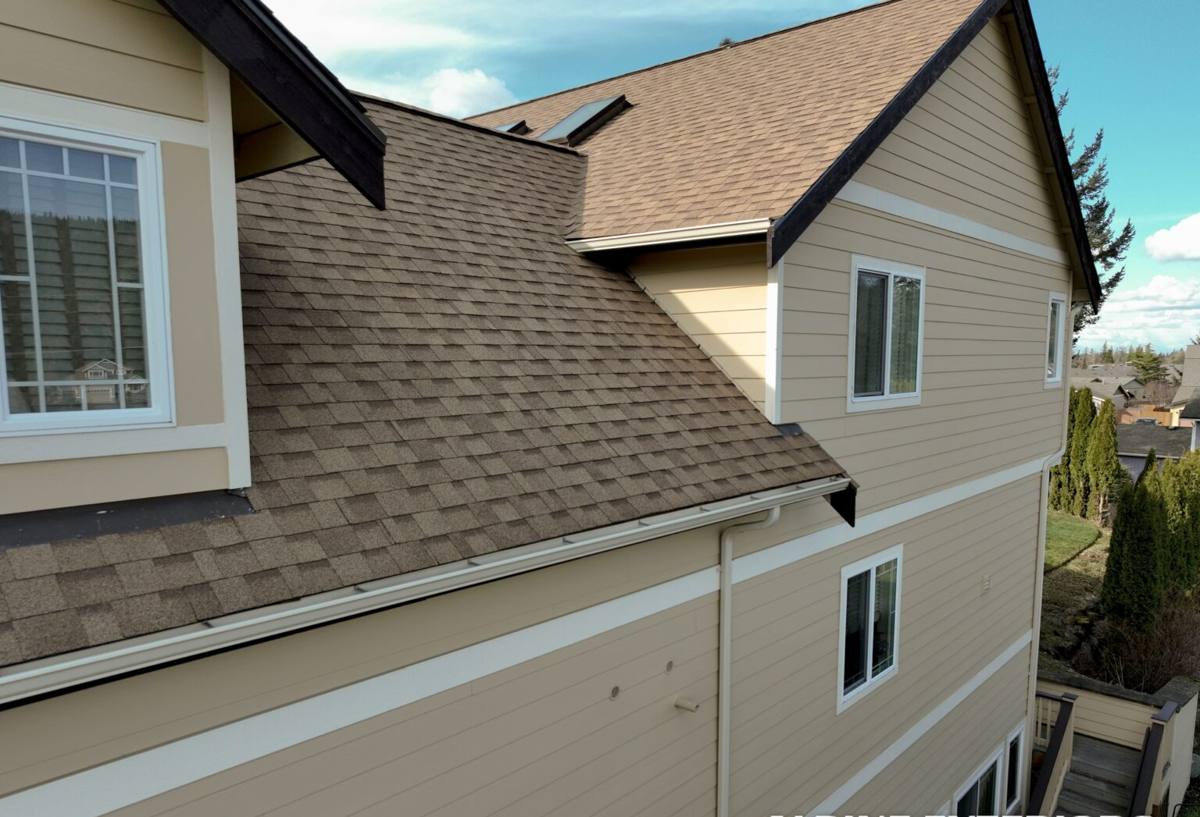
What Nooksack's Climate Actually Does to Siding
Salt Air and Moisture
Proximity to Birch Bay and the Strait means a steady low-level exposure to salt-carrying moisture in the air. This doesn't just corrode metal fasteners and trim — it also keeps humidity elevated against exterior wall surfaces for more of the year than inland Whatcom County properties experience. Siding materials that absorb moisture, or that rely on paint films to keep water out, are working overtime here.
Driving Rain
Storms coming off the water don't just fall straight down — wind-driven rain hits siding at an angle, working its way behind poorly lapped boards, undersized flashing, and gaps at trim joints. A siding system's water-management details (flashing, kick-out diverters, proper overlap, sealed penetrations) matter more here than in a drier, calmer climate.
Moss and Organic Growth
Shaded, moisture-retentive surfaces in this area grow moss and algae faster than most homeowners expect. Wood-based sidings and their coatings are particularly vulnerable — moss holds moisture against the surface, and scrubbing it off repeatedly wears down paint and primer, accelerating the next round of failure. A siding material's surface has to tolerate this cycle without breaking down.
Signs a Nooksack Home Needs Siding Replaced, Not Patched
- Soft, spongy, or crumbling spots when you press on the siding, especially near the bottom courses and around window trim
- Paint that keeps failing within a couple of years no matter how often it's redone
- Persistent moss or dark staining that returns quickly after cleaning
- Visible warping, cupping, or separation at panel or board joints
- Gaps or cracking at corners, trim, and penetrations where wind-driven rain can get behind the siding
- Interior signs — musty smell, peeling interior paint, or soft drywall near exterior walls — that point to moisture getting through
If you're only seeing isolated cosmetic wear, a repair may make sense. But once moisture has gotten behind the siding in more than one spot, patching tends to just move the problem instead of solving it — and it's usually a sign the underlying material and water management aren't holding up to this climate.
Why We Only Install James Hardie Fiber Cement Here
We don't install vinyl, LP SmartSide, primed spruce, cedar, or other fiber cement brands like Cemplank or Allura. That's a deliberate standard, not a sales pitch, and it matters even more in a moisture- and salt-exposed area like Nooksack.
Why We Passed on the Alternatives
Vinyl is affordable and low-maintenance in mild climates, but it expands and contracts significantly with temperature swings, can warp or crack in wind-driven weather, and its seams and J-channels give wind-driven rain more opportunities to work behind the panel over time. It also doesn't hold up structurally the way fiber cement does.
Engineered wood products like LP SmartSide use wood strand technology that performs well in many climates, but wood-based substrates are inherently more vulnerable to sustained moisture exposure than fiber cement — and in a salt-air, high-humidity, moss-prone area, that's the exact stress this material sees the most of.
Primed spruce and cedar are natural wood products that require the most ongoing maintenance of any siding option — repainting, caulking, and moisture monitoring on a tight cycle. In an area with this much rain and shade-driven moss, that maintenance burden gets steep fast, and skipped maintenance shows up as rot.
Other fiber cement brands (Cemplank, Allura) are legitimate fiber cement products, but we've standardized on Hardie's specific ColorPlus finish system, product engineering, and warranty structure, and we'd rather install and warranty one system we know inside and out than split our expertise across brands.
Why Hardie Fits This Climate
James Hardie fiber cement is non-combustible, doesn't rot, and resists moisture absorption far better than wood-based products. Hardie also makes a specific HZ5 product line engineered for climates with heavier moisture exposure — which fits the Birch Bay and Nooksack area well. The factory-applied ColorPlus finish is baked on under controlled conditions, which means better fade and moisture resistance than field-applied paint, and it holds up to the periodic washing needed to keep moss at bay.
| Factor | Vinyl | Wood / LP SmartSide | James Hardie Fiber Cement |
|---|---|---|---|
| Moisture resistance | Moderate (seam vulnerability) | Lower (wood-based substrate) | High (cement-based, engineered HZ lines) |
| Salt air / coastal exposure | Can become brittle over time | Accelerated wear near coast | Built to handle sustained exposure |
| Moss / algae surface tolerance | Cleans off surface, seams stay vulnerable | Coating wears down with repeated cleaning | Factory finish holds up to washing |
| Fire resistance | Low | Low to moderate | Non-combustible |
| Maintenance cycle | Low, but limited repair options | High — regular repainting/caulking | Low — periodic washing, occasional caulk check |
| Typical warranty | Varies by manufacturer | Varies by manufacturer | Strong, transferable Hardie warranty |
What a Correct Siding Replacement Involves
Replacing siding correctly is about what happens underneath it as much as the boards themselves. In a wind-driven-rain climate, skipping any of these steps is where future callbacks come from.
Tear-Off and Inspection
Old siding comes off in sections so we can inspect the sheathing and framing underneath before covering anything back up. This is the point where hidden moisture damage from years of a failing water-management system gets found — and it needs to be addressed before new siding goes on, not buried under it.
Water-Resistive Barrier and Flashing
A properly lapped weather-resistive barrier, correctly integrated flashing at windows, doors, and roof intersections, and kick-out flashing where rooflines meet walls are what actually keep wind-driven rain out — the siding itself is the second line of defense, not the only one.
Fastening and Panel Installation
Hardie specifies fastener type, spacing, and placement for a reason — improper fastening is one of the most common causes of premature siding failure, regardless of brand. Board and panel gaps, caulking at butt joints, and clearance from grade and roofing all need to follow manufacturer specs, especially in a climate that punishes shortcuts.
Trim and Finish Details
Corners, window and door trim, and any transitions need to be detailed to shed water outward, not channel it into the wall assembly. This is where a lot of the "why does the paint keep failing here" complaints on older homes actually originate.
Our Process for Nooksack Projects
- On-site assessment: We look at your current siding, the underlying sheathing where accessible, and the specific exposure your home has to wind, rain, and shade.
- Written estimate: A clear scope covering tear-off, any sheathing repair, the Hardie product and finish selected, and water-management details specific to your home.
- Scheduling around weather: Given how much rain this area sees, we plan tear-off and installation windows carefully so your home isn't left exposed longer than necessary.
- Installation to spec: Full tear-off, barrier and flashing work, and Hardie installation following manufacturer fastening and clearance requirements.
- Final walkthrough: We review the finished work with you, including care and cleaning guidance suited to this climate's moss and salt exposure.
Why a Crew That Already Works This Area Matters
Siding crews that mostly work drier, inland areas can install a technically correct system that still isn't matched to what Whatcom County's coastal edge throws at it. Working in and around Birch Bay and Nooksack regularly means we're already accounting for wind-driven rain patterns, salt exposure, and moss growth in how we detail flashing, choose Hardie's HZ product lines, and time our installation schedule around this area's rain patterns — not applying a one-size-fits-all approach built for a different climate.
What to Expect Cost-Wise
Siding replacement costs vary based on your home's size, the condition of the sheathing underneath, trim complexity, and the Hardie products and finish you choose. Homes with hidden moisture damage from long-term water intrusion often cost more once that damage is found and repaired properly — which is exactly why a full tear-off and inspection matters instead of a surface-level reside. We provide a detailed written estimate after seeing your home in person, not a rough number over the phone.
Questions to Ask Before You Hire Anyone
- Will you do a full tear-off, or install over existing siding?
- Who inspects the sheathing, and what happens if you find water damage?
- What water-resistive barrier and flashing details are included in the estimate?
- Is the fastening schedule and clearance spec from the manufacturer, or a shortcut?
- Is the warranty backed by the manufacturer, the installer, or both?
If you're dealing with aging, failing, or moss-covered siding on a home in the Nooksack area, we're happy to take a look and give you a straightforward, no-pressure estimate for what a proper James Hardie replacement would involve — just fill out the form below.