 Birch Bay
 Nooksack's Climate Puts Real Stress on an Asphalt Shingle Roof
Nooksack sits close enough to Birch Bay and the Strait of Georgia that homes here deal with a roofing climate that's noticeably tougher than what you'd find further inland in Whatcom County. Salt-laden air moves in off the water, wind-driven rain comes in sideways during winter storms, and the combination of shade, moisture, and mild temperatures gives moss and algae a long season to work on your shingles. None of that means asphalt shingle roofing is a bad choice here — it's still the most practical, cost-effective roofing material for the vast majority of homes in the area. It just means the roof has to be selected and installed with this specific climate in mind, not treated the same way you'd treat a roof in a dry inland town.
A shingle roof that's spec'd generically, without accounting for the coastal exposure and moss pressure around Nooksack, tends to show its age early — premature granule loss, soft spots at the eaves, and moss mats that hold moisture against the deck. A roof that's spec'd correctly for this area should give you decades of reliable service with only routine upkeep.
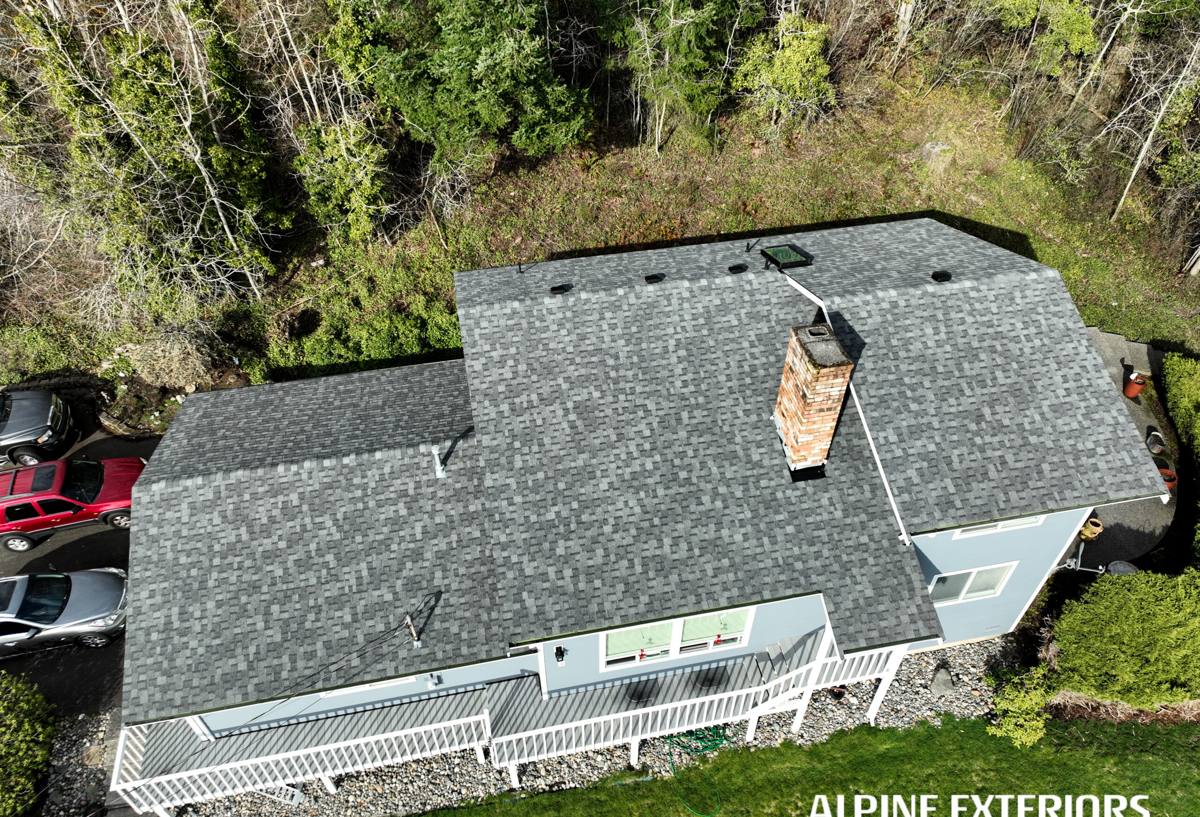
What Salt Air, Wind-Driven Rain, and Moss Actually Do to Your Roof
Salt Air and Wind
Salt-carrying air doesn't rot a shingle the way it corrodes bare metal, but it does accelerate wear on exposed metal components — flashing, nail heads, vent stacks, and gutter hardware — if those parts aren't rated for coastal exposure. Wind off the water also puts more uplift stress on shingle tabs and ridge caps than a sheltered inland roof ever sees, which is why proper fastening pattern and wind-rated products matter more here than in a lot of other parts of the county.
Driving Rain
Rain that comes in at an angle, rather than falling straight down, tests every seam, valley, and flashing detail on a roof. Water that would simply run off a roof in calm conditions can get pushed up under shingle tabs or into valleys during a real storm. This is where underlayment quality and flashing detail work do more for a roof's long-term performance than the shingle brand itself.
Moss and Algae
Whatcom County's mild, damp climate gives moss a long growing window, and shaded or north-facing roof sections around Nooksack are especially prone to it. Moss isn't just a cosmetic problem — its root structures lift shingle edges, trap moisture against the roof deck, and accelerate granule loss. Left unchecked for a few seasons, a mossy roof section can fail well before the rest of the roof.
Choosing the Right Shingle for a Nooksack Home
Not every asphalt shingle product is a good fit for a coastal, moss-prone climate. Here's how the main options compare for a home in this area:
| Shingle Type | Typical Lifespan | Moss/Algae Resistance | Wind Rating | Best Fit |
|---|---|---|---|---|
| 3-Tab (economy) | 15–20 years | Low unless treated | Lower | Budget-driven projects, low wind exposure sites |
| Standard Architectural | 25–30 years | Moderate | Moderate–High | Most homes, good balance of cost and durability |
| Algae-Resistant Architectural | 25–30 years | High (copper/zinc granules) | Moderate–High | Shaded lots, north-facing slopes, chronic moss areas |
| Impact-Rated (Class 4) | 30+ years | High (usually algae-resistant too) | High | Homes wanting maximum durability and possible insurance credit |
For most Nooksack homes, we lean toward algae-resistant architectural shingles as the default, simply because the moss pressure here is high enough that the upgrade pays for itself in fewer maintenance visits and a longer-looking roof. Where a roof is heavily shaded or has a history of moss coming back quickly, that resistance matters more than almost any other spec.
What a Correctly Installed Roof Includes
Deck and Ventilation
Before any shingle goes down, the roof deck needs to be inspected for soft or delaminated sheathing, and the attic or roof cavity needs adequate intake and exhaust ventilation. In a humid coastal climate, poor ventilation traps moisture that condenses on the underside of the deck — which rots wood from the inside even if the shingles above look fine.
Underlayment and Ice/Water Barrier
Given the driving rain this area sees, we don't consider synthetic underlayment optional, and we install self-adhering ice-and-water membrane at eaves, valleys, and around penetrations — the spots where wind-driven rain is most likely to find a way in. This is one of the details that's invisible once the roof is finished but does most of the actual work keeping water out.
Flashing and Valleys
Step flashing at walls and chimneys, properly lapped valley metal, and correctly sealed vent boots are where most roof leaks actually originate — not in the field of the shingles themselves. We treat these as full installation steps, not an afterthought bolted on at the end.
Warning Signs It's Time to Repair or Replace
A quick walk around your property (binoculars help — we don't recommend climbing onto the roof yourself) can tell you a lot. Signs worth acting on:
- Shingle edges curling upward or granules collecting in gutters and downspouts
- Dark streaking or thick moss growth, especially on shaded or north-facing slopes
- Soft or spongy-feeling roof decking noticeable from inside the attic
- Daylight visible through the roof deck from inside the attic
- Water stains on interior ceilings, especially after a windy rainstorm
- Missing or lifted shingles after a wind event
- Flashing that's visibly rusted, cracked, or pulling away at chimneys and vents
- A roof approaching or past the upper end of its rated lifespan with no recent inspection
Any one of these on its own isn't necessarily an emergency, but a few together usually mean it's time for a real inspection rather than another season of waiting.
Our Nooksack Roofing Process
- On-site assessment — we walk the roof, check the attic, and look at ventilation, flashing, and deck condition, not just the shingles themselves.
- Straight-talk estimate — you get a clear scope of work and pricing before anything is scheduled, with the reasoning behind any recommended upgrades (like algae-resistant shingles) explained plainly.
- Tear-off and deck inspection — old roofing comes off down to the deck, and any damaged sheathing is identified and addressed before new material goes down.
- Underlayment, ice/water barrier, and flashing — the parts that actually keep water out are installed first and correctly, per manufacturer spec.
- Shingle installation — proper nailing pattern and exposure for wind resistance, with attention to valleys, ridges, and penetrations.
- Cleanup and final walkthrough — magnetic sweep for nails, debris removal, and a walk-through so you know exactly what was done.
What Affects the Cost of Your Roof
Every roof is different, but the main cost drivers we see on Nooksack-area homes are:
- Roof size and pitch — steeper roofs take longer and require more safety setup
- Number of layers being torn off (some older homes have two layers of shingles)
- Deck condition — how much sheathing repair is needed once the old roofing is off
- Shingle tier chosen — standard architectural versus algae-resistant or impact-rated
- Roof complexity — valleys, dormers, chimneys, and skylights all add flashing work
- Ventilation upgrades needed to bring an older attic system up to current standards
Broadly, a straightforward architectural shingle replacement on a modest single-story home costs less than a steep, complex roof with multiple valleys and penetrations on a larger home — the honest answer is always "it depends on the specifics of your roof," which is exactly what a proper on-site estimate is for.
Why Hire a Crew That Already Works in Nooksack
A roofing crew that already works this part of Whatcom County isn't guessing about what your roof is up against — we've seen how moss builds on shaded Nooksack lots, how wind-driven rain off the water tests flashing details, and which shingle upgrades actually earn their keep here versus which ones are unnecessary for a given site. That local pattern recognition shows up in fewer callbacks and a roof that's specified right the first time, instead of a generic install that has to be re-treated for moss or re-flashed within a few years.
Keeping Your New Roof Moss-Free Longer
Even a correctly installed, algae-resistant shingle roof benefits from basic upkeep in this climate. Keep gutters and downspouts clear so water isn't backing up under the eaves. Trim back overhanging branches where practical to cut down on shade and debris buildup, since both encourage moss. A gentle rinse (never a pressure washer, which strips granules) to clear built-up debris every year or two goes a long way, and a quick visual check after any major windstorm can catch a lifted shingle before it turns into a leak.
If you're weighing a repair versus a full replacement, or just want an honest read on where your current roof stands, we're happy to take a look. Reach out for a free, no-pressure estimate using the form below.