 Birch Bay
 Board & Batten Siding in the Nooksack Area
Board and batten is one of the most requested siding profiles we install around Birch Bay, and the Nooksack area is no exception. The vertical lines read as clean and modern on newer builds, but the same profile also does a good job dressing up older farmhouses, cabins, and ranch-style homes that make up a lot of the housing stock in this corner of Whatcom County. It's a look homeowners choose for style first — but out here, the material and the install method matter just as much as the appearance.
What we install is not the same product as the board and batten you'd see in a drier inland climate. Whatcom County sits inside a marine-influenced weather pattern off the Salish Sea, and whether a home is closer to the water in Birch Bay proper or set back a bit toward Nooksack, it deals with the same basic conditions: long stretches of wet weather, wind-driven rain that hits siding at an angle instead of straight down, and a moss and algae season that can run most of the year in shaded yards. Any vertical siding profile has to be detailed correctly for that, or it becomes a maintenance headache within a few seasons.
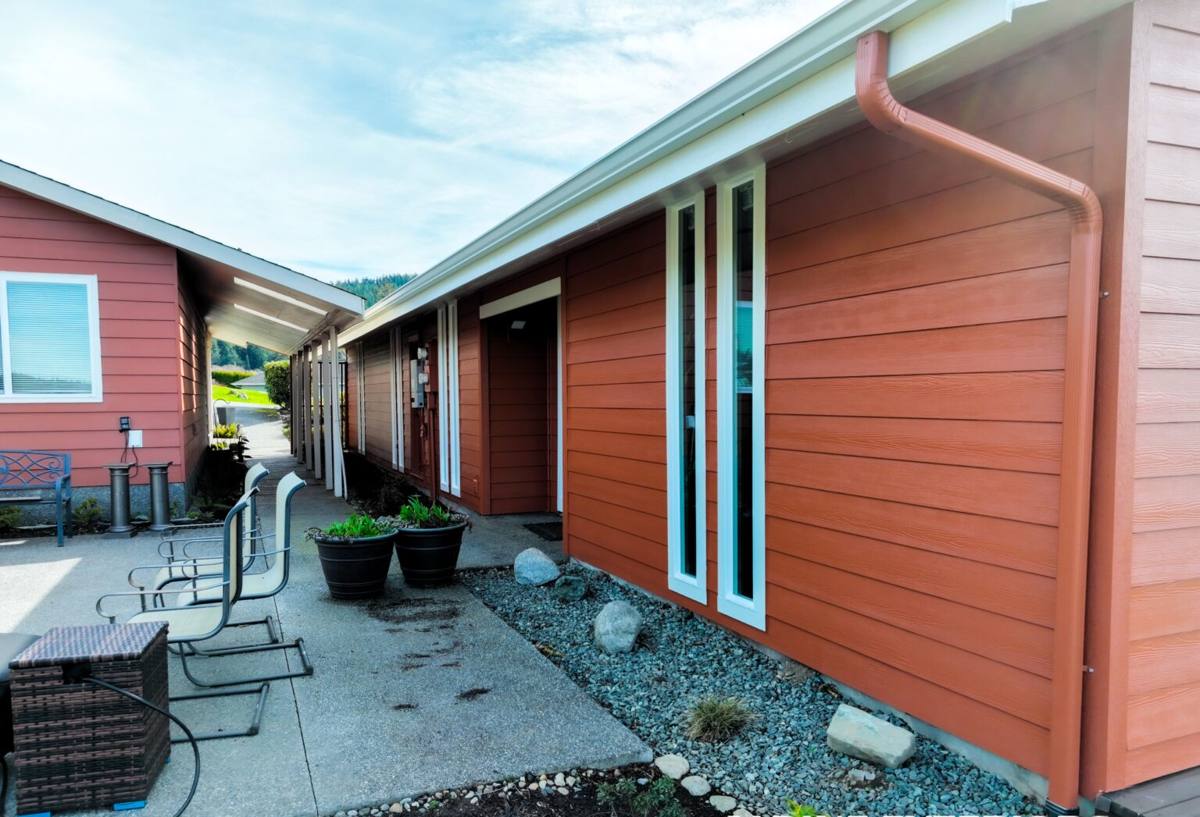
What This Climate Actually Does to Board & Batten Siding
Board and batten has more vertical seams than a standard lap profile, and every one of those seams is a place water can get behind the cladding if it isn't installed with the right gap, flashing, and fastening pattern. In a climate with occasional light rain, sloppy detailing might not show up for years. In Whatcom County's driving-rain, high-humidity pattern, it shows up fast — usually as staining at the battens first, then soft spots, then paint failure.
- Driving rain: wind pushes moisture sideways into vertical joints and behind loosely fastened battens, not just straight down the face.
- Salt-influenced air: moisture carries salt further inland than people expect, which accelerates corrosion on the wrong fastener and finish choices.
- Extended moss season: shaded north and east walls stay damp longer, and organic growth holds moisture against the siding surface instead of letting it dry.
- Freeze-thaw swings: even mild winters here put wet material through repeated freeze-thaw cycles, which is hard on anything that absorbs water.
None of that means board and batten is a bad choice for a Nooksack-area home. It means the product and the install both need to be built for this specific weather, not for a catalog photo taken somewhere dry.
Why We Only Install James Hardie for This Profile
We install James Hardie fiber cement exclusively, and board and batten is one of the profiles where that decision matters most. Hardie's vertical siding — HardiePanel with matching HardieTrim battens — is engineered fiber cement, not wood or wood-composite. It doesn't absorb water the way primed spruce or cedar battens do, and it isn't relying on a vinyl cap or plastic joint system to keep weather out.
A few specifics that matter in this climate:
- Non-combustible core: fiber cement doesn't feed a fire the way wood-based siding can, which matters given how many Whatcom County properties border trees and brush.
- ColorPlus factory finish: a baked-on finish applied under controlled conditions, which holds up better against UV and moisture cycling than field-applied paint on raw wood battens.
- Engineered for the Northwest: Hardie makes climate-specific HZ product lines built around exactly the moisture exposure this region sees, rather than a one-size-fits-all product.
- Warranty structure: a real, transferable manufacturer warranty backs the material — something that matters if a home changes hands down the road.
We get asked about primed wood board and batten fairly often, since it's often the cheaper upfront quote. We won't install it. Wood battens absorb water at the end grain and at every fastener hole, and in a climate this wet, that means recurring paint failure and rot risk that shows up in years, not decades. We'd rather explain that up front than sell a job we know will call us back.
What a Correct Board & Batten Install Actually Involves
Board and batten looks simple from the street — vertical panels, vertical strips over the seams — but the install has more steps than most homeowners expect, and skipping any of them is exactly how water problems start.
Water Management Comes First
Before a single panel goes up, the wall needs a weather-resistive barrier and properly lapped flashing at every window, door, and penetration. On a lot of the homes we work on in this area, we also install furring strips to create a rainscreen gap behind the panel — a small air space that lets any moisture that does get behind the siding drain and dry instead of sitting against the wall sheathing.
Panel and Batten Layout
Panel joints get flashed and fastened to Hardie's published spacing, and battens are set to hide those joints while leaving Hardie's specified gap for expansion — cement board moves slightly with temperature and humidity, and a batten nailed down tight with no room to move will eventually crack its caulk joint or worse.
Fasteners and Finish Details
Corrosion-resistant fasteners are non-negotiable this close to the Salish Sea — the wrong nail rusts, bleeds through the finish, and eventually loses its grip. Bottom edges get proper clearance off decks, patios, and grade so the siding isn't sitting in standing water or splash-back, and every trim-to-panel transition gets sealed with a sealant rated for the exposure, not whatever caulk happened to be on the truck.
Quick Reference: What to Ask an Installer
- Is a rainscreen gap (furring strips) included, or is the panel going straight over the weather barrier?
- What fastener type and coating is being used, and is it corrosion-rated for coastal-influenced air?
- What's the gap spec at panel seams and batten edges, and does the crew follow Hardie's published fastening schedule?
- How is bottom-edge clearance handled at decks, patios, and grade?
- Who is actually on the crew — subcontracted labor, or the company's own installers?
Board & Batten vs. Other Siding Approaches for This Climate
| Approach | Moisture Behavior Here | Long-Term Upkeep |
|---|---|---|
| Hardie board & batten (our install) | Fiber cement core, factory finish, rainscreen detailing sheds driving rain and resists moss staining | Periodic wash-down; repaint cycle is long due to ColorPlus finish |
| Primed wood battens | Absorbs water at end grain and fastener holes; swells and checks in wet cycles | Frequent repainting, ongoing caulk and rot inspection |
| Vinyl vertical panel | Doesn't rot, but joints can allow water intrusion behind panel with no drying path; softens with heat | Low paint upkeep, but panels can warp or crack and are hard to color-match if replaced later |
| Standard lap siding (any material) | Fewer vertical seams than board & batten, but doesn't give the vertical architectural look | Depends entirely on material chosen |
The point of this table isn't that board and batten beats lap siding or vice versa — it's that the material behind the profile matters more than the profile itself. A well-detailed Hardie board and batten job in this climate will outlast a poorly detailed one of any material, and it will outlast a well-detailed wood or vinyl job too.
Our Process for a Nooksack-Area Board & Batten Project
- On-site assessment: we look at existing siding condition, wall exposure to prevailing wind and rain, shaded or moss-prone areas, and any moisture damage already present.
- Written scope and honest product conversation: we walk through the Hardie board and batten system, colors, and what the job includes — no pressure toward products we don't stand behind.
- Prep and water management: removal of old siding where needed, repair of any compromised sheathing, correct weather barrier and flashing installation, and rainscreen furring where called for.
- Install to spec: panels, battens, fasteners, and sealant installed to Hardie's published requirements — not shortcuts to save a day of labor.
- Final walk-through: we go over the finished job with the homeowner before calling it done.
Why a Crew That Already Works This Area Matters
Board and batten installed to spec in a dry climate and board and batten installed to spec for Whatcom County's driving rain and salt-influenced air are not the same job, even though they can look identical from the curb. A crew that regularly works Birch Bay and the surrounding Nooksack area already knows which walls take the worst wind-driven rain, how aggressive the moss season really is on shaded exposures, and which fastener and flashing details actually hold up here versus what a generic install manual assumes for a milder region. That local pattern-recognition is what keeps a board and batten job looking right in year eight, not just at the final walk-through.
Keeping Board & Batten Siding in Good Shape
A correctly installed Hardie board and batten system is low-maintenance, but "low" isn't "none" — especially with this region's moss season.
- Rinse the siding down once or twice a year to clear pollen, dust, and early moss growth, especially on shaded north- and east-facing walls.
- Keep gutters clean and downspouts directed away from the wall — overflow is one of the most common causes of localized staining and moisture damage on any siding profile.
- Trim back landscaping and tree cover that keeps a wall shaded and damp longer than the rest of the house.
- Check caulking at trim and batten joints every couple of years and have any cracked sealant redone before it lets water behind the siding.
- Address any bubbling, staining, or soft spots right away rather than waiting for a full siding replacement to deal with it.
Get a Straight Answer for Your Home
If you're weighing board and batten for a home in the Nooksack area, we're glad to take a look and tell you honestly what your walls need — not just quote a number. Fill out the form below for a free, no-pressure estimate.