 Birch Bay
 Why Nooksack Roofs Wear on Their Own Schedule
A roof in Nooksack doesn't fail the same way a roof does in a dry inland climate. Whatcom County sits under a long wet season, and homes here take on moisture from multiple directions at once: steady rain that soaks into shaded roof sections and never fully dries, damp air that moves in off the Sound and settles into low-lying valleys overnight, and shaded north-facing slopes that stay wet for days after a storm has passed. That combination is exactly what moss, algae, and slow rot need to get started. A roof that would coast for another five years in a drier climate can be structurally compromised here if it was installed with shortcuts, or if it's simply reached the end of what its underlayment and flashing can handle.
New roof installation in this area isn't a cosmetic upgrade — it's the point where you either get years of predictable protection or you inherit somebody else's compromises. Homes around Nooksack that get a properly installed roof, matched to this climate, tend to go the better part of two decades or more with only routine maintenance. Homes that get a rushed or underspecified install often show problems within the first five to seven years, usually right where the climate is hardest on a roof: valleys, eaves, and anywhere moss has room to hold water against the shingles.
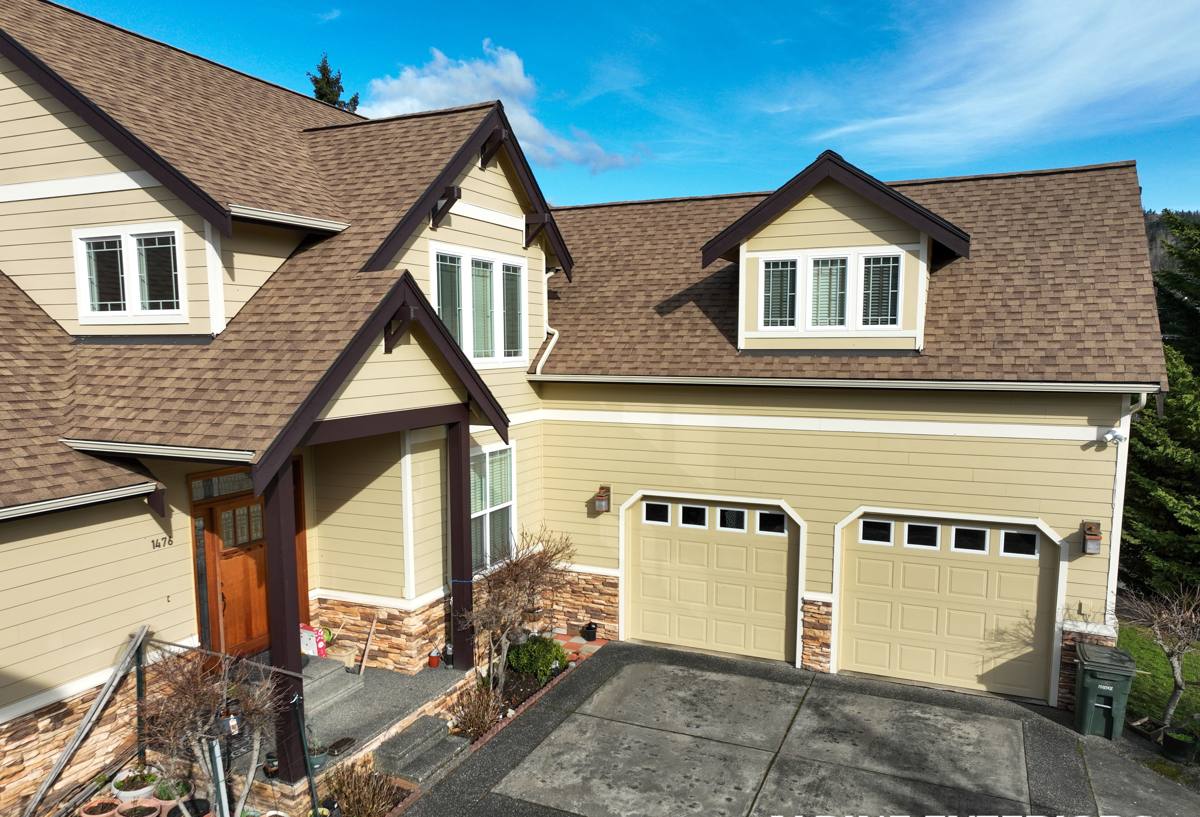
What the Local Climate Actually Does to a Roof
Moss and Algae
Whatcom County's moss season runs long — shaded, tree-covered lots around Nooksack rarely get enough direct sun to dry a roof out between rains. Moss doesn't just look bad; it lifts shingle edges as it grows, holds water against the roof deck, and accelerates granule loss. Once moss gets a foothold under a shingle tab, water intrusion is often already underway underneath it.
Driving Rain and Wind-Driven Moisture
Storms that come through Whatcom County frequently bring rain sideways, not straight down. That matters because a roof built to standard doesn't just need to shed water downhill — it needs sealed laps, properly nailed flashing, and underlayment that can handle water pushed sideways and upward under wind pressure. A roof that only performs in calm rain is not built for this area.
Salt-Influenced Coastal Air
Even away from the immediate shoreline, air moving in off the Sound carries moisture and salt that accelerates corrosion on exposed metal — nails, flashing, vent stacks, and gutter hardware. Fasteners and flashing that aren't rated for a coastal-influenced climate corrode faster here than the same materials would in a dry inland region, which is why material choice at the fastener and flashing level matters as much as the shingle brand on top.
Signs a Repair Won't Fix It
Not every roof problem calls for full replacement. But there's a point where patching becomes false economy — you're paying repeatedly to delay a job that needs to happen anyway, often while water damage spreads underneath. Watch for:
- Granules collecting in gutters or at downspout outlets, especially on a roof over 12-15 years old
- Moss established on more than a small patch, particularly along ridges or in valleys
- Curling, cupping, or cracked shingles visible from the ground
- Daylight visible through the roof deck from inside the attic
- Soft or spongy spots when walked on, or sagging between rafters
- Repeated leaks in the same spot despite prior patch repairs
- Flashing around chimneys, skylights, or vent stacks that's rusted, lifted, or missing sealant
- Interior ceiling stains that reappear after being painted over
What a Correct Installation Actually Involves
Tear-Off and Deck Inspection
A full tear-off to bare decking is the only way to know what's actually underneath. Sheathing that's soft, delaminated, or rotted from long-term moisture exposure gets replaced before anything new goes down — installing over a compromised deck just hides the problem under a new roof.
Ice and Water Protection at Vulnerable Points
Eaves, valleys, and areas around penetrations get self-adhering waterproof membrane, not just standard felt. These are the spots where wind-driven rain and ice dams (on the rare cold snaps this area does get) cause the most damage, and they're worth the extra material.
Synthetic Underlayment Across the Field
A high-quality synthetic underlayment across the whole roof deck adds a second line of defense under the shingles — important in a climate where the roof surface stays damp for extended stretches.
Ventilation
Balanced intake and exhaust ventilation keeps moisture from condensing inside the attic, which matters as much here as the outside weather does. Poor ventilation traps humid air against the underside of the deck and shortens the life of the roof from the inside.
Flashing and Fasteners
Corrosion-resistant flashing and fasteners at chimneys, valleys, sidewalls, and vent penetrations — these are the details that fail first in coastal-influenced air if they're undersized or the wrong material.
Shingle or Panel Installation to Manufacturer Spec
Correct nail placement, exposure, and sealing pattern — not just "close enough." Improper nailing is one of the most common causes of premature shingle failure and voided warranties.
Material Options and What Drives the Cost
Most Nooksack-area homes land on one of three approaches. Each has real trade-offs worth understanding before you decide, rather than picking on price alone.
| Material | Typical Lifespan | Moss/Moisture Resistance | Relative Cost | Maintenance |
|---|---|---|---|---|
| Architectural asphalt shingle | 25-30 years | Good with proper ventilation; still needs periodic moss treatment | Lowest upfront | Moderate — periodic cleaning recommended |
| Standing seam metal | 40-50+ years | Excellent — sheds moss and moisture readily | Highest upfront | Low |
| Synthetic/composite shingle | 30-40 years | Very good, resists moisture absorption | Mid-to-high | Low to moderate |
Beyond the roofing material itself, the biggest cost swings on any given job come from deck condition (how much sheathing needs replacing), roof complexity (valleys, dormers, and steep pitches take more labor), and how much of the flashing and ventilation system needs upgrading rather than reusing. A straightforward, accessible roof will always cost less to redo correctly than one with multiple valleys and penetrations, regardless of material chosen.
Our Process
- On-site inspection — we look at the deck, ventilation, flashing, and any interior signs of past leaks before quoting anything.
- Written estimate — material options, scope, and a clear price, with no vague allowances hidden in the fine print.
- Scheduling around weather — we plan tear-off days to minimize the window your home is exposed, and we keep the deck protected if conditions turn.
- Tear-off and deck repair — full removal, deck inspected and repaired as needed before anything new goes on.
- Waterproofing and underlayment — ice-and-water membrane at vulnerable areas, synthetic underlayment across the field.
- Ventilation and flashing correction — intake/exhaust balanced, flashing replaced or upgraded where it's undersized or corroded.
- Installation to spec — shingles or panels installed per manufacturer requirements to keep warranty coverage intact.
- Final walkthrough — cleanup, debris and nail sweep, and a walkthrough so you know what was done and why.
Permits, Warranty, and Local Code
Whatcom County requires permits for roof replacement work, and code requirements around ventilation and ice-barrier placement exist because of exactly the moisture conditions this region deals with — they're not boilerplate. A contractor who pulls the permit and builds to code is protecting your home's resale value and your ability to make a warranty claim later; skipping that step to save time is a false shortcut. Manufacturer warranties on shingles and underlayment also typically require installation by specification — improper nailing or missing underlayment can void coverage even if the shingle itself is defect-free.
Why a Crew That Already Works Nooksack Matters
A roofer who works this part of Whatcom County regularly already knows which details actually matter here — how much ventilation a shaded, tree-covered roof needs versus an open one, which flashing and fastener grades hold up against the coastal-influenced air, and how to sequence a tear-off around a wet forecast instead of getting caught mid-job. That local pattern recognition is the difference between a roof that's technically installed correctly and one that's installed correctly for this specific climate. It also means faster response if something needs a warranty check or a post-storm look — you're not waiting on a crew that has to drive in from somewhere unfamiliar with the area's weather habits.
If your roof is showing its age or you're weighing repair against replacement, we're glad to take a look and give you a straight answer — no pressure, no upsell. Fill out the form below for a free estimate.