 Birch Bay
 Roofing That Actually Holds Up Near Bellingham Bay
A roof in Bellingham does a different job than a roof fifty miles inland. It sits under marine air coming off the water, takes wind-driven rain sideways off Whatcom County storms, and spends a good part of the year damp enough to grow moss on anything that isn't shedding water properly. Asphalt shingle roofing is still the right call for most homes in this area — it's cost-effective, repairable, and available in products built to handle wet climates — but only when it's specified and installed correctly for this specific environment. A shingle roof designed for a dry climate, or installed by a crew that doesn't normally work this coastline, will show problems here years before it should.
This page is about that one job, done right, for homes in and around Bellingham. Not a generic roofing overview — what this climate actually does to a shingle roof, what a correct installation looks like, and how we approach the work.
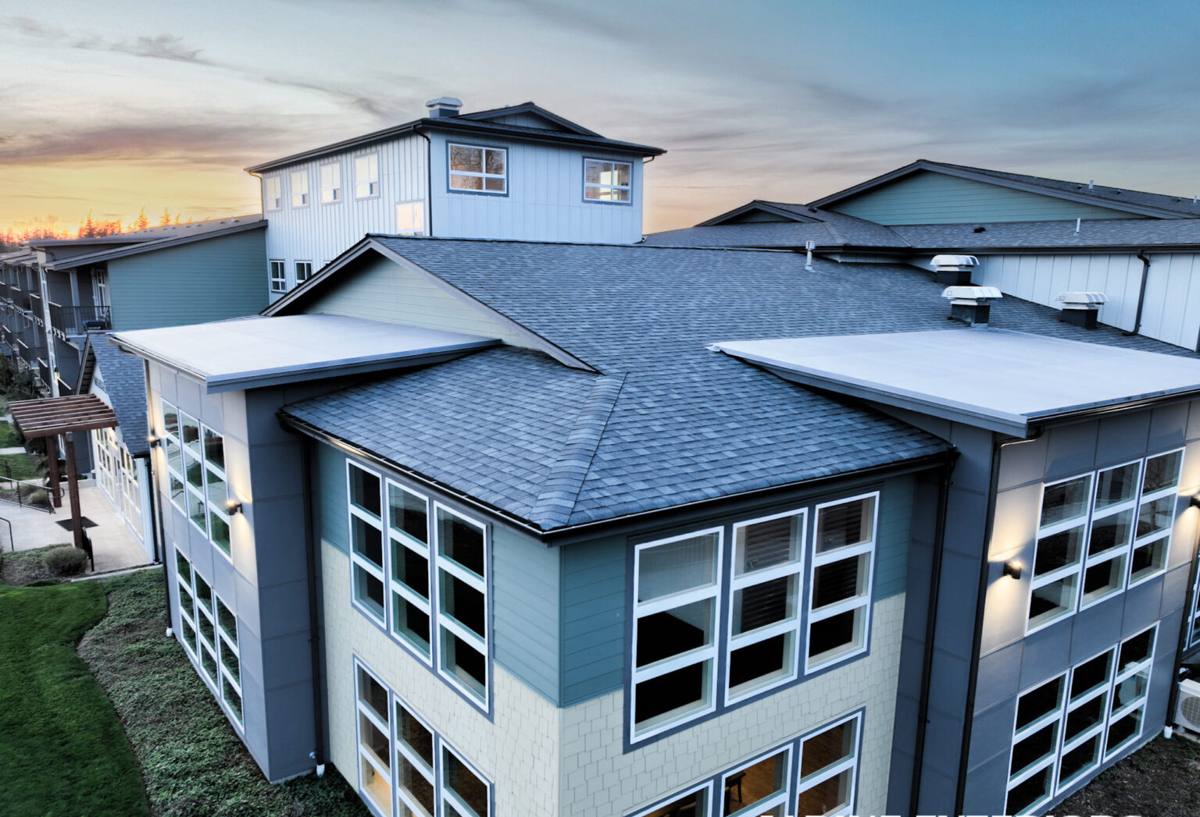
What Bellingham's Climate Does to a Shingle Roof
Salt Air and Corrosion
Proximity to Bellingham Bay and the greater Puget Sound means salt-laden air moving across roofs even on properties that aren't waterfront. Salt air accelerates corrosion on exposed metal — nail heads, flashing, vent stacks, and gutter hardware. Cheap or under-spec'd fasteners and flashing corrode faster here than they would inland, which is why material choice on the metal components matters as much as the shingle itself.
Driving Rain
Whatcom County storms frequently bring rain sideways rather than straight down, driven by wind off the water. That means water gets pushed up and under shingle edges, into valleys, and around penetrations in ways a roof built for calmer weather isn't tested against. Underlayment quality, shingle sealing, and flashing detail work carry more weight here than in areas with milder, more vertical rainfall.
Moss and Prolonged Moisture
The long wet season, combined with shade from mature trees common on Birch Bay and Bellingham-area lots, creates ideal conditions for moss and algae growth. Moss isn't just cosmetic — it holds moisture against the shingle surface, works its way under shingle edges as it grows, and can lift shingles enough to let water in. A roof that sheds water quickly and dries out between storms resists moss far better than one with poor airflow or persistent shade.
What a Correct Installation Actually Involves
Asphalt shingle roofing looks simple from the ground, but the parts that determine whether it lasts in this climate are mostly things you can't see once the job is done. A correct install for this area includes:
- Ice-and-water shield at vulnerable points — eaves, valleys, and around penetrations, not just where code minimums require it
- Synthetic underlayment rated for the wind and moisture load this coastline sees, properly lapped and fastened
- Corrosion-resistant flashing and fasteners at chimneys, walls, skylights, and roof-to-wall transitions — the metal choice matters more here than in a dry inland climate
- Balanced attic and roof ventilation so moisture from inside the house doesn't condense against the roof deck, and so the roof surface dries out between rain events instead of staying damp
- Correct nailing pattern and shingle exposure matched to the manufacturer's high-wind installation instructions, not just the standard pattern
- Valley and edge detailing built to shed driving rain rather than just vertical rainfall
Skipping any one of these doesn't necessarily cause a failure in year one. It shows up as a leak at year six, premature granule loss, or moss establishing itself faster than it should — problems that trace back to a shortcut taken during installation, not a defect in the shingle.
Choosing Shingles for a Wet, Mossy Climate
Not every asphalt shingle product is a good fit for Bellingham conditions. Algae-resistant (AR) shingles, which use copper- or zinc-infused granules to inhibit algae and moss growth, are worth the modest upgrade cost on most homes here, especially anywhere with shade or a north-facing slope. Beyond that, the choice usually comes down to architectural (dimensional) versus 3-tab shingles.
| Factor | 3-Tab Shingles | Architectural Shingles |
|---|---|---|
| Typical lifespan | Shorter end of the asphalt range | Longer end of the asphalt range |
| Wind resistance | Lower rated | Higher rated — better suited to exposed, wind-driven-rain sites |
| Moss/algae resistance option | Available on some lines | Widely available, often standard |
| Upfront cost | Lower | Moderate premium |
| Best fit | Budget-driven projects, secondary structures | Primary homes in exposed or shaded coastal settings |
We don't push a specific brand as the only acceptable option — several manufacturers make products that perform well here. What matters more is matching the product's wind rating and algae-resistance features to the specific exposure of your roof, and installing it to the manufacturer's high-wind spec so the warranty is actually intact if you ever need it.
Our Process for a Bellingham Roof
1. Roof and Attic Assessment
Before quoting anything, we look at the whole system — current shingle condition, flashing points, valley condition, gutter performance, and attic ventilation. A roof that's failing early because of trapped moisture needs a ventilation fix, not just new shingles on top of the same problem.
2. Tear-Off and Deck Inspection
We remove the existing roofing down to the deck rather than layering over it, which lets us check the sheathing for soft spots or rot — common where a previous roof let water sit too long — and address them before anything new goes down.
3. Underlayment and Flashing
Ice-and-water shield and underlayment go down first, followed by new flashing at every penetration and transition, sized and fastened for this climate rather than the bare minimum.
4. Shingle Installation
Shingles go on to the manufacturer's high-wind nailing pattern, with attention to valleys, ridges, and edges where driving rain causes the most trouble.
5. Ventilation Check and Cleanup
We confirm intake and exhaust ventilation is balanced, then do a full site cleanup, including a magnetic sweep for nails.
6. Walkthrough
We walk the finished roof with you, explain what was done, and go over any maintenance items specific to your property's shade and exposure.
Keeping a Shingle Roof Ahead of Moss and Moisture
Even a correctly installed roof needs some basic upkeep in this climate to get its full lifespan. A short annual routine catches most problems while they're still cheap to fix:
- Clear gutters and downspouts before the fall rains start, so water isn't backing up under the eaves
- Trim back overhanging branches to cut down shade and let the roof surface dry between storms
- Look for moss or dark streaking starting at the ridge or in shaded valleys, and address it early rather than letting it spread
- Check flashing around chimneys, skylights, and vent stacks for lifting or corrosion, particularly if the home is closer to the water
- After major windstorms, do a visual check from the ground for lifted or missing shingles
- Avoid pressure washing the roof surface — it strips protective granules; use low-pressure moss treatments instead
Repair, Patch, or Full Replacement?
Not every issue means a new roof. A few missing shingles after a storm, or an isolated leak at one flashing point, is usually a straightforward repair. Full replacement makes sense when granule loss is widespread, when multiple layers of moss or algae staining keep returning after treatment, when the roof is past its expected service life and starting to show soft spots on the deck, or when repeated repairs in different spots signal the underlayment and flashing system as a whole is failing rather than one isolated point. We'll always tell you honestly which situation you're in rather than defaulting to the bigger job.
What Affects the Cost of a Shingle Roof Here
Every roof is different, so we won't quote a number without seeing it, but these are the factors that move the price up or down on most Bellingham-area jobs:
| Factor | Effect on Cost |
|---|---|
| Roof size and number of facets/valleys | More cutting, flashing, and labor time |
| Existing layers to tear off | Multiple old layers add disposal and labor cost |
| Deck condition | Rotten or soft sheathing requires repair before new roofing goes down |
| Shingle grade chosen | 3-tab vs. architectural vs. premium algae-resistant lines |
| Roof pitch and access | Steep or hard-to-access roofs take longer and require more safety setup |
| Ventilation upgrades | Adding or correcting intake/exhaust vents adds material and labor |
Why It Matters That We Already Work This Area
A crew that roofs mostly inland or in drier climates doesn't always think about salt-air fastener corrosion, algae-resistant shingle lines, or the wind-driven rain detailing that Bellingham roofs need. We work Birch Bay, Bellingham, and the surrounding Whatcom County coastline regularly, which means we're not guessing at how a given shingle line performs in this specific mix of salt air, wind, and long wet seasons — we're specifying and installing based on what we've seen hold up here. That local familiarity is also why we can walk a roof and tell you fairly quickly whether you're looking at a repair or a replacement, and why our recommendations on shingle type and ventilation are based on this climate specifically rather than a generic install.
If your roof is showing moss, granule loss, or you're just due for an honest assessment, we're glad to take a look. Reach out for a free, no-pressure estimate using the form below — we'll walk the roof, explain what we find, and give you a straight answer on what it needs.