 Birch Bay
 Why Bellingham Roofs Wear Differently
A roof in Bellingham doesn't usually fail because of one big storm. It fails slowly, from the same three things wearing on it year after year: salt-laden air off the water, driving rain that comes in sideways more often than straight down, and a moss season that runs long because the air rarely dries out for good. None of that is unique to any one house — it's just what roofing materials in this part of Whatcom County have to hold up against, whether the home is a few years old or a few decades old.
Salt air is easy to overlook because you can't see it doing anything. What it actually does is speed up corrosion on anything metal — nail heads, flashing, drip edge, valley metal — long before the shingles themselves are due for replacement. Wind-driven rain is a different problem: it doesn't just run off a roof, it gets pushed sideways and upward under laps, at valleys, and around anything that penetrates the roof deck. And moss, once it gets a foothold in a shaded or north-facing section, holds moisture against the shingle surface for weeks at a time, which shortens the life of the material underneath it whether or not it looks bad from the ground.
None of these on their own is dramatic. Together, over 15 or 20 years, they're the difference between a roof that ages evenly and one that develops soft spots, leaks, and premature granule loss well ahead of schedule.
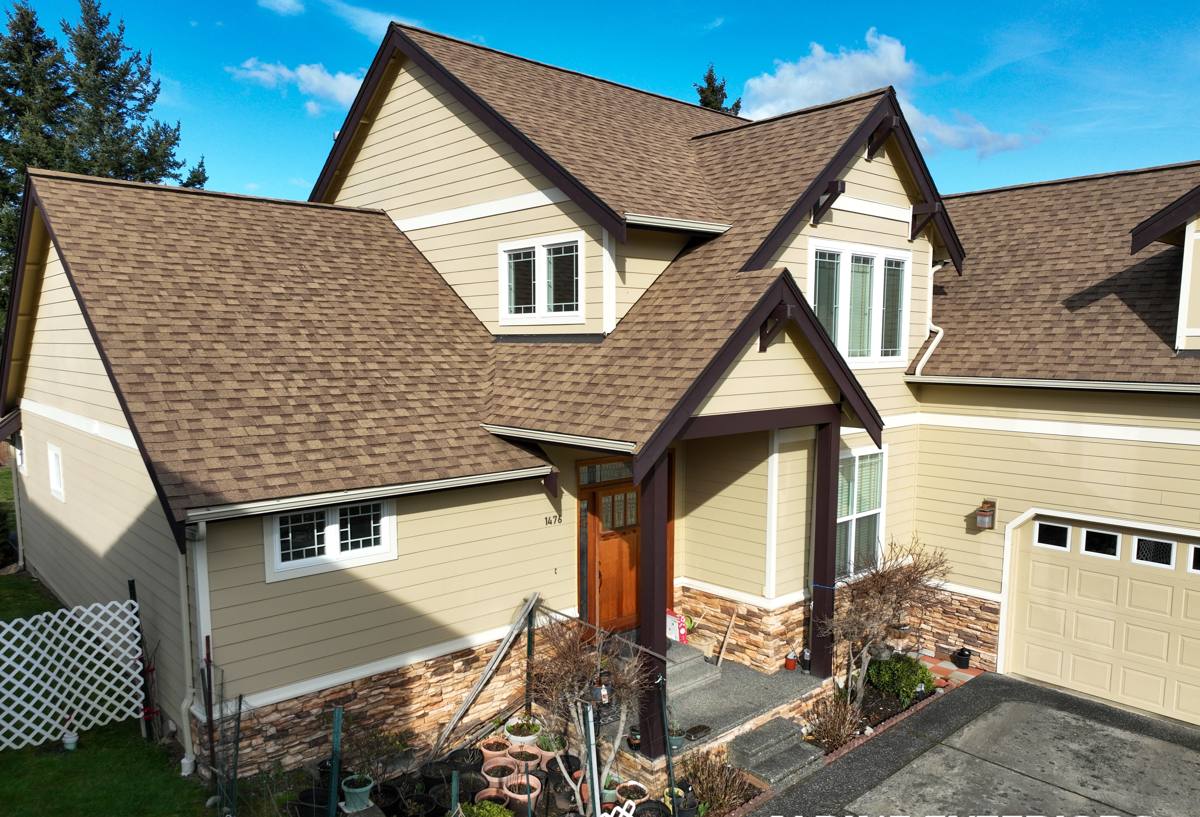
What a Correctly Installed Roof Actually Involves Here
"New roof" covers a lot of ground, and the difference between a roof that holds up in this climate and one that doesn't usually comes down to details that aren't visible once the job is finished.
Underlayment and Water-Resistive Barrier
We use synthetic underlayment as the primary water barrier under the roofing material, and we run self-adhered ice-and-water shield membrane at eaves, valleys, and around every penetration — chimneys, vent stacks, skylights. This area doesn't get much ice, but that membrane matters just as much here for wind-driven rain, which can push water uphill under standard felt in a way it won't push through a self-sealing membrane.
Flashing Details
Step flashing at walls, counter-flashing at chimneys, and kickout flashing where a roof edge meets a sidewall are the details that separate a roof that stays dry for decades from one that develops hidden rot behind siding within a few years. Kickout flashing in particular is one of the most commonly skipped details on production-grade installs, and it's a small piece of metal that prevents a genuinely expensive repair later.
Fasteners and Metal Components
Given the salt air, we don't treat fastener choice as an afterthought. Corrosion-resistant nails and metal flashing components cost a little more up front and hold up for the life of the roof instead of rusting and staining or failing early.
Comparing Roofing Materials for a Bellingham Home
There's no single "best" roofing material — the right choice depends on your budget, your roof's pitch and exposure, and how much upkeep you're willing to do. Here's an honest comparison of the main options we install, based on how they typically perform in a marine, moss-prone climate like this one.
| Material | Typical Lifespan | Moss/Algae Resistance | Salt-Air Notes | Relative Upfront Cost |
|---|---|---|---|---|
| Standard architectural asphalt shingle | 20-25 years | Moderate; needs periodic cleaning in shaded areas | Fine with corrosion-resistant fasteners and flashing | Lowest |
| Algae-resistant (AR) asphalt shingle | 25-30 years | Better; copper-infused granules slow algae/moss growth | Same fastener and flashing considerations apply | Low-Moderate |
| Standing-seam metal | 40-50+ years | High; smooth surface sheds moss and debris well | Requires marine-grade coated panels and fasteners near open water | Highest |
| Synthetic/composite shake | 30-40 years | Good; resists moisture absorption better than wood shake | Non-metallic surface, but trim and flashing still need corrosion resistance | Moderate-High |
We don't install traditional cedar shake or shingle roofing as a standard offering. It can look great, but in a climate this wet and moss-prone it demands a level of ongoing maintenance and moisture-related upkeep that most homeowners don't want to sign up for, and we'd rather set that expectation honestly up front than sell a product that needs more attention than most people want to give it.
Ventilation and Moisture Management Matter More Here Than Most Places
A roof isn't just the shingles — it's a system, and the part of that system most often shortchanged is ventilation. In a climate with this much ambient humidity, a poorly ventilated attic traps moisture under the roof deck year-round, not just in winter. That trapped moisture condenses on the underside of the sheathing, and over time it leads to sheathing rot, mold, and shingles failing from underneath before they've reached the end of their expected life from the top.
A correct system balances intake (usually soffit vents) with exhaust (usually a ridge vent), with baffles installed to keep insulation from blocking the intake path. When we replace a roof, we evaluate the existing ventilation rather than assuming it was done right the first time — a lot of older homes in this area were built before balanced ventilation was standard practice.
How Our Installation Process Works
- On-site inspection and measurement. We look at the existing roof, the decking condition, ventilation setup, and any problem areas like valleys or wall intersections before quoting anything.
- Material walk-through. We go over the realistic options for your roof's pitch, sun/shade exposure, and budget — including the honest trade-offs of each, not just the upsides.
- Tear-off and deck inspection. Old roofing comes off down to the deck, and we inspect for soft or rotted sheathing before anything new goes down. Any deck repairs are identified and priced before, not discovered as a surprise mid-install.
- Underlayment and flashing. Ice-and-water membrane at eaves and valleys, synthetic underlayment across the field, and flashing detail work at every wall, chimney, and penetration.
- Roofing material installation. Installed to manufacturer specification for nailing pattern and exposure — this is what keeps the warranty valid and the roof performing in wind.
- Ventilation tie-in. Ridge and soffit ventilation confirmed and corrected if needed.
- Cleanup and walkthrough. Magnetic sweep for stray fasteners, debris hauled off, and a walkthrough so you know what was done and what to expect going forward.
Signs You Need a New Roof, Not Another Repair
- Granule loss heavy enough to see bald patches on the shingle surface
- More than one layer of roofing already on the house — most decks aren't rated for a third layer
- Soft or spongy spots underfoot when walking the roof, or visible sagging from the ground
- Daylight visible through the roof boards from inside the attic
- Moss or algae growth that's widespread rather than isolated to one shaded section
- Shingles curling, cupping, or cracking at the edges across large areas
- A roof at or past its expected service life with repairs becoming frequent
- Rising heating or cooling bills that trace back to attic moisture or failing insulation
One or two of these might mean a repair is enough. Several at once usually means the repair-and-patch cycle has run its course and a full replacement is the more cost-effective path.
Permits, Timing, and Working Around Local Weather
Roof replacements in Whatcom County require a permit, and we handle that process as part of the job rather than leaving it to the homeowner. On timing: this area's weather doesn't offer long guaranteed dry stretches, especially outside of summer, so scheduling and crew efficiency matter more here than in drier climates. We plan installs around forecast windows and work in sections when needed so your home isn't left exposed overnight. A rushed job scheduled without regard for the forecast is one of the more common ways a roof replacement goes wrong before it's even finished.
Why It Matters That We're a Crew That Already Works This Area
Bellingham and the surrounding Birch Bay area have a real mix of home ages and construction styles — older homes built before current ventilation standards, newer builds with different framing conventions, and everything in between. A crew that works this specific area regularly has already seen how local homes typically age, which roof details tend to get skipped on production-grade work, and how quickly moss tends to come back on a given orientation or tree cover.
That local familiarity also matters after the job is done. We're not a traveling crew that's hard to reach once the final payment clears. If a question comes up six months or six years after installation, you're calling a business that's still working in this same area and stands behind what it installed.
If you're weighing a repair against a full replacement, or just want a straight answer on what your roof actually needs, we're glad to take a look. Request a free, no-pressure estimate using the form below — we'll give you an honest read on your roof's condition and what it would take to replace it right.