 Birch Bay
 Why Bellingham Siding Wears Differently Than Siding Inland
Homes around Bellingham sit close enough to the Salish Sea that salt-laden air is a daily fact of life, not an occasional coastal storm event. Add in driving rain that comes sideways off Whatcom County's winter fronts and a moss season that can run from October well into spring, and you have three separate stressors working on your siding at the same time, year after year. Most siding damage we find on Bellingham homes isn't the result of one big storm — it's the slow, cumulative effect of moisture finding a weak point and never fully drying out before the next round of rain arrives.
That matters for repair work specifically. A repair that only addresses the visible crack, gap, or soft spot — without figuring out how moisture got in and whether it's still getting in — is a repair that fails again within a year or two. Doing it right in this climate means treating every repair as a small investigation, not just a patch job.
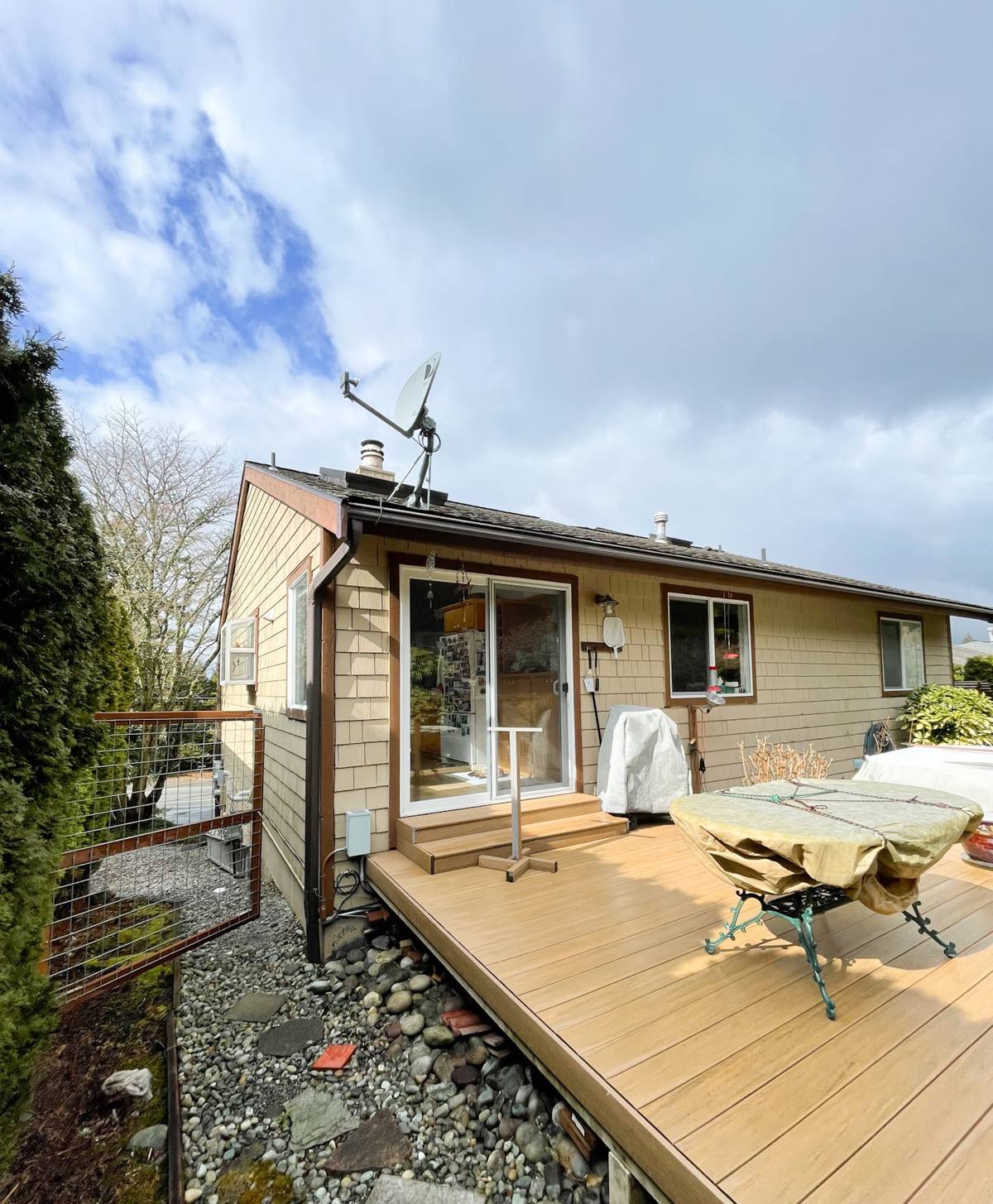
The Damage Patterns We See Most Often in This Area
Moss and Organic Growth
Whatcom County's long wet season gives moss, algae, and lichen plenty of time to establish themselves on north-facing walls, under eaves, and anywhere siding stays shaded and damp. Left alone, moss holds moisture directly against the siding surface far longer than open air would, which accelerates rot in wood-based products and can degrade paint and caulking on almost any siding type.
Salt Air and Coastal Corrosion
Proximity to Birch Bay and the broader Salish Sea means airborne salt settles on exterior surfaces and accelerates corrosion of fasteners, flashing, and any exposed metal trim. Siding itself can hold up fine while the hardware underneath it is quietly failing — which is why a proper repair inspection looks past the surface material.
Driving Rain and Wind-Driven Moisture
Standard lap siding is designed to shed rain that falls relatively straight down. Wind-driven, near-horizontal rain — common during winter storms here — pushes water up under laps, around trim, and into any gap that wouldn't normally see moisture. That's where you find soft spots at butt joints, corner boards, and window and door trim.
Signs Your Siding Needs Repair Now
- Soft, spongy, or crumbling material when you press on it, especially near the bottom of walls or below windows
- Visible cracking, buckling, or separation at seams and corner boards
- Paint that's bubbling, peeling, or failing in localized patches rather than evenly across the wall
- Persistent moss or dark staining that keeps returning after cleaning
- Gaps opening up around window and door trim, or at the base of the wall near the foundation
- A musty smell or visible staining on interior walls that back up to exterior siding
- Fasteners visibly rusting, backing out, or leaving streaked rust marks down the siding
Any one of these on its own might be minor. Two or three together, especially clustered in one area, usually mean moisture has been getting behind the siding for a while.
What a Correct Siding Repair Actually Involves
A repair that's done right is more than swapping out a damaged board. Here's what we check and address on every repair call in the Bellingham area:
- Identify the moisture source. Before replacing anything, we figure out how water got in — failed caulking, damaged flashing, a gap in the house wrap, or a grading issue directing water at the wall.
- Inspect what's underneath. Once damaged siding is removed, we check the house wrap, sheathing, and framing for hidden rot or damage. Siding is often the least of the problem if water has been getting behind it for a season or two.
- Repair the water management, not just the cosmetic layer. That means correcting flashing, re-sealing penetrations, and confirming proper drainage planes before any new siding goes back on.
- Match the replacement material properly. Board profile, exposure, and finish need to match the surrounding siding closely enough that the repair doesn't stand out as a patch.
- Reinstall to spec. Correct fastener type and placement, proper gapping for expansion, and correctly lapped and sealed joints — the same standards as a full installation, just applied to a smaller area.
Repair or Replace? Weighing the Real Factors
Not every damaged section needs a full re-side, and not every repair is worth doing if the underlying siding is near the end of its life. Here's how we think through it:
| Factor | Leans Toward Repair | Leans Toward Replacement |
|---|---|---|
| Extent of damage | Isolated to one or two areas | Recurring across multiple walls |
| Underlying structure | Sheathing and framing sound | Rot found behind siding in inspection |
| Siding age and material | Newer, still-supported material | Original siding is old, discontinued, or a product prone to ongoing issues |
| Moisture source | Single, correctable cause identified | Multiple or unclear entry points |
| Cosmetic match | Replacement material can blend in | Visible mismatch no matter what's used |
We'll always tell you honestly which side of that table your home falls on. A targeted repair that solves the actual problem is the right call more often than homeowners expect — but we're not going to patch a wall we know is going to need the same fix again in eighteen months.
Why We Repair With James Hardie Fiber Cement
When siding needs to be replaced during a repair — whether it's a few boards or a full elevation — we use James Hardie fiber cement, the same product we install on every full siding job. In a climate like Bellingham's, that choice matters for repair work specifically:
- Fiber cement doesn't absorb and swell with moisture the way wood-based siding can, which matters in a region where boards stay damp for extended stretches
- It's non-combustible, which is a meaningful consideration during Washington's dry summer wildfire-smoke season even in a generally wet coastal climate
- The factory-applied ColorPlus finish resists the fading and peeling that repeated moss cleaning and salt exposure can accelerate on field-painted siding
- Hardie's product lines are engineered for specific climate zones, including the wetter Pacific Northwest conditions Bellingham sits in
We don't repair or install LP SmartSide, vinyl, Cemplank, Allura, primed spruce, or cedar. That's not a knock on every homeowner's existing siding — plenty of it is holding up fine — but when we're the ones doing the repair or replacement work, we stand behind one product system we know performs in this specific climate, and Hardie is that system.
Our Repair Process
1. On-Site Inspection
We walk the affected area, check moisture levels where we can, and look at flashing, trim, and drainage — not just the damaged boards themselves.
2. Honest Assessment
You get a straightforward explanation of what's actually wrong, what caused it, and whether repair or a larger scope makes sense — including the reasoning, not just a number.
3. Written Scope and Estimate
A clear, itemized description of the work, so you know exactly what's being done and why before anything starts.
4. The Repair Itself
Removal of damaged material, correction of the underlying moisture issue, and reinstallation with properly matched James Hardie siding, flashing, and fasteners.
5. Final Walkthrough
We review the completed work with you and point out anything worth keeping an eye on going forward, particularly around moss-prone or wind-exposed areas of the house.
Why Local Experience in Bellingham and Whatcom County Matters
A crew that already works this specific coastline knows which wall orientations take the worst of the driving rain, where moss builds up fastest given local shade and drainage patterns, and how salt air behaves differently a mile from the water versus further inland. That's not something you pick up from a general siding background — it comes from repeatedly working homes in Birch Bay, Bellingham, and the rest of Whatcom County and seeing the same failure patterns show up in the same places.
It also means we're familiar with local permitting expectations and typical construction in this area's housing stock, so repairs integrate cleanly instead of looking like an afterthought.
Keeping Repaired Siding Performing Long-Term
- Rinse moss and algae off shaded or north-facing walls before it has a chance to establish, rather than after it's thick
- Keep gutters clear so overflow doesn't run directly down siding during heavy rain
- Check caulking around windows, doors, and trim annually — it's usually the first thing to fail in coastal wind and salt exposure
- Keep sprinklers and landscaping from spraying directly on siding
- Address small issues — a lifted board, a cracked seam — before the next wet season rather than waiting
Fiber cement repaired and installed to spec holds up well against all of this, but no siding is entirely maintenance-free in a climate this wet and salty. A little seasonal attention goes a long way toward making a repair last.
If you're seeing soft spots, moss buildup, or gaps in your siding, we're glad to take a look and give you a straightforward, no-pressure assessment of what's actually going on and what it would take to fix it right. The estimate is free — just fill out the form below.