 Birch Bay
 Deck Replacement in Bellingham: Knowing When Repair Isn't Enough
Bellingham sits right on Bellingham Bay, and that setting shapes how long a deck actually lasts here. Salt-tinged marine air, driving rain that comes in sideways off the water more often than it falls straight down, and a moss season that can run most of the year on shaded or north-facing decks all put steady stress on wood, fasteners, and framing. A deck that would coast along for decades in a drier inland climate often starts showing real problems in Bellingham well before that, and at some point patching the boards or swapping a railing baluster stops being a fix and starts being a delay.
This page is about deck replacement specifically — not routine repair, and not a general new-build guide. It covers how to tell when a Bellingham deck has crossed the line from repairable to replace-worthy, what a correct replacement actually involves in this climate, and how our process works from first look to final walkthrough.
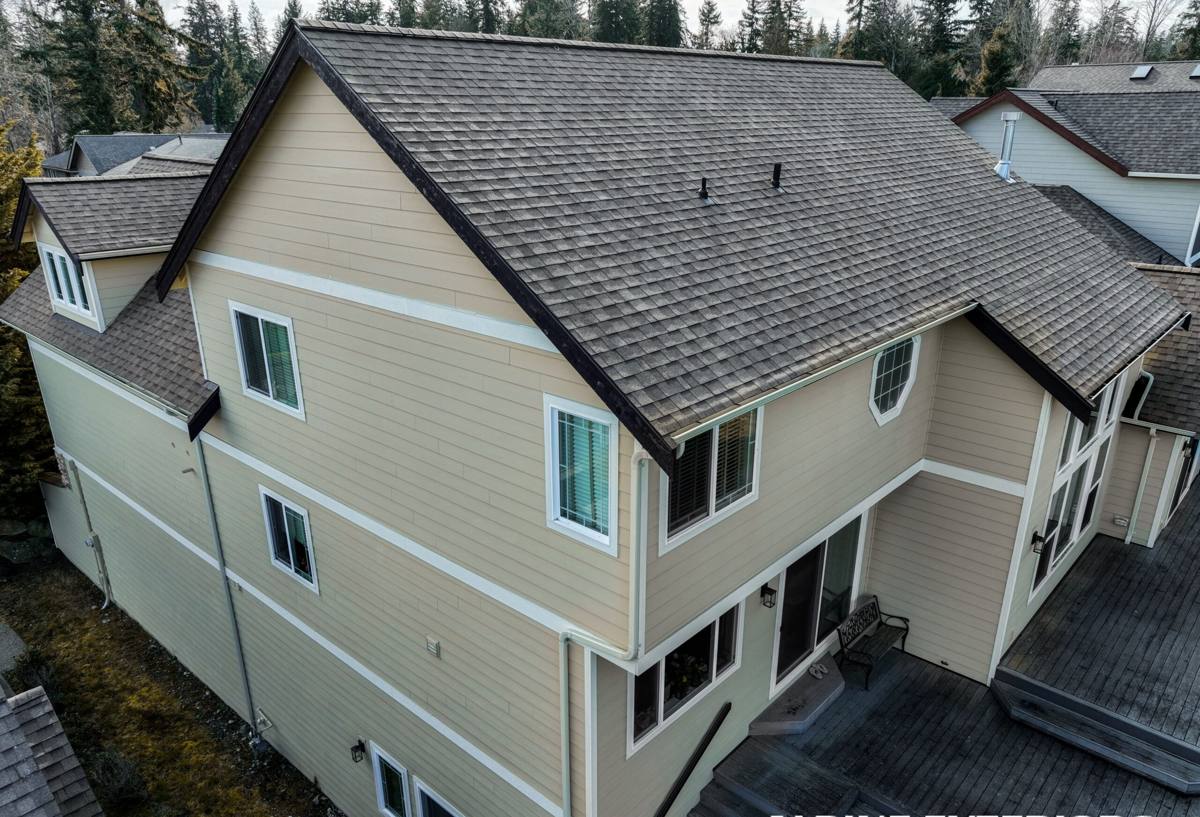
Signs a Bellingham Deck Needs Replacing, Not Patching
Every deck needs some upkeep over its life, and plenty of problems are genuinely fixable with a repair. Replacement becomes the honest recommendation when the issues are in the structure itself, or when enough of the deck has reached the same age and condition that a series of repairs would cost close to what a full rebuild does anyway.
Structural Warning Signs
The framing and connections underneath the visible surface are what actually hold a deck up, and problems there don't improve on their own. A soft or spongy joist, a ledger board that's pulling away from the house, posts that have shifted or settled, or fastener corrosion advanced enough to weaken hardware are all signs the deck's structure — not just its surface — has been compromised. Once rot or corrosion reaches that level, patching the decking on top doesn't address what's actually failing underneath.
Surface and Age-Related Signs
Widespread splintering, cupping, or graying across most of the deck surface, boards that have been replaced individually so many times the deck looks patchworked, or moss and mildew staining that returns within weeks of cleaning are all signs the material itself is at the end of its useful life in this climate. On older wood decks, especially, surface wear often mirrors what's happening in the framing below — a deck that's been outside through twenty or more Bellingham wet seasons is rarely failing in just one spot.
- Soft, spongy, or visibly rotted framing anywhere under the decking
- Ledger board separation or gapping where the deck meets the house
- Railing posts that wobble or have visibly shifted from vertical
- Rust staining spreading from fastener heads, not just isolated spots
- Repeated individual board repairs across multiple seasons
- Moss or mildew that regrows within weeks of cleaning, on most of the surface
- A deck original to a home built before current fastener and flashing standards were common
Why This Climate Wears Decks Out Faster
Marine Air Off the Bay
A deck sits outside with no wall or roofline to shield it, and in Bellingham that means it takes the full effect of salt-tinged air moving in off the bay day after day, not just during storms. That steady exposure accelerates corrosion in fasteners, joist hangers, and railing hardware well before the corrosion is visible from the surface, which is part of why a deck can look fine and still have compromised connections underneath.
Wind-Driven Rain
Rain in this part of Whatcom County frequently arrives at an angle rather than falling straight down, driven by wind off the water. On a deck, that pattern pushes moisture up under railings, into ledger connections, and between boards that weren't gapped correctly to shed it. A deck built for calm, dry conditions can perform fine on a still day and still trap water the moment wind gets involved, which in Bellingham is a regular occurrence, not an occasional one.
A Long Moss Season
Mild temperatures and near-constant dampness give moss a growing season that runs most of the year here, and horizontal deck surfaces are usually among the first places it takes hold, since they hold water longer than a vertical wall and stay damp between rain events. Shaded decks and north-facing surfaces typically show it first, and any decking material with even minor surface porosity gives moss something to grip onto.
Repair vs. Replacement: Making the Right Call
Not every aging deck needs a full rebuild, and we won't recommend replacement when a targeted repair genuinely solves the problem. The distinction usually comes down to how much of the deck's structure — not just its surface — is affected, and how old the existing framing and connections already are.
| Factor | Repair Usually Makes Sense | Replacement Usually Makes Sense |
|---|---|---|
| Framing condition | Isolated soft spot or single damaged joist | Widespread soft framing, rot, or corrosion |
| Ledger connection | Minor sealant or flashing touch-up | Gapping, separation, or visible moisture staining behind it |
| Decking surface | A handful of boards need replacing | Most boards are cupped, splintering, or graying uniformly |
| Age of the structure | Newer deck, isolated issue | Original framing predates current fastener and code standards |
| Railings and posts | Loose hardware, tightened or replaced | Posts shifted from vertical or attachment points compromised |
When the honest answer is repair, we'll say so — a full replacement isn't the right recommendation just because it's the bigger job. When the structure itself is the problem, though, repair usually ends up as a series of short-term patches that cost real money without solving what's actually wrong.
What a Correct Deck Replacement Involves
Full Tear-Out and Structural Assessment
A proper replacement starts with removing the old deck down to the ledger and support posts, which is also the point where problems hidden under the old decking finally become visible — moisture damage at the ledger, undersized or corroded hardware, or footings that were never adequate for the deck's size to begin with. That assessment shapes the rest of the job; a replacement that skips it and simply reuses the old framing under new decking boards is really just a resurfacing, not a rebuild.
Bringing the Structure Up to Current Standards
Many older Bellingham decks were built under fastening, flashing, and hardware standards that have since been tightened, particularly around ledger attachment and joist hanger requirements. A replacement is the opportunity to correct that — proper structural screws or bolts at the ledger instead of the nails common in older builds, joist hangers rated for the actual load, and post-to-footing connections that meet current structural expectations rather than whatever was standard decades ago.
Ledger Board Flashing
The ledger board connection, where the deck attaches to the house, is one of the most common failure points on any deck in a climate this wet, and it's almost always hidden from view once the deck is finished. A correct replacement includes proper flashing that directs water away from this connection and the wall assembly behind it, rather than relying on caulk alone to keep moisture out over time.
Corrosion-Resistant Fasteners and Hardware
Given the marine air this city sits in, we use fasteners and structural hardware rated for corrosive exposure throughout the rebuild — not just on the visible decking surface, but in the joist hangers, post bases, and structural connectors that don't get seen again once the job is done.
Choosing Decking Material for the Rebuild
Material choice matters more on a replacement than it might seem, because a new deck built with the wrong material for this climate just restarts the same wear cycle that led to replacement in the first place. The three main options homeowners weigh are pressure-treated or cedar wood, capped composite, and cellular PVC.
Wood
Pressure-treated lumber and cedar remain popular for their upfront cost and traditional look, but both need regular sealing or staining to hold up against sustained moisture, and both are more vulnerable to moss growth and surface wear in this climate without consistent upkeep.
Capped Composite
Capped composite boards have a protective shell around a wood-fiber core, which resists moisture absorption and staining far better than uncapped composite or raw wood. For a Bellingham replacement, that cap layer is doing real work against the same salt air and moisture load that wore out the previous deck.
Cellular PVC
PVC decking contains no wood fiber, so it doesn't absorb moisture the way even capped composite can at cut edges or fastener holes. It costs more upfront but offers the strongest moisture resistance of the three, which some homeowners decide is worth it for a deck that sees heavy shade or sits close to the water.
Our Deck Replacement Process
We start with an on-site assessment of the existing deck — checking the ledger connection, probing framing for soft spots, and inspecting posts, footings, and hardware — so the recommendation we give is based on what's actually there, not a guess from the surface. From that assessment, we put together a clear, written scope covering the tear-out, any structural or code-related upgrades the rebuild needs, material options within the homeowner's budget, and a realistic timeline.
Once the scope is agreed on, we handle permitting through the City of Bellingham as part of the job. The build itself follows the old deck's removal with a full structural assessment, then framing and ledger work done to current standards, then the decking surface, railings, and stairs. We finish with a walkthrough covering what the specific material chosen actually needs going forward — for most modern decking that's minimal, but it isn't nothing.
A Simple Checklist Before Hiring for a Deck Replacement
- Ask whether they recommend repair or full replacement, and why — and be wary of anyone who skips straight to the bigger job without inspecting the structure
- Confirm they carry current Washington contractor licensing and insurance
- Ask specifically how they handle ledger board flashing, since that connection is the most common failure point in this climate
- Ask about fastener and hardware corrosion resistance for a marine-air environment
- Get a clear, written scope of work, including any structural upgrades, before signing anything
Why It Matters That We Already Work Bellingham
A crew that occasionally builds decks in this city can still do competent work, but a contractor who works Bellingham regularly already knows how salt air, wind-driven rain, and a long moss season behave here specifically, and how those conditions tend to show up in decks built a few decades ago under older fastening standards. That familiarity shows up in the judgment calls — where extra flashing detail earns its keep, which fastener grade is worth the added cost, and how to tell a homeowner honestly whether their deck needs a full rebuild or just a focused repair.
Whether you're dealing with a deck that's clearly past saving or you just want an honest read on whether repair still makes sense, we're happy to walk the site with you and lay out the options plainly. Reach out below for a free, no-pressure estimate.