 Birch Bay
 Composite Decking in Bellingham: Built for the Weather We Actually Have
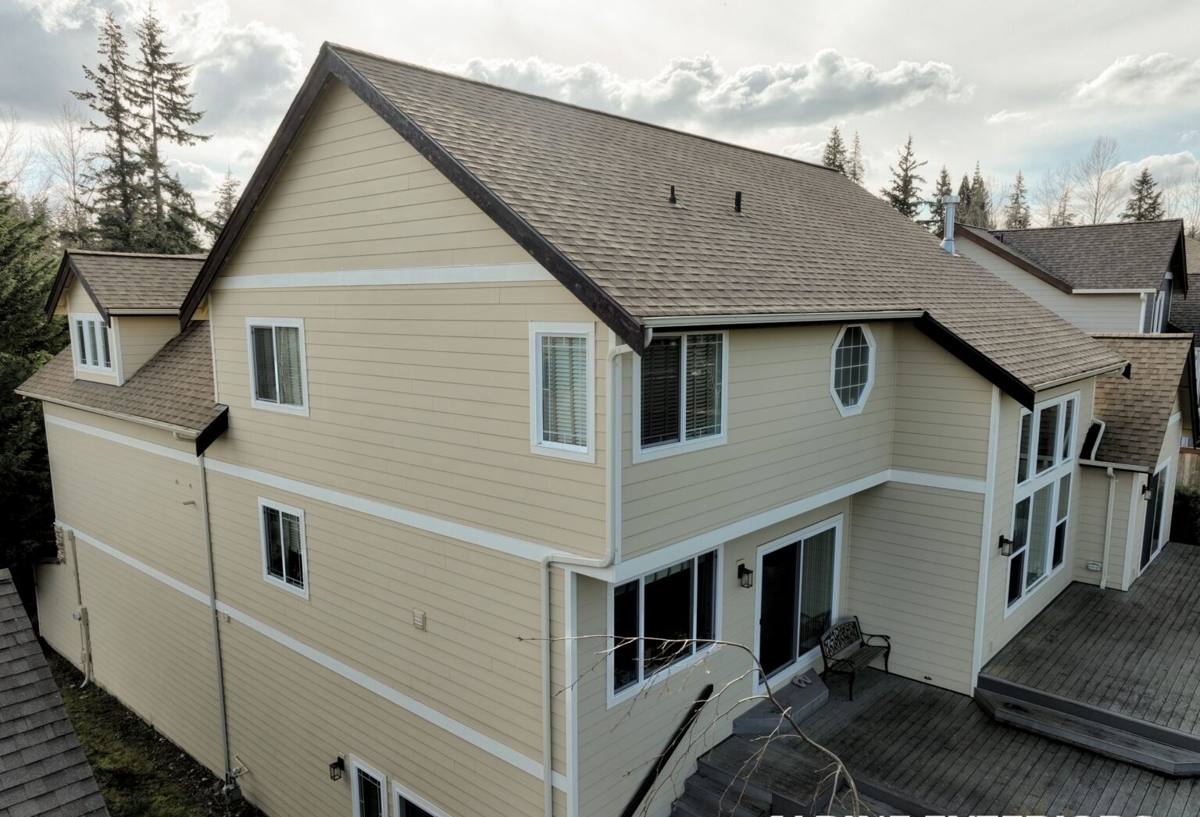
Bellingham sits close enough to the water, and close enough to Birch Bay and the rest of Whatcom County, that decks here deal with a specific combination of stresses: salt-tinged air rolling in off the Strait and Bellingham Bay, long stretches of driving rain from fall through spring, and a moss and algae season that can run most of the year in shaded yards. A deck that looks great in a showroom in a dry climate can struggle here if it wasn't chosen and installed with those conditions in mind. This page is about what actually matters for composite decking on a Bellingham property, not a generic rundown of decking in general.
Why Composite Makes Sense for This Climate
Wood decking isn't a bad product, but it asks a lot of a homeowner in this region: annual staining or sealing, constant vigilance against moss and mildew in shaded corners, and a real risk of cupping, splitting, or soft spots wherever water sits too long. Composite decking was developed specifically to reduce that maintenance burden, and in a climate like ours — where boards rarely get a long dry stretch to fully cure between rain events — that matters more than it would somewhere arid.
The trade-off homeowners should understand honestly: composite costs more upfront than pressure-treated wood, and it isn't maintenance-free, just maintenance-light. It still needs periodic washing to keep organic growth from taking hold, and the substructure underneath it still needs to be built and vented correctly. Composite doesn't fix a bad structure — it just means the visible surface holds up better once the structure underneath is right.
What Salt Air and Moisture Actually Do to a Deck
- Corrode unprotected or low-grade fasteners over time, which is why fastener choice matters as much as board choice
- Keep wood decking damp longer between rains, feeding rot in framing and moss on the surface
- Accelerate finish breakdown on stained or painted wood, shortening the interval between refinishing jobs
- Contribute to premature fading or chalking on lower-grade composite products not rated for coastal exposure
What a Correct Composite Deck Build Involves
The composite boards themselves get most of the attention, but in this climate the parts nobody sees are what determine whether the deck lasts. A correct build in Whatcom County conditions includes attention to airflow, drainage, and material compatibility at every layer, not just the surface.
The Substructure
Joists and framing need to stay dry enough, long enough, between rain events. That means proper joist spacing for the specific composite product being installed (composite generally needs tighter spacing than wood, and manufacturers publish minimums that shouldn't be treated as optional), correct ledger board flashing where the deck meets the house, and enough clearance beneath the deck for air to actually move. A deck built low to wet ground, with no airflow underneath, will trap moisture against the framing regardless of what's on top of it.
Fasteners and Hardware
In a coastal-influenced climate, fastener grade is not a place to cut corners. Stainless steel or coated fasteners rated for exterior and coastal use resist the corrosion that standard hardware develops here within a few seasons. Corroded fasteners don't just look bad — they weaken over time and can eventually compromise board attachment.
Drainage and Grading
Water needs somewhere to go. That means correct board gapping for expansion and drainage, attention to how the deck sheds water away from the house foundation, and, where a deck sits over a living space or patio below, a drainage system that actually directs water off the structure instead of letting it pool on framing members.
Choosing the Right Composite Product
Not all composite decking is built the same way, and the differences matter more in a wet climate than a dry one. Homeowners are usually choosing between a few general categories:
| Type | What It Is | How It Handles Our Climate |
|---|---|---|
| Capped composite | A wood-plastic core wrapped in a protective polymer shell | Best moisture and stain resistance; the shell is what actually keeps rain and organic growth from penetrating the board |
| Uncapped composite | Wood-plastic blend with no protective outer layer | More exposed to moisture absorption and staining over time; tends to need more cleaning in a wet climate |
| PVC/composite hybrid | Higher synthetic content, little to no wood fiber | Very strong moisture resistance, though appearance and feel differ from wood-grain composites |
We generally steer homeowners here toward fully capped composite for anything exposed to direct weather, simply because the capped shell is doing real work against the rain and moss cycle this area sees for a good part of the year. That's a professional judgment based on moisture behavior and long-term maintenance, not a claim that other composite products are unusable — they're just a different trade-off, and we'll walk through it honestly for your specific deck and budget.
Moss, Algae, and the Maintenance Reality
Even a well-installed capped composite deck in Bellingham will develop some surface growth in shaded, low-airflow spots — that's the nature of a long wet season, not a defect. The difference between a deck that stays clean for years and one that turns green fast usually comes down to two things: how much airflow and sun the site gets, and whether the deck surface gets washed on a reasonable schedule before growth gets established.
- Rinse or wash the surface a couple of times a year, more often in shaded or north-facing areas
- Keep gutters and nearby vegetation trimmed back so less water and debris land directly on the deck
- Address any standing water or slow-draining spots early — that's usually a sign of a grading or gapping issue, not something a cleaning product will fix long-term
- Avoid pressure washing at close range or high pressure on composite boards, which can damage the surface texture or cap layer
Our Process for a Bellingham Composite Deck
Because we already work Birch Bay and the surrounding Whatcom County area regularly, we're familiar with how sites here typically sit — proximity to water, shade patterns, soil drainage, and the kind of weather exposure a given yard actually gets through the year. That shapes some practical decisions before a board is ever installed.
- Site walk and assessment — we look at drainage, sun/shade exposure, existing structure condition, and how the deck ties into the house
- Product selection — matching board type, color, and fastening system to the site's actual exposure, not just homeowner preference
- Structural prep — framing, joist spacing, ledger flashing, and airflow clearance built to the manufacturer's specification and local conditions
- Installation — board layout, gapping, and fastening done to manufacturer spec, with coastal-rated hardware
- Final walk-through — reviewing the finished deck and basic maintenance expectations with the homeowner
Why Local Experience on This Specific Job Matters
Composite decking installation isn't exotic work, but installing it correctly for this particular climate takes more than reading a manufacturer's install guide once. A crew that regularly works Birch Bay and the greater Bellingham area has already seen how the local weather pattern plays out on real decks over multiple seasons — where moss tends to establish first, which sites need extra airflow underneath, and how fastener corrosion shows up years down the line on jobs that used the wrong hardware. That's the kind of judgment that comes from repetition on this specific coastline, not from a generic decking checklist.
It also means we're not guessing at permitting norms, typical soil conditions, or how a deck should tie into homes built to the styles common in this area. A local crew is accountable locally — we're not passing through.
Cost Factors Worth Understanding Upfront
Every composite deck project is priced around a handful of variables, and it's worth knowing what actually drives the number before getting quotes:
| Factor | Why It Affects Cost |
|---|---|
| Deck size and shape | More linear footage of board and framing, plus complexity around curves, angles, or multiple levels |
| Board tier | Capped composite and PVC-hybrid products cost more than uncapped composite, but generally require less upkeep here |
| Substructure condition | Whether existing framing can be reused or needs to be rebuilt to meet current spacing and code requirements |
| Height and railing | Elevated decks need additional structural work and code-compliant railing systems |
| Site access | Difficult access, slopes, or tight yards add labor time |
We won't quote a number without seeing the site, but we're happy to talk through realistic ranges and what drives them once we understand your yard and goals.
Let's Look at Your Deck
If you're planning a new composite deck or replacing an aging one in the Bellingham or Birch Bay area, we're glad to come take a look and give you a straightforward, no-pressure estimate. You'll get an honest read on what your site needs, what it'll cost, and why — use the form below to get started.