 Birch Bay
 Bellingham Roofs Don't Wear Out the Way a Textbook Says They Should
Most roofing guides are written for a generic climate — moderate rain, a dry season, maybe some snow load. Bellingham doesn't get that generic climate. Sitting on Bellingham Bay in Whatcom County, homes here deal with salt-laden air off the water, long stretches of driving rain that comes in sideways as often as straight down, and a moss season that can run most of the year in shaded, north-facing sections of a roof. A repair that would hold up fine in a drier inland town can fail here in a single wet season if it doesn't account for those conditions.
This page is specifically about roof repair for Bellingham homes — not a general roofing overview. If you're dealing with a leak, lifted shingles, or a roof that's showing its age, the details below explain what's actually going on, what a correct repair looks like, and how we approach the work.
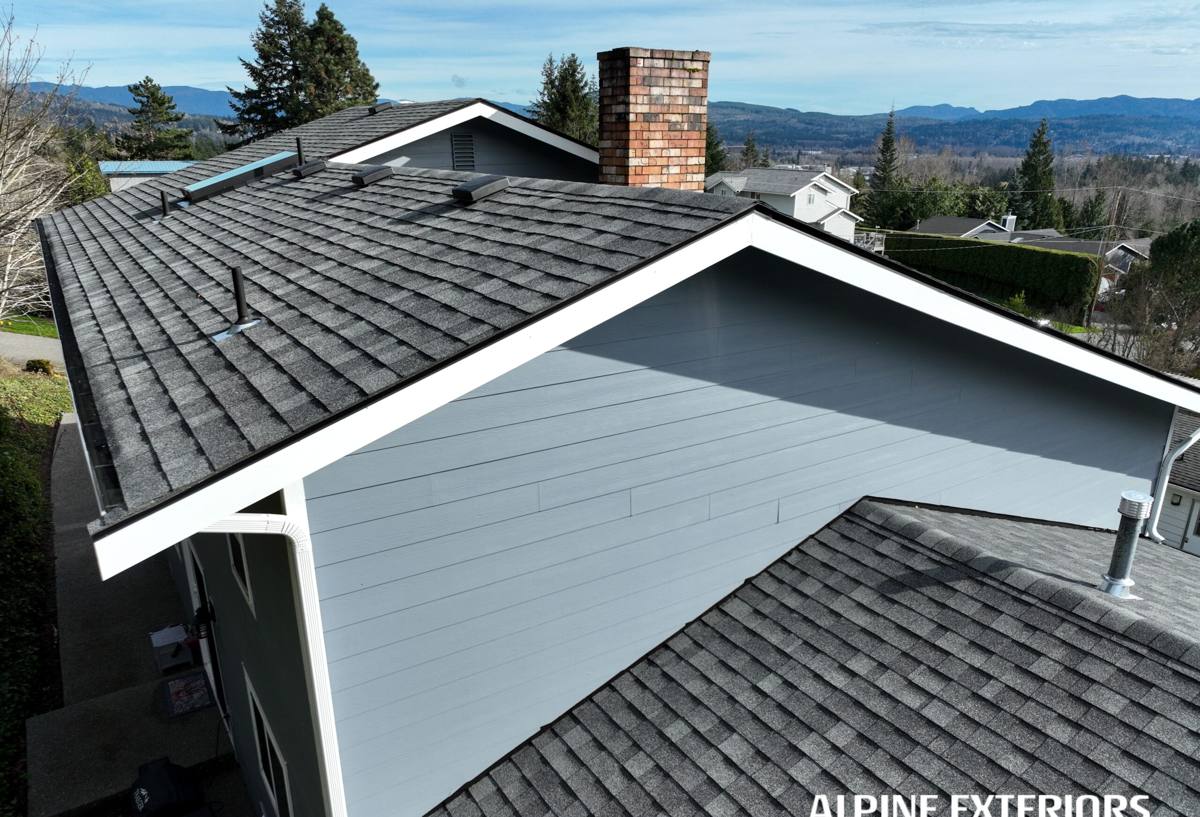
What the Local Climate Does to a Roof Over Time
Salt Air and Metal Fatigue
Homes closer to the water pick up salt in the air, and that salt settles on metal roofing components — flashing, fasteners, gutter hardware, vent caps. Over years, it accelerates corrosion, especially where two dissimilar metals meet or where a fastener's protective coating has worn through. A flashing failure that looks minor from the ground is often the first visible sign of corrosion that's been building underneath for a while.
Driving Rain and Wind-Driven Water
Wind off the bay doesn't just bring rain straight down — it pushes it sideways and up under laps, ridge caps, and flashing edges that were only ever designed to shed water moving in one direction. This is why leaks in this area often show up somewhere other than where the water actually got in. Water can travel along the underlayment or decking for feet before it finds a gap to drip through, which makes an accurate diagnosis more important here than in calmer climates.
The Long Moss Season
Whatcom County's combination of moisture and shade means moss and moisture-loving growth can take hold on a roof for most of the year, not just in a short "wet season." Moss holds water against the roofing material long after the rain has stopped, keeps shingles from drying out between storms, and physically lifts shingle edges as it grows — which opens a path for wind-driven rain to get underneath. Roofs that face north or sit under tree cover typically need moss addressed as part of any repair, not as a separate afterthought.
Common Roof Repair Issues We See in Bellingham Homes
A handful of issues show up again and again on repair calls in this area, and most of them trace back to the climate factors above:
- Moss-lifted shingles along the north side of the roof or under tree cover, where edges have curled up enough to let water in.
- Flashing failures around chimneys, skylights, and roof-wall intersections, often from corrosion or from flashing that was never properly integrated with the roofing material in the first place.
- Clogged or undersized gutters that back water up under the roof edge during heavy rain, leading to rot at the fascia and lowest course of shingles.
- Soft or spongy decking in valleys and around penetrations, a sign that moisture has been getting into the plywood or sheathing underneath for some time.
- Worn ridge caps that have taken the brunt of wind and rain and no longer seal the ridge line the way they should.
Signs Your Roof Needs Attention
Most roof problems give some warning before they turn into an active leak inside the house. Worth checking for, especially after a stretch of heavy weather:
- Dark streaks, green tinge, or visible moss buildup on shingles, especially on shaded slopes
- Granules collecting in gutters or at the base of downspouts
- Shingle edges that look curled, cracked, or lifted
- Daylight visible through the attic roof deck, or damp insulation below it
- Water stains on interior ceilings, even faint ones that come and go with the weather
- Sagging sections along the roofline or in valleys
- Rust streaks below metal flashing or fasteners
What a Correct Roof Repair Actually Involves
A quick patch over a visible leak is tempting because it's cheap and fast, but in this climate it usually just buys a season or two before the same spot fails again. A repair that actually holds needs to address a few things together:
Finding the real entry point. Because wind-driven rain can travel under shingles before it drips through, the visible stain or drip point is often not directly above the actual failure. Tracing it back correctly is the difference between a repair that lasts and one that doesn't.
Clearing and treating moss, not just cutting it back. If moss caused or contributed to the failure, removing it without addressing regrowth just delays the same problem.
Matching materials and integration, not just covering the gap. Flashing, underlayment, and shingles need to be tied together correctly at the repair point — a bead of sealant over a gap is not the same as properly lapped and integrated flashing.
Checking the decking underneath. If water has been getting in for a while, the plywood or sheathing under the failure point may be soft or delaminating and needs to be replaced, not just covered over.
Repair or Replace? What Actually Drives That Decision
Not every roof problem in Bellingham means a full replacement, and not every leak is fixable with a small patch. The honest answer depends on a few concrete factors:
| Factor | Leans toward repair | Leans toward replacement |
|---|---|---|
| Extent of the problem | Isolated to one section, flashing point, or penetration | Multiple areas failing, or widespread moss and granule loss |
| Roof age | Well within expected service life for the material | At or past the age where the roofing material is naturally wearing out |
| Decking condition | Solid, dry sheathing found under the repair area | Soft, rotted, or delaminated decking across multiple sections |
| Repair history | First real repair the roof has needed | Same area has already been patched more than once |
| Underlying material condition | Shingles/material still flexible and intact away from the problem | Shingles brittle, cracking, or curling broadly across the roof |
We'll tell you honestly which side of that table your roof falls on. If a repair is the right call, that's what we'll recommend — a repair sized correctly to the actual problem, not inflated into something bigger than it needs to be.
How Our Bellingham Roof Repair Process Works
- On-site assessment. We inspect the roof itself — not just the spot where the leak showed up inside — including attic access where possible, to trace the actual path water is taking.
- Straight explanation of what we find. You get a plain-language rundown of what's causing the problem, what it will take to fix it correctly, and what it would cost to leave it alone versus repair it now.
- Moss and debris clearing where relevant. If growth or debris is part of the problem, it gets cleared and treated as part of the repair, not left for a separate visit.
- Repair of flashing, decking, and roofing material as needed. Matched to what's already on the roof where possible, integrated properly rather than just sealed over.
- Final check for related weak points. Since one failure point often isn't the only one under similar stress, we check nearby flashing, laps, and penetrations before calling the job done.
Why Hiring a Crew That Already Works in Bellingham Matters
Roof repair advice that works in a dry inland climate can be the wrong advice here. A crew that regularly works Whatcom County homes already knows which flashing details tend to fail first in salt air, which roof orientations need moss treatment as standard practice rather than an upsell, and how wind-driven rain off the bay behaves differently than a straight-down rainstorm. That familiarity shows up in fewer callbacks and repairs that are sized to the actual local conditions instead of a generic playbook.
It also means showing up with realistic expectations about weather windows. Repair work in this area often has to be scheduled and sequenced around rain, not just booked on the first available day — a crew used to the region plans for that instead of getting caught mid-repair by a system rolling in off the water.
Keeping a Bellingham Roof Healthy Between Repairs
A few habits go a long way toward stretching the time between repairs in this climate:
- Clean gutters at least twice a year, more often if the property has overhanging trees
- Have shaded or north-facing roof sections checked for moss regrowth annually
- Trim back branches that keep sections of the roof shaded and damp longer than the rest
- Address small flashing or fastener rust issues before they become active leaks
- After any major windstorm, do a visual check for lifted or missing shingles
None of this eliminates the need for repairs eventually — the climate here is simply hard on roofs — but it does reduce how often and how severe those repairs need to be.
If you're dealing with a leak, moss buildup, or a roof that just doesn't look right anymore, we're happy to take a look and give you a straight answer about what it needs. Use the form below to request a free, no-pressure estimate.