 Birch Bay
 Why Board & Batten Fits Bellingham and Birch Bay Homes
Board and batten has become one of the most requested siding looks in Whatcom County, and it's easy to see why. The wide vertical panels and clean shadow lines read as modern farmhouse on a new build, but the same profile has deep roots in Pacific Northwest barns, cabins, and coastal cottages — so it also looks right at home on an older Bellingham or Birch Bay property. It's often used as a full-facade siding, or paired with horizontal lap siding on gables, dormers, and entry accents to break up a large elevation.
That said, board and batten is not just a look you bolt onto a house. In a marine climate like ours, the details of how it's built matter more than they do in drier parts of the country. Get them wrong and you're repainting or replacing boards years early. Get them right and it's one of the more durable siding profiles available.
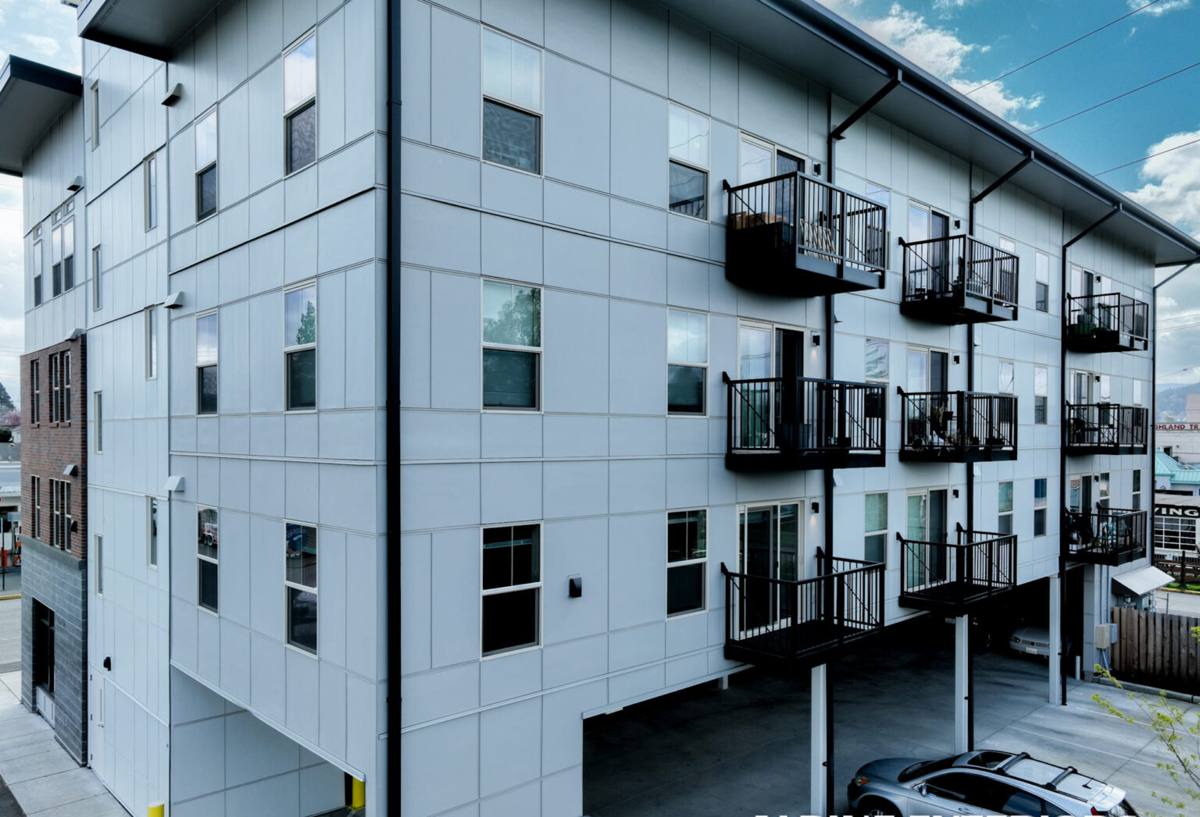
What Board & Batten Siding Actually Is
Board and batten is a vertical siding system built from wide flat boards installed with a small gap between them, then covered at each seam with a narrower strip — the batten. The battens do double duty: they hide the vertical joints and they shed water away from the seam instead of letting it pool there. Some systems use a single wide panel with battens applied over it purely for the look; others use individual boards with true gaps behind each batten. Both can perform well, but only if the water management behind the boards is designed correctly, which we'll get into below.
Where it works best on Whatcom County homes
We see board and batten used three ways around Bellingham and Birch Bay: as full siding on new construction and modern-farmhouse remodels, as a gable or dormer accent over a home sided primarily in lap siding, and on porch surrounds, shed dormers, or garage faces where a distinct texture change helps the architecture read correctly. All three applications face the same climate, so all three need the same attention to detail — an accent panel that fails is just as much of a headache as a full facade that fails.
The Real Climate Test: Salt Air, Driving Rain, and Moss Season
Birch Bay sits right on the water, and Bellingham isn't far behind — both catch salt-laden air off the Salish Sea that accelerates corrosion on fasteners, flashing, and any metal trim that isn't rated for coastal exposure. Add Whatcom County's long stretch of driving, wind-pushed rain from fall through spring, and you have moisture that doesn't just fall straight down — it gets pushed sideways into seams, laps, and fastener heads that a drier climate would never test.
Then there's moss and algae. Our extended damp season means anything that stays wet longer than it should — a poorly flashed joint, a batten with no drainage path behind it, a paint film that's starting to chalk — becomes a growth surface within a season or two, not years. On a horizontal lap siding job that's mostly a cosmetic problem. On board and batten, where the vertical boards and battens create dozens of narrow channels and seams per wall, it's also a moisture-trapping problem if the assembly wasn't built with drainage in mind from the start.
What a Correct Board & Batten Installation Requires
This is the part that separates a board and batten job that looks good in the driveway photo from one that's still performing in fifteen years. None of it is visible once the crew packs up, which is exactly why it's worth asking about before you hire anyone.
A drainage gap behind the siding
Vertical siding should never be fastened directly against the weather-resistive barrier with no space behind it. A furred-out rainscreen gap lets any water that gets past the battens drain down and out instead of sitting against the sheathing. In our climate, skipping this gap is one of the fastest ways to turn a siding job into a rot problem behind the walls.
Fastening and joint treatment
Battens need to land over real structural framing or properly spaced furring, with corrosion-resistant fasteners driven at the manufacturer's specified pattern — not just "close enough." Board and batten has more linear seams per square foot than lap siding, and every one of those seams is a potential water entry point if the fastening is inconsistent.
Flashing at windows, corners, and transitions
Every place a vertical board meets a window, door, corner trim, or the foundation needs proper flashing and end-grain sealing — vertical boards direct water straight down toward these transitions, so a shortcut here shows up fast as staining or soft trim.
Batten spacing and panel expansion
Fiber cement moves slightly with temperature and moisture, and the installation has to account for that with correct gapping and fastener placement, not tight-nailed joints that fight the material.
Why We Install This Only in James Hardie Fiber Cement
We get asked whether board and batten can be done in wood, vinyl, or engineered wood products, and it can be — but we've standardized on James Hardie fiber cement for every siding job we do, board and batten included, because of how it holds up specifically to what Bellingham and Birch Bay throw at a house.
Built for this climate
James Hardie engineers its HZ5 product line for the Pacific Northwest's moisture exposure. Fiber cement doesn't feed moss and mildew the way bare wood grain can, it won't swell or rot at cut edges the way engineered wood products can if a seal fails, and it's non-combustible, which matters more each year given regional wildfire smoke and ember exposure.
A factory finish that's built to last
Board and batten's biggest long-term maintenance item, on any material, is the paint film — those vertical boards and battens are more exposed to driving rain than a lapped horizontal profile. Hardie's ColorPlus finish is baked on at the factory under controlled conditions, which gives it better fade and moisture resistance than field-applied paint, and it carries a dedicated finish warranty separate from the substrate warranty.
Board & Batten Material Options in a Marine Climate
| Material | Moisture & salt-air behavior | Maintenance |
|---|---|---|
| James Hardie fiber cement | Non-combustible, dimensionally stable, engineered HZ5 line for wet climates | Occasional wash; factory finish resists fading and moss growth |
| Vinyl vertical panel | Won't rot, but can warp or fade and doesn't hold paint if you want a color change later | Low, but limited color/repair options long-term |
| Solid wood boards | Classic look, but end grain and joints are vulnerable to our wet season without diligent upkeep | Repainting and caulk inspection every few years |
| Engineered wood (LP-type) panels | Treated to resist moisture, but performance depends heavily on sealed cuts and correct installation | Manufacturer-specified caulking and touch-up schedule |
We only install the fiber cement option ourselves, but this comparison is meant to show honestly where it sits relative to the alternatives — not to talk down every other product on the market.
Our Process for a Bellingham or Birch Bay Board & Batten Project
- On-site assessment of the wall assembly, existing siding condition, and any moisture issues already present
- Design conversation covering board width, batten spacing, and where vertical siding will meet existing lap siding or trim
- Installation with a proper rainscreen gap, correct fastening pattern, and flashing detail at every transition
- Final walkthrough so you understand what maintenance, if any, the finish will need going forward
Because we work this area regularly, we already know what Bellingham and Birch Bay homes tend to need — older houses with siding that was never built with a drainage gap, newer builds where board and batten accents were value-engineered with shortcuts, and everything in between. That familiarity means fewer surprises once we open up a wall.
Living With Board & Batten in a Marine Climate
- Rinse siding annually to clear salt residue and organic buildup before it takes hold
- Keep gutters and downspouts clear so runoff doesn't sheet directly down a wall of vertical boards
- Trim back vegetation and landscaping that shades siding and keeps it damp longer than necessary
- Have caulking and trim transitions checked periodically, especially around windows and corners
- Address any staining or soft spots early — on vertical siding, water problems travel down, not sideways
Cost Factors to Expect
Board and batten typically costs somewhat more than standard lap siding to install, mainly due to labor — more linear seams, more battens, and more precise fastening and flashing work per square foot. Full-facade board and batten costs more than using it as a gable or accent treatment. We can walk through actual numbers for your specific home during an on-site estimate, since wall area, existing siding removal, and trim complexity all factor in.
If you're considering board and batten for a home in Bellingham or Birch Bay, we're happy to take a look and walk you through what it would actually take to do it right on your house — no pressure, just a straight answer. Use the form below to request a free estimate.