 Birch Bay
 Why Bellingham Decks Wear Out Faster Than You'd Expect
A deck in Bellingham lives a harder life than the same deck would in a drier climate. Whatcom County sits right on Puget Sound, and the combination of salt-laden air drifting in off the water, long stretches of driving rain, and a moss season that can run from October through May puts real stress on every part of a deck's structure. Homeowners are often surprised that a deck built well only ten or fifteen years ago is already showing soft spots, loose railings, or rust streaks around the fasteners.
None of this means your deck is doomed. It means deck repair here needs to account for moisture cycling, corrosion, and organic growth in a way that repair work in a drier region simply doesn't. That's the lens we bring to every Bellingham repair job.
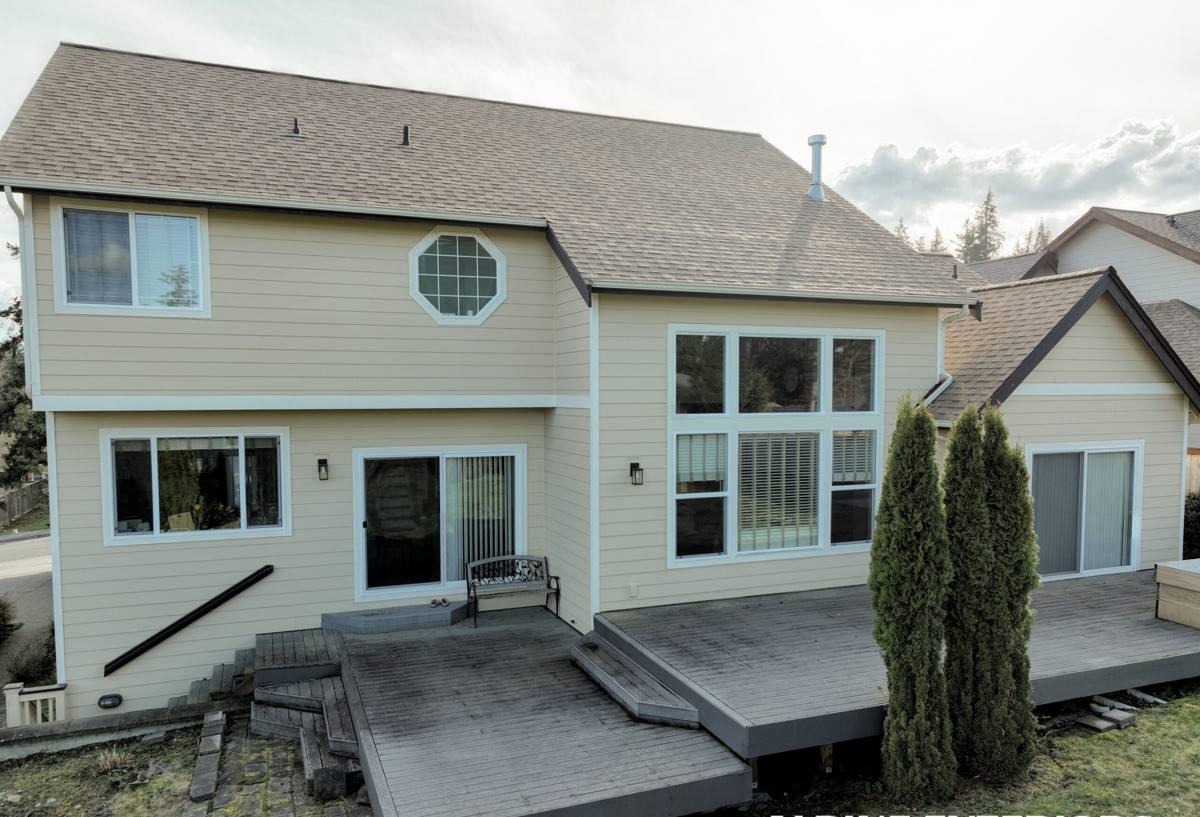
What the Local Climate Actually Does to a Deck
Salt Air and Corrosion
Proximity to the Sound means airborne salt settles on exposed metal — nails, screws, joist hangers, bolts — and accelerates corrosion. Standard galvanized fasteners that would hold up fine inland can start rusting within a few years this close to the water. Once a fastener corrodes, it loses holding strength long before it looks obviously bad, which is why so many "surprise" deck failures aren't actually sudden at all.
Driving Rain and Trapped Moisture
Rain that comes in sideways finds every gap in flashing, every board seam without proper spacing, and every spot where caulk has failed. Once water gets behind a ledger board or under decking without anywhere to drain, it doesn't dry out quickly in our climate — it just sits there, and wood that stays wet for weeks at a time starts to rot from the inside.
Moss, Algae, and the Long Wet Season
Shaded decks and north-facing surfaces in Whatcom County can stay damp for months, which is exactly what moss and algae need to take hold. Beyond looking bad, a mossy deck surface is a slip hazard, and moss holds moisture directly against the wood or composite surface, which shortens its life.
Signs Your Bellingham Deck Needs Repair
Most deck problems don't announce themselves. They show up as small clues that get worse if ignored. Walk your deck and check for the following:
- Boards that feel spongy, bouncy, or soft underfoot, especially near the house or stairs
- Visible gaps opening up around the ledger board where the deck attaches to the house
- Rust streaks running down from screw or nail heads
- Railings or posts that wiggle when you push on them
- Green or black staining that keeps coming back after cleaning
- Stair stringers that flex or creak more than they used to
- Gaps between boards that have closed up entirely, trapping debris and moisture
- Any spot where you can push a screwdriver into the wood with light pressure
Any one of these on its own might be minor. Several at once, or anything involving the ledger board or main support posts, is worth a professional look before it becomes a safety issue.
The Deck Problems We See Most Often in This Area
Ledger Board Separation
The ledger board — the piece that bolts the deck to the house — is the single most important structural connection on most decks, and it's also the part most exposed to water running off the house siding or roofline. When flashing behind it fails or was never installed correctly, water gets trapped between the ledger and the house framing and rot sets in where you can't see it.
Joist and Beam Rot
Framing that stays wet for extended periods softens over time. This is especially common under decks with tightly spaced boards that don't let water drain and dry between rain events, which, in a region that gets rain for months at a stretch, matters more than it would elsewhere.
Corroded or Failing Fasteners
As covered above, salt air speeds this up. We regularly find decks where the wood itself is still sound but the fasteners holding it together have weakened to the point of being unreliable.
Railing and Guardrail Movement
Loose railings are usually a sign that the posts weren't bolted through to solid framing, or that the connection has corroded or rotted over time. This is a safety-code issue, not just a cosmetic one.
Stair Structure Wear
Stairs take concentrated foot traffic and often sit in shadier, damper spots than the main deck surface, which makes stringers and stair framing an area we check closely.
What a Correct Deck Repair Actually Involves
Not all deck repair is the same, and shortcuts on this kind of work tend to fail again within a few years — which just means paying for the same repair twice. A repair done right generally includes:
1. Structural Inspection First
Before any boards come off, we check the ledger connection, support posts, footings, joists, and beams. Surface-level repair on a deck with an underlying structural issue doesn't solve anything.
2. Fixing the Cause, Not Just the Symptom
If a section of decking is rotting because water is pooling underneath it, replacing the boards without addressing drainage or flashing just resets the clock on the same failure.
3. Matching or Upgrading Fasteners
Given the salt air here, we use fasteners and hardware rated for coastal or corrosive environments — typically stainless steel or high-grade coated hardware — rather than whatever standard fastener happens to be cheapest.
4. Proper Flashing at the Ledger Board
Any time a ledger board repair is involved, correct flashing gets installed so water sheds away from the house rather than behind it.
5. Board Spacing for Drainage
Decking gets spaced to allow water to drain through and air to circulate underneath, which matters more here than in a drier climate.
6. Code-Compliant Railings and Stairs
Any railing or stair work gets brought up to current guardrail and stair code, not just patched to look fixed.
Repair or Replace? How We Help You Decide
Not every deck problem means starting over, and not every deck is worth repairing indefinitely. The right call depends on how much of the structure is still sound.
| Factor | Usually Points to Repair | Usually Points to Replacement |
|---|---|---|
| Ledger board and main framing | Solid, no significant rot | Widespread rot or repeated ledger failure |
| Decking surface | Isolated soft or damaged boards | Rot or splitting across most of the surface |
| Age of the deck | Under 15-20 years, built to a reasonable standard | Older deck already patched multiple times |
| Railings and posts | Loose but structurally attached | Posts rotted at the base or improperly anchored |
| Overall footprint changes | No changes needed | Homeowner wants a different size, layout, or material |
In many cases the honest answer is a hybrid: replace the sections that have failed, reinforce the framing where needed, and leave the parts of the deck that are still structurally sound. We'll tell you plainly which category your deck falls into rather than defaulting to the more expensive option.
Our Deck Repair Process
Inspection and Estimate
We start by physically checking the framing, ledger connection, fasteners, and decking surface, not just looking at what's visible from the top. You get a clear explanation of what we found and what it will take to fix it.
Plan and Materials
We walk through repair options and material choices with you, including trade-offs between wood and composite decking, so you're deciding with full information rather than guessing.
The Repair Work
Structural issues get addressed first, followed by decking, railings, and stairs. We use fasteners and flashing appropriate for this climate, not generic hardware.
Cleanup and Final Walkthrough
We clear debris, check that everything is solid and level, and walk the finished repair with you before calling the job done.
Material Choices That Hold Up Locally
Wood decking is still a reasonable choice in Whatcom County when it's properly maintained — sealed on a regular schedule and kept clear of standing moss and debris. Composite decking costs more upfront but resists moisture, rot, and moss staining better over time, which is worth weighing given how many months of the year this region stays damp. Neither material is automatically the "right" answer; it depends on your budget, how much upkeep you want to do, and the condition of the structure underneath. We'll give you a straight assessment rather than steering you toward whatever's more profitable for us to install.
Why Hire a Crew That Already Works in Bellingham and Whatcom County
Deck repair advice that's generic to the trade nationally often misses what actually matters here. A crew that regularly works Bellingham and the surrounding Birch Bay area already knows which fasteners hold up against salt air, how local moss and rain patterns affect where rot tends to start, and what Whatcom County's permitting and code requirements expect for railings, stairs, and structural repairs. That local familiarity shows up in fewer surprises during the job and a repair that's built for the conditions it actually has to survive, not generic conditions from somewhere drier.
Get a Free, No-Pressure Estimate
If your Bellingham deck has soft spots, loose railings, or moss that keeps coming back, it's worth having someone take an honest look before small problems turn into structural ones. Fill out the form below for a free estimate — no pressure, just a clear assessment of what your deck actually needs.