 Birch Bay
 Point Roberts Puts Roofs Through More Than Most
Point Roberts sits on its own peninsula, bordered by water on three sides and cut off from the rest of Whatcom County by the international border. That geography is part of what makes it a beautiful place to own a home, and it's also exactly why roofs here take a harder beating than roofs a few miles inland. Salt-laden air off the water works on exposed metal year-round. Wind-driven rain comes in sideways off the Strait, testing every flashing detail and shingle lap instead of just falling straight down. And the tree cover that gives so many Point Roberts lots their privacy also holds shade and moisture against the roof deck for months at a time, which is exactly what moss needs to get established.
None of that means a roof here is doomed to fail early. It means a roof installed for Point Roberts needs to be built and detailed a little differently than a roof going on a house in a drier, more sheltered part of Whatcom County. That's the whole focus of this page: what a correct new roof installation looks like for a home in this specific location, and why it's worth working with a crew that already understands the conditions.
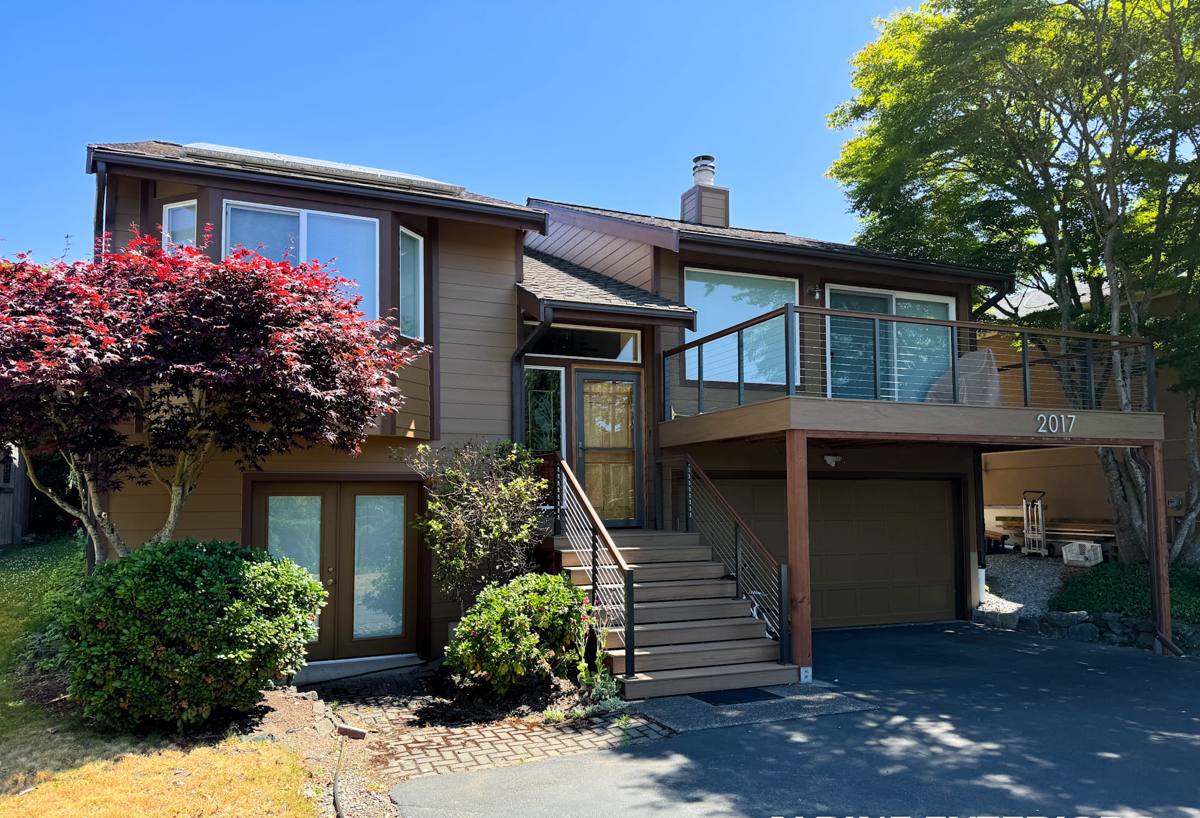
Signs a Point Roberts Roof Needs Replacement, Not Another Patch
Roof repairs make sense when the damage is isolated and the rest of the roofing system is sound. Full replacement makes sense when the roof as a whole has aged past the point where patching is doing much good, or when the underlying problem is systemic rather than a single bad spot. In a marine, moss-prone climate, a few signs tend to show up earlier and matter more than they would elsewhere:
- Granule loss heavy enough that you can see bare, shiny patches on asphalt shingles, especially on slopes that stay shaded most of the day
- Shingles that are curling, cupping, or lifting at the edges — moss growing under the tab line is a common cause here
- Soft or spongy decking underfoot, usually a sign moisture has been getting past the surface layer for a while
- Repeated leaks around the same valley, chimney, or vent boot after more than one repair attempt
- Streaking, staining, or dark trails running down the roof plane, which usually points to algae or moss runoff rather than a cosmetic issue alone
- A roof that's simply reached the back half of its expected service life and has already needed two or more repairs in recent years
If your roof is showing one or two of these, a repair may still be the right call. If it's showing several at once, or the roof is old enough that another winter of driving rain is a real risk, replacement is usually the more honest recommendation — and the more cost-effective one over time.
What a Correct New Roof Installation Actually Involves
A new roof is more than shingles nailed to plywood. In a climate like this, the parts you don't see matter as much as the parts you do:
Tear-Off and Deck Inspection
We remove the existing roofing down to the deck rather than layering over it. That's the only way to actually see the condition of the sheathing — soft spots, delamination, or rot from long-term moisture intrusion don't show up until the old layers are off. Any bad decking gets replaced before anything new goes down; installing a new roof over a compromised deck just guarantees an early failure.
Underlayment and Water Barriers
Self-adhering ice-and-water membrane at eaves, valleys, and around penetrations gives you a second line of defense in exactly the spots where wind-driven rain is most likely to find a way in. Synthetic underlayment covers the rest of the field. In a location that sees this much sideways rain, we don't treat these as optional upgrades — they're standard.
Flashing
Step flashing at walls, counter-flashing at chimneys, and properly formed valley metal are where most roof leaks actually originate, not in the open field of shingles. Flashing gets custom-fit and fastened with corrosion-resistant hardware, since standard fasteners degrade faster this close to salt air.
Ventilation
Balanced intake and exhaust venting keeps the attic and deck dry and closer to outside temperature. That matters twice over here: it protects the deck from condensation-driven rot, and a cooler, drier roof surface is less hospitable to moss than a warm, damp one.
Fasteners and Hardware
We use corrosion-resistant nails and flashing hardware rather than standard-grade fasteners. It costs a little more up front. Given how quickly salt air can work on unprotected metal, it's not a place we cut corners.
Choosing a Roofing Material for This Climate
There's no single "best" roofing material for every home — the right choice depends on your budget, your roof's exposure to shade and moisture, and how much upkeep you want to take on. Here's how the common options generally compare for a Point Roberts property:
| Material | Moisture / Moss Behavior | Salt-Air Durability | Maintenance Burden |
|---|---|---|---|
| Architectural asphalt shingles | Algae-resistant granule options help slow staining and moss buildup on shaded slopes | Good, especially with corrosion-resistant fasteners and flashing | Low to moderate — periodic moss/debris clearing |
| Standing-seam metal | Sheds moisture quickly and gives moss little to grip onto | Very good with a quality coated finish; fasteners still need to be corrosion-rated | Low — occasional inspection of seams and fasteners |
| Cedar shake | Attractive, but shaded, damp conditions accelerate moss growth and require more frequent treatment | Fair — needs consistent upkeep to hold up to marine exposure | Higher — regular cleaning and treatment to manage moisture and moss |
We install both asphalt and metal roofing systems and will walk you through the honest trade-offs for your specific lot — sun exposure, tree cover, and how much roof maintenance you actually want to do — rather than pushing one product across the board.
Our New Roof Installation Process
- On-site inspection: We look at the current roof, the decking condition where accessible, ventilation setup, and how sun, shade, and wind exposure affect that particular roof plane.
- Material and scope walkthrough: We go over material options, a written scope of work, and a straightforward estimate — no pressure to decide on the spot.
- Permitting: Roofing permits are pulled through Whatcom County as required before work begins.
- Scheduling around weather: Tear-off day is planned around a realistic dry-weather window rather than squeezed in regardless of forecast, since an open deck and incoming rain don't mix.
- Tear-off and deck repair: Old roofing comes off, the deck is inspected, and any damaged sheathing is replaced before new materials go down.
- Underlayment, flashing, and ventilation: Water barriers, flashing, and venting are installed to the standard described above, not as an afterthought.
- Roofing installation: Shingles or panels go on to manufacturer specifications, with attention to nailing pattern, exposure, and fastener choice.
- Cleanup and magnetic sweep: The property is cleared of debris and swept for stray nails and fasteners.
- Final walkthrough: We review the finished roof with you before calling the job complete.
Why Location Actually Changes the Job Here
Point Roberts is a US exclave — the only land route in and out runs through Canada. That's a fact of geography, not a complaint, but it's a real factor in how a roofing project gets planned and run. Material deliveries, dump runs for tear-off debris, and crew scheduling all need to account for the border crossing rather than assuming a straight, uninterrupted drive like a job on the mainland side of the county. A crew that hasn't worked in Point Roberts before can end up caught off guard by this — a truck short on materials, a delayed start, a debris haul that takes longer than planned. A crew that already works here builds that reality into the schedule from day one, so it doesn't turn into your problem mid-project.
Keeping a New Roof Performing Once It's Installed
A correctly installed roof still benefits from a little ongoing attention, especially in a location where moss season runs long:
- Keep gutters and downspouts clear so water isn't backing up under the roof edge
- Trim back overhanging branches to cut down on shade and debris buildup on the roof surface
- Have moss growth treated before it gets thick enough to lift shingle edges, rather than after
- Walk the roof visually (from the ground, or have it checked) after major windstorms
- Avoid pressure washing the roof surface, which can strip granules and shorten shingle life
None of this is complicated, but skipping it is how a well-installed roof ends up needing early attention anyway.
Why Hire a Crew That Already Works Point Roberts
The fundamentals of a good roof — proper tear-off, sound decking, correct flashing, balanced ventilation, corrosion-resistant hardware — apply anywhere. What changes in Point Roberts is the margin for error. Wind-driven rain finds weak flashing faster here. Salt air finds under-rated fasteners faster here. And a crew that hasn't planned around the border crossing can turn a straightforward schedule into a strung-out one. Hiring a contractor who already understands these conditions — and who's still reachable locally if a question comes up after the job is done — is worth as much as the roofing materials themselves.
If you're weighing a repair against a full replacement, or you just want an honest look at what your current roof needs, we're glad to come out and take a look. The estimate is free, there's no pressure attached to it, and you can use the form below to get started.