 Birch Bay
 Why Point Roberts Roofs Take a Beating
Point Roberts sits on the tip of a small peninsula that juts out into the Strait of Georgia and Boundary Bay, which means it catches weather from almost every direction. There's no inland buffer, no line of hills to slow down a storm before it reaches a roofline. Homes here deal with a combination most inland Whatcom County properties don't see in the same intensity: constant salt-laden air off the water, driving rain that comes in sideways during winter storms, and a moss season that runs longer than almost anywhere else in the region because the roof rarely gets a real chance to dry out between systems.
None of that is exotic weather. It's the same maritime pattern that shapes roofing needs across Birch Bay and the rest of Whatcom County. But the exposure is more constant on the point, and constant exposure is what turns small, ignorable wear into an actual leak. A roof that would sit fine for another few years two miles inland can start failing here because it never stops being tested.
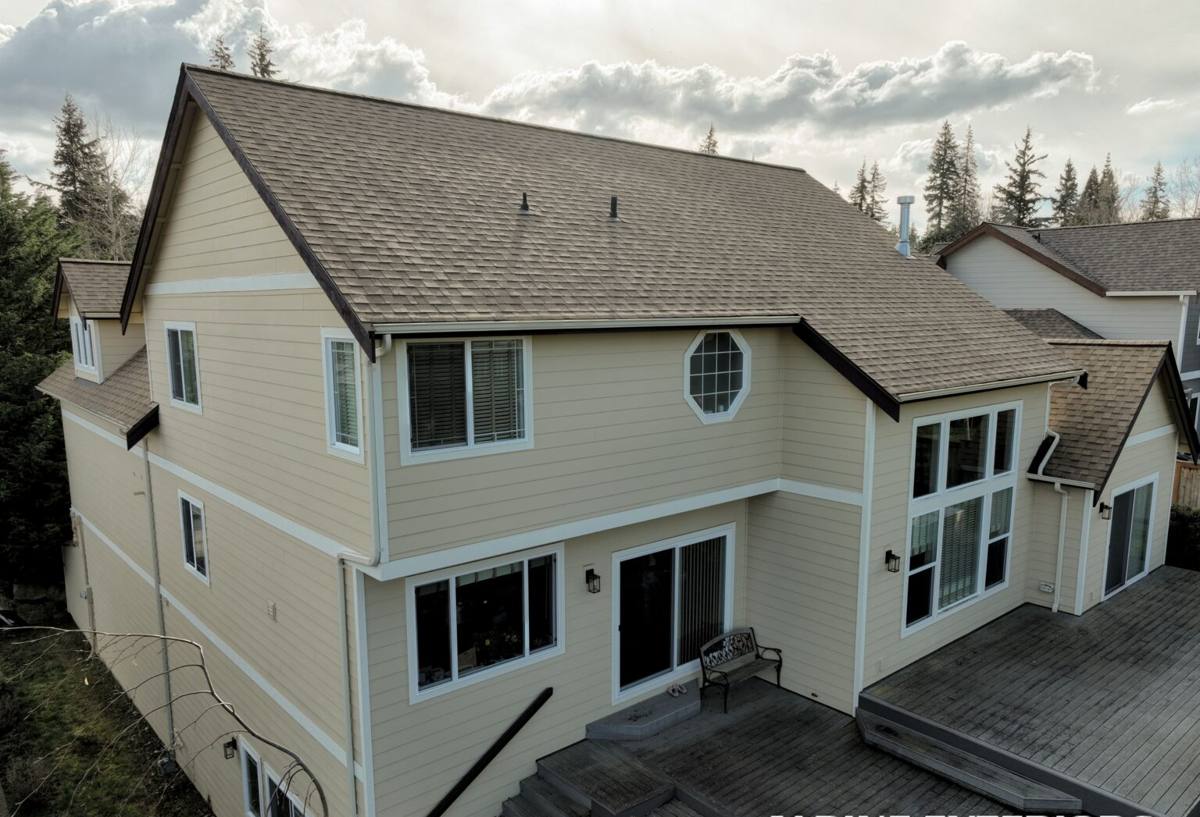
What Storm Damage Actually Looks Like on a Roof Here
Homeowners often picture storm damage as something dramatic — a tree through the roof, a section peeled back like a can lid. Sometimes it is. More often it's quieter and easier to miss from the ground:
- Shingles lifted or creased at the edges from sustained wind, even if none actually blew off
- Ridge cap shingles cracked or loosened along the peak, where wind uplift concentrates
- Flashing around chimneys, vents, and roof-to-wall transitions bent, pulled, or separated
- Granule loss from wind-driven rain and debris, which shows up as bald patches or granules collecting in gutters
- Moss colonies at the north-facing slopes and valleys that have started lifting shingle edges and holding moisture against the deck
- Soft spots or staining on interior ceilings that trace back to a small breach nowhere near where the stain appears
That last point matters. Water doesn't always drip straight down from where it enters. It can travel along the underlayment or decking and show up on a ceiling several feet from the actual damage. A proper storm inspection isn't just a walk around the yard looking up — it involves getting on the roof and following the path water would take.
Why Location Changes the Job
Point Roberts is a pene-exclave — the only practical way to drive there is through Canada, crossing the border twice each way. That's a fact of geography, not an inconvenience we're inventing to justify a markup, but it does change how a repair job actually gets staged. A crew that isn't used to working here has to plan around border crossing times for both workers and material deliveries, account for the fact that a forgotten tool or an extra bundle of shingles isn't a quick trip back to the shop, and build a little more lead time into scheduling than they would for a job in Birch Bay proper or Blaine.
None of that is a reason to put off a repair. It's a reason to work with a crew that has already solved that logistics problem — someone who shows up with the materials, fasteners, and flashing stock needed to finish the job in one mobilization instead of discovering a shortage mid-repair and losing a day to a border run. Permitting and inspections for Point Roberts properties still route through Whatcom County, so the paperwork side isn't different from the rest of the county — it's the physical logistics of getting people and materials there efficiently that separates a smooth repair from a stalled one.
What a Correct Storm Repair Actually Involves
A patch job that only addresses the visible symptom tends to fail again in the next storm. A correct repair works through the roof system in order:
1. Inspection Before Assumptions
We check the full roof, not just the area a homeowner points to. Wind damage is rarely confined to one spot — if one section of shingles lifted, nearby areas usually took the same stress even if they haven't failed yet.
2. Decking Check
Any spot where water has been getting in gets checked for soft or delaminated decking underneath. Replacing shingles over compromised decking just hides the problem and shortens the life of the new material.
3. Underlayment and Flashing
Underlayment that's been wet repeatedly loses its ability to protect the deck even if it looks intact. Flashing gets re-bent, resealed, or replaced rather than just caulked over — caulk is a short-term patch, not a repair.
4. Matching Materials
Where shingles need replacing, we match the existing product as closely as possible in color and profile so the repair doesn't stand out as an obvious patch. On older roofs where an exact match isn't available, we're upfront about that before starting rather than after.
Our Process, Start to Finish
- Initial call and photos. If you can safely get ground-level photos of visible damage, that helps us prepare before we arrive.
- On-site inspection. We get on the roof, document what we find, and explain what's actually happening in plain terms — no pressure to sign anything on the spot.
- Written scope and estimate. You get a clear description of what needs to be repaired, what materials are involved, and an honest cost range before work starts.
- Repair. We come prepared for the site's logistics so the work gets done in as few mobilizations as possible.
- Cleanup and walkthrough. Debris and old material get hauled off, and we walk the finished work with you before we consider the job done.
Repair vs. Replacement: How We Decide
Not every storm-damaged roof needs to come off. But sometimes a repair is a temporary fix on a roof that's already near the end of its service life, and it's worth knowing which situation you're in before spending money.
| Factor | Leans Toward Repair | Leans Toward Replacement |
|---|---|---|
| Age of roof | Under 12–15 years | Approaching or past expected lifespan |
| Extent of damage | Localized to one slope or area | Spread across multiple slopes |
| Decking condition | Solid, no soft spots found | Soft or delaminated in multiple areas |
| Moss/moisture history | Isolated, recently treated | Long-term, recurring moss with embedded staining |
| Prior repair history | First real repair needed | Multiple past patches in different areas |
We'll always give you our honest read on where your roof falls on that spectrum rather than defaulting to the bigger job. A repair that genuinely solves the problem is the right call more often than not.
Insurance Claims and Storm Damage
Wind and storm damage is often covered under standard homeowner's insurance policies, but coverage details vary by carrier and policy, so we won't make promises about what your specific policy will pay. What we can do is document damage thoroughly with photos and a written scope that you can submit to your insurer, and describe what we find in plain, factual terms if an adjuster has questions. Getting damage assessed and documented soon after a storm — rather than waiting until a small leak becomes a bigger one — generally makes for a more straightforward claims conversation.
Reducing the Damage From the Next Storm
Storm repair fixes what already happened. A few maintenance habits make the next storm less costly:
- Keep gutters and downspouts clear so wind-driven rain has somewhere to go instead of backing up under shingle edges
- Address moss while it's still a surface problem — once it's lifted shingles and held moisture against the deck for a season or two, it's no longer just a cosmetic issue
- Have flashing around chimneys and vents checked periodically, since these are the first points to fail under wind stress
- Trim back branches that hang over the roofline, which reduces both direct impact risk and the debris that traps moisture in valleys
- After any significant windstorm, a quick visual check from the ground can catch obvious lifted shingles before the next rain gets underneath them
Why Hiring a Crew That Already Works Point Roberts Matters
A roofing crew that treats Point Roberts as just another stop on the Whatcom County map can end up costing you time — a missed border crossing window, a material shortage that turns a one-day repair into three, a tarp that stays up longer than it should while logistics get sorted out. A crew that already knows the drill shows up prepared, works efficiently within the constraints the location actually has, and doesn't treat the peninsula's geography as a surprise mid-job.
That's really the difference between a repair that gets handled cleanly and one that drags on while a small leak keeps getting worse. Local familiarity isn't a marketing line here — it's the difference between one mobilization and three.
If you've got storm damage on a Point Roberts roof — or you're not sure whether what you're seeing is worth a repair call — we're happy to take a look and give you a straightforward, no-pressure estimate. Use the form below to get started.