 Birch Bay
 New-Construction Windows Built for Point Roberts' Coastal Isolation
Point Roberts sits on its own peninsula at the far northwest corner of Whatcom County, separated from the rest of Washington by water and by the international border. That geography shapes everything about building here, including how new-construction windows get specified, ordered, and installed. The marine exposure is intense — salt-laden air off the water, wind-driven rain that comes in sideways rather than straight down, and a long moss season that keeps shaded wall and roof planes damp for months at a stretch. A new build is the one point in a home's life when a window installer has the best possible shot at getting ahead of all of that, because the wall is open and there's no old caulk or failed flashing standing in the way.
This page covers new-construction window installation specifically for Point Roberts builds — how the location itself changes the job, what a correct install involves at the framing stage, and why a crew that already works this peninsula regularly is worth choosing over one that doesn't.
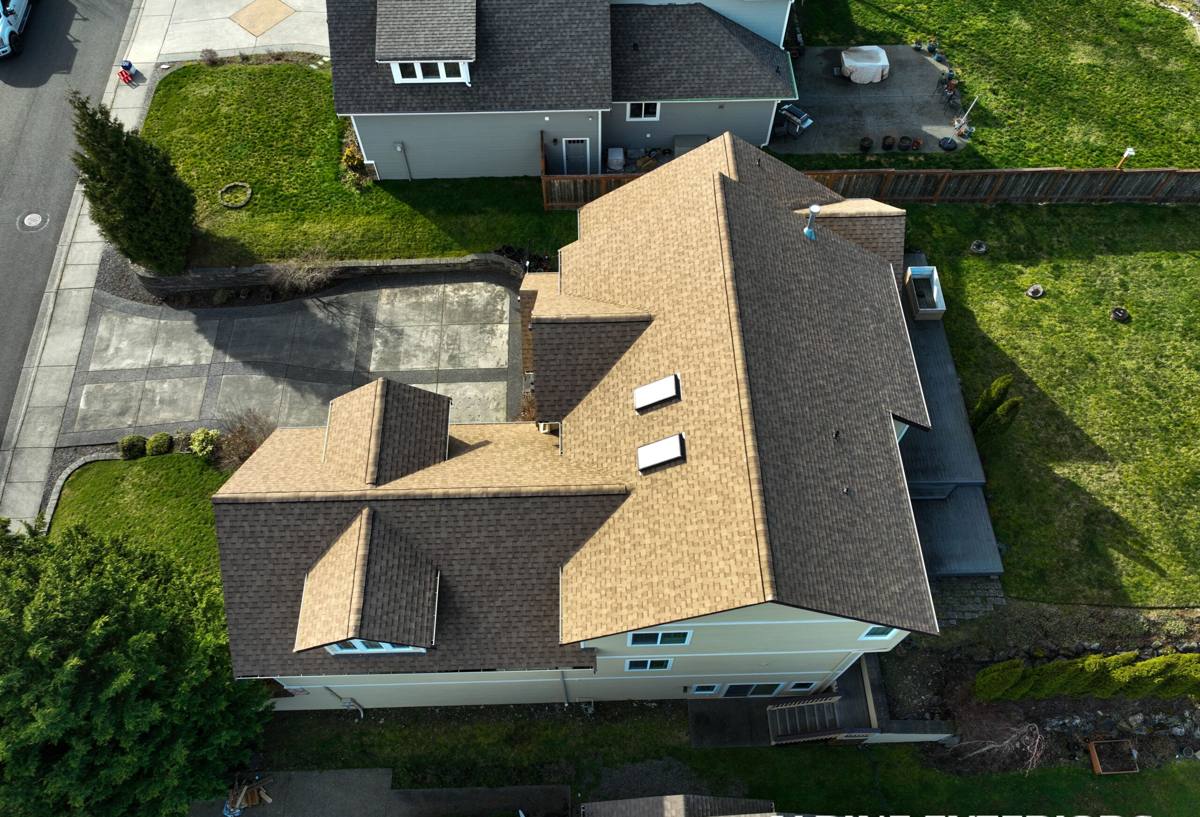
Why Point Roberts Is a Different Job From the Rest of Whatcom County
Point Roberts is a U.S. exclave — the only way to reach it from the rest of Washington by land is by driving north through British Columbia and crossing back into the U.S. at the peninsula's own border crossing. That single fact changes how a construction project gets planned here more than most homeowners expect going in.
Border Crossing and Material Logistics
Windows for a new build are often special-ordered to the sizes and specs the plans call for, and getting them to the jobsite means routing a delivery through the same border crossing every truck, trailer, and supplier has to use. That's not a reason to worry, but it is a reason to plan lead times honestly rather than promise a schedule that assumes mainland logistics. We build crossing time and delivery windows into the schedule up front instead of treating them as a surprise partway through the job.
A Smaller Trade Pool Means Fewer Contractors Know the Work
Because of the crossing, fewer general contractors and subs treat Point Roberts as routine territory the way they would a job a few miles down the road. That's part of why it matters to hire a crew that already schedules around the border, already knows what a delivery timeline actually looks like here, and isn't learning the peninsula's quirks on your project.
What the Climate Demands From a New Window Opening
Salt Air and Hardware Corrosion
Being surrounded by water on three sides puts Point Roberts homes in near-constant contact with salt-tinged marine air, which accelerates corrosion on window hardware, fasteners, and lower-grade flashing metal faster than it would a few miles inland. On a new build, that means specifying corrosion-resistant fasteners and flashing components from the start, not discovering years later that budget hardware pitted and seized on the elevations facing the water.
Driving Rain and Sill Pan Drainage
Storms off the water push rain sideways and even upward into window openings instead of letting it fall straight down. That means the sill pan under every new window opening needs a real pitch and a clear path to drain outward, not a flat sill sealed with a bead of caulk and hoped for. This is a detail that's dramatically easier to build correctly into open framing than to retrofit later.
A Long Moss Season and Sustained Dampness
Shaded elevations and window sills that don't drain well stay damp longer here than they would in a drier setting, which feeds moss and mildew growth and, over years, slow rot at the sill and lower corners of a window opening. Getting the drainage plane right at the framing stage is the single most effective way to keep that moisture out of the wall assembly before it ever becomes a problem.
New Construction vs. Replacement Windows: Why the Distinction Matters
New-construction windows and replacement windows aren't the same product installed the same way, and treating them as interchangeable is one of the more common mistakes on a build. New-construction units have a nailing fin built into the frame that fastens directly to the stud framing before the weather-resistive barrier (WRB) and siding go on, so the fin becomes part of the wall's drainage plane when it's flashed correctly. Replacement or insert windows are built to drop into an existing, already-finished opening without disturbing the siding around them, and they rely on a different sealing approach because the wall is already closed up.
On a new Point Roberts build, a properly flashed nail-fin window gives you the chance to build the full drainage sequence layer by layer, integrated with the housewrap, rather than caulked on as an afterthought. That's the real advantage a new build has over a retrofit — it's worth insisting the window install gets treated as its own trade sequence rather than a rushed step on the way to siding.
What a Correct New-Construction Window Install Involves
A window opening on a new build goes through a specific sequence, and skipping or reordering steps is how problems get built into a house that won't show up until a wet season or two later.
Rough Opening Prep
The opening has to be square, plumb, and sized correctly to the window unit before anything else happens. An opening that's out of square forces shims and gaps that compromise both operation and seal.
Sill Pan Flashing
A properly formed and pitched sill pan goes in first, sloped to shed any water that gets past the window outward and away from the framing rather than pooling under the frame.
Setting the Window and Fastening the Nailing Fin
The window is set into the opening, checked for level, plumb, and square, and the nailing fin is fastened following the manufacturer's specified pattern using corrosion-resistant fasteners suited to this exposure.
WRB and Flashing Tape Integration
This step separates a correct install from a shortcut one. Flashing tape and housewrap have to be integrated in the right shingle-lap order — sill first, then jambs, then head flashing lapped over the top — so water reaching the wall behind the siding drains down and out instead of getting trapped behind the window.
Head Flashing and Drip Cap
A head flashing or drip cap above the window sheds water outward before it can run down behind the top of the frame, an important detail given how much of this peninsula's rain arrives wind-driven rather than falling straight down.
Interior Air Sealing and Insulation
Once the exterior sequence is complete, the gap between the window frame and the rough opening gets sealed and insulated from the inside without trapping moisture against the framing, keeping the assembly efficient and dry.
Comparing Frame Materials for a Point Roberts Build
Budget, sun and wind exposure, and how long you plan to own the home all factor into the right frame choice. Here's how the common options hold up in this climate.
| Frame Material | Moisture & Corrosion Behavior | Typical Maintenance | Realistic Fit for This Location |
|---|---|---|---|
| Vinyl | Won't rot or corrode; seams and hardware are the weak point over time | Low — occasional cleaning | Solid budget-friendly choice; verify reinforced corners on larger units |
| Fiberglass | Very stable dimensionally; holds up well to sustained damp and salt exposure | Low | Strong fit for exposed elevations facing the water |
| Aluminum-clad wood | Good exterior protection, but any breach in the cladding exposes wood beneath to rot | Moderate — depends on cladding integrity | Works if flashing and cladding seams are installed and maintained correctly |
| Bare wood | Highest maintenance burden; most vulnerable to sustained coastal moisture | High — regular refinishing required | We recommend it only with a clear maintenance commitment from the owner |
How We Work With Builders and Homeowners on Point Roberts Projects
We coordinate directly with your general contractor or builder to schedule window delivery and installation around the framing timeline, factoring in the border crossing rather than assuming mainland lead times. That usually means locking in window specs and placing orders earlier in the process than a mainland job would require, so the units are staged and ready when the framing crew hits the point where openings need to close up. We also do a joint walkthrough of rough openings before installation to catch any framing issues while they're still cheap and easy to correct, rather than after the WRB is already up.
Because we already schedule around the crossing and know what a realistic delivery window looks like for this peninsula, we build that into the project timeline from day one instead of discovering it mid-build. That's a small thing on paper and a real one in practice — a missed delivery window here doesn't just mean a short delay, it can mean the framing crew sits idle waiting on windows that got held up in transit.
Practical Checklist Before Your Window Order Goes In
- Rough opening sizes confirmed against the actual window schedule, not just the plan set
- Frame material chosen with this location's salt exposure and maintenance tolerance in mind
- Corrosion-resistant fasteners and flashing metal specified, not standard-grade hardware
- Sill pan flashing detail confirmed for positive drainage, not a flat sill
- Delivery lead time built into the schedule with the border crossing accounted for
- Installer coordinating directly with the builder on timing, not working from an outdated framing schedule
- WRB and flashing tape sequence specified in writing, not left to whoever's on site that day
Why Hiring a Crew That Already Works Point Roberts Matters
A new-construction window install is only as good as the sequence it's built on, and that sequence depends on materials and crew actually showing up when the framing schedule needs them. A crew that already works this peninsula regularly has already solved the logistics problem — they know what a realistic delivery window looks like, they've planned around the crossing before, and they're not treating your project as their first attempt at figuring it out. Combined with correct flashing detail for salt air, driving rain, and a long moss season, that experience is what keeps a new window opening dry for the life of the house rather than becoming a callback five years down the road.
If you're planning a new build or an addition on Point Roberts and want window openings done right from the framing stage forward, we're happy to walk the plans with you and put together a free, no-pressure estimate. Use the form below to get started.